
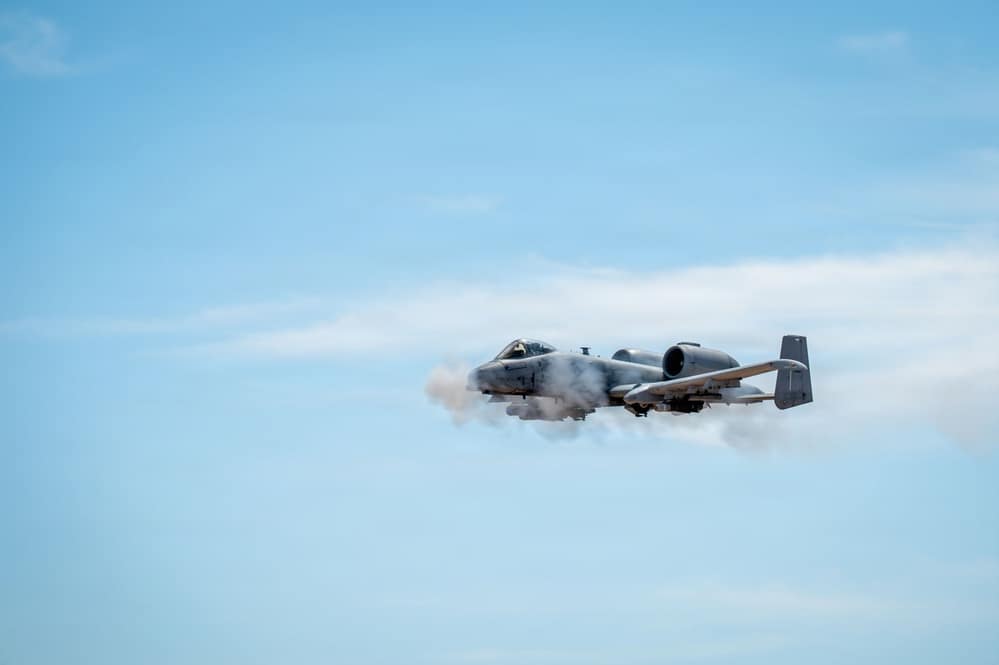
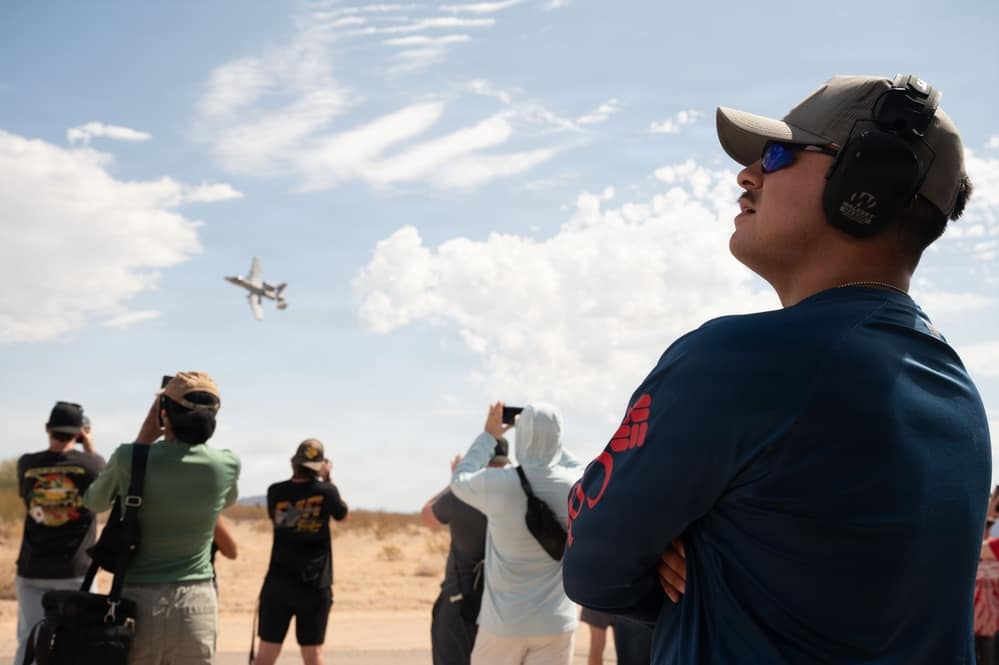
Auf dem Messturm am Gila Bend herrschen 107 Grad, und ein Fotograf schützt seine Kamera zwischen den Durchgängen im Schatten vor Überhitzung. Dann ertönt das Geräusch – dieses unverwechselbare, die Brust erschütternde Dröhnen. BRRRT — und ein A-10C Die Thunderbolt II taucht aus dem Dunst Arizonas auf, die Bordkanonen feuern auf den Wüstenboden. Am 24. und 25. Juni 2026 versammelten sich Schaulustige auf dem Barry M. Goldwater Range, um die Warthog bei ihrer Paradedisziplin zu beobachten – jener Disziplin, die sie besser beherrscht als jedes andere Flugzeug. Die meisten wussten, dass es das letzte Mal sein würde, dass sie sie hier sehen würden.
Die Davis-Monthan Air Force Base veranstaltete ihren letzten öffentlichen A-10-Schießtag – das Ende einer Tradition, die der 355. Flügel jahrelang etwa alle zwei Monate durchgeführt hatte. Fast fünf Jahrzehnte lang hallte das Dröhnen der Gatling-Kanone der A-10 über den Himmel von Tucson. Nun wird die Flotte außer Dienst gestellt, und damit auch die Schießtage.
Kurzinfo
| Ereignis | Letzter öffentlicher Tag auf dem A-10 Schießstand |
| Wo | Barry M. Goldwater Range, Gila Bend, Arizona |
| Wann | 24.–25. Juni 2026 |
| Gastgeber | 355. Geschwader / 357. Jagdgeschwader der Generation, Davis-Monthan AFB |
| Flugzeug | A-10C Thunderbolt II “Warthog” |
| Status | Die Flotte wurde nun bis 2030 verlängert, nachdem der Kongress den Ruhestand blockiert hatte. |
Ein Abschied, der beinahe nicht nötig gewesen wäre
Und jetzt kommt die Überraschung: Die A-10 ist nicht wirklich ausgemustert. Eigentlich sollte der Flugzeugtyp Ende 2026 außer Dienst gestellt werden, doch der Kongress verweigerte der Luftwaffe die Genehmigung, ihn ohne Nachfolger außer Dienst zu stellen. Das Verteidigungsgesetz von 2026 untersagte der Luftwaffe, die Flotte bis September 2026 unter 103 Flugzeuge zu reduzieren, und im Frühjahr bestätigte die Luftwaffe, dass die A-10 bis 2030 im Einsatz bleiben würde.
Dies war also nicht der letzte Flug der A-10. Es war der letzte Flug der öffentlich Die Übungstage auf dem Schießstand – ein Opfer einer Ausbildungskette, die bereits stillgelegt ist. Am 3. April 2026 schloss der letzte Lehrgang der A-10-Piloten des 357. Jagdgeschwaders ab. Die Entwicklungs- und Testabteilung in Davis-Monthan wurde im Dezember 2025 geschlossen. Die Jets fliegen zwar weiter, doch das Umfeld um sie herum wird Stück für Stück abgebaut.
Die Männer, die es aufwachsen sahen
Unter den Zuschauern befand sich der pensionierte Generalleutnant Glen “Wally” Moorhead, der das Flugzeug während seiner 38-jährigen Dienstzeit kennengelernt hatte. Moorhead überführte vor fast einem halben Jahrhundert die allererste A-10 an Davis-Monthan und gehörte zu den ersten Piloten, die die modernisierte A-10C flogen. Für ihn standen an diesem Tag die Menschen genauso im Mittelpunkt wie die Maschine selbst.
Für Tucson sind die Schießübungen längst mehr als nur eine Flugschau. Wie der 355. Flügel es ausdrückte, wurden das Dröhnen der Bordkanone und der Anblick einer Warthog in den Wolken zu einer wortlosen Botschaft des Stützpunkts an die Stadt, die ihn versorgt – eine Botschaft, dass die Menschen innerhalb des Zauns jederzeit einsatzbereit sind.
Bis zum Schluss tödlich.
Die A-10 Warthog verdiente sich ihre Gnadenfrist auf die harte Tour. Im Jahr 2026 flogen A-10-Kampfjets im Nahen Osten gegen den Iran, ausgestattet mit einer neu installierten Betankungssonde im Bug und Behältern für elektronische Kampfführung. Einige kehrten mit Abschussmarkierungen zurück – kleinen Bomben und den Silhouetten iranischer Kriegsschiffe, die auf ihre Flanken aufgemalt waren. Ein Flugzeug, das als zu alt, zu langsam und zu verwundbar abgeschrieben worden war, hatte gerade bewiesen, dass es immer noch wichtige Ziele finden und zerstören konnte.
Das ist das Paradoxon, mit dem die Kampfpilotengemeinschaft seit Jahren lebt: Der Jet, den alle ständig abzuschießen versuchen, bleibt einfach nützlich. Und die Piloten, die ihn fliegen, sind ihm meist verfallen.
Oberst Jose Cabrera, Kommandeur des 355. Geschwaders, verfolgte die letzten Überflüge gemeinsam mit den Familien und Vertretern der Stadt. Die Luftwaffe bezeichnete die Demonstration als “kraftvoll und präzise” – ein lebendiges Abbild all dessen, wofür die A-10-Mission steht: Disziplin, Hingabe und unerschütterliches Engagement für die Bodentruppen, die zu den Bodentruppen aufblicken.
Die Warthog wird noch bis 2030 fliegen. Doch die Zuschauer auf dem Schießstandturm in Gila Bend haben ihre letzte Schießvorführung erlebt. Wenn die Geschütze endgültig verstummen, wird Tucson die Stille bemerken.
Quellen: Davis-Monthan AFB / 355th Wing Public Affairs; US Air Force; DVIDS; Stars and Stripes; Air & Space Forces Magazine.
Verwandte Fragen
Was ist ein A-10-Übungstag?
Ein Schießtag ist eine Vorführung mit scharfer Munition, die der 355. Flügel der US-Luftwaffe auf dem Barry M. Goldwater-Schießplatz nahe Gila Bend, Arizona, veranstaltet. Eine A-10C Thunderbolt II demonstriert ihre Kampffähigkeiten – Beschuss mit Bordkanonen, Raketen und Leuchtraketen – vor Angehörigen der Luftwaffe, deren Familien und zivilen Gästen. Diese Veranstaltungen fanden jahrelang etwa alle zwei Monate statt.
Wird die A-10 Warthog außer Dienst gestellt?
Die A-10 sollte ursprünglich Ende 2026 außer Dienst gestellt werden, doch der Kongress verhinderte eine vollständige Ausmusterung, woraufhin die Luftwaffe die Flotte bis 2030 verlängerte. Das Verteidigungsgesetz von 2026 untersagte eine Reduzierung der Flotte unter 103 Flugzeuge bis September 2026. Mit der Verkleinerung der Flotte werden Übungen und Veranstaltungen wie die öffentlichen Schießstandtage schrittweise eingestellt.
Warum wird die A-10 auch Warzenschwein genannt?
“Warzenschwein” (oft kurz “Hog”) war der liebevolle Spitzname, den die Besatzungen der Fairchild Republic A-10 Thunderbolt II aufgrund ihres plumpen, ungelenken Aussehens gaben. Sie wurde um ihre 30-mm-GAU-8/A-Avenger-Kanone herum konstruiert, um Panzer zu bekämpfen und Bodentruppen zu unterstützen.
Kam die A-10 im Jahr 2026 zum Kampfeinsatz?
Ja. A-10-Kampfflugzeuge flogen 2026 Kampfeinsätze gegen den Iran, ausgestattet mit einer neuen, in der Nase montierten Luftbetankungssonde und Behältern für elektronische Kriegsführung. Einige kehrten mit Abschussmarkierungen zurück, die Bomben und iranische Marineschiffe darstellten – ein Grund dafür, dass der Kongress und die Luftwaffe den Flugzeugtyp weiterhin im Einsatz hielten.
Wo sind die meisten US-amerikanischen A-10 stationiert?
Die Davis-Monthan Air Force Base in Tucson, Arizona, beherbergt eine der größten Ansammlungen von A-10-Kampfflugzeugen und den Flugzeugfriedhof, auf dem ausgemusterte Maschinen gelagert werden. Das dortige 357. Jagdgeschwader verabschiedete am 3. April 2026 den letzten Lehrgang für A-10-Piloten.

0 Kommentare