
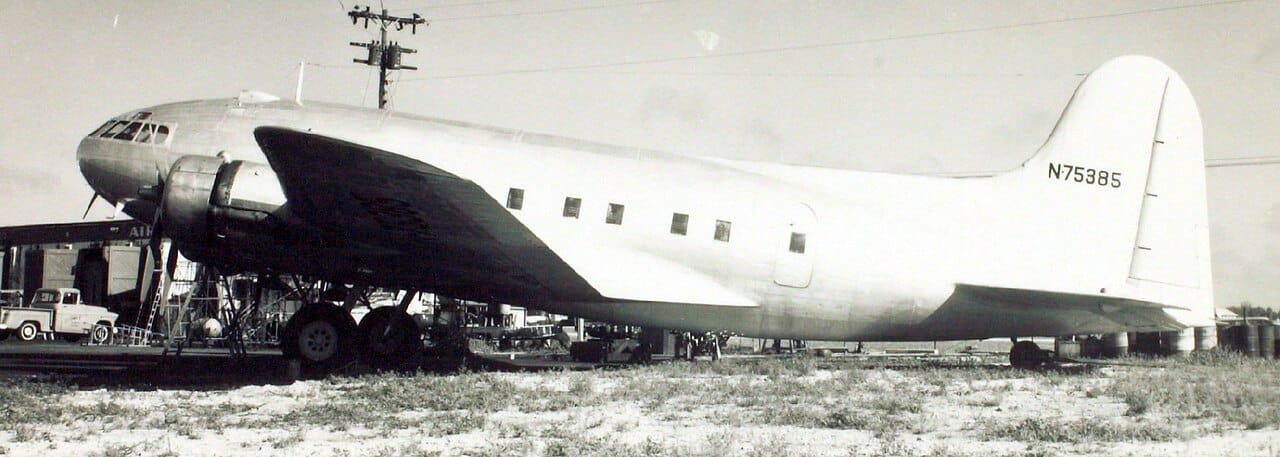
Every time you settle into an airliner seat at 35,000 feet, sealed comfortably against air so thin and cold it would kill you in minutes, you are enjoying an idea that first flew on the last day of 1938. Its name was the Boeing 307 Stratoliner, and almost nobody remembers it.
Portly and whale-shaped, built in a run of just ten, the Stratoliner was the first airliner in the world with a pressurized cabin — the first aircraft that let ordinary passengers ride above the weather instead of bouncing through it.
Kurzinfo
- Flugzeug: Boeing 307 Stratoliner (the “Flying Whale”)
- Bekanntheitsgrad: the world’s first airliner with a pressurized cabin
- Erster Flug: 31 December 1938; into service July 1940
- Bezogen auf: the B-17 Flying Fortress — its wings, tail and engines
- Kapazität: 33 passengers cruising near 20,000 ft, above the weather
- Gebaut: just 10; flown by TWA and Pan Am; Howard Hughes owned one
- Vermächtnis: its pressurization fed the B-29 and every airliner since
A Flying Fortress in a business suit
Boeing did not start from a blank sheet. It took the wings, tail and engines of its new B-17 Flying Fortress bomber and married them to a fat, circular-section fuselage that could be pumped up like a balloon. The result carried 33 passengers in genuine luxury — reclining sleeper seats, berths with windows, a galley, even skylights in the lavatories — while cruising near 20,000 feet, high above the turbulence that tormented the DC-3s of the day.
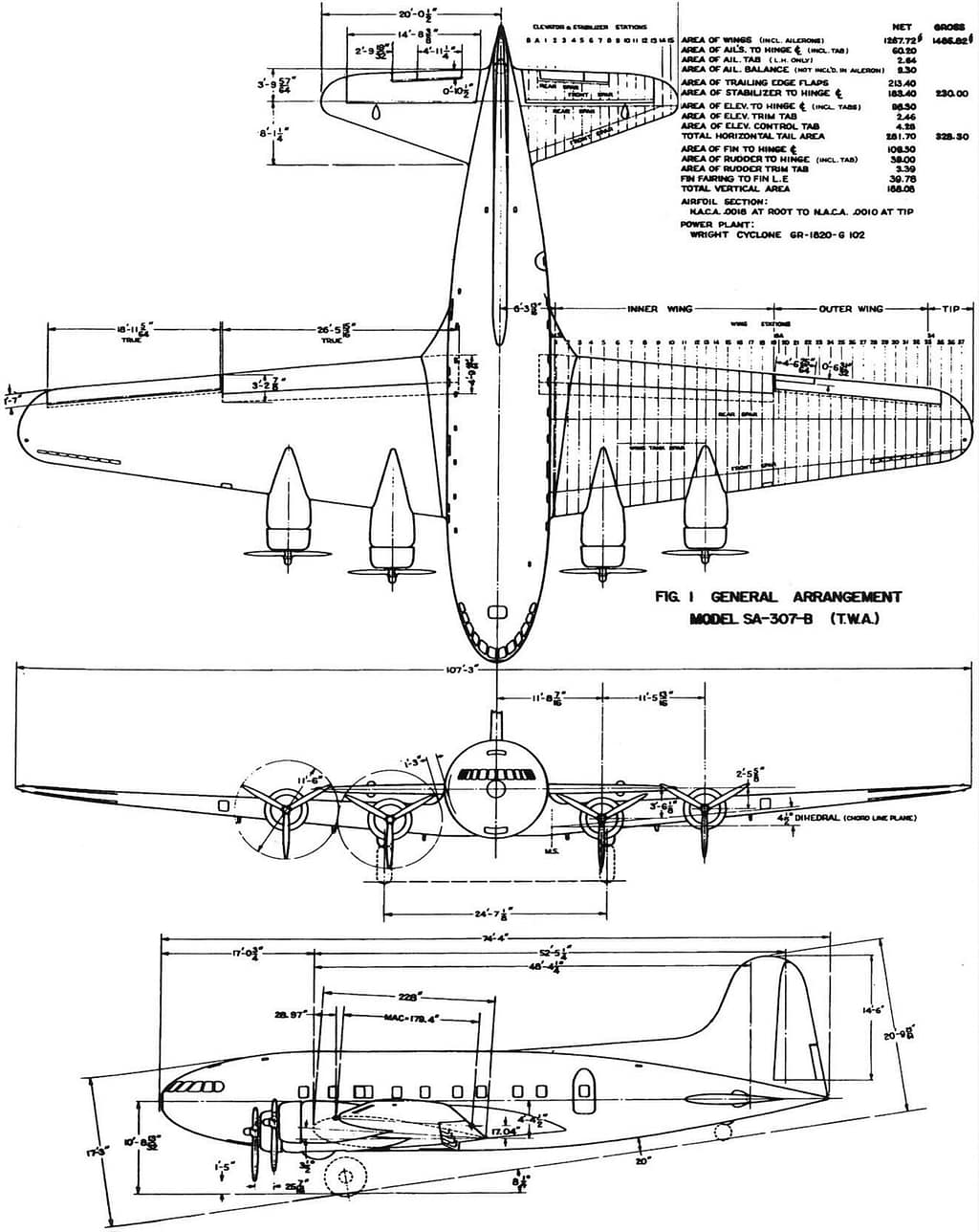
Contemporaries were impressed, and historians still are.
A brilliant idea, a brutal lesson
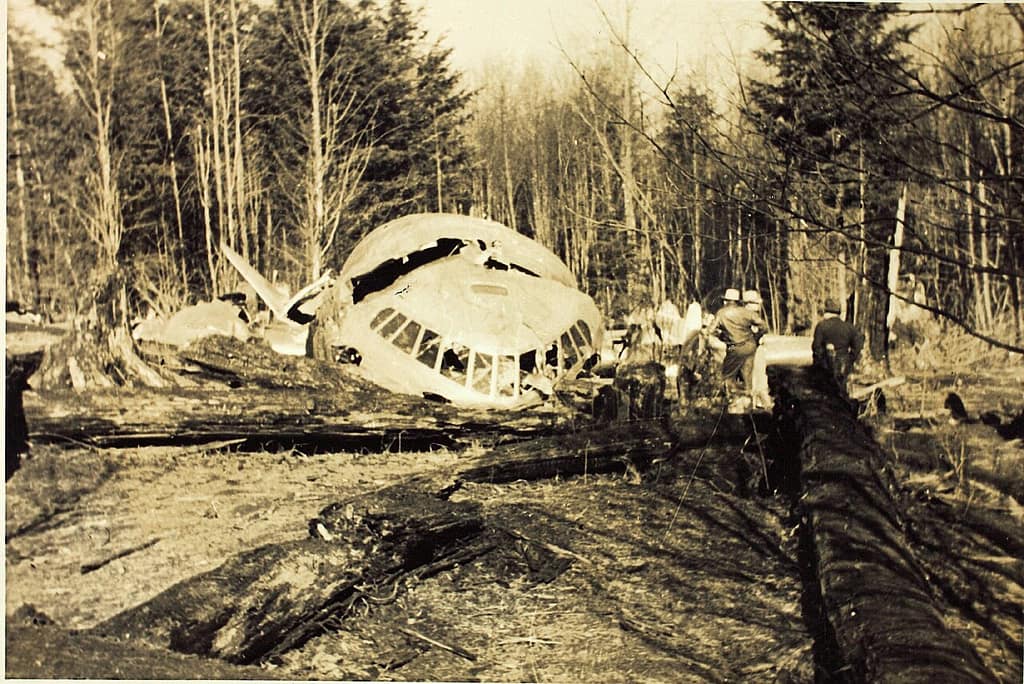
Progress came at a price. On 18 March 1939, the prototype was thrown into a demonstration of its behaviour with two engines shut down on one side. It lost control, broke up and crashed, killing everyone aboard, including senior Boeing and airline engineers. The disaster forced a redesign with a much larger vertical tail — a fin so successful that Boeing then grafted it onto the later B-17E and its descendants, and big Boeing tails have been a family trait ever since.
Once fixed, the aircraft delivered. Pan American’s Clipper Flying Cloud flew the first pressurized airline service, from Miami into Latin America, on 4 July 1940. TWA ran them coast to coast at up to 220 mph. For a few years, this was the most civilized way to travel on Earth.
Hughes, war, and a very strange afterlife
One Stratoliner went to Howard Hughes, who wanted extra tanks and engines for a round-the-world flight that the outbreak of war cancelled. He later turned it into a flying apartment; decades on, after a hurricane wrecked it, its fuselage was bought for scrap, bolted to a boat hull and turned into a yacht that still floats today. The other Stratoliners served through the war as transports and soldiered on into the 1950s, with a couple reportedly still flying in Southeast Asia in the 1970s and 80s.
Only a handful were ever built, and only one flies-worthy survivor remains — the restored Clipper Flying Cloud, now in the Smithsonian. But the Stratoliner’s real monument is invisible: the pressurized tube around you on every modern flight.
A closer look at the Stratoliner’s brief, luxurious heyday:
Sources: HistoryLink.org (Anthony E. Pomata); Smithsonian National Air and Space Museum; Boeing.

0 Kommentare