
Seitdem Menschen zum ersten Mal den Boden verließen, stellt sich eine bestimmte Art von Pilot eine gefährliche Frage: Was passiert, wenn ich das versuche? Die Antworten füllen das wildeste Kapitel der Luftfahrtgeschichte – ein Jahrhundert voller Loopings, Rollen, Sturzflüge und unmöglicher Manöver durch enge Lücken, geflogen von Männern und Frauen, die ihr Leben für ein paar unvergessliche Sekunden riskierten. Manche taten es für Geld, manche aus Stolz, manche aus purer, waghalsiger Freude. Viele überlebten es nicht.
Hier kommt das Highlight: unsere Übersicht der verrücktesten und waghalsigsten Flugmanöver aller Zeiten. Schnapp dir einen Kaffee – es wird eine lange Reise durch über hundert Jahre Nervenkitzel.
Kurzinfo
| Erster Luftring | Pjotr Nesterow, 1913 |
| Der Schleifenkönig | Lincoln Beachey – starb 1915 mitten in einem Stunt |
| Unter dem Arc de Triomphe | Charles Godefroy, 1919 |
| Barnstorming | Flugzeug-Flügelgänger und Flugzeug-zu-Flugzeug-Transfers, 1920er Jahre |
| Ein Passagierflugzeug in eine Fassrolle bringen | Tex Johnston, Boeing 707, 1955 |
| Jet unter einer Brücke | Valentin Privalov, MiG-17, 1965 |
| Tee bei 1G | Bob Hoovers Eistee-Fassrolle |
| Formation bis auf den Zoll genau | Red Arrows & Blue Angels |
| Düsengetriebene Flügel | Yves Rossy, “Jetman” |
| Vom Rande des Weltraums | Felix Baumgartner, 2012 |
Die ersten Draufgänger: Loopings und Sprünge
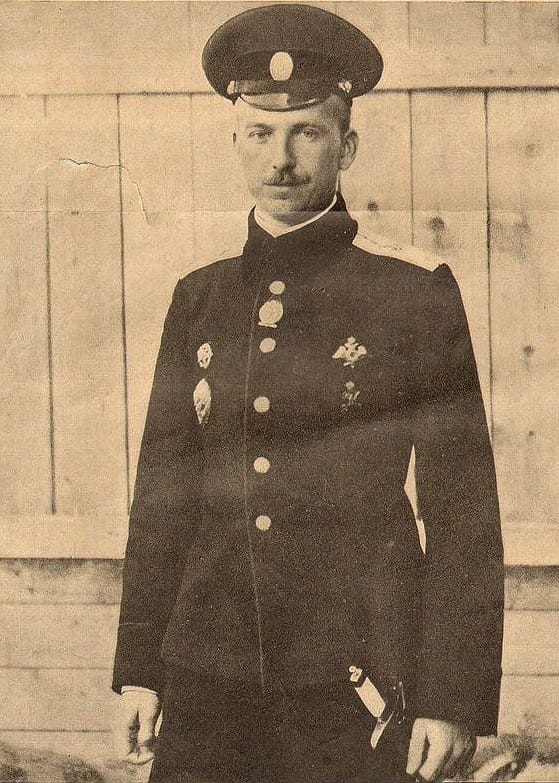
Kunstflug entstand fast zeitgleich mit der Entwicklung von Flugzeugen, die solche Manöver überstehen konnten. Im September 1913 führte der russische Militärpilot Pjotr Nesterow über Kiew mit seiner klapprigen Nieuport den ersten dokumentierten Kunstflug durch. Schleife — ein Manöver, das so schockierend war, dass die Armee ihn zunächst für die Gefährdung von Staatseigentum bestrafte und ihn dann als Helden feierte.
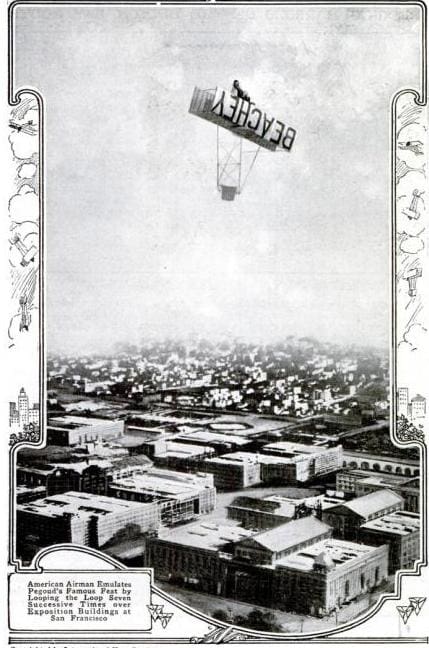
In Amerika war Lincoln Beachey – “der Mann, dem der Himmel gehört” – der Meister des Loopings. Beachey flog Loopings, stürzte senkrecht auf die Zuschauer zu und flog sogar in Ausstellungshallen, wo er Hunderttausende von Zuschauern anzog. Sein Glück verließ ihn im März 1915 auf der Panama-Pacific-Ausstellung in San Francisco: Beim Abfangen eines Sturzflugs klappten die Tragflächen seines Eindeckers ein, und er stürzte vor den Augen entsetzter Menschen in die Bucht. Der größte Draufgänger seiner Zeit wurde durch eben jenen Stunt getötet, der ihn berühmt gemacht hatte.
Die Denkmäler von Paris miteinander verbinden
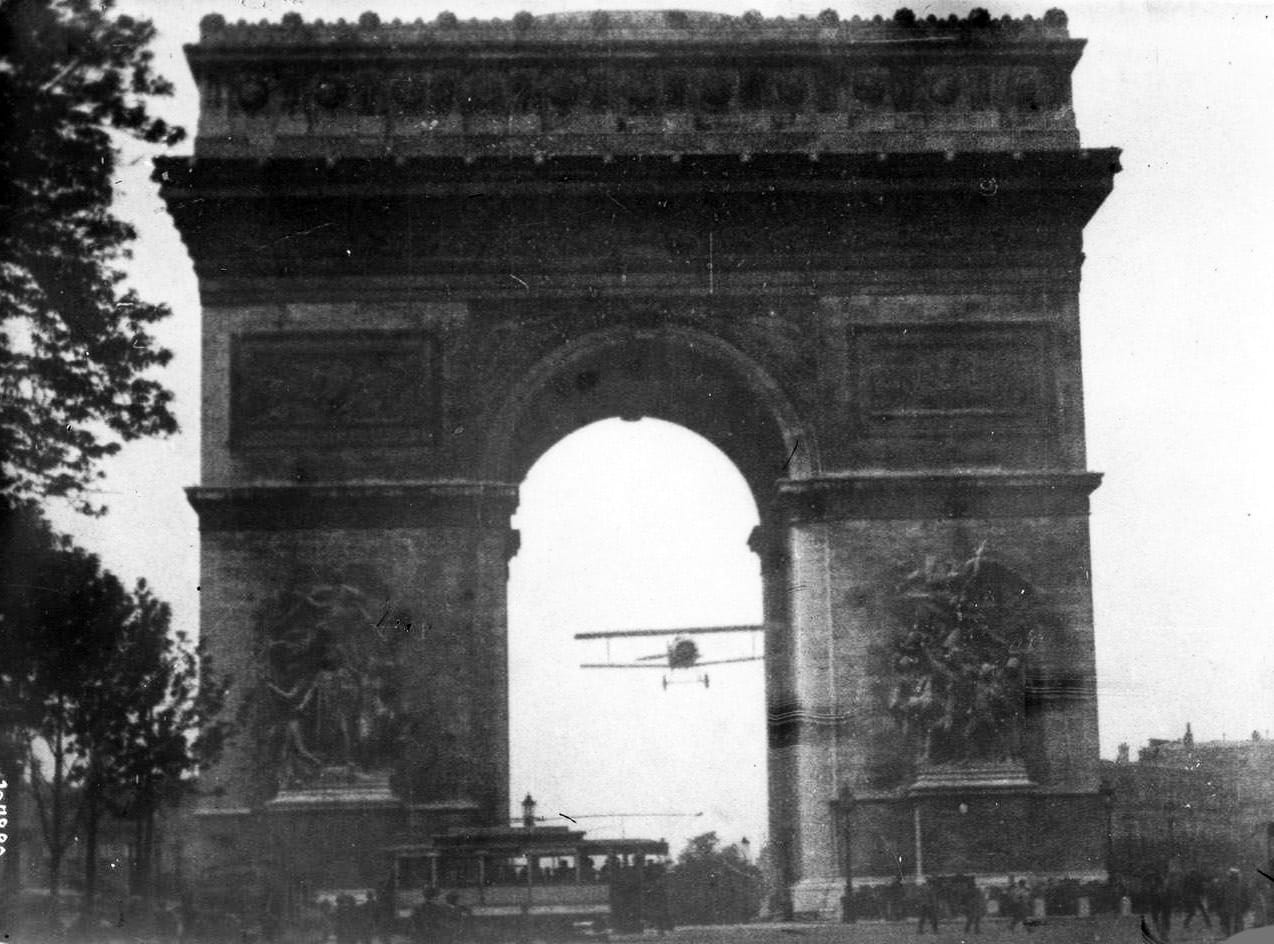
Keine Stadt reizte Draufgänger so sehr wie Paris. Piloten flogen unterhalb des Eiffelturms, und glitt zwischen seinen eisernen Beinen hindurch. Doch der kühnste Pariser Stunt ereignete sich im August 1919, als Charles Godefroy mit einem Nieuport-Jagdflugzeug direkt unter dem Arc de Triomphe hindurchflog – wütend darüber, dass die Flieger aufgefordert worden waren, Marsch Er nahm an der Siegesparade teil, anstatt zu fliegen. Der Abstand war erschreckend gering. Er schaffte es, und eine Kamera hielt alles fest. Lesen Sie hier die ganze Geschichte.
Barnstorming: auf den Flügeln stehen
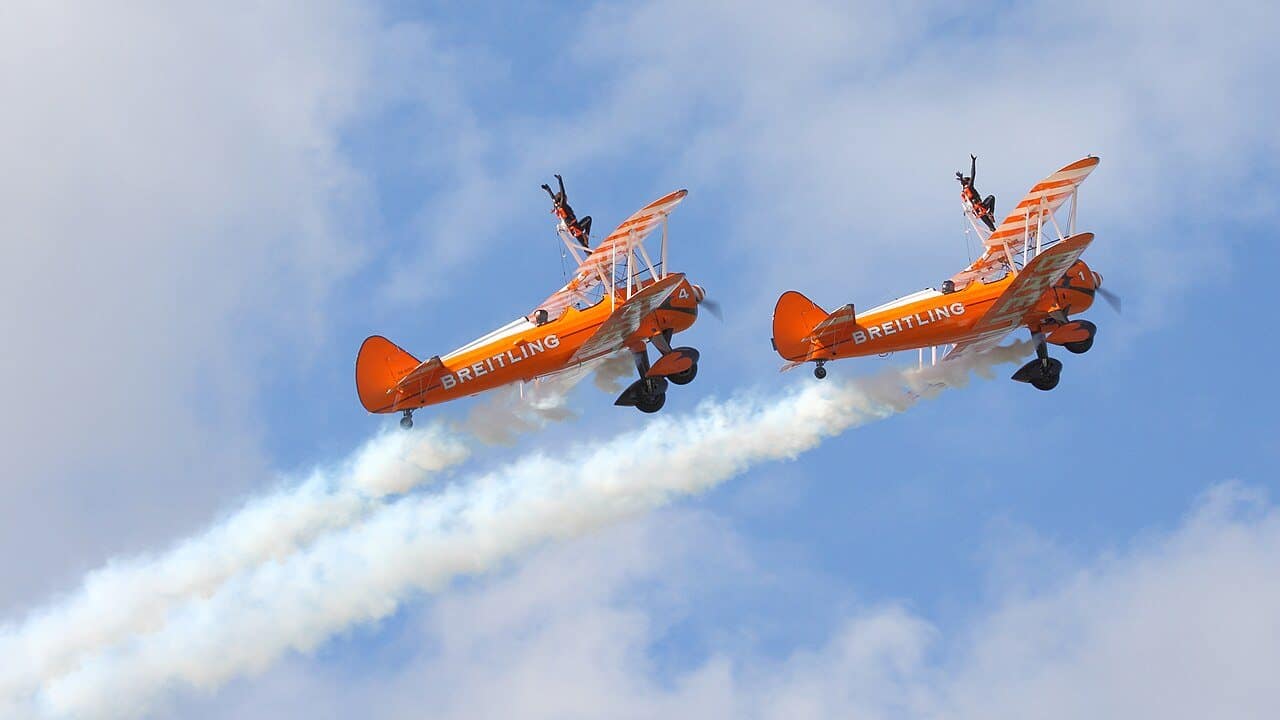
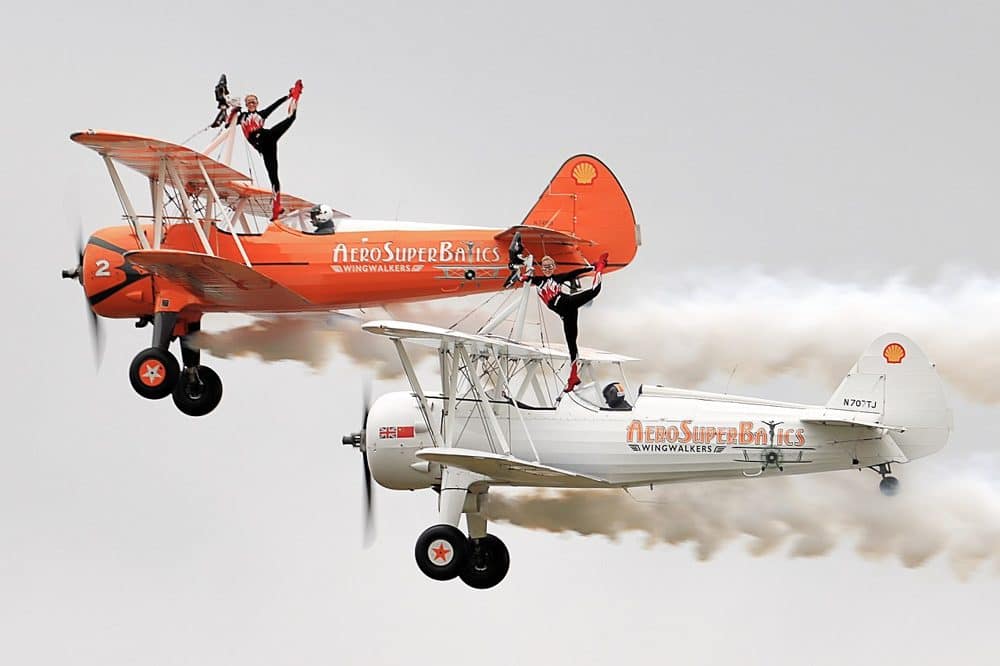
Die 1920er Jahre gehörten den Barnstormern – Zigeunerpiloten, die durch Amerika tourten und waghalsige Kunststücke vor dem Publikum auf den Bauernhöfen vorführten. Die kühnsten unter ihnen waren die Flügelgänger, die auf die Tragflächen kletterten. im Flug, Sie hingen am Fahrwerk und wurden sogar in der Luft von einem Flugzeug in ein anderes umgebucht. Der Pionier war Ormer Locklear, dessen Flugzeugwechsel ihn zum Hollywoodstar machten – bis er 1920 bei den Dreharbeiten zu einem Nachtstunt ums Leben kam. Es war spektakulär und tödlich: Viele Kunstflugstaffeln erreichten nicht einmal dreißig Jahre.
Ein Passagierflugzeug über eine Menschenmenge rollen lassen
Manche Stunts waren reine Marketingstrategie. Am 7. August 1955 führte Boeing-Testpilot Tex Johnston mit der Dash 80 – dem Prototyp der Boeing 707, dem Flugzeug, das den modernen Flugverkehr einläuten sollte – auf der Seafair in Seattle gleich zwei Fassrollen über eine Menge von Airline-Managern durch. Als Boeings wütender Präsident wissen wollte, was er sich dabei gedacht hatte, wurde Johnstons Antwort legendär: “Flugzeuge verkaufen.” Er behielt seinen Job, und das Filmmaterial ist erhalten geblieben.
Die vollständige Geschichte dieses Fluges finden Sie hier.
Ein Kampfjet unter einer Brücke
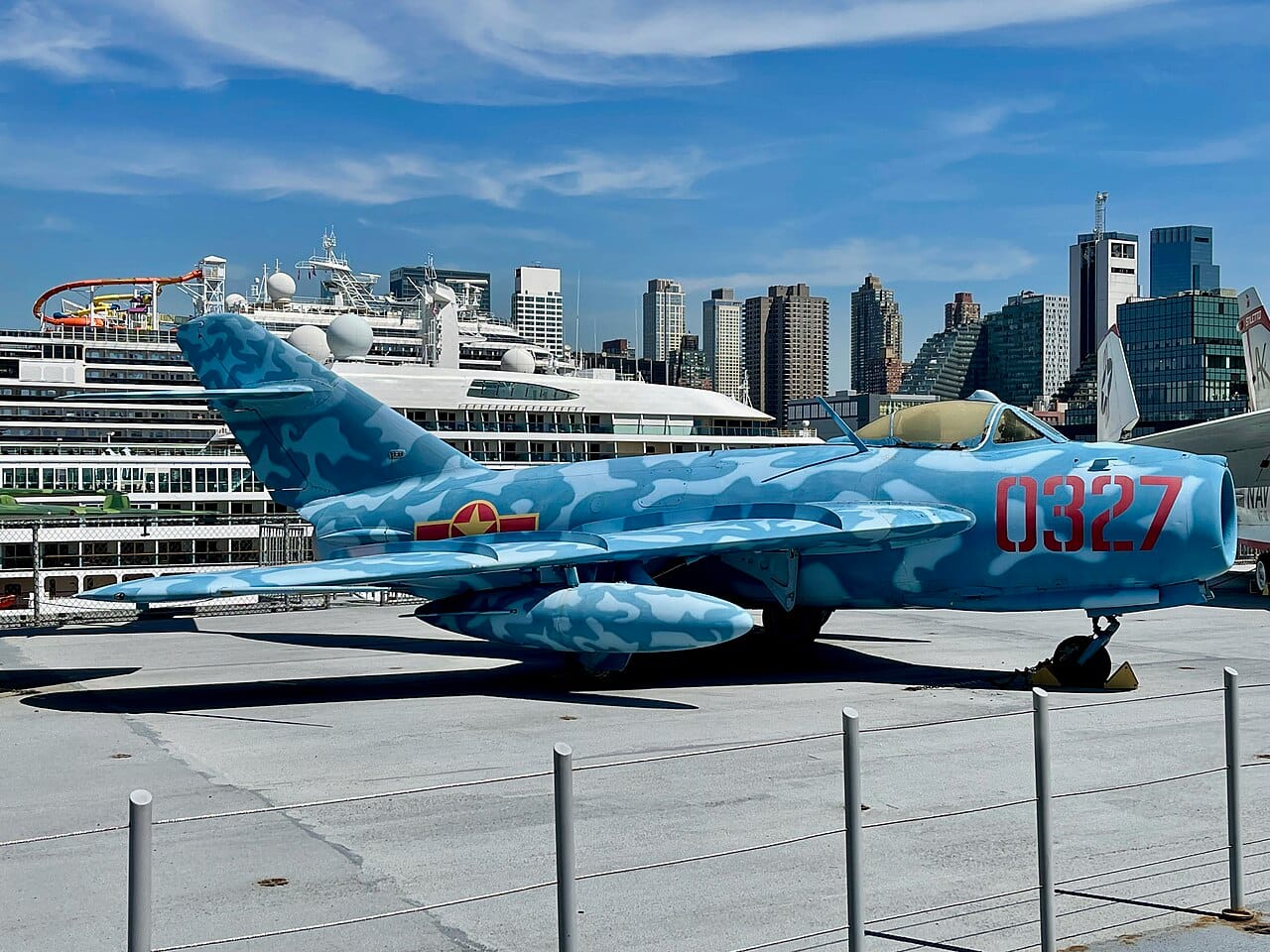
Der Kalte Krieg schuf seine eigene Legende. 1965 flog der sowjetische Pilot Valentin Priwalow eine MiG-17. darunter Eine Eisenbahnbrücke über den Ob bei Nowosibirsk – mit rund 700 km/h, nur wenige Meter über dem Wasser. Er hätte vor ein Kriegsgericht gestellt werden müssen; stattdessen ließ ihn ein höherer Offizier, beeindruckt von seinem Können, ungeschoren davonkommen. Wir erzählen diese Geschichte hier in voller Länge.
Der Tower-Bridge-Vorfall ist so berüchtigt, dass er auch ein halbes Jahrhundert später noch immer erklärt wird – dieser Kurzfilm erzählt die Geschichte in weniger als einer Minute:
Der Meister der Kontrolle: Bob Hoover
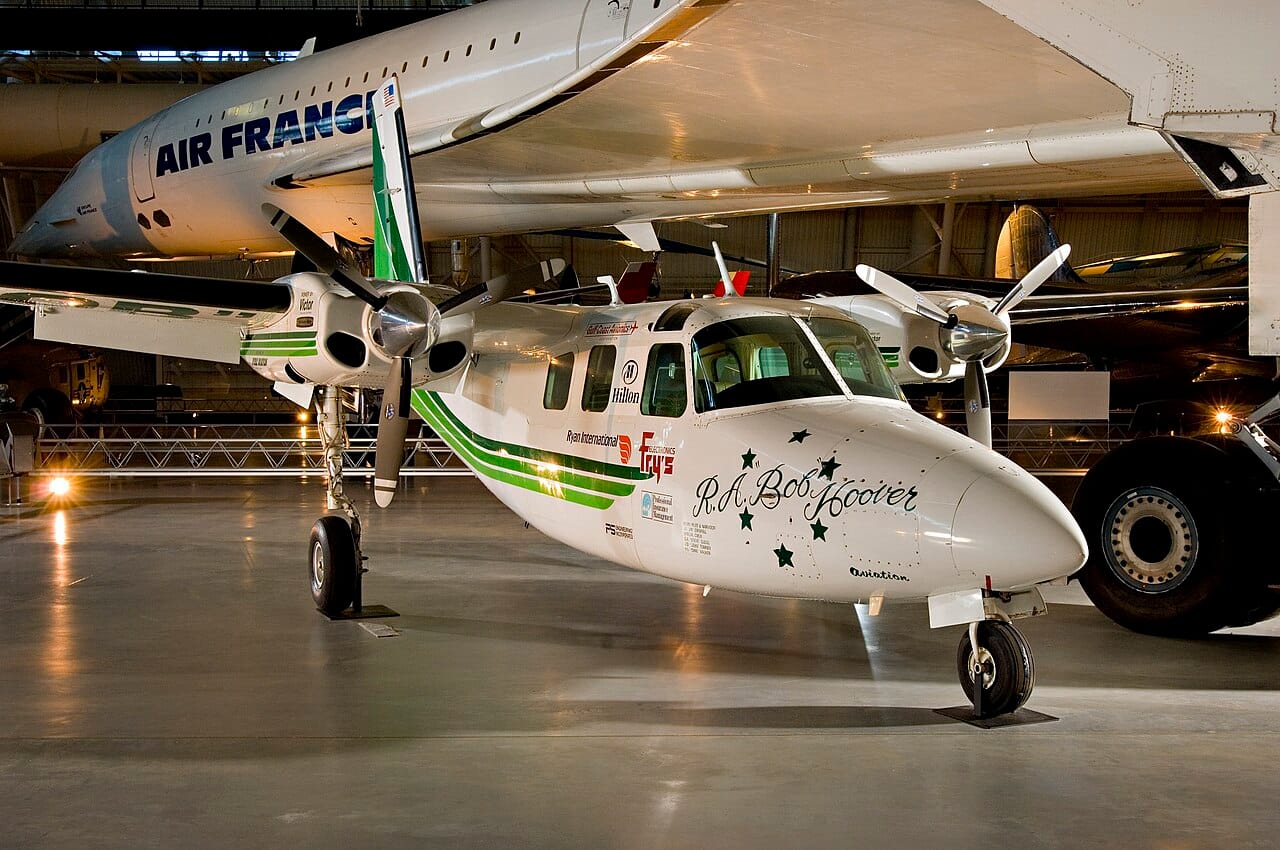
Nicht jede Legende flog waghalsig. Bob Hoover ließ das Unmögliche gelassen aussehen. Sein Markenzeichen war es, Eistee in ein Glas zu füllen, während er mit seinem Flugzeug eine Fassrolle flog – und dabei einen perfekten 1-G-Bogen hielt, sodass kein Tropfen verschüttet wurde. Er flog auch ein komplettes Kunstflugprogramm mit Beide Motoren schalteten sich ab., Dann setzte er die Maschine mit Volllast wieder auf die Landebahn und rollte zu seinem exakten Ausgangspunkt zurück. Wo andere auf Nervenstärke setzten, verließ sich Hoover auf absolute Meisterschaft. Mehr zu Hoover finden Sie hier.
Man muss niemandem glauben – der Film hat überlebt. Beobachten Sie das Glas, das auf dem Blendschutz liegt, während der Horizont sich ringsum bewegt und der Tee weiterfließt:
Und der Trick ist mit Hoover nicht in Vergessenheit geraten. MiGFlug-Kunden haben ihn auf dem Rücksitz eines Flugzeugs nachgestellt. L-39 Albatros – eine sanfte Fassrolle, ein Drink, kein Tropfen verschüttet. Die Physik schert sich nicht darum, ob es sich um einen Shrike Commander oder einen tschechischen Trainer handelt; eine perfekt geflogene 1G-Rolle ist eine perfekt geflogene 1G-Rolle. Wenn Sie es selbst einmal versuchen möchten, ist das buchstäblich etwas, das man buchen kann.
Formationsflug bis auf den Zentimeter genau
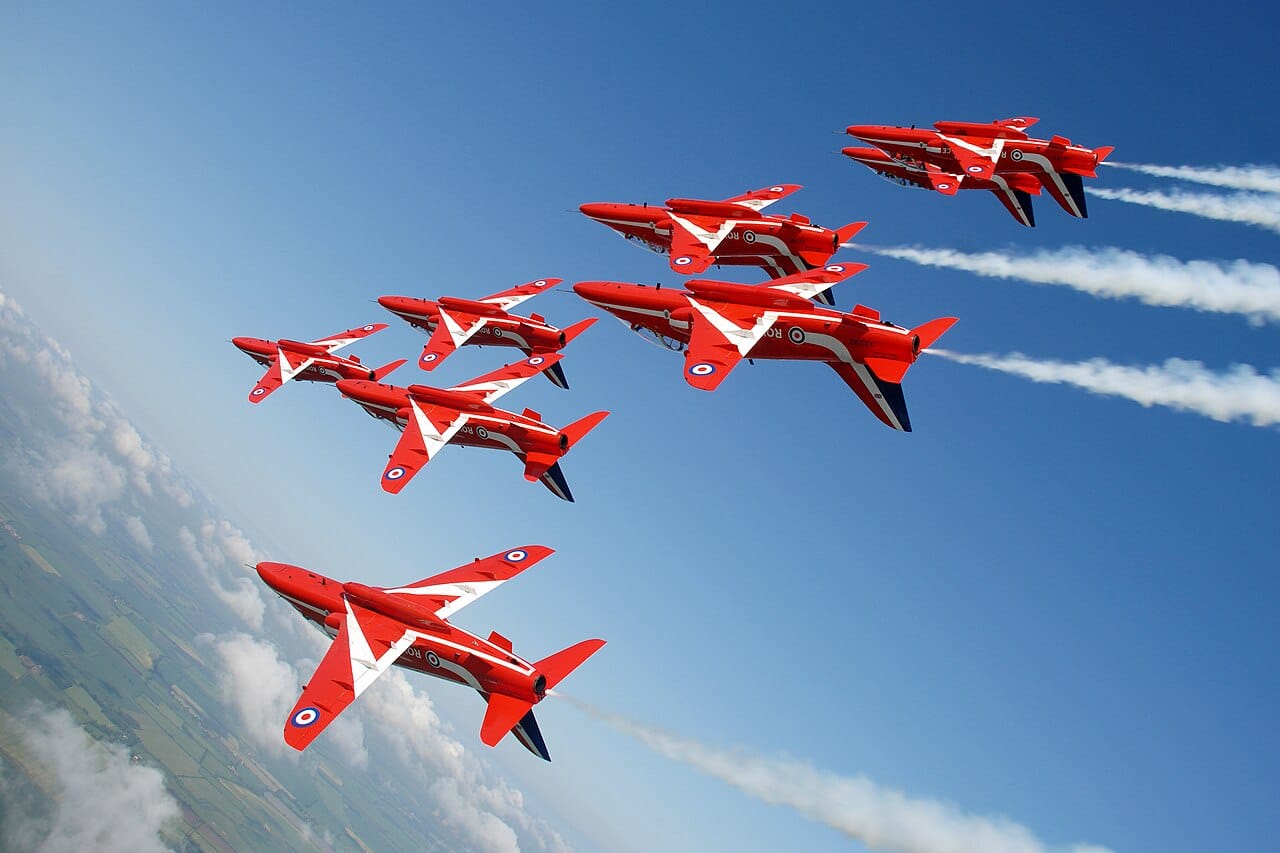
Dann gibt es da noch den Kunstflug, der bei jeder Flugschau öffentlich gezeigt wird: Teams wie die britischen Red Arrows und die amerikanischen Blue Angels fliegen in Formation, nur wenige Meter – manchmal sogar nur Zentimeter – voneinander entfernt, rollen, schleifen und kreuzen sich in rasantem Tempo, sodass kein Moment der Unaufmerksamkeit erlaubt ist. Es sieht aus wie eine Show. Tatsächlich ist es eine der anspruchsvollsten Formen des Präzisionsflugs, die je entwickelt wurden.
Die moderne Rasse: Flügel und der Rand des Weltraums
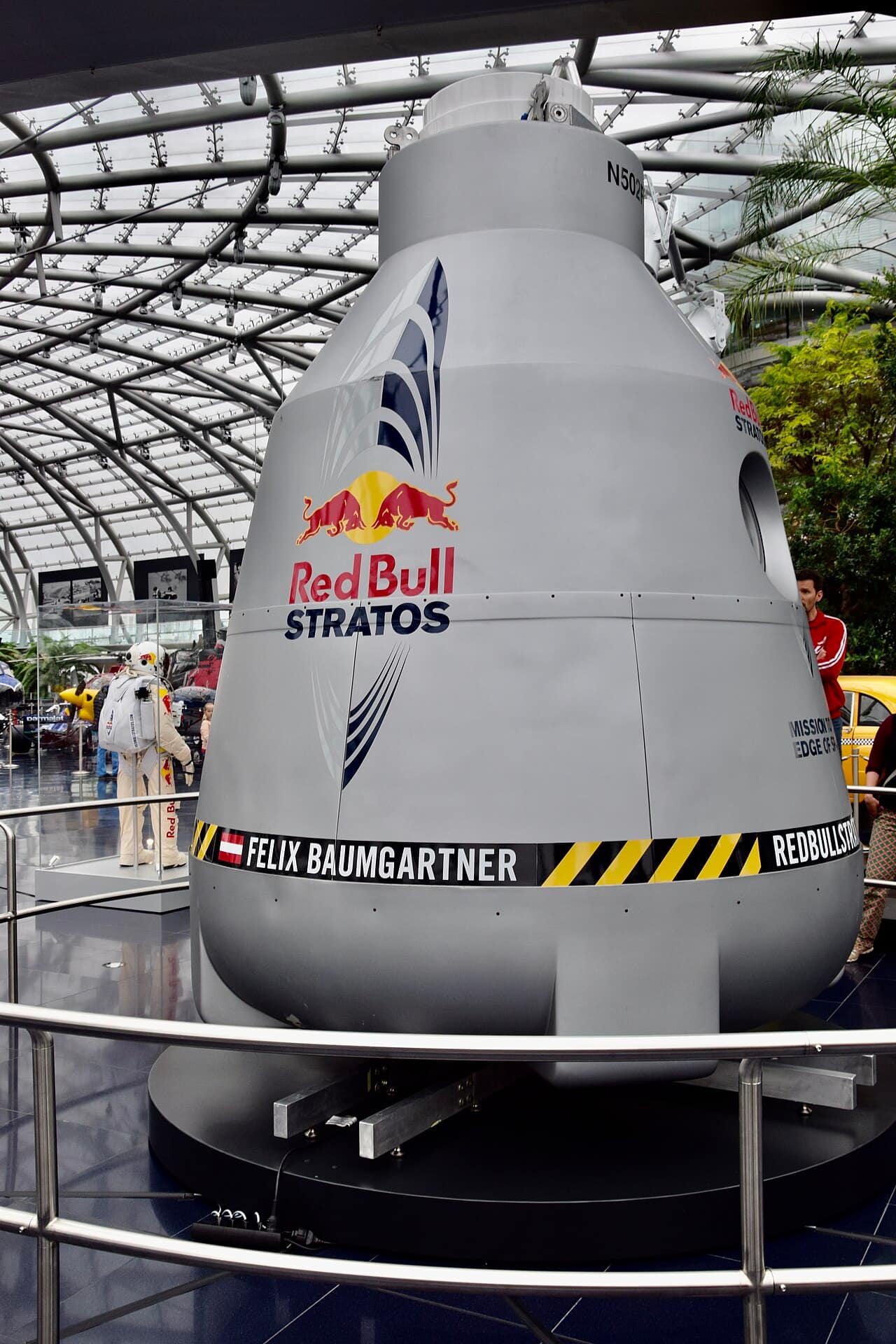
Der Draufgänger ist nicht gestorben – er hat sich nur neue Spielzeuge zugelegt. Der Schweizer Pilot Yves Rossy, genannt “Jetman”, schnallte sich einen starren Carbonflügel mit vier kleinen Düsentriebwerken auf den Rücken und flog ihn wie ein menschliches Flugzeug. 2008 überquerte er damit den Ärmelkanal und kreiste später in Formation mit Passagierflugzeugen über Dubai. Und 2012 fuhr Felix Baumgartner mit einem Ballon an den Rand des Weltraums und sprang aus rund 39 Kilometern Höhe heraus – und durchbrach dabei im freien Fall die Schallmauer.
Jeder dieser Piloten setzte alles auf eine Karte – für wenige perfekte Sekunden. Diejenigen, die Erfolg hatten, wurden unsterblich; diejenigen, die scheiterten, wurden zu abschreckenden Beispielen. Das ist der ewige Pakt des Draufgängers – und der Grund, warum wir auch mehr als ein Jahrhundert später noch immer nicht wegschauen können.
Quellen: zeitgenössische Presse- und Wochenschauarchive; This Day in Aviation; Smithsonian; Sammlungen zur Luftfahrtgeschichte.
Verwandte Fragen
Was sind die verrücktesten Stunts in der Geschichte der Luftfahrt?
Sie umfassen mehr als ein Jahrhundert: Pjotr Nesterow, der 1913 den ersten Looping flog, Lincoln Beacheys todesmutige Sturzflüge, Charles Godefroy, der 1919 unter dem Arc de Triomphe hindurchflog, Kunstflugstaffeln auf den Tragflächen in den 1920er Jahren, Tex Johnston, der 1955 mit einer Boeing 707 eine Fassrolle flog, Valentin Priwalow, der 1965 mit einer MiG-17 unter einer Brücke hindurchflog, Bob Hoovers präzise Kunstflugvorführungen und Felix Baumgartners Sprung vom Rande des Weltraums im Jahr 2012.
Wer flog den ersten Looping?
Der russische Pilot Pjotr Nesterow flog im September 1913 über Kiew den ersten dokumentierten Looping. Er wurde kurzzeitig bestraft, weil er ein Militärflugzeug gefährdet hatte, bevor er gefeiert wurde. Der Amerikaner Lincoln Beachey führte bald darauf ebenfalls Loopings vor und wurde zu einem der ersten großen Stuntflugstars.
Hat ein Testpilot tatsächlich eine Looping-Rolle mit einem Passagierflugzeug geflogen?
Ja. Am 7. August 1955 führte Boeing-Testpilot Tex Johnston mit der Dash 80 – dem Prototyp der Boeing 707 – zwei Fassrollen über den Köpfen der Zuschauer auf dem Seafair-Festival in Seattle durch. Als sein Chef eine Erklärung verlangte, antwortete Johnston bekanntlich: “Ich verkaufe Flugzeuge.”
Wofür war Bob Hoover berühmt?
Bob Hoover wurde dafür verehrt, dass er unmögliche Präzision mühelos aussehen ließ. Er goss sich Eistee in ein Glas, während er mit seinem Flugzeug eine Fassrolle flog (und dabei konstant 1 g einhielt, damit nichts verschüttet wurde) und absolvierte anschließend ein komplettes Kunstflugprogramm mit abgeschalteten Triebwerken, um punktgenau zu landen.
Wer flog mit düsengetriebenen Flügeln?
Der Schweizer Pilot Yves Rossy, bekannt als “Jetman”, baute einen starren Kohlefaserflügel, der mit kleinen Strahltriebwerken ausgestattet war, und flog ihn auf dem Rücken befestigt – er überquerte 2008 den Ärmelkanal und flog später in Formation mit Passagierflugzeugen und Kampfjets über Dubai.
Sind solche Flugmanöver heute noch erlaubt?
Fast keines dieser Manöver wäre heute noch erlaubt. Flüge unter Denkmälern oder Brücken verstoßen gegen die strengen Luftraumregeln, und moderne Kunstflugvorführungen sind aus Sicherheitsgründen streng reglementiert. Die waghalsigsten historischen Stunts stammen aus früheren, gesetzloseren Epochen der Luftfahrt – und genau deshalb wurden sie zu Legenden.
Lesen Sie die vollständigen Geschichten
0 Kommentare