
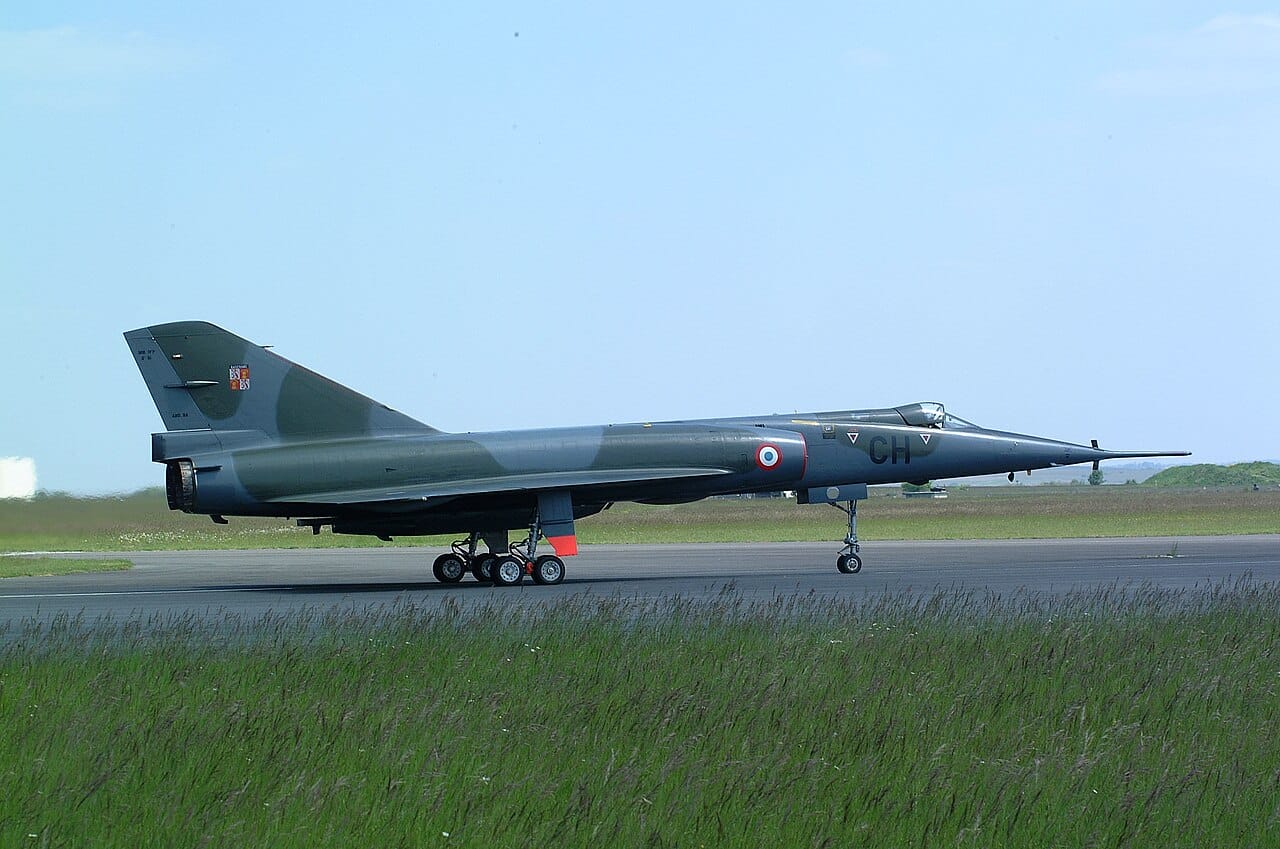
In 1964, France joined the nuclear club on its own terms. Refusing to depend on American or British weapons, it built a sleek supersonic delta to carry its own bomb — a two-seat, twin-engined thoroughbred that could dash toward Moscow at twice the speed of sound. This was the Dassault Mirage IV, the airborne fist of France’s Force de Frappe.
Kurzinfo
- Typ: Dassault Mirage IV — supersonic strategic nuclear bomber
- Prototype first flight: 17 June 1959
- Service entry: October 1964
- Motoren: two SNECMA Atar afterburning turbojets; delta wing
- Höchstgeschwindigkeit: Mach 2.2 (redlined by airframe heating)
- Im Ruhestand: nuclear role 1996; fully retired (reconnaissance) 2005
A fighter’s wing, a bomber’s job
Dassault did not start from a blank sheet. It took the tailless-delta shape it had perfected on the small Mirage III fighter and scaled it up into a machine big enough to carry an atomic bomb at Mach 2. The prototype first flew on 17 June 1959 in the hands of test pilot Roland Glavany, and just days later made a supersonic flypast over the Paris Air Show.
Two SNECMA Atar turbojets in reheat gave it genuine supersonic reach, redlined at Mach 2.2 only by the heat the airframe could tolerate. Two crew flew it: a pilot up front and a navigator to run the bombing and navigation systems behind him.
France’s whole deterrent, on one wing
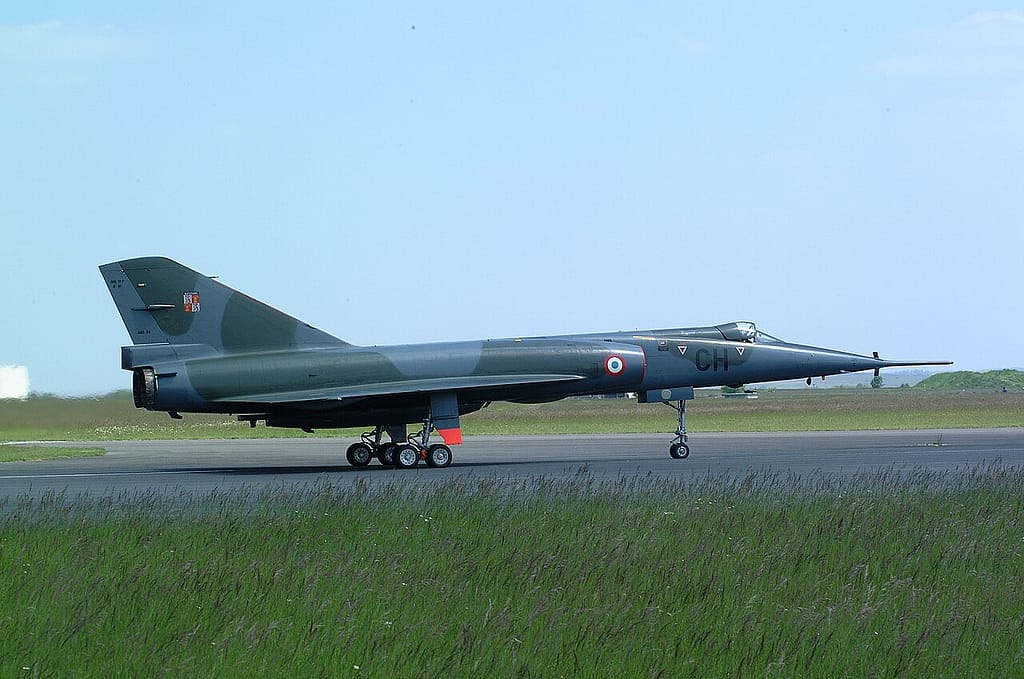
For seven years the Mirage IV was not merely part of France’s nuclear force — it was the whole of it. From 1964 to 1971 it was the country’s only means of delivering a nuclear weapon, each aircraft carrying a single free-fall bomb of around 60 kilotons. To reach targets deep in the Soviet Union it depended on KC-135F tankers and flew demanding high-low profiles — missions that, in the worst case, would have been one-way.
Around 60 were built, dispersed across hardened bases and held on alert — a small, elite fleet on which an entire nation’s deterrent rested.
From bomb to missile to camera
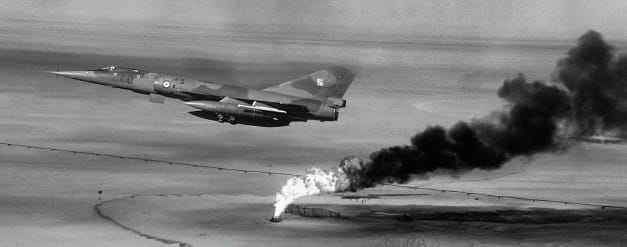
The Mirage IV kept evolving. In the 1980s, rebuilt Mirage IVP aircraft traded the free-fall bomb for the ASMP, a supersonic stand-off nuclear missile that entered service in 1986 and let them strike from a safer distance. When France finally retired the type from nuclear duty in 1996, the survivors refused to bow out: fitted with the CT52 camera pod, Mirage IVPs flew high-speed reconnaissance over the Balkans, Chad and Iraq well into the 2000s, before the last were retired in 2005.
For four decades the Mirage IV embodied French strategic independence — proof that a mid-sized nation could design, arm and fly its own supersonic bomber without asking anyone’s permission. Elegant, fast and unmistakably French, it remains one of the most striking aircraft the Cold War ever produced.
Sources: Dassault Aviation; Key.Aero; GlobalSecurity; Royal Aeronautical Society; Wikipedia.
Ähnliche Beiträge
0 Kommentare