
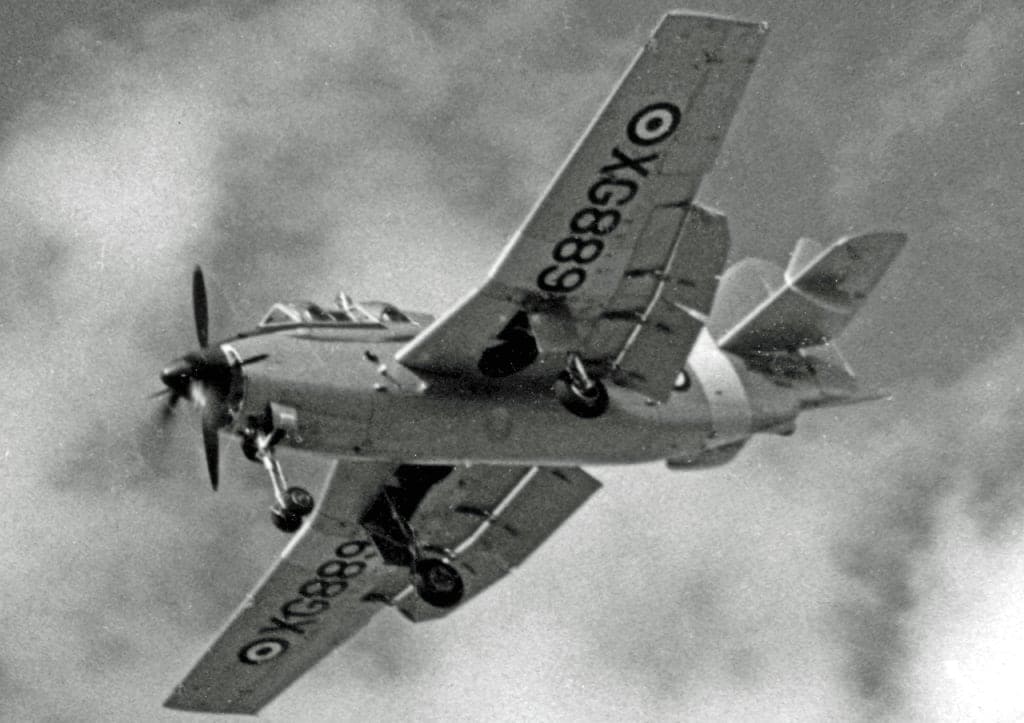
Von vorn betrachtet wirkte die Fairey Gannet wie ein Entwurf, über den ein Gremium lange gestritten und letztendlich verloren hatte. Ein tiefer, buckliger Rumpf, ein mit Radargeräten vollgestopfter Bug und acht rotierende Propellerblätter, die in zwei gegenläufigen Scheiben angeordnet waren. Sie ist eines der ungelenksten Flugzeuge, die die Royal Navy je in Dienst gestellt hat.
Es war auch in seiner Funktion brillant. Hinter der ungelenken Form verbarg sich eines der raffiniertesten Triebwerke der 1950er Jahre und eine echte Luftfahrtpremiere – das erste Turboprop-Flugzeug, das jemals auf einem Flugzeugträger landete.
Kurzinfo
- Flugzeug: Fairey Gannet, trägergestütztes U-Boot-Jagdflugzeug (und später Frühwarnflugzeug)
- Operator: Royal Navy Fleet Air Arm, sowie Australien, Deutschland und andere
- Erste: Erste Turboprop-Landung auf einem Flugzeugträger — HMS Illustrious, 18. Juni 1950
- Motor: Armstrong Siddeley Double Mamba – zwei Turboprop-Triebwerke, eine Propellernabe
- Partytrick: Durch Abschalten der Hälfte des Motors im Reiseflug lässt sich die Reichweite nahezu verdoppeln.
- Gebaut: Rund 300 U-Boot-Jagdflugzeuge und 45 Frühwarnflugzeuge
Zwei Motoren, ein Propeller
Das Herzstück der Gannet war die Double Mamba: zwei nebeneinander montierte Armstrong Siddeley Mamba-Turboprop-Triebwerke, von denen jedes einen von zwei koaxialen Propellern antrieb, die sich in entgegengesetzte Richtungen um dieselbe Achse drehten. Das linke Triebwerk trieb den vorderen Propeller an, das rechte den hinteren.
Diese Konstruktion löste ein Problem, das schon vielen Piloten zweimotoriger Flugzeuge das Leben gekostet hatte. Da die Propeller koaxial und gegenläufig waren, führte das Abschalten eines Triebwerks zu keinem asymmetrischen Schub – das Flugzeug flog einfach mit dem anderen Triebwerk weiter. Und genau das taten die Besatzungen. Auf längeren Patrouillenflügen schalteten sie ein Triebwerk der Mamba ab, reduzierten die Reisegeschwindigkeit von etwa 400 km/h auf rund 270 km/h und verlängerten so ihre Flugdauer von etwa dreieinhalb auf über fünf Stunden. Um den Verschleiß auszugleichen, wechselten sie die Triebwerke etwa alle halbe Stunde.
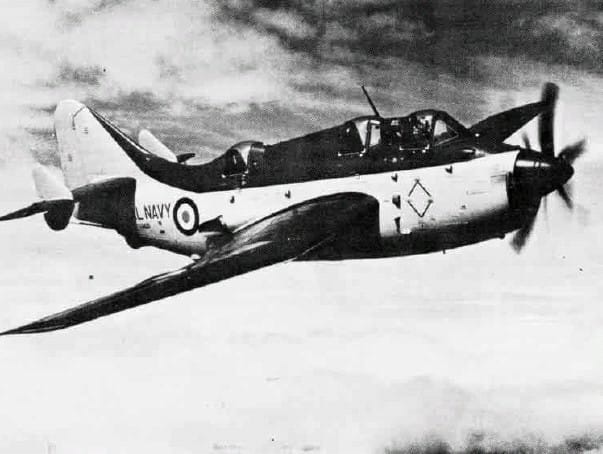
Das Starten des Flugzeugs war ein Spektakel für sich. Der vordere Motor wurde mit einer Zündpatrone gezündet; der hintere wurde dann durch den Luftstrom des vorderen Propellers in Gang gesetzt. Zusammen mit dem theatralischen Entfalten der Doppelgelenkflügel war das Starten der Gannet an Deck ein wahrhaft beeindruckendes Schauspiel.
Für die Terrasse gebaut
Alles an der Gannet war auf den Einsatz auf Flugzeugträgern ausgerichtet. Die Tragflächen ließen sich zweimal zu einem markanten ‘Z’ zusammenklappen, um wertvollen Hangarplatz zu sparen. Ein robustes Bugradfahrwerk ermöglichte dem Piloten im Gegensatz zu den vorherigen Spornradflugzeugen eine gute Sicht über den Bug. Drei Besatzungsmitglieder – ein Pilot, ein Beobachter, der die taktische Jagd leitete, und ein nach hinten gerichteter Funker – fanden an Bord Platz.
Der Entwurf beeindruckte den berühmtesten Testpiloten der Fleet Air Arm so sehr, dass sein Urteil unmissverständlich ausfiel.
Ein zweites Leben, das nach unten blickt
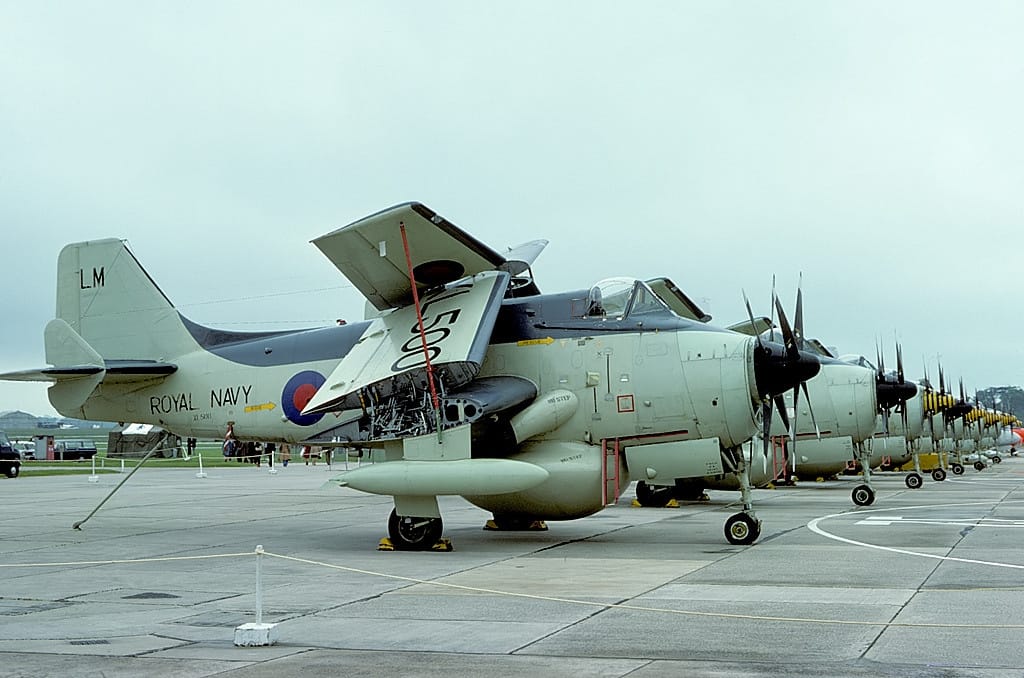
Ende der 1950er-Jahre übernahmen Hubschrauber die U-Boot-Jagd, doch die Gannet war zu nützlich, um ausgemustert zu werden. Sie wurde zur AEW3 umgebaut, einem luftgestützten Frühwarnflugzeug mit großem Radar und stärkerem Triebwerk, das den Himmel nach der Flotte absuchte. In dieser Funktion blieb sie bis 1978 im Einsatz, als die Royal Navy ihren letzten Flugzeugträger mit festen Tragflächen, die HMS Ark Royal, außer Dienst stellte.
Rund 300 U-Boot-Jagdflugzeuge vom Typ Gannet und 45 Frühwarnversionen wurden gebaut und dienten unter anderem Großbritannien und Australien. Unhandlich, clever und still unverzichtbar – die Gannet bewies, dass es in der Marinefliegerei nie um gutes Aussehen ging.
Quellen: AvBuyer / GA Buyer Europe; Thunder & Lightnings; Royal Australian Navy Sea Power Centre; Wikipedia.
0 Kommentare