
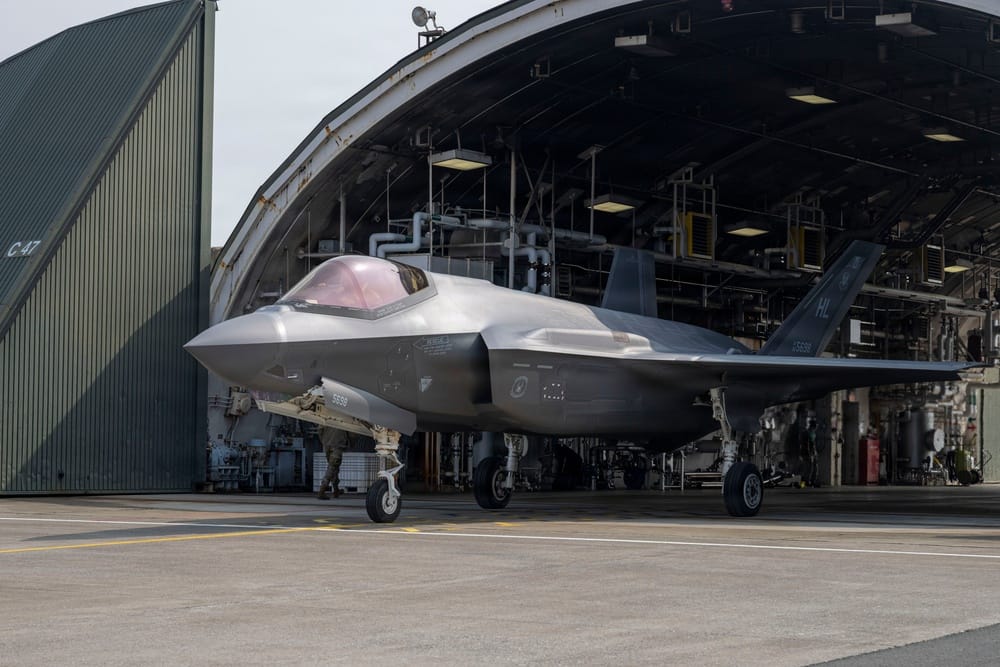
On 16 June a brand-new F-35A lifted off from Fort Worth, flew for about an hour, and came home behind a chase jet. Routine — except for two black letters painted on its tail: WW.
Those letters make aircraft 24-5970 the first F-35 ever to wear the Wild Weasel tail code. It is bound for the 35th Fighter Wing at Misawa Air Base in northern Japan, where it will take up one of the oldest and most dangerous jobs in air warfare: flying straight at the enemy’s radars and missiles, and killing them.
Kurzinfo
| Flugzeug | F-35A Lightning II, serial 24-5970 |
| Erster Flug | 16 June 2026, NAS JRB Fort Worth |
| First of its kind | First F-35 to wear the “WW” Wild Weasel tail code |
| Headed to | 35th Fighter Wing, Misawa Air Base, Japan |
| Mission | Suppression of Enemy Air Defenses (SEAD) |
| Tail motto | “FILO” — First In, Last Out |
| Wing transition | 36 F-16s being replaced by 48 F-35As |
Two letters with a deadly pedigree
“Wild Weasel” dates to the Vietnam War, when specially equipped jets went hunting for North Vietnamese surface-to-air missile sites — deliberately baiting the radars into switching on so they could be destroyed. The unofficial motto of the men who flew those missions, “YGBSM,” is unprintable in a family publication. The 35th Fighter Wing made the heritage official on 18 June 1996, when it swapped its “MJ” tail flash for “WW.”
This particular jet wears more than a code. Across the top of the tail is “FILO” — First In, Last Out, the wing’s motto. And rather than belonging to a single squadron, it carries the badge of the 13th Fighter Squadron on one side of the tail and the 14th on the other: it is the Operations Group commander’s aircraft, flying the colours of both of Misawa’s Wild Weasel units at once.

The 13th Fighter Squadron — the “Panther Pack” — traces its Weasel identity directly to Korat, Thailand, where its predecessor flew SAM-hunting missions in the late 1960s. Nearly sixty years later, the same squadron is taking the mission into the stealth age.
Why the F-35 is a natural Weasel
The argument for the F-35 in this role is simple: it was born to do it. The F-16 flew the modern Weasel mission with sensors and targeting pods bolted on after the fact. The F-35 is, at its core, a flying sensor — stealthy, packed with an electronically scanned radar that can do electronic attack, and built to fuse everything it sees and “quarterback” the fight for everyone around it.
There is one catch. The dedicated anti-radar missile the jet will eventually carry internally — the AARGM-ER, successor to the long-serving HARM — is not in service yet. For now the F-35A’s Weasel punch leans on its radar’s electronic-attack tricks and stand-off bombs. The sensors are ready; the perfect weapon is still on its way.
A Wild Weasel base in Japan
Misawa is converting from 36 F-16s to 48 F-35As, and 24-5970 will join the first four Lightning IIs that touched down there on 28 March 2026 — the first U.S. F-35s permanently based in Japan, and the first stealth fighters stationed at any Pacific Air Forces base in the Western Pacific.
The timing is not subtle. As China fields ever-denser air-defence networks, the United States is parking the aircraft built to punch holes in them within easy reach of the region. The Wild Weasels are back — and this time they are invisible.
Sources: The Aviationist; U.S. Air Force / DVIDS (35th Fighter Wing); Air & Space Forces Magazine; Stars and Stripes.
Verwandte Fragen
What does “Wild Weasel” mean?
“Wild Weasel” refers to aircraft and crews tasked with Suppression of Enemy Air Defenses (SEAD) — hunting and destroying enemy radars and surface-to-air missiles. The term dates to the Vietnam War, when jets baited North Vietnamese radars into switching on so they could be killed. The mission has a storied history.
What is the first F-35 Wild Weasel?
Aircraft 24-5970 is the first F-35A to wear the “WW” Wild Weasel tail code. It first flew on 16 June 2026 from Fort Worth and is headed to the 35th Fighter Wing at Misawa Air Base, Japan, which specialises in suppressing enemy air defenses.
What is SEAD?
SEAD stands for Suppression of Enemy Air Defenses — the dangerous mission of neutralising an enemy’s radars and missile systems so other aircraft can operate. It can be flown by radar-hunting jets like the F-35 Wild Weasel or by dedicated electronic-warfare aircraft that jam defences from afar.
Where is the 35th Fighter Wing based?
The 35th Fighter Wing is based at Misawa Air Base in northern Japan. It is swapping its 36 F-16s for 48 F-35As. The wing made its Wild Weasel heritage official on 18 June 1996, when it adopted the “WW” tail code.
What does “FILO” mean on the F-35’s tail?
“FILO” stands for “First In, Last Out,” the 35th Fighter Wing’s motto — a nod to SEAD crews being first into contested airspace and last to leave. This particular jet also carries the badges of both the 13th and 14th Fighter Squadrons.
Where did the Wild Weasel mission come from?
It began in the Vietnam War, when specially equipped jets hunted North Vietnamese surface-to-air missile sites. The crews’ unofficial motto, “YGBSM,” is famously unprintable. The 35th Fighter Wing carries that legacy forward today with the F-35A.
0 Kommentare