
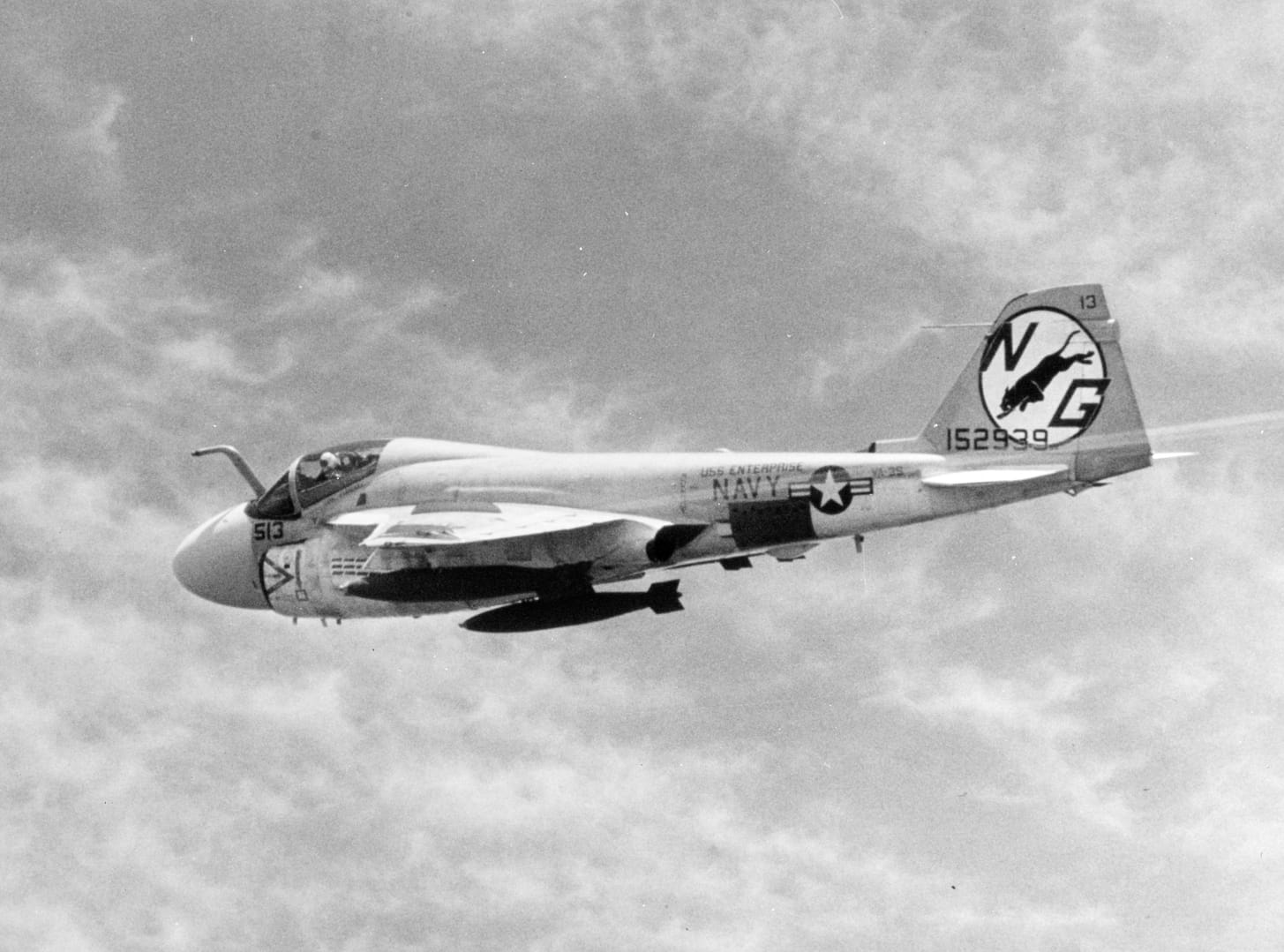
Sie war weder schnell noch elegant. Luftkämpfe waren ihr nicht gewachsen. Und dreißig Jahre lang, wenn das Wetter umschlug und das Ziel unter Wolken und Dunkelheit verborgen lag, die alles andere am Boden hielten, schickte die US Navy die Grumman A-6 Intruder. Unterschallfähig, mit stumpfer Nase und kantigen Seiten, war die Intruder das Flugzeug, das selbst in der dunkelsten Nacht ein Ziel finden und eine Bombe durch dessen Fenster werfen konnte – und dabei unversehrt zurückkehrte.
Die Piloten liebten sie gerade deshalb, weil sie hässlich und ehrlich war. Ein ehemaliges Besatzungsmitglied der Intruder-Flotte brachte das Aussehen der Flotte besser auf den Punkt als jedes Datenblatt.
| Flugzeug | Grumman A-6 Intruder |
| Rolle | Angriff eines Flugzeugträgers bei jedem Wetter |
| Crew | 2 — Pilot + Bombenschütze/Navigator, Seite an Seite |
| Erster Flug | 19. April 1960 |
| Service | US Navy 1963 – 1997 |
| Ersetzt durch | F/A-18 Super Hornet |
Ein LKW, der um einen Computer herum gebaut wurde
Als Grumman 1956 einen Wettbewerb der US-Marine für ein Langstrecken- und Allwetter-Kampfflugzeug gewann, ging das Unternehmen einen ungewöhnlichen Weg: Es konstruierte den Jet um seine Elektronik herum. Das Herzstück der Intruder war DIANE – das digitale integrierte Angriffsnavigationssystem –, ein System, das Gelände und Ziel auf einem Bildschirm darstellte, sodass die Besatzung auch bei Nullsicht angreifen konnte. Pilot und Bombenschütze/Navigator saßen nebeneinander, so nah beieinander, dass sie sich im Dunkeln einen Blick zuwerfen konnten.
Sie wurde 1963 in Dienst gestellt und war der erste wirklich allwettertaugliche Angriffsbomber der Geschichte. Sie war langsam und hatte keine Bordkanone. Das kümmerte sie nicht. Ihre Aufgabe war es, bis zu neun Tonnen Bombenlast über weite Strecken, nachts und bei jedem Wetter, präzise abzuwerfen. Kein anderes Flugzeug der Flotte konnte das.
Vietnam und der lange Krieg
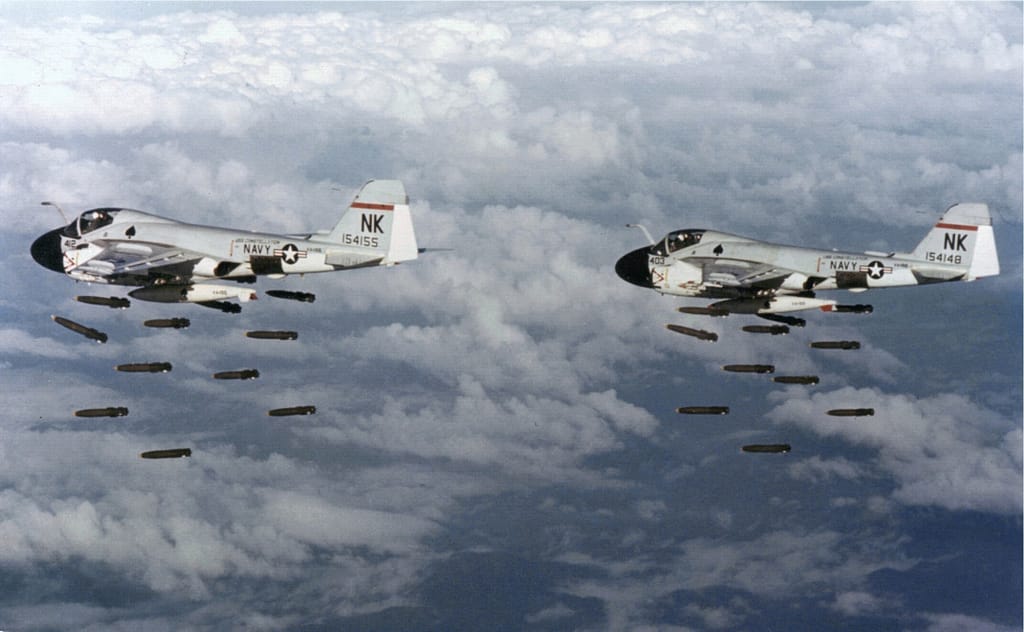
Über Vietnam wurde die Intruder gleichermaßen unverzichtbar und verwundbar. Sie flog Missionen, die kein anderes Flugzeug bewältigen konnte – und zwar tief, mitten hinein in die schwersten Luftverteidigungsanlagen der Welt. In der Nacht des 30. Oktober 1967 durchbrach eine einzelne Intruder mit Charles Hunter und Lyle Bull an Bord das Feuer von zehn Boden-Luft-Raketen, um die Fähranleger von Hanoi aus nächster Nähe zu treffen. Beide Männer wurden mit dem Navy Cross ausgezeichnet. 84 Intruder kehrten aus diesem Krieg nicht zurück.
Die Flugzeugzelle erwies sich als unendlich anpassungsfähig. Die KA-6D verwandelte sie in ein Tankflugzeug, das mit einem Schlauch durstige Maschinen betankte. F-14 Tomcats. Aus dem elektronischen Kampfflugzeug EA-6A entwickelte sich die viersitzige EA-6B Prowler, die vier Jahrzehnte lang als Störsender der Marine diente. Dieser Kampfhubschrauber begründete eine ganze Dynastie.
Die letzte Kreuzfahrt
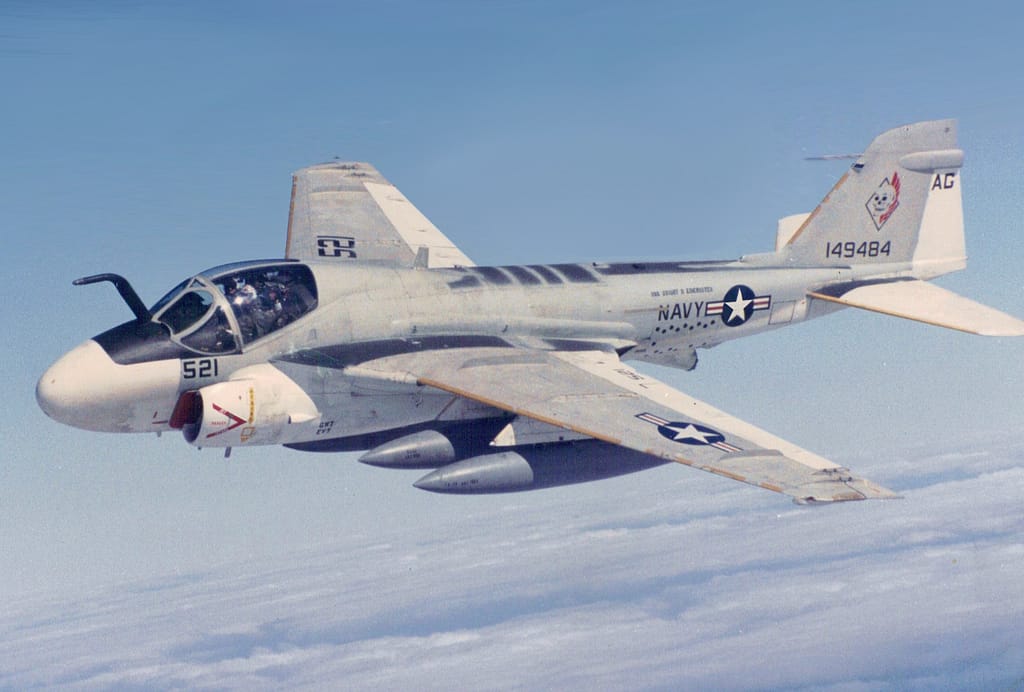
Im Rahmen der Operation Desert Storm flog die Intruder über 4.700 Kampfeinsätze – bei Tag und Nacht auf der Jagd nach Panzern, Schiffen und Brücken. Ihr geplanter Nachfolger, die getarnte A-12 Avenger II, scheiterte jedoch an Kostenüberschreitungen und wurde eingestellt. Anstatt die Intruder zu ersetzen, musterte die Marine sie einfach aus: das Marine Corps 1993, die Marine 1997. Die Rolle ging an die … über. F/A-18 Super Hornet.
Die Intruder erlangte eine zweite, seltsamere Art von Unsterblichkeit. Ein ehemaliger A-6-Pilot namens Stephen Coonts verarbeitete seine beiden Kampfeinsätze zu einem Roman., Flucht des Eindringlings, Das Buch verbrachte achtundzwanzig Wochen auf der Bestsellerliste und wurde verfilmt. Der Kriegsclub war zur Literatur geworden.
Einige der ausgemusterten Flugzeugrümpfe wurden zerlegt und vor der Küste Floridas auf einem künstlichen Riff namens Intruder Reef versenkt. Ein würdiges Ende für den unansehnlichen, aber unverzichtbaren Jet: Er ist weiterhin im Einsatz, still und leise, wo ihn niemand mehr sieht.
Quellen: Naval History and Heritage Command; National Naval Aviation Museum; The War Zone; Stephen Coonts.
0 Kommentare