
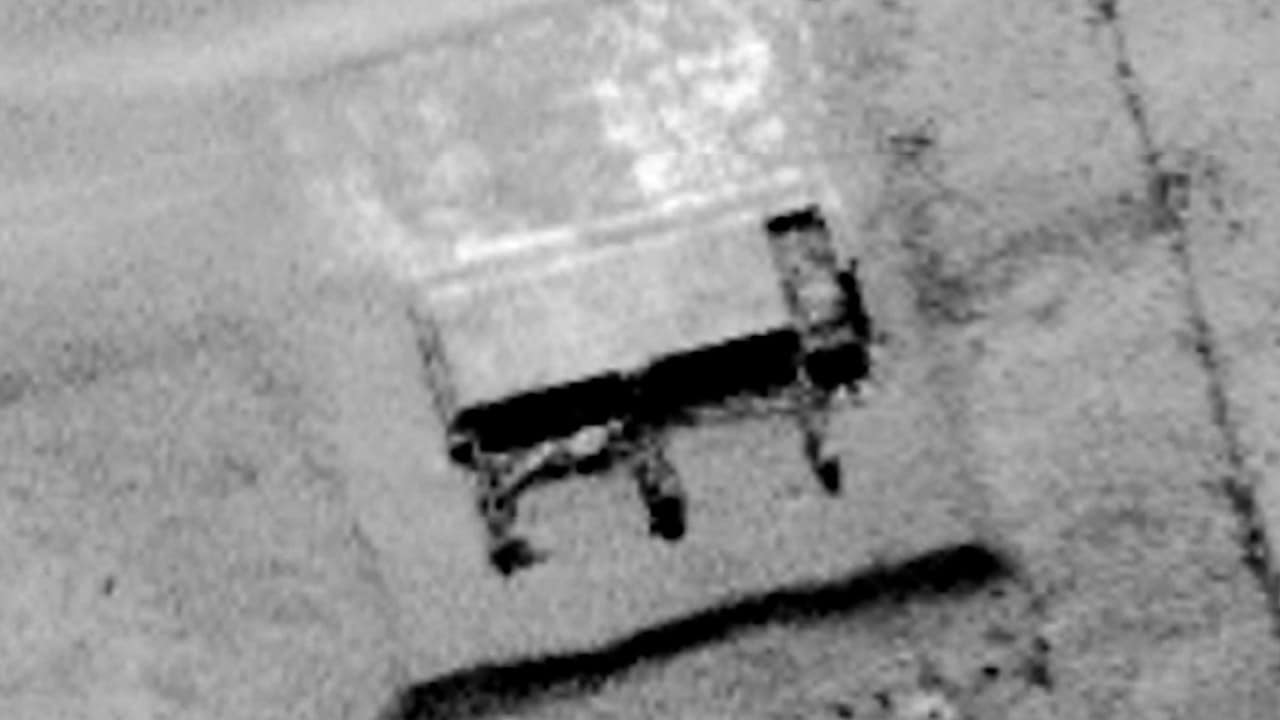
Kommerzielle Satellitenbilder haben zwei ungewöhnliche, gehärtete Strukturen auf Chinas wichtigstem Raketentest- und Übungsgelände enthüllt. Ihre Geometrie stimmt mit keiner bisher dort erfassten Struktur überein. Die Strukturen befinden sich im 1. Test- und Übungsbezirk der Raketenstreitkräfte der Volksbefreiungsarmee nahe Jilantai in der Inneren Mongolei und sind mit rechteckigen, einziehbaren Dächern von etwa 20 mal 6,5 Metern (65,5 mal 21 Fuß) bedeckt.
Die Entdeckung wurde am 6. Juli vom China Aerospace Studies Institute (CASI), einer Forschungseinrichtung der US Air Force Air University, veröffentlicht und am darauffolgenden Tag von The War Zone detailliert untersucht. CASI betont ausdrücklich, dass die Schlussfolgerungen des Berichts die Ansichten des Autors, des Forschers Eli Tirk, widerspiegeln und nicht die offizielle Position der US-Regierung darstellen. Dieser Vorbehalt ist wichtig, da es sich im Folgenden um eine Analyse von Baustellen handelt, nicht um gesicherte Erkenntnisse über deren Inhalt.
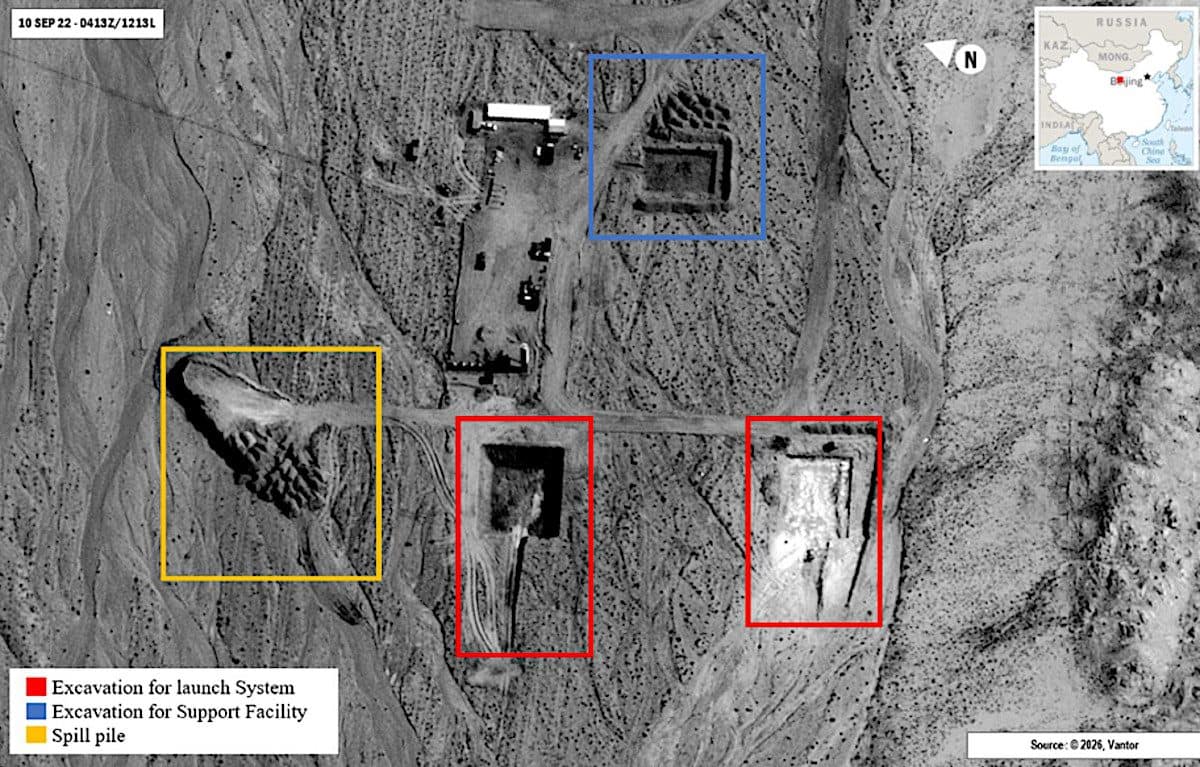
Die Bildaufnahmen sind dennoch präzise. Satellitenbilder vom September und Dezember 2022 zeigen die im Bau befindlichen Gebäude; laut CASI-Zeitplan begannen die Arbeiten Ende 2022. Ein Bild vom 28. Januar 2026 zeigt ein fertiggestelltes Gebäude mit geschlossenem Dach. Weiteres, von The War Zone ausgewertetes Bildmaterial zeigt, dass sich die Dächer durch seitliches Verschieben entlang dreier großer Schienen öffnen lassen.
Kurzinfo
- Zwei neue gehärtete Strukturen wurden im 1. Test- und Übungsbezirk der PLARF in der Nähe von Jilantai, Innere Mongolei, identifiziert.
- Aufgefallen vom Chinesischen Institut für Luft- und Raumfahrtstudien; detailliert beschrieben von The War Zone am 7. Juli 2026
- Die einziehbaren rechteckigen Dächer messen ungefähr 20 m mal 6,5 m (65,5 Fuß mal 21 Fuß) und gleiten auf drei Schienen.
- Geschätzte Tiefe 6,4 bis 11,8 m (21 bis 38 Fuß) – zu gering für ICBM-Silos
- Es wurde als geeignet eingestuft, Raketen bis zur MRBM-Klasse, wie beispielsweise die ~10 m lange DF-21 oder die ~11 m lange DF-17, aufzunehmen.
- Laut CASI-Bildchronik begannen die Bauarbeiten Ende 2022.
- Kontext: Laut einer Analyse von FAS hat China seit 2020 Siloanlagen in Yumen (ca. 120 Silos) und Hami (ca. 110 Silos) errichtet.
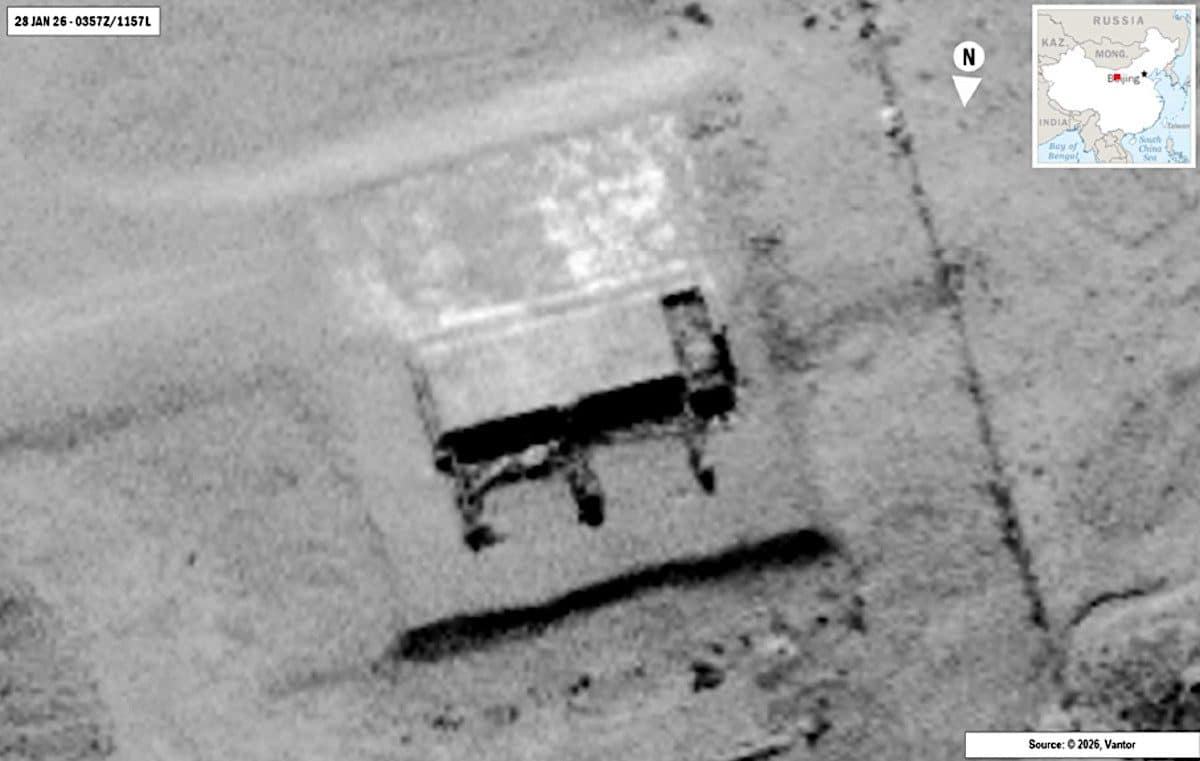
Die Dimensionen bilden den Ausgangspunkt der Analyse. Tirk schätzt die Tiefe der Strukturen auf 6,4 bis 11,8 Meter – viel zu gering für eine Interkontinentalrakete, die üblicherweise ein Silo von mindestens 20 Metern Tiefe benötigt. Seine Einschätzung: Die Strukturen könnten Raketen bis zur Mittelstreckenraketenklasse aufnehmen, wobei er die etwa 10 Meter langen Silos DF-21 und 11 Meter langen DF-17 als Referenzpunkte nennt. Kurzstreckenraketen und Marschflugkörper könnten problemlos untergebracht werden.
Das deutet weg von Chinas nuklearer Abschreckung und hin zu etwas anderem: gehärteten, festen Startpositionen für konventionelle Systeme. Die DF-17 trägt insbesondere einen Hyperschallgleiter. Nach Tirks Einschätzung könnte der Bau folgende Absicht widerspiegeln.
Wie die Strukturen aussehen könnten – und wie sie nicht aussehen könnten
Alternative Erklärungen bleiben offen, und es empfiehlt sich, mehrere gleichzeitig in Betracht zu ziehen. Die Strukturen könnten neben Raketenwerfern auch andere Anlagen verbergen. Sie könnten einer speziellen Testfunktion dienen, die nie zu einer operativen Einsatzfähigkeit führt – schließlich handelt es sich um einen Teststützpunkt. Tirk bringt auch eine mögliche Verbindung zur Entwicklung der chinesischen Raketenabwehr ins Spiel, wobei „The War Zone“ anmerkt, dass dies im Widerspruch dazu steht, dass Jilantai primär der PLARF dient, während die Luft- und Raketenabwehr größtenteils in der Verantwortung der PLA-Luftwaffe liegt. Das Abfeuern durch ein offenes Dach aus einem Fahrzeug, das in den Stützpunkt hineinfährt – anstatt aus einem echten Silo – ist eine weitere Möglichkeit, die die Bilder nicht ausschließen können.
Ein aufschlussreicher Vergleich findet sich etwa 560 Kilometer (350 Meilen) östlich in Sundian, wo eine deutlich größere Konstruktion – etwa 22,5 Meter (74 Fuß) lang und 9 Meter (29,5 Fuß) breit – sich entlang zweier Schienen über einem echten Röhrensilo öffnet. Die Jilantai-Konstruktionen weisen ein anderes, kleineres Muster auf. Was auch immer sie sein mögen, sie sind keine Kopien der Vorgängerbauten.
Ein Stützpunkt, der Chinas Raketenzukunft probt
Der Standort verleiht der Entdeckung Bedeutung. Jilantai ist keine operative Raketenbasis; dort testet die PLARF Ausrüstung und bildet Personal aus, bevor die Fähigkeiten flächendeckend eingeführt werden. Seit Ende der 2010er-Jahre beherbergt der Stützpunkt Testversionen der Silos, die später in Chinas neuen ICBM-Feldern in großem Maßstab nachgebaut wurden – etwa 120 Silos in Yumen und etwa 110 in Hami, die laut einer Analyse der Federation of American Scientists in nahezu perfekten Rastern mit einem Abstand von etwa 3 Kilometern angeordnet sind. Was zuerst in Jilantai auftaucht, hat die Tendenz, später auch anderswo zu erscheinen.
Das ist der analytische Kern des CASI-Berichts: Sollten sich diese gehärteten Schnellstartanlagen auf dem Testgelände bewähren, könnte China dieses Muster breiter einsetzen – eine konventionelle, vorab erkundete und salvenfähige Angriffsinfrastruktur, die die Planung der USA und ihrer Verbündeten in einem Taiwan-Szenario erschweren soll. Feste Startrampen opfern ihre Überlebensfähigkeit für höhere Einsatzbereitschaft; die Härtung und die einziehbaren Dächer sind ein Versuch, einen Teil dieser Überlebensfähigkeit zurückzugewinnen.
Dieser Trend beschränkt sich nicht nur auf einen Wüstenstützpunkt. Befestigte Flugzeugunterstände, unterirdische Kommandoposten und nun auch überdachte Startpositionen spiegeln Chinas umfassendere Investitionen in befestigte Infrastruktur wider – eine Absicherung gegen die Präzisionsschlagfähigkeiten, die in einem Konflikt gegen China eingesetzt würden.
Ein genauerer Blick auf das seltsame, sich wiederholende Muster des Silofelds Hami in China – die Dimensionen, zu denen die Prototypen aus Jilantai herangewachsen sind.
Was heute bestätigt wurde, ist bescheiden und sollte klar formuliert werden: zwei Strukturen, bestimmte Abmessungen, ein Bauzeitplan und ein Standort innerhalb des Haupttestgeländes der PLARF. Es handelt sich dabei um eine Einschätzung, nicht um eine Tatsache. Doch auf einem Stützpunkt, dessen jüngere Geschichte die Prototypen des größten Silobauprogramms seit dem Kalten Krieg umfasst, hat die neue und unerklärte gehärtete Startinfrastruktur genauestens beobachtet werden müssen.
Quellen: The War Zone, China Aerospace Studies Institute, Federation of American Scientists, The Washington Times
Verwandte Fragen
Was wurde auf dem chinesischen Testgelände Jilantai entdeckt?
Auf Satellitenbildern sind zwei ungewöhnliche, gehärtete Strukturen im 1. Test- und Ausbildungsbezirk der Raketenstreitkräfte der Volksbefreiungsarmee nahe Jilantai in der Inneren Mongolei zu sehen. Jede Struktur ist mit einem rechteckigen, einziehbaren Dach von etwa 20 mal 6,5 Metern bedeckt, das sich auf drei Schienen öffnen lässt – eine Geometrie, die bisher dort nicht dokumentiert wurde.
Was ist Jilantai?
Jilantai in der Inneren Mongolei beherbergt den ersten Test- und Ausbildungsbezirk der Raketenstreitkräfte der Volksbefreiungsarmee – Chinas wichtigsten Raketentest- und -ausbildungskomplex. Neue Raketeninfrastruktur entsteht dort oft zuerst, weshalb Analysten sie per Satellit genau beobachten.
Handelt es sich bei den neuen chinesischen Anlagen um ICBM-Silos?
Analysten sehen das anders. Ihre geschätzte Tiefe von 6,4 bis 11,8 Metern sei zu gering für Interkontinentalraketen. Sie gehen davon aus, dass sie Raketen bis zur Mittelstreckenklasse aufnehmen könnten, wie beispielsweise die etwa 10 Meter lange DF-21 oder die 11 Meter lange DF-17.
Wie viele Raketensilos hat China in letzter Zeit gebaut?
Laut einer Analyse der Federation of American Scientists hat China seit 2020 in Yumen (ca. 120 Silos) und Hami (ca. 110 Silos) riesige Siloanlagen errichtet. Die Entdeckung in Jilantai ergänzt diese rasante Expansion um eine neue, andersartige Art von Silokonstruktion – eine, die den Planern Sorgen bereitet. Amerikas eigene nukleare Modernisierung.
Wer hat die Bauwerke in Jilantai entdeckt?
Das China Aerospace Studies Institute (CASI), eine Forschungseinrichtung der US Air Force Air University, veröffentlichte den Fund am 6. Juli 2026 in einem Bericht des Forschers Eli Tirk; The War Zone untersuchte ihn am darauffolgenden Tag detailliert. Laut CASIs Bilddatensatz begannen die Bauarbeiten Ende 2022.
Welche Raketen könnten die Anlagen in Jilantai aufnehmen?
Aufgrund der etwa 20 mal 6,5 Meter großen Dächer und der geschätzten Tiefe von 6,4 bis 11,8 Metern könnten die Strukturen Raketen bis zur Klasse der Mittelstreckenraketen aufnehmen – zum Beispiel Chinas DF-21 (etwa 10 Meter lang) oder die DF-17 (etwa 11 Meter), die ein Hyperschallgleitflugzeug trägt.


0 Kommentare