
Everything a combat pilot knows about dropping a bomb assumes air. Thick air, at sensible altitudes, where wings generate predictable lift, engines produce rated thrust, and a weapon released at a known speed follows a known arc to the ground.
In May 1999 the Indian Air Force was ordered to attack positions sitting between six thousand and eighteen thousand feet above sea level, in the Himalayas, where none of those assumptions hold. No air force had ever fought an air war at that altitude anywhere in the world.
They had to work out how to do it while doing it.
Kurzinfo
Betrieb: Safed Sagar, meaning White Ocean, the IAF component of the 1999 Kargil conflict
Opened: first light, 26 May 1999
Target altitudes: roughly 1,800 to 5,500 metres, or 6,000 to 18,000 feet above sea level
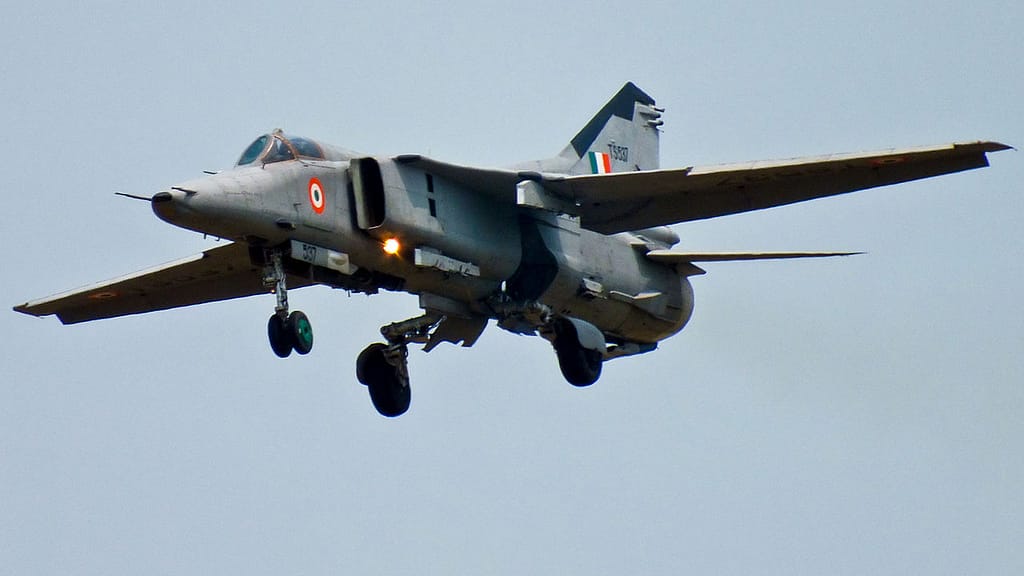
Flugzeug: MiG-21, MiG-23 and MiG-27 in the strike role, Mirage 2000H with laser-guided bombs
Mirage effort: two squadrons flew 514 sorties between May and July with three drop-outs
Erste Male: India's first combat use of laser-guided bombs, including the first night LGB drop in anger, on Tiger Hill
Losses: a MiG-27 on 27 May attributed to engine failure, and a MiG-21 shot down the same day
Ergebnis: Tiger Hill and Tololing retaken by July. The air campaign is assessed to have shortened the war by around three weeks
Why altitude ruins everything
Start with the aircraft. At high altitude the air is thin, which means a wing generates less lift for the same speed and a jet engine produces less thrust for the same throttle setting. An aircraft that handles crisply at low level over the plains becomes sluggish and reluctant. Turn radius grows. Climb performance collapses. The margin between flying and stalling narrows exactly where the terrain is least forgiving.
Now add the ground. In normal ground attack, the pilot has thousands of feet of vertical space to dive, aim, release and pull out. In the Kargil sector the valley floors were already at ten thousand feet and the ridgelines above eighteen. There was no vertical space. Aircraft were manoeuvring inside a bowl of rock with the enemy holding the rim.
Then the ballistics. A bomb released in thin air decelerates more slowly than the tables predict, so it flies further. Release parameters calculated for sea level put weapons long. The aiming solutions the crews had trained on for years were simply wrong, and every correction had to be worked out in the middle of a shooting war.
And finally the enemy, who occupied the high ground with man-portable surface-to-air missiles. Pakistani positions on Tiger Hill were defended with Stingers. An aircraft coming down into the valley to attack was flying below launchers that were above it, which inverts the usual geometry of air defence entirely.
The first two days
Operation Safed Sagar opened at first light on 26 May with MiG-21s, MiG-23s and MiG-27s striking intruder camps, supply dumps and routes around Dras, Kargil and Batalik. It was the first large-scale use of air power in Jammu and Kashmir since 1971.
That sentence, delivered over a cup of tea in the Chief of Air Staff's office, is how the Indian Air Force found out about Kargil. Nobody yet knew the scale of it. Within three weeks the service was fighting the highest air war in history.
On 27 May it cost. A MiG-27 flown by Flight Lieutenant K. Nachiketa went down over Batalik, attributed by the IAF to engine failure. A MiG-21 flown by Squadron Leader Ajay Ahuja was shot down in the same sector on the same day.
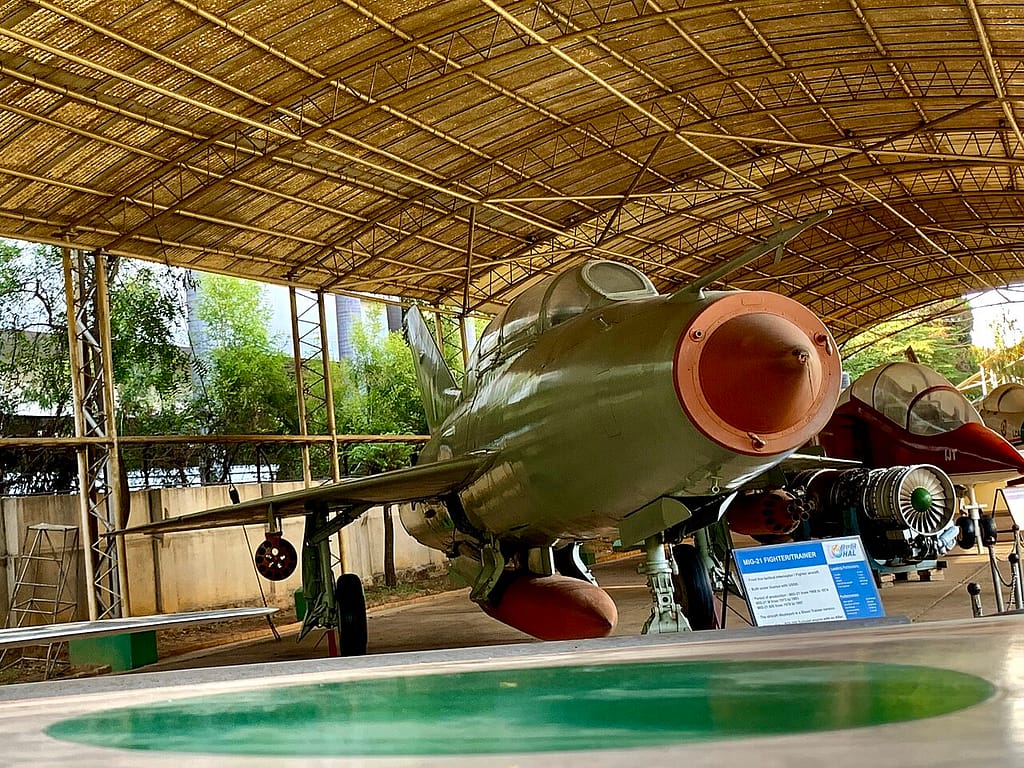
Two aircraft in two days, against an enemy with no air force in the fight, made the problem obvious. Going down into the valleys to deliver unguided weapons against dug-in positions on ridgelines was not survivable at a sustainable rate. Something had to change, and what changed was the weapon.
A decision the chief regretted
There was an argument behind the scenes about helicopters. The Army wanted gunships committed. The air force assessment was that the terrain sat outside the operating envelope of the available helicopters, and that slow, low aircraft over ridgelines held by troops with shoulder-launched missiles was a poor trade.
Tipnis lost the argument, or rather chose not to win it. His published account of the moment is unusually candid for a service chief.
It is a rare thing to see written down. Inter-service relations are their own battlefield, and a chief conceding that he made an operational decision to preserve a working relationship rather than because he thought it was right tells you as much about how wars are actually run as any account of the flying.
The Mirage solution
The answer was to stop going down.
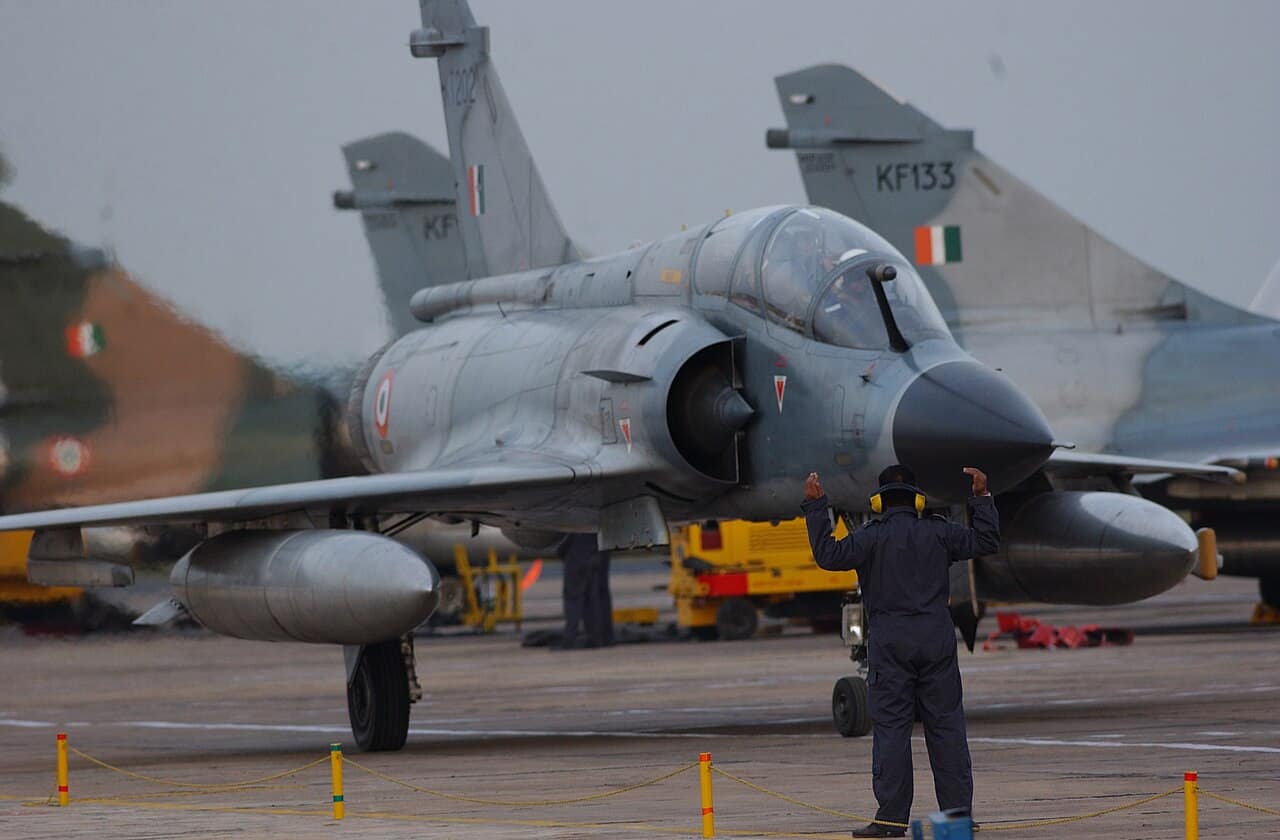
The Mirage 2000H, with a laser designation pod and Paveway laser-guided bombs, could release from medium altitude, well above the Stinger envelope, and still put a weapon onto a bunker. India had never used laser-guided munitions in combat before. The integration work was done at speed, under wartime pressure, and it worked.
Between May and July the two Mirage squadrons flew 514 sorties and lost none. That number is the entire argument. The older types, delivering dumb bombs from within the threat envelope, were taking losses in the first forty-eight hours. The Mirages, releasing precision weapons from outside it, went through the whole campaign intact.
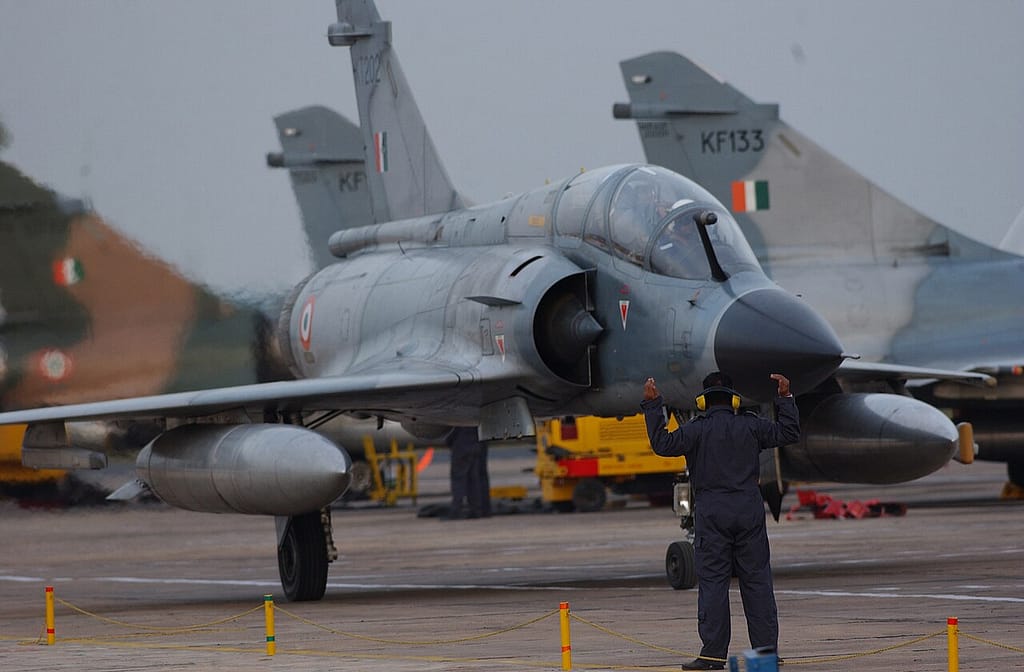
The most cited moment came over Tiger Hill, a heavily defended peak that had resisted repeated ground assault. A 7 Squadron Mirage 2000 delivered what is recorded as the first night drop of a laser-guided bomb in anger by the IAF against Pakistani positions on the summit. The hill was retaken by the Indian Army on 4 July after an eleven-hour night battle.
The restraint nobody mentions
One detail is easy to miss and is arguably the most consequential of the whole campaign. Indian aircraft were under orders not to cross the Line of Control.
This was a deliberate political choice by a nuclear-armed state fighting another nuclear-armed state, both of which had tested weapons the previous year. It also made the military problem considerably harder. Attacking a ridgeline from only one side removes the pilot's freedom to choose an approach, which means predictable run-in headings, which means the defenders know where to point. Every crew flew into that knowledge.
Indian Mirage pilots later reported that their radars had locked onto Pakistani F-16s flying combat air patrol on the far side of the line, at around thirty-five kilometres. Neither side crossed. In the first shooting war between two declared nuclear powers, both air forces stayed on their own side of a line on a map, and that restraint is a large part of why Kargil stayed a limited conflict.
What it changed
Kargil rewrote Indian air power. The IAF went into the conflict as a force built around large numbers of Soviet-era aircraft dropping unguided weapons, and came out of it convinced that precision was not a luxury item. The modernisation that followed, and the precision-strike doctrine that shaped later Indian operations, traces directly back to those weeks in the mountains.
The broader lesson travelled further. Kargil demonstrated that air power could be decisive in terrain everyone had assumed was infantry country, and that the decisive factor was not the aircraft but the weapon it carried. Every air force fighting in mountains since has been working from notes taken over Batalik in 1999.
The 2024 documentary above draws on IAF logbooks, war diaries and veteran interviews.
Sources: Indian Air Force, Bharat Rakshak IAF History, A.Y. Tipnis in FORCE magazine via The Wire, Observer Research Foundation, The Week, DefenceStories.
0 Kommentare