
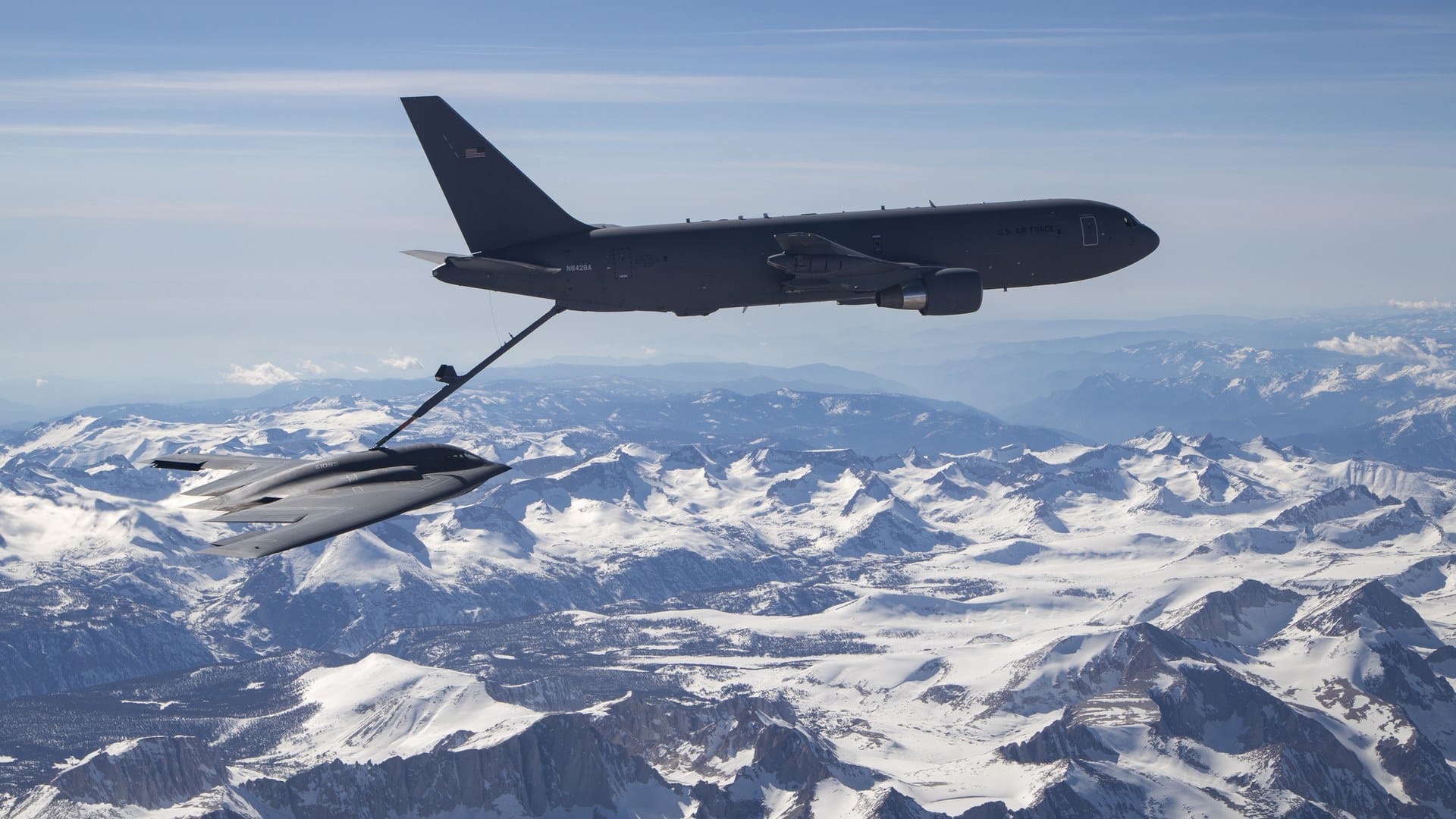
It was a Friday afternoon at the Pentagon, 29 February 2008 — a leap day, fittingly, for a decision almost nobody saw coming. Air Force officials stepped before the press to name the winner of the KC-X tanker programme, 179 aircraft and roughly 35 billion dollars, and the name they announced was not Boeing. In Mobile, Alabama, where the winning aircraft would be assembled, celebrations ran into the night. In Everett and Wichita, Boeing country, there was stunned silence.
The victors were Northrop Grumman and EADS — the European parent of Airbus. For the first time, the United States Air Force had selected a European airframe, the A330-based tanker it would call the KC-45A, for one of the largest defence contracts in its history.
The victory lasted 110 days. What follows is the story of the decade-long war Washington fought with itself over a flying petrol station — a war that featured a bribery conviction, a landmark protest, a cancelled do-over and a solo European charge at America’s crown jewels. The politics was not a subplot. The politics was the story.
Kurzinfo: Der KC-X-Tankerkrieg
| Programm | KC-X: 179 neue Tanker als Ersatz für die KC-135, im Wert von rund 1,4 Billionen Pfund. |
| 2001–2004 | Der Leasingvertrag für die Boeing KC-767 scheitert im Darleen-Druyun-Skandal. |
| 29. Februar 2008 | Northrop Grumman/EADS KC-45 (A330 MRTT) schlägt Boeing |
| 18. Juni 2008 | GAO upholds Boeing’s protest, citing “significant errors” |
| März 2010 | Northrop zieht sich aus dem erneuten Bieterverfahren zurück; EADS führt das Projekt allein fort. |
| 24. Februar 2011 | Boeing’s 767-based KC-46A wins the final round |
| Nachwirkungen | KC-46: years of technical trouble · A330 MRTT: a global export success |
Ein Mietvertrag, zu gut, um wahr zu sein
The saga began innocently enough. After 9/11, with the KC-135 fleet approaching its fifth decade, the Air Force proposed to lease 100 Boeing 767 tankers rather than buy them — a financial arrangement worth more than 20 billion dollars that critics, led by Senator John McCain, attacked as a thinly disguised gift to Boeing.
Then it got worse. Darleen Druyun, the Air Force’s second-ranking acquisition official and the woman shaping the tanker deal, had been quietly negotiating a $250,000-a-year job with Boeing’s chief financial officer, Michael Sears — including a discreet meeting at Orlando airport in October 2002, while she still oversaw the negotiations.
In October 2004 Druyun was sentenced to nine months in federal prison. She admitted she had agreed to a higher price than she believed appropriate as, in her own words, a “parting gift” to her future employer, and that she had passed Boeing proprietary data about the rival Airbus offer. Sears got four months. Boeing’s chief executive, Phil Condit, resigned. The lease was dead — and in its place the Pentagon promised a clean, open competition called KC-X.
Ein amerikanischer Tanker mit französischem Akzent
When the bids landed in 2007, Boeing offered a tanker based on its smaller 767. Northrop Grumman, as prime contractor, teamed with EADS to offer the Airbus A330 Multi Role Tanker Transport: a bigger jet carrying more fuel, more cargo and more passengers. Air Force evaluators rated the larger aircraft ahead on several key measures — and on 29 February 2008, Northrop and EADS won.
Das Team hatte seine politische Strategie sorgfältig vorbereitet. Die KC-45 sollte in einem neuen Werk in Mobile, Alabama, montiert werden, und es wurden Tausende amerikanische Arbeitsplätze in Dutzenden von Bundesstaaten versprochen. Es handele sich, so betonten die Befürworter, um einen amerikanischen Tanker mit europäischen Wurzeln.

Im Kongress kommt es zum Eklat.
The reaction from Boeing’s home states was volcanic. “By awarding this contract to Airbus, the U.S. government is leading those jobs to the guillotine,” Senator Patty Murray of Washington declared on the Senate floor. Lawmakers waved duelling jobs maps — Airbus jobs in Alabama and Mississippi against Boeing jobs in Washington and Kansas — while the long-running US–EU fight at the World Trade Organization over Airbus subsidies gave the argument a transatlantic edge.
Boeing legte am 11. März 2008 beim Government Accountability Office (GAO) formell Einspruch ein. Am 18. Juni ließ das GAO die Bombe platzen: Dem Einspruch wurde stattgegeben.
Defence Secretary Robert Gates first ordered an accelerated rebid — then, in September 2008, cancelled the competition entirely and handed the whole radioactive file to the next administration. Seven years after the process began, the Air Force had no new tanker and no path to one.
Die Neuvergabe und der Sololauf
The 2009 request for proposals rewrote the rules: 372 mandatory requirements and a structure that came down, in essence, to a price shoot-out. Northrop Grumman concluded the new terms favoured the smaller Boeing jet and withdrew in March 2010. Then came the extraordinary part: EADS decided to bid alone — a European giant, without an American prime contractor, going head-to-head with Boeing for the US Air Force’s biggest prize.
On 24 February 2011, Deputy Defense Secretary William Lynn announced that Boeing was “the clear winner” under the evaluation formula. This time it was Alabama’s turn to cry foul. The plane proposed by EADS “clearly offers the more capable aircraft. If this decision stands, our war-fighters will not get the superior equipment they deserve,” said Senator Richard Shelby, who blamed “Chicago politics” — Boeing’s headquarters city — for the outcome. EADS, ten percent more expensive on the final price, declined to protest.
Beide Seiten verloren, beide Seiten gewannen
Boeing had bid aggressively low on a fixed-price development contract — and paid for it. The KC-46A Pegasus first flew on 25 September 2015, and the first aircraft reached the Air Force in January 2019, years behind schedule. Its Remote Vision System — the camera arrangement the boom operator uses instead of a window — suffered deficiencies serious enough to require a full redesign, and by the mid-2020s Boeing had absorbed more than seven billion dollars in charges on the programme. Winning, it turned out, was the expensive part.
The A330 MRTT lost America and won nearly everyone else. Australia, the United Kingdom, France, Saudi Arabia, Singapore, South Korea, the United Arab Emirates, a jointly owned NATO fleet and more than a dozen air forces in all chose the big Airbus tanker — the aircraft the GAO fight kept out of US Air Force colours became the West’s de facto standard everywhere else.

And Mobile, Alabama? It got its Airbus factory anyway. The assembly line built for a tanker that never came now delivers A320-family airliners — Airbus jets, built by Alabama workers, flying for American airlines. The tanker war’s quietest peace treaty was signed on a factory floor.
Quellen: Wikipedia (KC-X, EADS/Northrop Grumman KC-45, Boeing KC-46 Pegasus, Darleen Druyun), US Government Accountability Office (18. Juni 2008), The Spokesman-Review, TIME, Aviation International News, Federal News Network, Pressemitteilungen von Northrop Grumman
Verwandte Fragen
Was war der KC-X-Tankerwettbewerb?
Der KC-X-Wettbewerb war das langwierige Vorhaben der US-Luftwaffe, 179 neue Luftbetankungsflugzeuge im Wert von rund 14 Billionen US-Dollar zu beschaffen, um die alternde KC-135 zu ersetzen. Boeing trat gegen ein Konsortium aus Northrop Grumman und EADS (Airbus) an. Nach einem Skandal, einer aufgehobenen Auftragsvergabe und einer Neuausschreibung gewann Boeing schließlich 2011 mit der auf der 767 basierenden KC-46A.
Warum war der KC-X-Tankervertrag so umstritten?
Der KC-X-Vertrag war umstritten, da er ein Jahrzehnt voller Skandale und Rückschläge umfasste. Ein früherer Leasingvertrag mit Boeing scheiterte im Zuge des Ethikskandals um Darleen Druyun. 2008 gewann ein Airbus-Tanker von Northrop Grumman/EADS den Zuschlag, doch das GAO gab Boeings Einspruch wegen "erheblicher Fehler" statt. Die Geschichte wurde zu einem Paradebeispiel dafür, wie … Verteidigungswettbewerbe Ingenieurwesen mit Politik verbinden.
Wer hat den KC-X-Tankervertrag gewonnen?
Boeing gewann schließlich am 24. Februar 2011 mit seiner auf der 767 basierenden KC-46A den Auftrag für den KC-X-Tanker, nachdem Northrop Grumman sich 2010 aus der Neuausschreibung zurückgezogen hatte und EADS allein weitermachte. Ein früherer Auftrag aus dem Jahr 2008 an den auf der A330 basierenden Northrop/EADS-Tanker war nach einem erfolgreichen Einspruch von Boeing aufgehoben worden. Die KC-46 hatte später jahrelang mit technischen Problemen zu kämpfen.
Was ist die KC-46 Pegasus?
Die KC-46 Pegasus ist ein auf der Boeing 767 basierendes Luftbetankungsflugzeug von Boeing, das einen Teil der KC-135-Flotte der US-Luftwaffe ersetzen soll. Sie gewann 2011 die letzte Runde des KC-X-Ausschreibungsverfahrens, hatte aber mit anhaltenden technischen Problemen zu kämpfen, insbesondere mit ihrem ferngesteuerten Betankungssystem. Tankflugzeuge sind nach wie vor unverzichtbare Einsatzkräfte, eine Rolle, die mittlerweile auch auf Drohnen wie die KC-46 Pegasus ausgeweitet wurde. MQ-25 Stingray.
Was war der Darleen-Druyun-Skandal?
Der Darleen-Druyun-Skandal betraf eine hochrangige Beschaffungsbeamtin der US-Luftwaffe, die Boeing unzulässigerweise bevorzugte, unter anderem bei einem geplanten Leasingvertrag für den Tanker KC-767, bevor sie selbst in das Unternehmen eintrat. Die Affäre führte zu strafrechtlichen Verurteilungen und dem Scheitern des Leasingvertrags um das Jahr 2004. Sie schädigte das Tankerprogramm und prägte den darauffolgenden, umstrittenen Wettbewerb um die KC-X.
Zu welchem Tanker wurde der Airbus A330?
Der Airbus A330 wurde zum A330 MRTT (Multi Role Tanker Transport) weiterentwickelt, den das Team von Northrop Grumman/EADS der US Air Force als KC-45A anbot. Obwohl er im finalen KC-X-Wettbewerb gegen Boeing unterlag, wurde der A330 MRTT weltweit ein großer Exporterfolg. Zu den früheren Tankerumbauten zählen unter anderem die britischen... Handley Page Victor.
0 Kommentare