
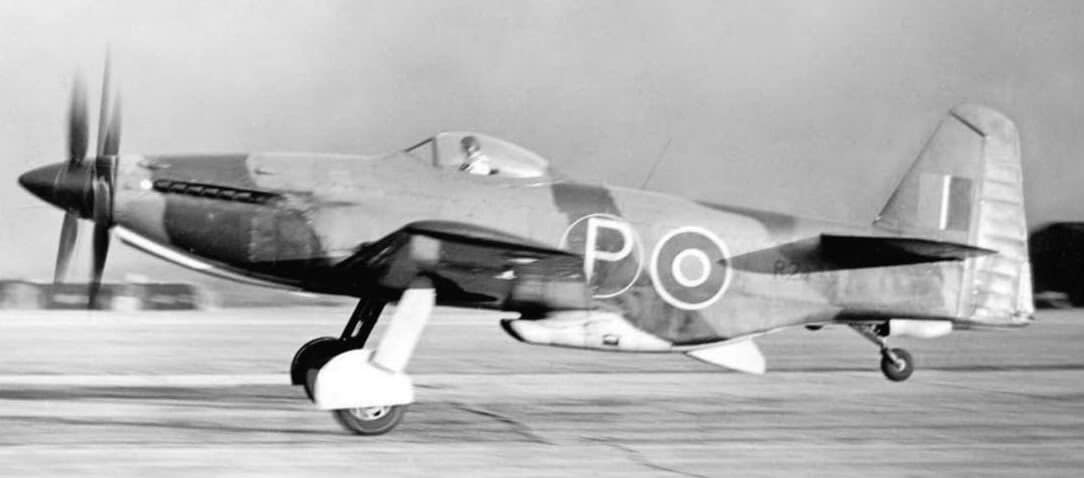
Every test pilot who flew it seemed to reach for superlatives. One of the greatest aviators of the century called it outstanding. Another, a man who would later fly jets to the edge of control, called it simply the best aircraft he had ever flown. The Martin-Baker MB 5 might have been the finest piston-engine fighter Britain ever produced.
The Royal Air Force built exactly one, then walked away.
Kurzinfo
- Flugzeug: Martin-Baker MB 5, prototype serial R2496
- Erster Flug: 23 May 1944
- Motor: Rolls-Royce Griffon 83, about 2,340 hp, driving six-blade contra-rotating propellers
- Leistung: roughly 460 mph, ceiling around 40,000 ft
- Rüstung: four 20 mm Hispano cannon
- Gebaut: one — never ordered into production
The Outsider’s Masterpiece
Martin-Baker was a small firm run by two men: the brilliant, self-taught engineer James Martin and his friend and test pilot Valentine Baker. Their earlier MB 3 prototype crashed in 1942, killing Baker — a loss that would haunt, and later define, the company. Martin pressed on, redesigning the aircraft around a Rolls-Royce Griffon and a pair of contra-rotating propellers. The result, the MB 5, first flew in May 1944.
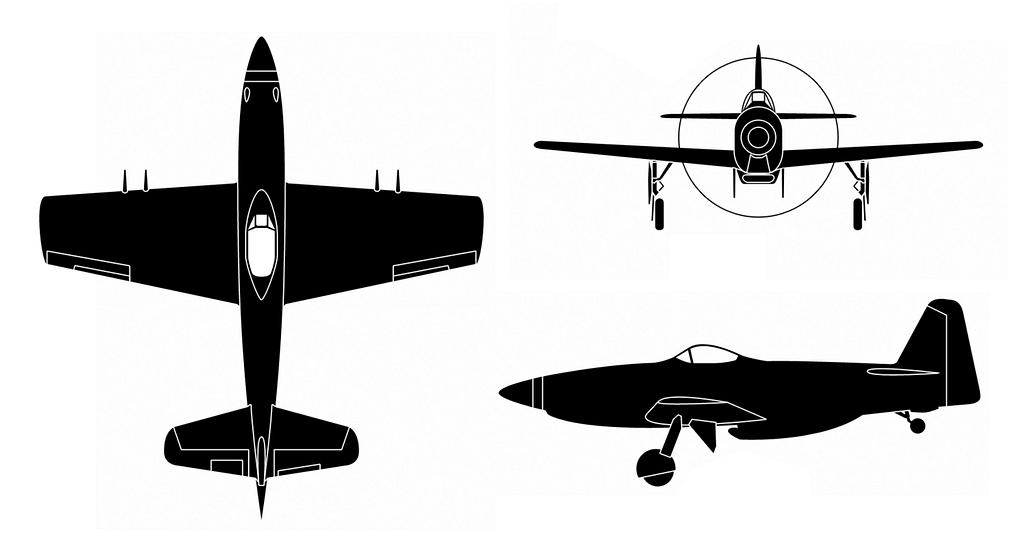
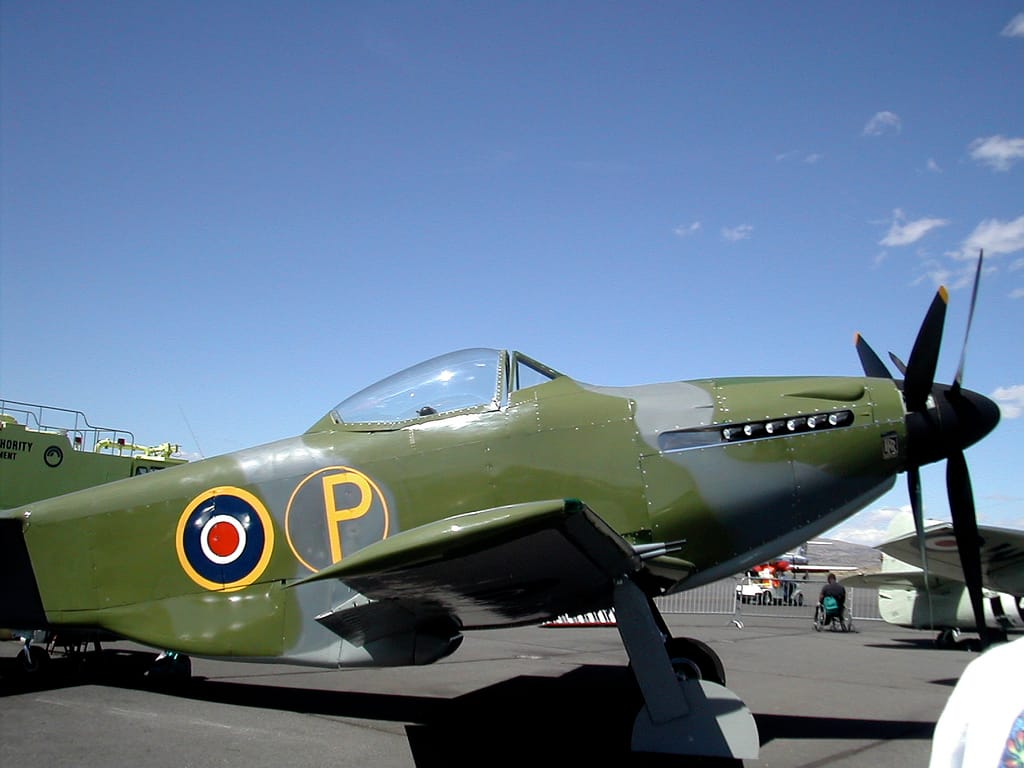
It was, by the accounts of the men who tested it, close to perfect. Fast, stable, beautifully harmonised, and — unusually — a joy to service, thanks to a fuselage of detachable panels that gave mechanics easy access to everything. Where most fighters were a compromise, the MB 5 felt like an answer.
The Polish ace and virtuoso display pilot Janusz Żurakowski threw it around the sky at Farnborough in 1946 and left onlookers stunned. He rated it superlative — better, in many ways, he thought, than the Spitfire itself.
Killed by Timing
So why did it die? Partly, cruel luck. When the MB 5 was demonstrated to Winston Churchill, the Chief of the Air Staff and a crowd of VIPs at Farnborough, the Griffon engine chose that moment to fail — hardly the impression a hopeful manufacturer wants to leave with the Prime Minister.
But the deeper reasons were structural. By 1944 the jet age was arriving, and the Air Ministry’s attention had swung decisively toward turbine-powered fighters. A superb new piston fighter, however good, was a technology on the way out. And Martin-Baker was a small outsider firm that, in the view of historians, simply lacked the factories and the government backing to build fighters in the numbers a wartime air force needed. The big established makers got the orders.
The Consolation Prize That Changed Aviation
The single MB 5 was eventually destroyed, and the greatest British piston fighter never to serve passed into legend. But the story has a remarkable coda. Haunted by the death of Valentine Baker, James Martin turned the company’s genius toward a different problem: how to get a pilot out of a doomed aircraft alive.
Martin-Baker became the world’s foremost maker of ejection seats, and its seats have since saved thousands of lives across dozens of air forces. The firm that couldn’t sell its perfect fighter went on to save more aircrew than any fighter ever could. It is hard to imagine a stranger, or better, second act.
Sources: Wikipedia; Eric Brown, Wings of the Weird & Wonderful; Hush-Kit; Defense Media Network; Old Machine Press.
0 Kommentare