
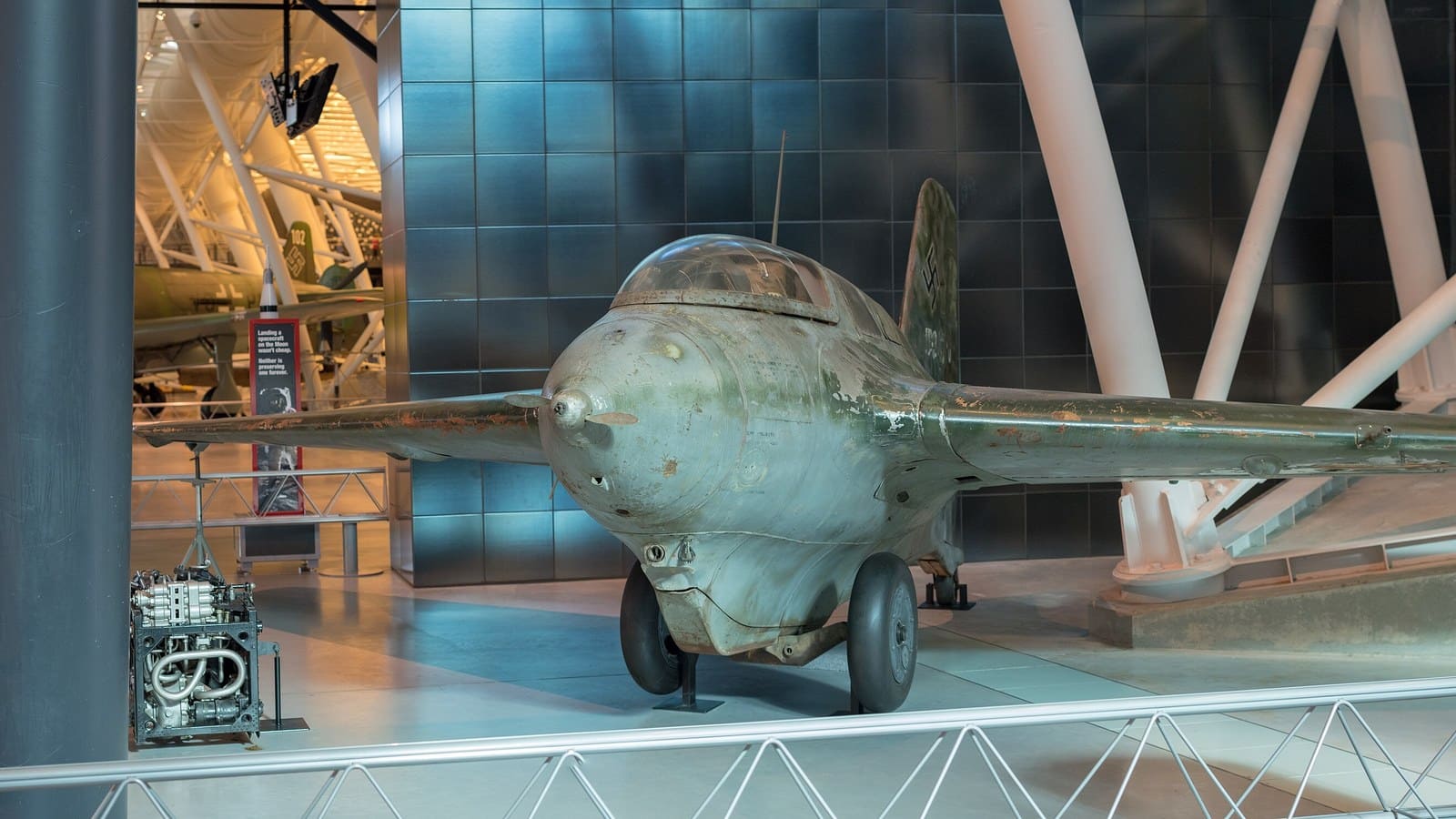
Am 28. Juli 1944, P-51 Piloten der 359. Jagdgruppe eskortierten B-17-Bomber von Merseburg weg, als jemand Kondensstreifen hoch oben auf sechs Uhr rief. Zwei gedrungene, schwanzlose Gestalten schnitten schneller als alles, was die Amerikaner je gesehen hatten, durch die Formation – und dann richtete sich eine von ihnen auf und stieg in die Sonne. Die Eskortflugzeuge konnten nichts tun, als zusehen.
Was ihnen soeben begegnet war, war die Messerschmitt Me 163 Komet, der einzige raketengetriebene Jäger, der jemals im Einsatz war. Sie konnte 1944 alle anderen Flugzeuge am Himmel in Steigrate und Geschwindigkeit übertreffen und erreichte Geschwindigkeiten um die 1000 km/h, während die schnellsten alliierten Jäger Mühe hatten, 700 km/h zu erreichen.
Sie war zudem mit Abstand das gefährlichste Flugzeug des Krieges für ihre eigenen Piloten. Die Komet flog mit zwei hypergolen Chemikalien, die sich bei Kontakt entzündeten – eine davon löste menschliches Gewebe auf. Mehr Komets wurden durch Unfälle, Explosionen und missglückte Landungen zerstört als durch alliiertes Feuer.
Kurzinfo: Messerschmitt Me 163B Komet
| Rolle | Raketengetriebener Abfangjäger zur Punktverteidigung – der einzige jemals einsatzbereite |
| Erster Flug | 1. September 1941 (Me 163A Prototyp) |
| Motor | Walter HWK 109-509A Flüssigtreibstoffrakete, ~17 kN (3.800 lbf) Schub |
| Treibmittel | T-Stoff (konzentriertes Wasserstoffperoxid) + C-Stoff (Methanol/Hydrazin) — hypergol |
| Höchstgeschwindigkeit | Im Einsatz erreichte sie eine Geschwindigkeit von etwa 960 km/h (600 mph); Rekordflug mit 1.130 km/h (702 mph), Juli 1944 |
| Ausdauerleistung | Ungefähr 7,5 Minuten |
| Aufstieg | 12.000 m (39.000 Fuß) in etwa drei Minuten |
| Rüstung | 2 × 30 mm MK 108 Kanone |
| Gebaut | ~370 |
| Kampfbilanz | Ihm werden 9–18 Abschüsse zugeschrieben (häufig wird 9 bestätigt), bei etwa 10 Kampfverlusten. |
Ein Segelflugzeug mit einer Rakete im Heck
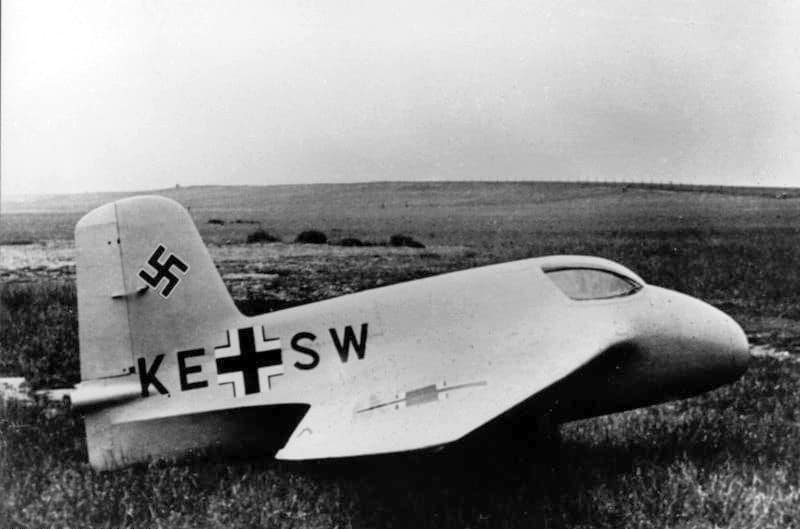
Die Komet entstand auf dem Reißbrett von Alexander Lippisch, dem deutschen Pionier des schwanzlosen Flugzeugs. Seine Entwürfe entwickelten sich von rekordverdächtigen Segelflugzeugen zum Forschungsflugzeug DFS 194, das mit einem von Hellmuth Walter entwickelten Raketenmotor ausgestattet wurde, der mit konzentriertem Wasserstoffperoxid betrieben wurde. Als Flugzeugzelle und Motor bei Messerschmitt zusammengeführt wurden, entstand ein völlig neues Flugzeug: ein winziges, pfeilflügeliges, schwanzloses Ei ohne Höhenleitwerk, Propeller und konventionelles Fahrwerk.
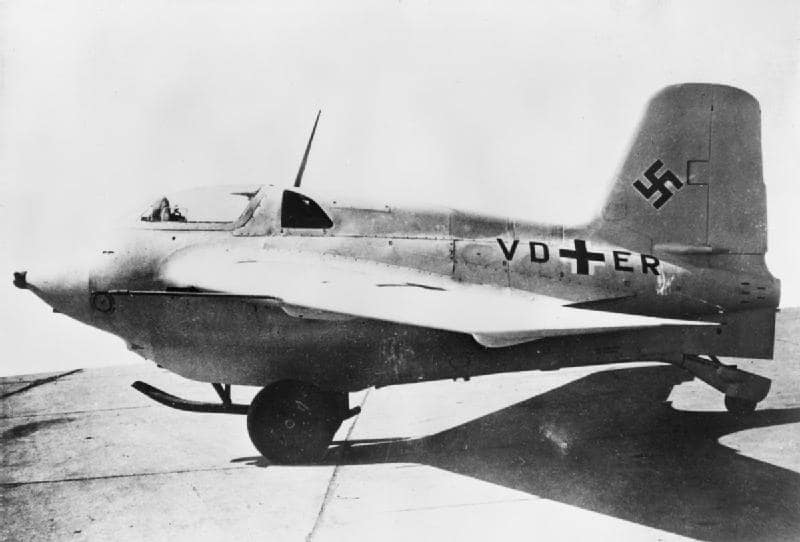
Es startete von einem abwerfbaren zweirädrigen Transportwagen und kehrte auf einem einziehbaren Unterflurfahrwerk zurück – Merkmale, die es direkt von seinen Segelflugzeug-Vorfahren geerbt hatte. Alles an ihm war minimalistisch, denn alles diente nur einem Zweck: Geschwindigkeit.
Diese Zahl wurde früh erreicht. Am 2. Oktober 1941 beschleunigte Testpilot Heini Dittmar den Prototyp der Me 163A V4 auf 1.004,5 km/h – zu einer Zeit, als die Jagdflugzeuge an der Front rund 400 km/h langsamer waren. Dieser Wert lag so weit über dem damaligen Stand der Technik, dass er geheim gehalten wurde. Am 6. Juli 1944 übertraf Dittmar die Geschwindigkeit noch und erreichte mit der Me 163B V18 1.130 km/h – ein inoffizieller Rekord, der erst 1953 von einem Strahlflugzeug erreicht wurde. Er landete an diesem Tag, nachdem ihm durch Flattern fast das gesamte Seitenruder abgerissen worden war.
Die Prototypen der A-Serie bestätigten das Konzept; die endgültige Me 163B verfügte über eine bewaffnete, besser herstellbare Flugzeugzelle und den neuen Walter HWK 109-509-Motor. Insgesamt wurden rund 370 Komets fertiggestellt.
Die Leistung des Flugzeugs verblüffte die Menschen immer wieder aufs Neue. Wolfgang Späte, der Kommandant der Testeinheit, der die erste Serienmaschine Me 163B flog, beschrieb sie als eleganten, blitzschnellen und leicht zu steuernden Pfeil, der jedes andere Flugzeug am Himmel abfangen konnte.
Treibstoff, der Menschen fraß
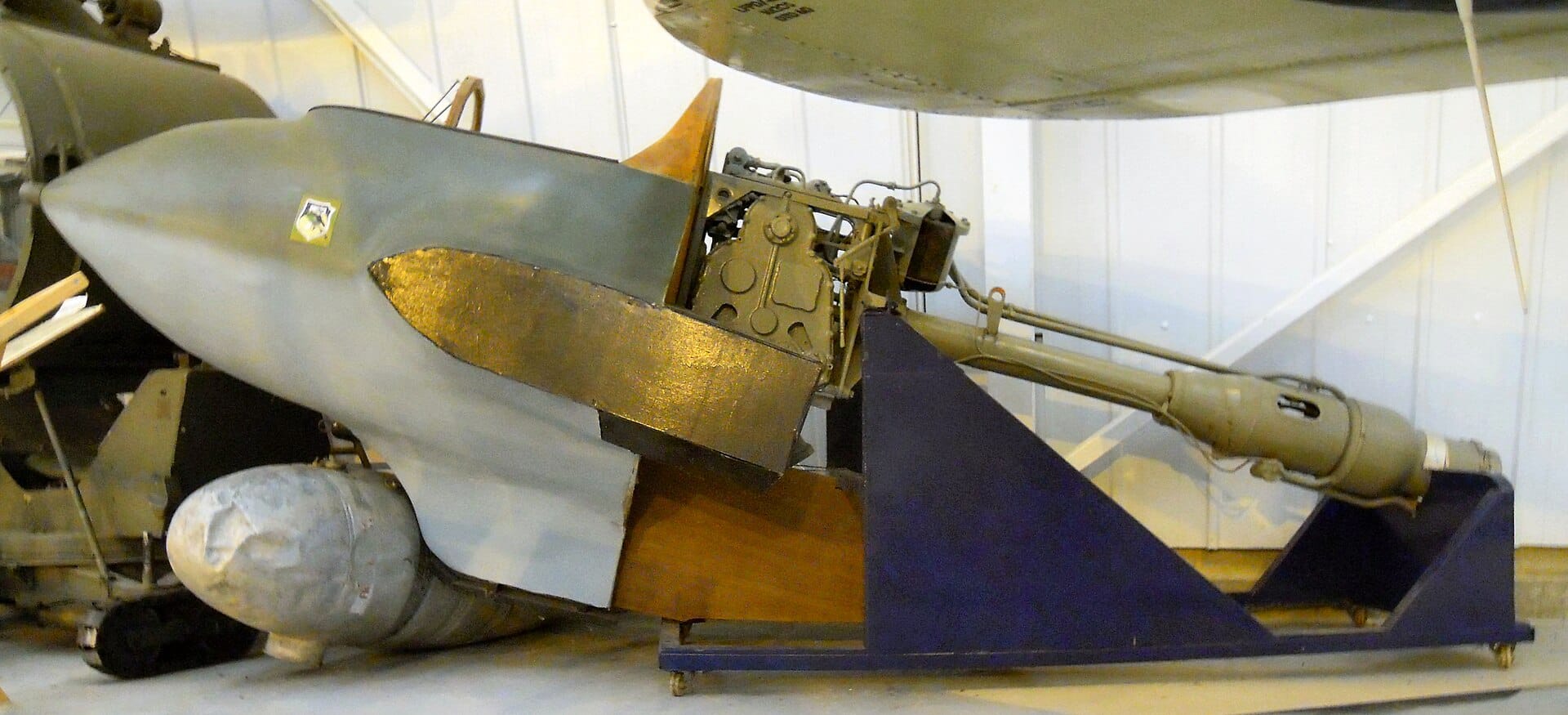
Das Triebwerk der Walter-Maschine verbrannte C-Stoff – ein Gemisch aus Methanol, Hydrazinhydrat und Wasser – im sauerstoffreichen Abgas von sich zersetzendem T-Stoff, konzentriertem Wasserstoffperoxid (ca. 80 %). Die beiden Flüssigkeiten waren hypergol: Bei Kontakt entzündeten sie sich sofort, ein Funke war nicht nötig. Die Bodenmannschaften setzten für jede Chemikalie separate Tankwagen ein, und ein Tankwagen musste den Bereich verlassen haben, bevor sich der andere nähern konnte. Selbst Spuren in einem Abflussrohr konnten explodieren, und Komets wurden gelegentlich schon beim Betanken auf dem Rollfeld zerstört.
T-Stoff besaß eine zweite Eigenschaft, die der Komet ihren düsteren Ruf einbrachte: Es entzündete spontan alles Organische – und löste Fleisch auf. Die Piloten flogen in speziellen Schutzanzügen aus gummiertem Gewebe und saßen zwischen zwei zusätzlichen T-Stoff-Tanks mit insgesamt etwa 120 Litern Oxidationsmittel, je einem auf jeder Seite des Cockpits.
Die Warnung war nicht theoretischer Natur. Ende 1943 kam der Jagdflieger Josef Pöhs ums Leben, als bei einem missglückten Start eine Treibstoffleitung riss; offiziell wird sein Tod auf die Vergiftung durch T-Stoff in Verbindung mit seinen Verletzungen zurückgeführt. Harte Landungen auf dem Landegestell waren berüchtigt dafür, Resttreibstoffleitungen zu beschädigen, und eine Komet, die sich mit verbliebenem Treibstoff in den Tanks überschlug oder einen Salto machte, explodierte in der Regel.
Die Landung selbst war ein riskantes Unterfangen. Nach dem Verbrauch des Treibstoffs wurde die Komet zum Segelflugzeug – nur ein Anflug, kein Durchstarten, die Landung erfolgte auf einer gefederten Metallkufe. Versagte der Kufenmechanismus oder war die Landung hart, konnte der Aufprall die Wirbelsäule des Piloten komprimieren; Rückenverletzungen waren eine häufige Folge des Fliegens dieses Flugzeugtyps.
Siebeneinhalb Minuten Donner
Der Kampfeinsatz der Komet verlief von der ersten Sekunde an heftig. Das Flugzeug hob mit über 320 km/h vom Startwagen ab, beschleunigte im Horizontalflug auf rund 676 km/h und stieg dann in einem steilen Winkel von 70 Grad auf, dem kein alliierter Pilot folgen konnte – 12.000 Meter in etwa drei Minuten. In der Höhe stabilisierte es sich und beschleunigte auf rund 880 km/h.
Dann war Schluss. Die maximale Flugdauer des Triebwerks betrug nur etwa 7,5 Minuten – weit weniger als von den Konstrukteuren geplant. Danach folgte nur noch ein Gleitflug: ein oder zwei Angriffe auf die Bomber, dann ein langer, lautloser und schutzloser Abstieg zurück zur Basis, wo alliierte Jäger lernten, zu kreisen und die Komets im Landeanflug abzuschießen.
Testpilot Rudolf Opitz, der eine der ersten Komet-Kampfmaschinen an den Jagdflügel überführte, stellte fest, dass selbst befreundete Flugplätze eine Gefahr darstellten. Er erinnerte sich, dass beim Anflug auf den Flugplatz für einen Hochgeschwindigkeits-Tiefflug “lange Leuchtspurgeschosse von allen Seiten auf mich einschlugen”. Die Flakbesatzungen hatten noch nie etwas so Schnelles gesehen und nahmen an, es müsse feindlich sein.
Gegen die Bomberströme
Die Luftwaffe stellte ihren einzigen Raketenjägerflügel, das Jagdgeschwader 400, in Brandis bei Leipzig auf. Er sollte das Werk für synthetischen Treibstoff in Leuna verteidigen – eines der am stärksten bombardierten Ziele im Reich. Der erste reguläre Kampfeinsatz des Flugzeugtyps erfolgte am 28. Juli 1944, als zwei Komet-Jäger B-17-Bomber angriffen, ohne jedoch Abschüsse zu erzielen. Der Bericht des Begleitkommandanten, Oberst Avelin P. Tacon Jr., an diesem Tag prägte den Verlauf aller folgenden alliierten Gefechte.
Doch genau diese Geschwindigkeit, die die Komet unangreifbar machte, führte dazu, dass sie als Geschützplattform nahezu nutzlos war. Ihre beiden 30-mm-Kanonen MK 108 hatten eine geringe Mündungsgeschwindigkeit und waren nur auf kurze Distanz präzise; typischerweise waren vier oder fünf Treffer nötig, um eine B-17 abzuschießen. Bei Annäherungsgeschwindigkeiten von mehreren hundert Kilometern pro Stunde war das Zeitfenster zum Feuern verschwindend klein.
Der beste Raketenpilot des Krieges, Feldwebel Siegfried Schubert, löste das Problem durch seine Treffsicherheit – drei Bomber, darunter eine B-17, schoss er angeblich mit nur drei Schüssen ab. Sein Ende sagt alles über das Flugzeug aus: Am 7. Oktober 1944, Stunden nach seinem letzten Abschuss, setzte sein Motor beim Start aus, eine Flügelspitze verfing sich im Gras, seine Komet überschlug sich und explodierte.
Die endgültige Abschussbilanz ist zwar in einigen Punkten umstritten, aber in jeder Version vernichtend. Der Komet werden zwischen 9 und 18 zerstörte alliierte Flugzeuge zugeschrieben – neun bestätigte Abschüsse gelten als die gängigste Zahl –, während etwa zehn Flugzeuge im Kampf verloren gingen. Bis Ende 1944 hatte das Jagdgeschwader 400 (JG 400) lediglich sechs Flugzeuge durch Feindeinwirkung, aber neun durch Unfälle und andere Ursachen verloren. Dieses Muster blieb bis zum Schluss bestehen: Die Komet tötete mehr eigene Flugzeuge als der Feind.
Das Scheitern, das in die Zukunft wies
Als Waffe erwies sich die Komet als Fehlschlag – ein enormer Entwicklungsaufwand für eine Handvoll Bomber, geflogen von Piloten, die Gefahr liefen, aufgerieben, zerstört oder im Rückgrat verletzt zu werden, bevor sie überhaupt den Feind zu Gesicht bekamen. Treibstoffmangel hielt die meisten der rund 370 Flugzeuge am Boden, und im letzten Winter des Krieges erkannten die Amerikaner, dass sie ihre Bomberverbände einfach um Brandis herumleiten konnten.
Als Maschine war sie ihrer Zeit jedoch ein Jahrzehnt voraus. Ihre Geschwindigkeiten blieben bis in die 1950er-Jahre von Düsenjägern unerreicht; Japan entwickelte sie in Lizenz als Mitsubishi J8M; und erbeutete Komets wurden von den Siegern eingehend untersucht – der Testpilot der Royal Navy, Eric Brown, flog sogar selbst eine. Deutschlands anderer Raketenabwehrjäger in letzter Instanz, der vertikal startende Bachem Ba 349 Natter, war noch radikaler und noch weniger erfolgreich, während die Sowjets das Konzept bereits 1942 mit der BI-1 ausprobiert hatten.
Heute existieren noch etwa zehn Komets in Museen; sie sind so klein, dass sie unter den Flügel eines Bombers passen. Steht man neben einem solchen Flugzeug, wirkt die Vorstellung absurd: ein hölzernes Ei mit Flügeln, gefüllt mit gesundheitsschädlichen Chemikalien, gebaut, um mit der Geschwindigkeit eines modernen Passagierflugzeugs zu sprinten und lautlos nach Hause zu gleiten. 1944 war es siebeneinhalb Minuten lang das schnellste Flugobjekt am Himmel.
Quellen: Wikipedia, Aviation History / HistoryNet (Don Hollway), Smithsonian National Air and Space Museum, Warfare History Network
Verwandte Fragen
Was war die Messerschmitt Me 163 Komet?
Die Messerschmitt Me 163 Komet war ein deutscher raketengetriebener Abfangjäger des Zweiten Weltkriegs und der einzige Raketenjäger, der jemals im Einsatz war. Angetrieben von einer Flüssigtreibstoffrakete, konnte sie in etwa drei Minuten auf 12.000 Meter steigen und eine Geschwindigkeit von rund 960 km/h erreichen – deutlich schneller als jeder alliierte Jäger. Es wurden etwa 370 Exemplare gebaut.
Wie schnell war die Me 163 Komet?
Die Me 163 Komet erreichte im Einsatz etwa 960 km/h und stellte bei einem Testflug im Juli 1944 einen Rekord von 1.130 km/h auf, zu einer Zeit, als die besten alliierten Jagdflugzeuge Mühe hatten, 700 km/h zu erreichen. Sie konnte in etwa drei Minuten auf 12.000 Meter steigen und übertraf damit alle anderen Flugzeuge am Himmel in Geschwindigkeit und Steigleistung.
Warum war die Me 163 für ihre eigenen Piloten gefährlich?
Die Me 163 war für ihre Piloten lebensgefährlich, da sie mit zwei hypergolen Treibstoffen flog: T-Stoff (konzentriertes Wasserstoffperoxid) und C-Stoff (ein Methanol-Hydrazin-Gemisch). Diese entzündeten sich bei Kontakt und konnten einen Piloten auflösen oder verbrennen. Harte Landungen konnten Explosionen auslösen, und der unmotorisierte Gleitflug zurück zur Basis machte sie schutzlos. Dadurch zählte sie zu den gefährlichsten Flugzeugen des Krieges und war mit der späteren Me 163 vergleichbar. F-104 Starfighter.
Wie lange konnte die Me 163 unter Motor fliegen?
Die Me 163 Komet hatte nur etwa 7,5 Minuten Flugzeit, bevor ihr Raketentreibstoff ausging. Danach gleitete sie antriebslos zurück zur Basis und landete auf Kufen. Aufgrund dieser geringen Reichweite konnte sie nur ein oder zwei Angriffe auf alliierte Bomber fliegen, bevor sie zum Abbruch gezwungen war.
Welche Bewaffnung führte die Me 163 mit sich?
Die Me 163 Komet war mit zwei 30-mm-Kanonen vom Typ MK 108 bewaffnet. Diese hatten zwar eine hohe Durchschlagskraft, aber eine geringe Feuerrate und kurze Reichweite. Die extreme Annäherungsgeschwindigkeit der Komet ließ den Piloten nur einen Bruchteil einer Sekunde Zeit, um alliierte Bomber anzuvisieren. Ihr wurden etwa 9 bis 18 Abschüsse bei rund 10 eigenen Verlusten zugeschrieben.
Wer hat die Me 163 Komet entworfen?
Die Me 163 Komet entstand aus den schwanzlosen Entwürfen von Alexander Lippisch, einem deutschen Pionier des Nurflüglerkonzepts. Seine rekordverdächtigen Segelflugzeuge entwickelten sich zum Forschungsflugzeug DFS 194, das mit einem Raketenantrieb zur Komet kombiniert wurde. Deutschlands Verzweiflung gegen Kriegsende führte auch zu überhastet entwickelten Konstruktionen wie der He 162 Volksjäger.
0 Kommentare