

Im Winter 1946 war Großbritannien vielleicht sechs Monate davon entfernt, als erste Nation die Schallmauer zu durchbrechen. In einem bewachten Hangar stand ein kleines, kugelförmiges Düsenflugzeug namens Miles M.52, fast fertiggestellt, der Testpilot ausgewählt, die Überschallflüge für Oktober geplant. Doch dann, mit nur einer einzigen Bestellung, stornierte die Regierung das Projekt.
Eighteen months later it was an American, Chuck Yeager, who broke the sound barrier in the rocket-powered Bell X-1 — and the honour Britain had been chasing was gone for good. The story of the M.52 is one of dazzling engineering, official timidity, and one of the most bitterly debated decisions in British aviation history.
Das Schlimme daran ist, dass die M.52 mit ziemlicher Sicherheit funktioniert hätte. Wir wissen das, weil ein späteres Modell genau das tat, wofür das Flugzeug konstruiert worden war.
• Flugzeug: Miles M.52 — Britain’s secret supersonic research aircraft
• Vertrag: December 1943, to Miles Aircraft; engine by Frank Whittle’s Power Jets
• Ziel: das erste bemannte Strahlflugzeug, das 1.000 Meilen pro Stunde (etwa Mach 1,5) erreichte
• Innovationen: hauchdünne, bikonvexe Flügel; ein voll bewegliches Leitwerk; eine abwerfbare, druckbeaufschlagte Bugkapsel
• Abgesagt: 12. Februar 1946, wobei das erste Flugzeug so gut wie fertiggestellt war
• Stattdessen: Chuck Yeager durchbrach am 14. Oktober 1947 mit der Bell X-1 die Schallmauer.
• Rechtfertigung: Ein unbemanntes, raketengetriebenes Modell der M.52 erreichte am 10. Oktober 1948 eine Geschwindigkeit von Mach 1,38.
Das Geheimnis der 1.000 Meilen pro Stunde
In December 1943, at the height of the war, the Air Ministry handed a top-secret contract to Miles Aircraft — a small firm known for clever thinking — to build the world’s first piloted aircraft capable of 1,000 mph. The engine would come from Frank Whittle’s Power Jets. With almost no data on how anything behaved beyond the speed of sound, Miles turned to an unlikely source: wind-tunnel tests on rifle bullets and artillery shells. From that they shaped a needle-nosed aircraft with a razor-thin wing.
Ein Jahrzehnt seiner Zeit voraus
Die M.52 steckte voller Ideen, die den Überschallflug über Jahrzehnte prägen sollten. Ihre Flügel waren außergewöhnlich dünn und scharfkantig. Der Pilot saß in einer abwerfbaren, druckbeaufschlagten Bugkanzel, die im Notfall weggeblasen werden konnte. Und vor allem hatte sie einen voll bewegliches Leitwerk — the entire horizontal tail pivoted as one surface, the single most important control breakthrough for staying flyable as an aircraft approaches the speed of sound. In the summer of 1944, controversially, all of this research was handed to the Americans.
Die Absage, die immer noch Rätsel aufgibt
By early 1946 the first M.52 was all but built and the Fleet Air Arm’s Captain Eric “Winkle” Brown — the most experienced test pilot in Britain — had been named to fly it. Then, on 12 February 1946, Miles was ordered to stop. Officials cited cost and doubts that supersonic flight was even achievable soon. To the men who had built it, the decision was incomprehensible.
Amerika durchbricht stattdessen die Barriere.
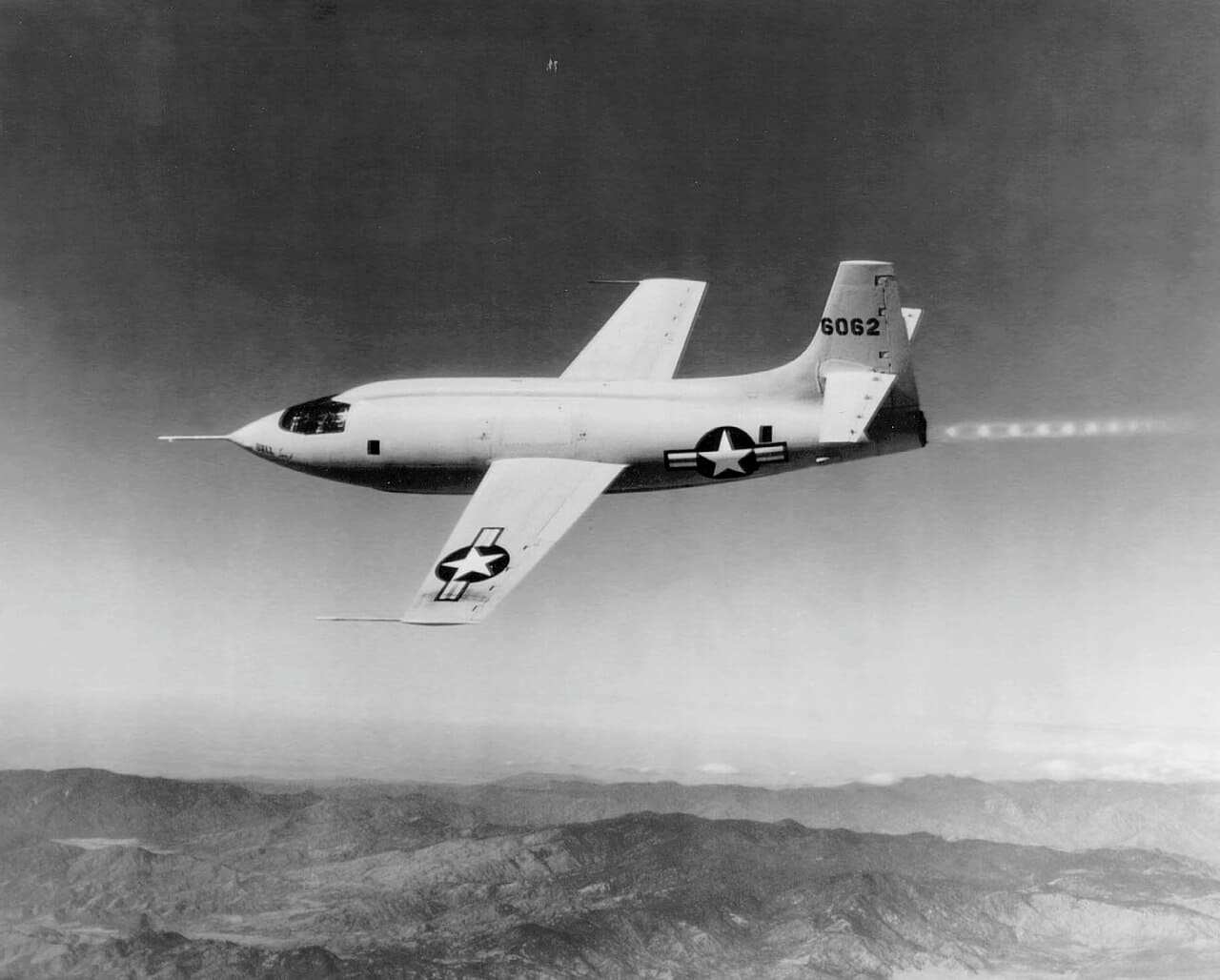
The glory went across the Atlantic. On 14 October 1947, US Air Force Captain Chuck Yeager rode the rocket-powered Bell X-1 past Mach 1 — and, tellingly, the X-1 used an all-moving tailplane of the kind the M.52 had pioneered, after the Americans had been given Britain’s research. How much that transfer mattered is still argued over, but the timing has never sat comfortably with British engineers.
Proven right — too late
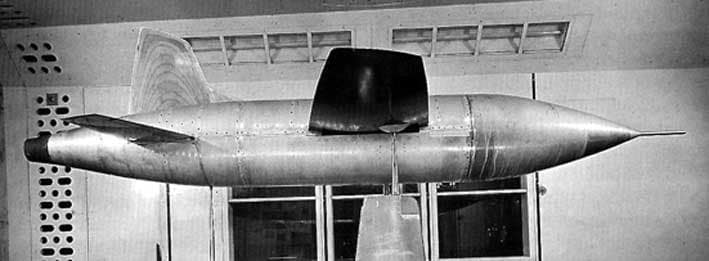
Britain did not entirely abandon the design. Engineers built unmanned, rocket-powered scale models of the M.52 and air-launched them from a Mosquito. On 10 October 1948, one of them held Mach 1.38 in stable, level flight — doing precisely what the full-sized aircraft had been built to do, and proving beyond doubt that the M.52 concept was sound. By then it was a footnote. The aircraft that could have made Britain first through the sound barrier had been scrapped, and its designers were left to wonder what might have been.
Sources: The History Press (“Captain Eric ‘Winkle’ Brown & the gateway to supersonic flight”); Wikipedia (Miles M.52; Bell X-1); The Engineer. The degree to which M.52 research aided the Bell X-1 remains a matter of historical debate.
Verwandte Fragen
Was war die Miles M.52?
Die Miles M.52 war ein streng geheimes britisches Überschallforschungsflugzeug, das im Dezember 1943 in Auftrag gegeben wurde und als erstes bemanntes Strahlflugzeug die 1.000-Meilen-Marke (etwa Mach 1,5) erreichen sollte. Angetrieben wurde es von einem Triebwerk von Frank Whittle’s Power Jets, Das Projekt war so gut wie abgeschlossen, als die britische Regierung es am 12. Februar 1946 abbrach.
Warum wurde die Miles M.52 abgesagt?
The M.52 was cancelled on 12 February 1946, with officials citing cost and doubts that supersonic flight was achievable soon — even though the first aircraft was nearly finished and its test pilot had been chosen. Like the later TSR-2, Es bleibt eine der am heftigsten diskutierten Flugstreichungen in der Geschichte der britischen Luftfahrt.
Wer hat als Erster die Schallmauer durchbrochen?
US Air Force Captain Chuck Yeager was first to break the sound barrier, flying the rocket-powered Bell X-1 on 14 October 1947 — about 18 months after Britain cancelled the Miles M.52. Tellingly, the X-1 used an all-moving tailplane of the kind the M.52 had pioneered, after Britain handed its supersonic research to the Americans in 1944.
Hätte die Miles M.52 die Schallmauer durchbrechen können?
Almost certainly. On 10 October 1948, an unmanned rocket-powered scale model of the M.52 reached Mach 1.38 in stable flight — doing exactly what the full-size aircraft had been designed to do and vindicating the design two years after its cancellation.
Welche Neuerungen führte die Miles M.52 ein?
The M.52 featured razor-thin biconvex wings shaped using wind-tunnel data from rifle bullets and artillery shells, a jettisonable pressurised nose capsule that could be blown clear in an emergency, and an all-moving tailplane — the single most important control breakthrough for flying near the speed of sound.
Was ist ein voll bewegliches Höhenleitwerk?
Ein voll bewegliches Leitwerk ist eine horizontale Leitwerksfläche, die sich als eine einzige Einheit dreht, anstatt über ein kleines, angelenktes Höhenruder zu verfügen. Es hält das Flugzeug steuerbar, wenn sich Stoßwellen in der Nähe der Schallgeschwindigkeit bilden, wo herkömmliche Höhenruder ihre Wirkung verlieren. Es wurde erstmals bei der Miles M.52 eingesetzt, später von der Bell X-1 übernommen und ist seitdem Standard bei Überschallflugzeugen.
Wer wurde ausgewählt, die Miles M.52 zu fliegen?
Captain Eric “Winkle” Brown of the Fleet Air Arm, Britain’s most experienced test pilot, was selected to fly the M.52’s supersonic trials. On learning of the cancellation he described “deep disappointment, total frustration, burning anger” among the team that had built it.
Haben die Amerikaner britische Überschallforschung genutzt?
Yes. In the summer of 1944 Britain controversially handed its M.52 research to the United States. When the Bell X-1 broke the sound barrier in October 1947 it flew with an all-moving tailplane — the control breakthrough the M.52 had pioneered — while Britain’s own supersonic programme had been cancelled.

0 Kommentare