
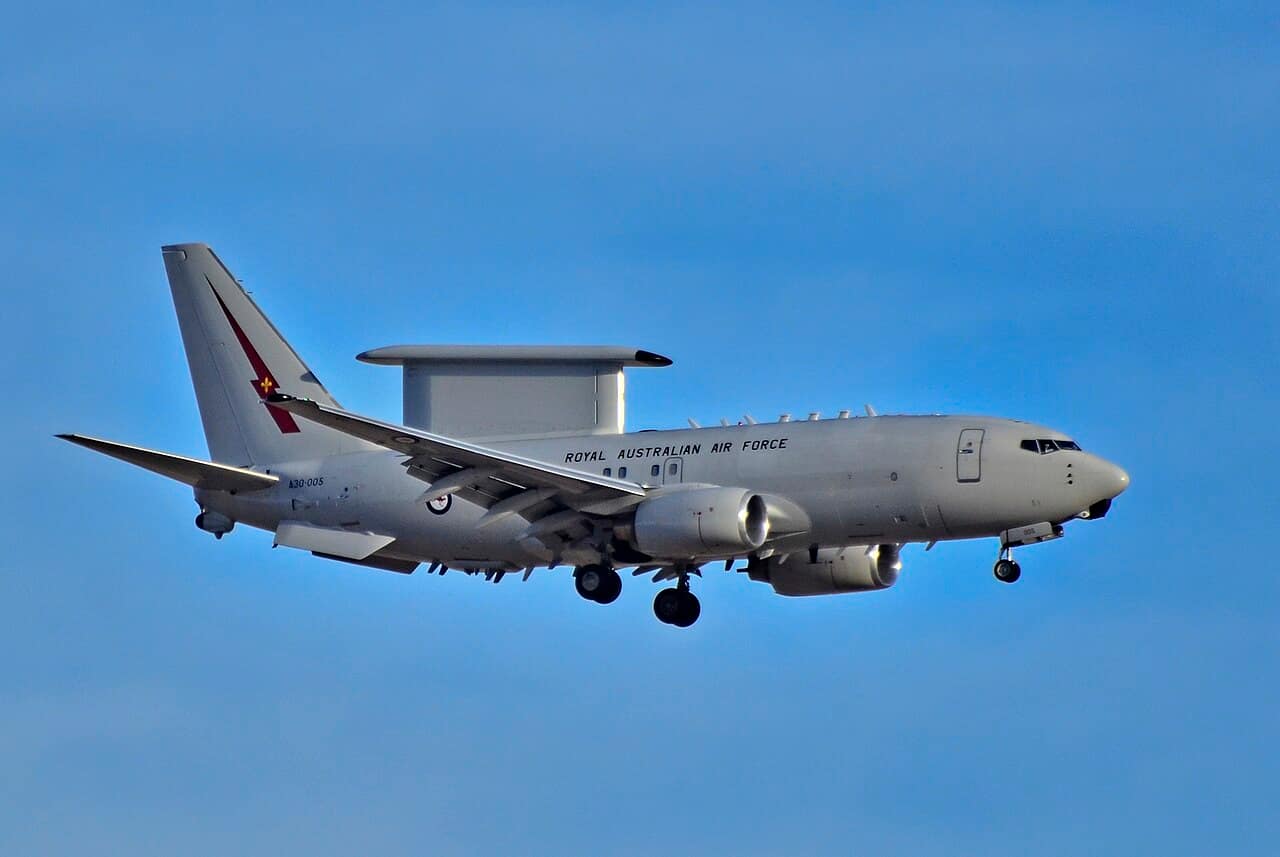
Falls Sie sich am Nachmittag des 15. Juli zufällig am Flughafen Birmingham aufgehalten hätten, hätten Sie etwas gesehen, das wie ein Irrtum aussah: eine Boeing 737 mit einer großen rechteckigen Finne, die an ihrem Rumpf befestigt war und in einem unschönen Metallic-Grün lackiert war, stieg über den West Midlands auf.
Es handelte sich nicht um einen Irrtum. Es war WT002, die zweite der drei E-7 Wedgetails der Royal Air Force, die ihren Erstflug absolvierte, nachdem sie zerlegt und zu einem Frühwarnflugzeug umgebaut worden war. Sie blieb etwa zwei Stunden in der Luft. Boeing bestätigte den Flug am folgenden Tag.
Das Grün ist der interessante Teil, und es lohnt sich, ihn zu erklären, denn fast jedes neue Flugzeug, das Sie jemals auf einem Foto gesehen haben, hat diese Phase durchlaufen, und fast niemand fotografiert sie.
Kurzinfo
Flugzeug: WT002, zweite von drei RAF E-7 Wedgetail AEW Mk1
Flug: 15. Juli 2026, vom Flughafen Birmingham, etwa zwei Stunden
Was es war: Erster Funktionsprüfungsflug nach dem Umbau
Konvertiert von: STS Aviation Services, Flughafen Birmingham
Grundgerüst des Flugzeugs: Boeing 737 Next Generation
Radar: Northrop Grumman MESA, in die Rückenflosse integriert, keine rotierende Kuppel
Flotte: Die 2019 bestellten fünf wurden im Rahmen der integrierten Überprüfung 2021 auf drei reduziert.
Operator: VIII. Staffel, RAF Lossiemouth
Ersetzt: die E-3D Sentry, die 2021 außer Dienst gestellt wurde
Warum es grün ist
Die Beschichtung ist eine Grundierung. Aluminium-Flugzeugstrukturen korrodieren, und zwar sofort nach dem Freilegen. Daher wird eine umgebaute Flugzeugzelle, sobald die Metallarbeiten abgeschlossen sind, mit einer Schutzschicht versiegelt. Der grüne Farbton stammt von den Chromatverbindungen, die traditionell in Grundierungen für die Luft- und Raumfahrt verwendet werden. Er ist temporär, funktional und dient gleichzeitig als Basis für die endgültige Lackierung.
Ungewöhnlich ist der Flug selbst. Die meisten Flugzeuge werden vor dem Erstflug lackiert, da die Lackierung am Boden erfolgt und stillstehende Flugzeuge Kosten verursachen. Bei einem Umbauprogramm läuft das jedoch anders ab: Zuerst wird die Funktionsfähigkeit des Flugzeugs nachgewiesen, dann werden drei Wochen und mehrere hundert Kilogramm investiert, um es so aussehen zu lassen, als gehöre es einer Luftwaffe. Die WT002 wird vor Beginn der Test- und Bewertungsphase lackiert.
Die Lücke, die dadurch geschlossen wird
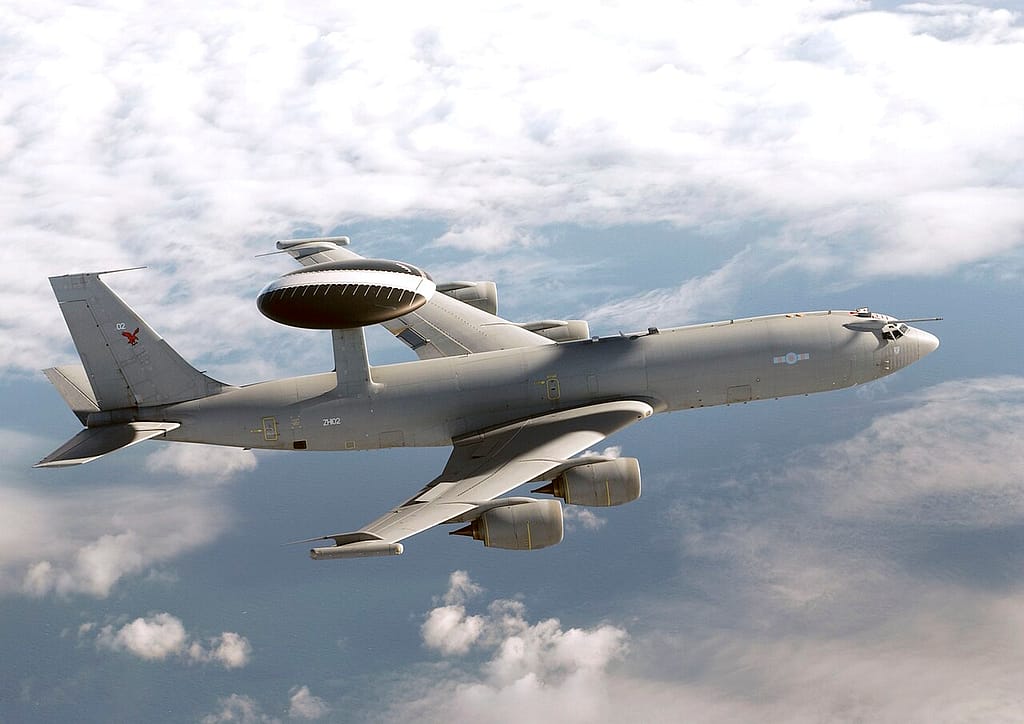
Großbritannien stellte seine E-3D Sentry-Flotte 2021 außer Dienst und verfügt seither über kein eigenes, luftgestütztes Frühwarnflugzeug mehr. Fünf Jahre sind eine lange Zeit für ein atomar bewaffnetes NATO-Mitglied mit globalen Verpflichtungen, das keine Möglichkeit hat, selbstständig über den Horizont hinauszusehen.
Das erste Flugzeug, WT001, traf am 21. Mai nach der Systemaktivierung und Radarkalibrierung in Boscombe Down auf dem RAF-Flugplatz Lossiemouth ein. Es befindet sich in der Endphase der Boden- und Flugtests vor der offiziellen Übergabe von Boeing an die RAF. Die dritte und letzte Maschine wird derzeit noch in Birmingham umgerüstet.
Der entscheidende Punkt ist, den Bedarf zu erkennen. Die Inbetriebnahme wurde für 2026 versprochen, doch Boeing hat noch immer keinen Übergabetermin genannt. Niemand, der mit dem Projekt befasst ist, blickt dem Zeitplan mit Entwarnung entgegen.
Drei Flugzeuge und die Arithmetik davon
Großbritannien unterzeichnete 2019 einen Vertrag über fünf Wedgetails. Im Rahmen der Integrierten Überprüfung 2021 wurde diese Zahl aus Kostengründen auf drei reduziert, und diese Entscheidung wird seither kontrovers diskutiert.
Die Rechnung ist unerbittlich. Von drei Flugzeugen, von denen eines in der Generalüberholung und eines im Training oder auf dem Transportweg ist, bleibt nur noch ein Flugzeug übrig. Es ist schwierig, über einen längeren Zeitraum kontinuierlich eine einzige Umlaufbahn zu halten. Zwei Flugzeuge gleichzeitig zu betreiben, ist unrealistisch. Zum Vergleich: Australien, das Land, in dem dieser Flugzeugtyp entwickelt wurde, betreibt sechs davon.
Was Großbritannien jedoch besitzt, ist ein sehr gutes Flugzeug. Die E-7 ersetzt die drehbare Kuppel der E-3 durch ein fest installiertes Northrop Grumman MESA-Array in der Rückenflosse. Das mag wie ein Detail klingen, ist es aber nicht. Eine mechanisch drehbare Antenne kann nur in die Richtung blicken, in die sie gerade zeigt. Ein elektronisch gesteuertes Array hingegen lenkt seinen Strahl blitzschnell und kann gleichzeitig in verschiedenen Richtungen nach Kampfflugzeugen suchen, diese verfolgen und steuern, ohne dass sich ein einziges Bauteil bewegen muss.
Das obige Video zeigt einen Rundgang durch eine australische E-7A und vermittelt einen wesentlich besseren Eindruck vom Innenraum als jedes Foto der Außenansicht. Das Flugzeug der Royal Air Force ist im Grunde dasselbe.
Das Geld darunter
Der Flug war nicht die einzige Neuigkeit von Wedgetail in dieser Woche. Boeing Defence UK erhielt einen Wartungsvertrag im Wert von rund 127,5 Millionen Pfund für die E-7-Flotte. Dieser Vertrag ist Teil eines Auftrags zur Unterstützung der Royal Air Force (RAF) im Wert von über 240 Millionen Pfund, der auch eine Vertragsverlängerung für die neun P-8 Poseidon in Lossiemouth im Wert von 115,2 Millionen Pfund umfasst. Der E-7-Auftrag soll rund 180 Arbeitsplätze in Schottland sichern, 60 bis 80 weitere sollen geschaffen und vier Ausbildungsplätze vergeben werden.
Wartungsverträge gehören zu den unglamourösesten und gleichzeitig aufschlussreichsten Dokumenten im Verteidigungsbereich. Man unterzeichnet schließlich keinen mehrjährigen Wartungsvertrag für eine Flotte, über die man ständig streiten muss. Die Stationierung des Wartungspersonals in Lossiemouth zeigt, dass Boeing und das Verteidigungsministerium so handeln, als ob die Wedgetail-Flotte kurz vor der Markteinführung stünde und nicht nur ein Programm sei.
Mit der grünen Farbe und allem drum und dran ist es das jetzt fast.
Quellen: ADS Advance, FlightGlobal, Aerospace Global News, Aviation Week, Royal Air Force, Army Recognition.
0 Kommentare