
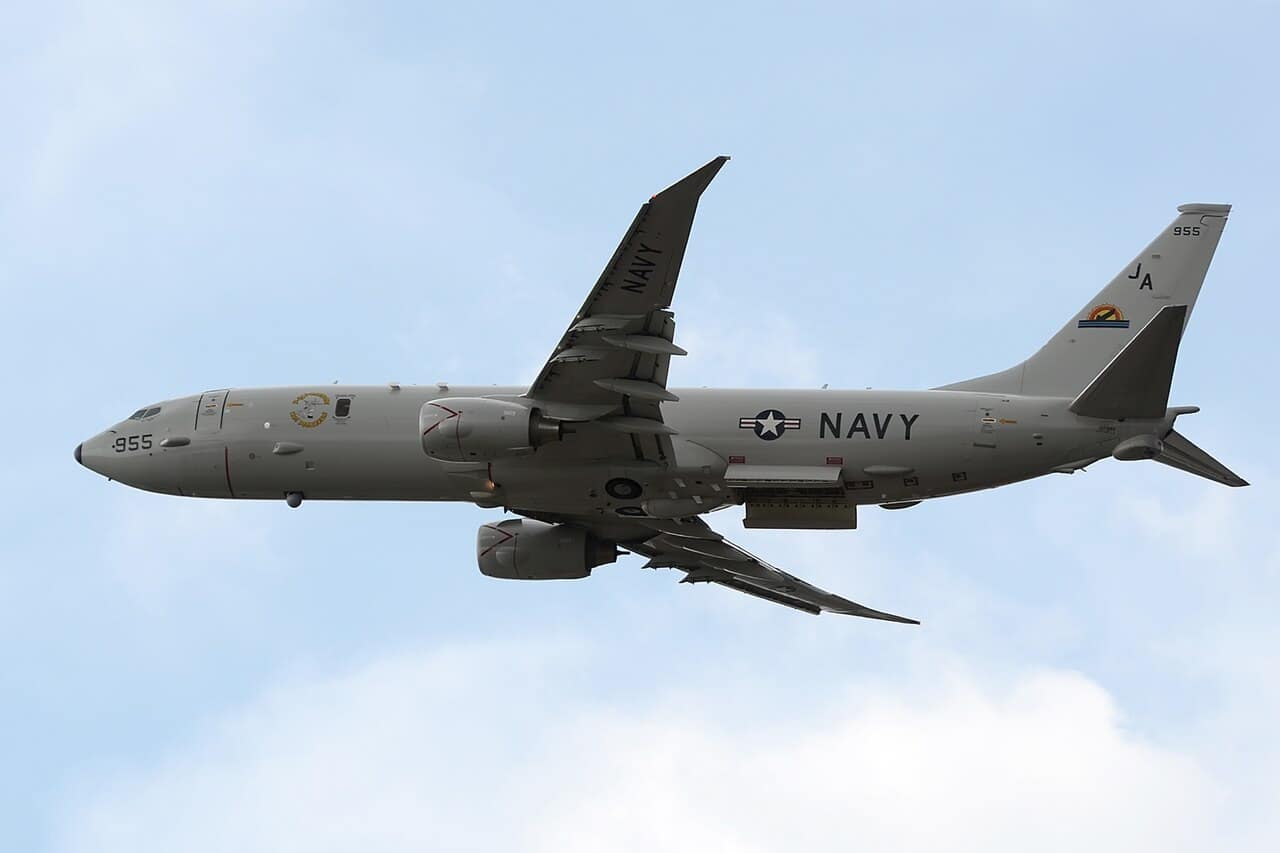
Hunting a submarine is a team sport. This year, at the world’s largest naval exercise, the team stopped stopping at national borders — and started sharing the same aircraft.
For the first time at RIMPAC, the U.S. Navy is flying mixed multinational crews aboard its P-8A Poseidon maritime patrol aircraft. Instead of each nation working its own jet and comparing notes afterward, personnel from several partner nations now sit at the consoles of a single American Poseidon, hunting the same contact together.
| Übung | RIMPAC 2026 (Rim of the Pacific), Hawaii |
| First | Mixed multinational aircrews aboard the same P-8A |
| Flugzeug | Boeing P-8A Poseidon Seeaufklärungsflugzeug |
| Nations flying MPA | US, Japan, Canada, Australia, South Korea, India |
| Mission | Anti-submarine warfare — detect, track, simulate attack |
| Note | ROK Navy’s first RIMPAC P-8A deployment |
One aircraft, many flags
The idea sounds simple and is anything but. Maritime patrol aircraft from the United States, Japan, Canada, Australia, South Korea and India have been folded into a single multinational force, with aircrew from different countries flying together on the same airframe. Getting sailors and airmen from six nations to run a coordinated submarine hunt from one cabin — on shared procedures, shared displays and shared radio discipline — is exactly the kind of thing that is easy to talk about and hard to do.
That is the whole point of RIMPAC. If allies are ever going to fight together, they had better practice sitting shoulder-to-shoulder before the shooting starts.
Why the Poseidon, and why now
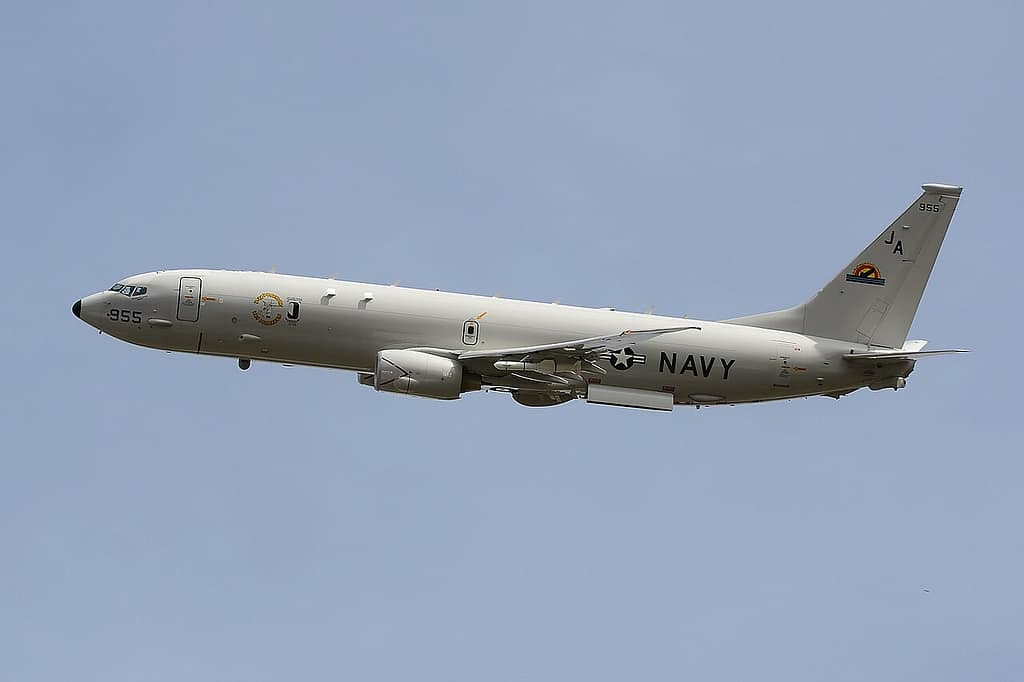
The P-8A is the West’s workhorse sub-hunter: a militarised 737 stuffed with radar, acoustic processors and racks of sonobuoys, able to loiter for hours and drop a web of sensors across the sea. It has quietly become the common thread linking allied navies — the U.S., Australia, South Korea, India and others all fly it — which is precisely what makes a shared-crew experiment possible.
South Korea underlined the trend at this year’s exercise, running a full anti-submarine sequence with its newly introduced P-8A alongside a U.S. Poseidon — searching, classifying, tracking and simulating an attack on a submerged target. It was the ROK Navy’s first RIMPAC deployment of the type, and a marker of how fast the Pacific’s sub-hunting club is growing.
The quiet significance
None of this makes headlines the way a new stealth fighter does. But beneath the surface — literally — the contest for the Pacific is increasingly about who can find the other side’s submarines first. Building crews that can do that together, in one aircraft, is a bigger deal than it looks.
The video below goes inside the P-8A to show how the sub-hunt actually works.
Common aircraft, common training, common crews: at RIMPAC 2026, the allied maritime-patrol community took another step toward fighting as one — and made the ocean a lonelier place for anything trying to hide beneath it.
Sources: DVIDS / U.S. Navy; USNI News; The Korea Times; Zona Militar; Australian Department of Defence.
0 Kommentare