
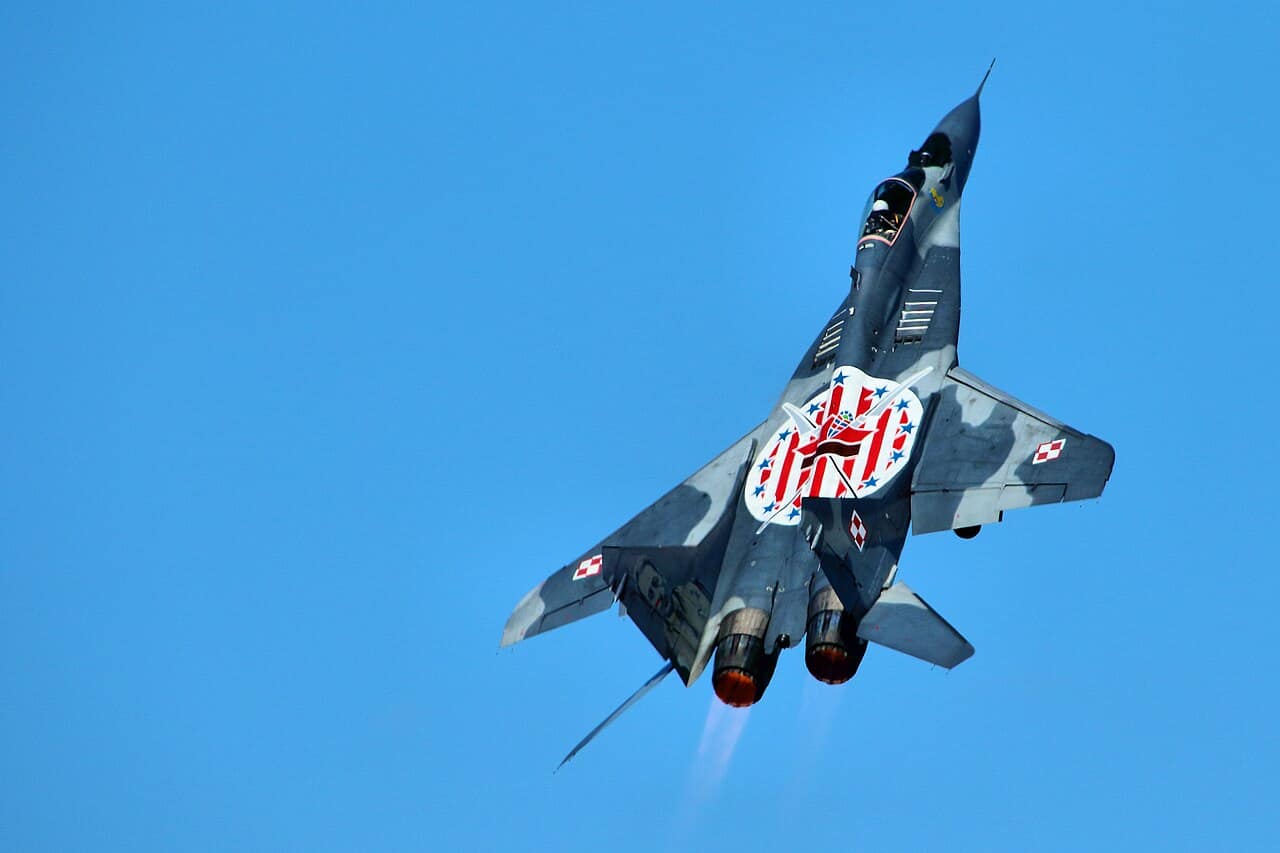
Ask which is better, the MiG-29 oder die Su-30, and you have already misunderstood the question. They were never meant to compete. They are the two halves of a single idea — the Soviet Union's deliberate decision to build one small fighter and one big one, each doing a job the other could not. It is one of the neatest examples in aviation of how a country's whole air-power strategy can be read from two aircraft.
Eine Anforderung, aufgeteilt in zwei
1969 erließ der sowjetische Generalstab eine Anforderung für eine PFI (Perspektivnyy Frontovoy Istrebitel, roughly “advanced frontline fighter”) — a next-generation machine with long range, great agility, Mach 2+ speed and heavy armament, built partly in response to the American F-15. The specification proved too demanding and too expensive to satisfy in a single airframe bought in the numbers the Soviets needed.
Also, etwa 1971, teilten sie es auf. Die schwere Hälfte – die TPFI — ging zum Suchoi design bureau and became the Su-27 Flanker family. The light half — the LPFI — ging zu Mikojan and became the MiG-29 Fulcrum. The planned force was roughly one third heavy fighters, two thirds light. If that sounds familiar, it should: it is almost exactly the logic behind the US Air Force's own “hi-lo” mix of the expensive F-15 and the cheaper F-16 — the fly-off that also gave us die YF-17 Cobra.
Die MiG-29: der leichte Messerkämpfer
Die MiG-29, die 1977 ihren Erstflug absolvierte und 1983 in Dienst gestellt wurde, war als wendiger Frontjäger für den Einsatz in unmittelbarer Nähe des Schlachtfelds konzipiert. Angetrieben von zwei Klimov RD-33 Trotz seiner kompakten Bauweise ist es klein, wendig und im Nahkampf für seine Überlegenheit bekannt. Ausgestattet mit einem Helmvisier und Raketen, die außerhalb des Sichtfelds operieren, bescherten es westlichen Piloten der ersten Stunde eine böse Überraschung, als sie gegen erbeutete Exemplare flogen. Seine Schwächen waren die Kehrseite seiner Stärken: Die geringe Reichweite und der bescheidene Treibstoffvorrat bedeuteten, dass es eher zur Verteidigung eines begrenzten Luftraums als für ausgedehnte Einsätze konzipiert war.
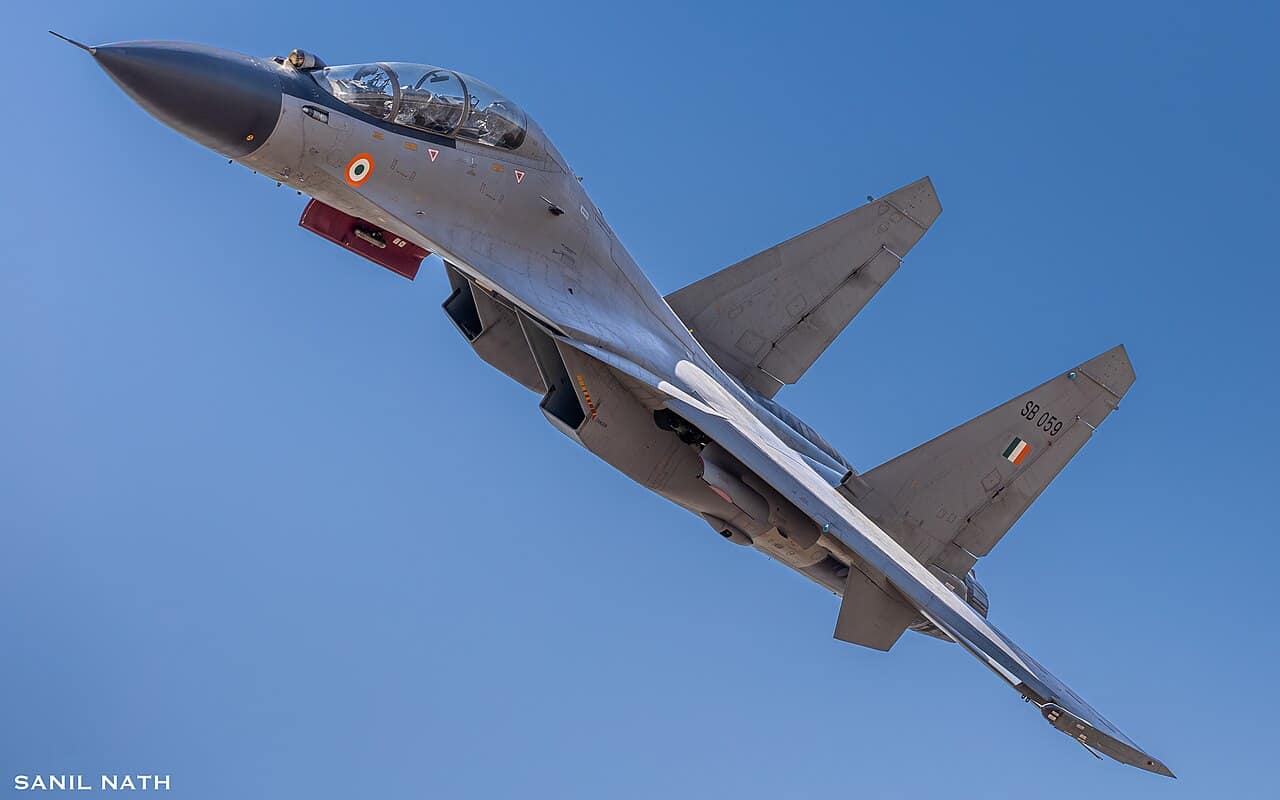
Die Su-30: der Langstrecken-Schwergewichtler
Die Suchoi ging den entgegengesetzten Weg. Die daraus entstandene Su-27 war ein großer, langbeiniger Luftüberlegenheitsjäger mit dem Treibstoff und dem Radar, um riesige Luftraumgebiete zu kontrollieren. Su-30 ist seine Zweisitzer-Mehrzweckentwicklung: Zwillingssitzer Saturn AL-31F Triebwerke, enorme Reichweite, eine schwere und vielfältige Waffenlast und – bei Versionen wie der Su-30MKI – Schubvektorsteuerung für die atemberaubenden Flugmanöver, für die die Flanker-Familie berühmt ist. Wo die MiG-29 ein Messer ist, ist die Su-30 ein Breitschwert, das zudem die gesamte Waffenarsenal tragen kann.
Zwei Antworten, aber kein Gewinner
Deshalb greift ein Vergleich anhand nur eines Kriteriums zu kurz. Die MiG-29 war günstiger, leichter und für den Masseneinsatz zur Frontverteidigung konzipiert; die Su-30 ist schwerer, teurer und für den Einsatz in größeren Gebieten und zur Gebietsüberlegenheit ausgelegt. Zusammen sollten sie das gesamte Spektrum abdecken – genau wie die F-16 und F-15 im Westen.
Von den beiden ist es die kleine Fulcrum, die für die meisten Enthusiasten der Traum ist, einmal darin Platz zu nehmen – und dieser Traum ist durchaus berechtigt. Mit der MiG-29 an den Rand des Weltraums fliegen bleibt eines der außergewöhnlichsten Erlebnisse in der zivilen Luftfahrt.
Verwandte Fragen
Worin besteht der Unterschied zwischen der MiG-29 und der Su-30?
Die MiG-29 und die Su-30 verkörpern zwei Seiten eines sowjetischen Plans: die Entwicklung eines kleinen und eines großen Jagdflugzeugs. Die MiG-29 ist ein leichter Kurzstreckenjäger zur Verteidigung eines begrenzten Luftraums, während die Su-30 ein großer, langstreckentauglicher, zweisitziger Mehrzweckjäger der Flanker-Familie ist. Sie wurden so konzipiert, dass sie sich ergänzen, nicht miteinander konkurrieren.
Warum baute die Sowjetunion sowohl einen leichten als auch einen schweren Jäger?
1969 veröffentlichte der sowjetische Generalstab eine Ausschreibung für einen Jagdbomber der nächsten Generation mit großer Reichweite, Wendigkeit, einer Geschwindigkeit von über Mach 2 und schwerer Bewaffnung, teilweise als Reaktion auf die amerikanische F-15. Die Anforderungen erwiesen sich als zu anspruchsvoll und kostspielig für ein einzelnes, erschwingliches Flugzeug, weshalb man um 1971 die Entwicklung in einen schweren Jäger (die spätere Su-27) und einen leichten Jäger (die spätere Su-27) aufteilte. MiG-29).
Was ist der MiG-29 Fulcrum?
Die MiG-29 Fulcrum ist ein leichter sowjetischer Jäger, der von zwei Klimow-RD-33-Triebwerken angetrieben wird. Sie ist klein, wendig und berühmt für ihre Stärke im Nahkampf. Ihr frühes Helmvisier und die Raketen mit seitlicher Zielerfassung überraschten westliche Piloten. Ihre Schwächen spiegeln ihre Stärken wider: Die geringe Reichweite und der bescheidene Treibstoffvorrat bedeuteten, dass sie eher zur Verteidigung eines begrenzten Luftraums als für den Einsatz in großen Gebieten konzipiert war.
Was ist die Su-30?
Die Su-30 ist eine zweisitzige Mehrzweckmaschine, eine Weiterentwicklung der Suchoi Su-27 Flanker. Sie verfügt über zwei Saturn AL-31F-Triebwerke, eine enorme Reichweite, eine schwere und vielfältige Waffenlast und, in Versionen wie der Su-30MKI, Schubvektorsteuerung für spektakuläre Manöver. Während die MiG-29 ein Kurzstreckenjäger ist, ist die Su-30 für die Kontrolle großer Luftraumgebiete ausgelegt.
Welche Triebwerke verwendet die MiG-29?
Die MiG-29 wird von zwei Klimow-RD-33-Turbofan-Triebwerken angetrieben, die dem leichten Jäger sein hohes Schub-Gewichts-Verhältnis und seine Wendigkeit im Nahkampf verleihen. Diese Wendigkeit, kombiniert mit einem Helmvisier und der Möglichkeit, Raketen außerhalb des Zielbereichs abzufeuern, machte die frühe Fulcrum zu einem gefährlichen Kampfflugzeug. Luftkampf bei hohen G-Kräften.
Basieren die Su-30 auf den Su-27?
Ja. Die Su-30 ist eine zweisitzige Mehrzweckversion des Luftüberlegenheitsjägers Su-27. Die ursprüngliche Su-27 entstand aus der schweren Hälfte der sowjetischen Luftwaffen-Ausschreibung von 1969 und war ein großer, langstreckenfähiger Jäger mit ausreichend Treibstoff und Radar zur Kontrolle großer Luftraumgebiete. Die Su-30 erweiterte dieses Flugzeug um einen zweiten Besatzungsangehörigen und Mehrzweckfähigkeit.
Welches ist besser, die MiG-29 oder die Su-30?
Keines der beiden Flugzeuge ist per se besser; sie wurden für unterschiedliche Aufgaben entwickelt. Die MiG-29 glänzt als kleiner, wendiger Kurzstreckenjäger, während die Su-30 in puncto Reichweite, Radar und Waffenlast dominiert. Die Frage nach dem besseren Flugzeug verkennt die sowjetische Konstruktionslogik, die eine Anforderung bewusst in einen leichten und einen schweren Jäger aufteilte, sodass jeder das leisten konnte, was der andere nicht konnte.
0 Kommentare