
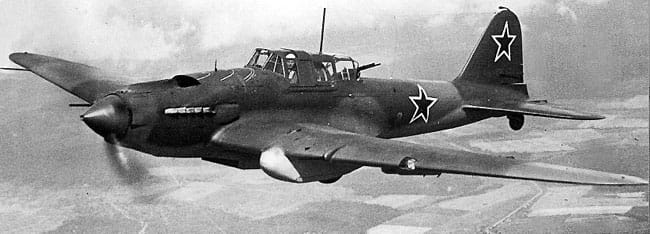
With 36,183 examples built, the Ilyushin Il-2 Sturmovik is the most-produced military aircraft in history — and arguably the most important ground-attack platform of the Second World War. Soviet infantry called it "the flying tank." German soldiers called it "der schwarze Tod" — the Black Death. Stalin himself declared it as essential to the Red Army as bread and air.
- Erster Flug: 2 October 1939 (TsKB-55 prototype)
- Rolle: Ground-attack / close air support
- Designer: Sergei Vladimirovich Ilyushin
- Motor: Mikulin AM-38F liquid-cooled V-12
- Rüstung: 700 kg armoured shell protecting engine, cockpit, and fuel tanks
- Rüstung: 2 × 23 mm cannons, 2 × 7.62 mm machine guns, up to 600 kg of bombs, 8 × RS-82 rockets
- Insgesamt gebaut: 36,183
An Armoured Shell That Could Fly
What made the Il-2 unique was its construction. Designer Sergei Ilyushin built the aircraft around a 700-kilogramme armoured bathtub — a shell of steel plate between 4 and 12 millimetres thick that enclosed the engine, fuel tanks, coolant system, and cockpit. The armour was not bolted on; it was a structural part of the airframe, replacing what would normally be an aluminium monocoque. The result was an aircraft that could absorb extraordinary punishment from ground fire and keep flying.
Small-calibre rounds bounced off the armour plate. Even 20 mm cannon hits often failed to bring down an Il-2. Pilots returned to base with dozens of holes in their aircraft, engines shot to pieces, control surfaces shredded — and landed safely. No other ground-attack aircraft of the war offered anything close to this level of protection.
Stalin's Telegram
Early in the war, the Il-2 was produced as a single-seat aircraft, leaving the rear gunner position empty to save weight and increase production speed. Losses to German fighters attacking from behind were catastrophic. When production at one factory fell behind schedule, Stalin sent a now-famous telegram to the plant directors reminding them that the Il-2 was needed by the Red Army "like bread, like air" and demanding immediate increases in output.
The message worked. Production ramped up to staggering levels — at peak output, factories were turning out more than 40 Il-2s per day. The two-seat version, with a rear gunner armed with a 12.7 mm UBT machine gun, entered service in 1943 and dramatically reduced losses to fighter attack.
The Battle of Kursk
The Il-2 reached its peak effectiveness during the Battle of Kursk in July 1943, the largest tank battle in history. Soviet Sturmovik units deployed PTAB anti-tank bomblets — small shaped-charge submunitions carried in cassettes of up to 280 per aircraft. A single Il-2 pass could scatter PTABs across an area the size of a football pitch, and each bomblet could penetrate the thin top armour of any German tank, including the Tiger and Panther.
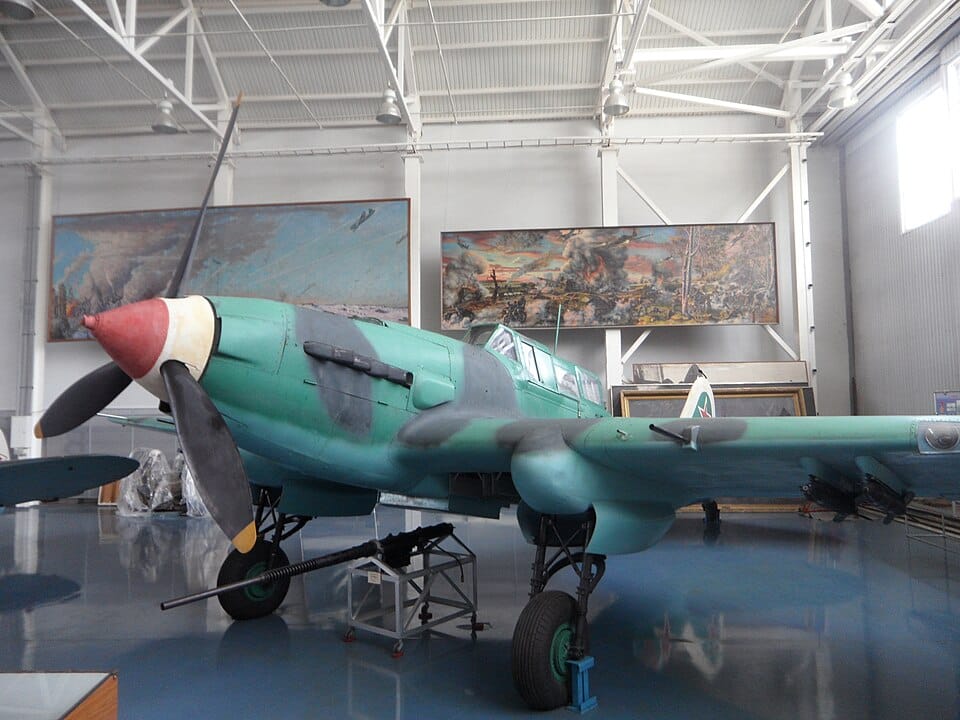
At Kursk, massed Il-2 formations attacked German armoured columns in waves, softening them up before Soviet tank counterattacks. German after-action reports describe entire panzer companies halted or destroyed by Sturmovik strikes. The combination of Il-2 air attacks and Soviet armoured reserves broke the back of the German offensive and marked the turning point of the Eastern Front.
Legacy of the Flying Tank
The Il-2 was not a sophisticated machine. It was slow, not particularly manoeuvrable, and vulnerable from the rear in its early versions. But it was tough, simple enough for hastily trained pilots to fly, and produced in numbers that overwhelmed German defences through sheer volume. The Sturmovik proved that in total war, quantity combined with adequate quality can be decisive.
Its influence echoes in every dedicated close air support aircraft that followed — from the American A-1 Skyraider in Vietnam to the A-10 Thunderbolt II, which inherited the Il-2's philosophy of building an armoured aircraft around a massive gun. With 36,183 built, the Il-2 holds a production record that will almost certainly never be broken.
Verwandte Fragen
What was the Il-2 Sturmovik?
The Ilyushin Il-2 Sturmovik was a Soviet ground-attack aircraft of the Second World War and, with 36,183 built, the most-produced military aircraft in history. Soviet infantry called it “the flying tank” and German troops “der schwarze Tod” — the Black Death. Stalin declared it as essential to the Red Army as bread and air.
Why was the Il-2 so hard to shoot down?
Designer Sergei Ilyushin built the Il-2 around a 700-kilogram armoured “bathtub” — a structural shell of steel plate 4 to 12 mm thick enclosing the engine, cockpit and fuel tanks. Small-calibre rounds bounced off it and even 20 mm cannon hits often failed to bring the aircraft down, letting pilots return riddled with holes.
How many Il-2s were built?
A total of 36,183 Il-2 Sturmoviks were built, making it the most-produced military aircraft ever and one of the most-produced piston-engine aircraft of any kind. This staggering output reflected its central role in Soviet close air support on the Eastern Front.
What was Stalin's telegram about the Il-2?
Early Il-2s were single-seaters, and losses to German fighters attacking from the undefended rear were catastrophic. When one factory fell behind on production, Stalin sent a now-famous telegram reminding directors that the Il-2 was needed by the Red Army “like bread, like air,” demanding output be increased immediately.
What weapons did the Il-2 carry?
The Il-2 was armed with two 23 mm cannons, two 7.62 mm machine guns, up to 600 kg of bombs and eight RS-82 rockets, powered by a Mikulin AM-38F V-12 engine. This mix let it attack tanks, vehicles and troops — the close-support role that made it feared on the Eastern Front where aces like Lydia Litvyak also fought.
How did the Il-2 compare to other WWII aircraft?
No other ground-attack aircraft of the war offered anything close to the Il-2's protection, and its production run dwarfed every rival. It stands in sharp contrast to desperate late-war designs such as Germany's He 162 Volksjäger, rushed out in a matter of days as the Reich collapsed.
0 Kommentare