

The US Army Air Forces didn't want them. The military establishment was convinced, and had "proved" through pseudo-scientific studies, that Black men lacked the intelligence, the nerve, and the coordination to fly combat aircraft. When political pressure from civil rights organisations and President Roosevelt forced the creation of a Black flying unit in 1941, the Army placed it at Tuskegee, Alabama — in the Deep South, on a segregated base, with equipment that was deliberately kept inferior, in what many believed was a programme designed to fail. The Tuskegee Airmen then proceeded to compile one of the most distinguished combat records of the entire war.

The Experiment That Was Supposed to Fail
The 1940 Army Air Corps report that purported to prove Black pilots were unsuitable for combat was not science — it was bureaucratic cover for racial policy. The arguments were the same ones used to keep Black men out of every skilled military role: they lacked "initiative," they were "easily confused," they would not fight effectively under pressure. These claims had no evidential basis. They were assertions designed to justify exclusion.
The Tuskegee training programme began in 1941. The first class of five pilots graduated in March 1942. They trained on the same aircraft as white pilots. They faced the same curriculum. They also faced constant institutional resistance: segregated mess halls, inferior housing, denial of promotions, refusal to assign them to combat theatre. Many of the early graduates spent months at Tuskegee waiting for assignments that never came, flying proficiency flights over Alabama while white pilots with less experience were sent to Europe and the Pacific.
Into Combat: North Africa and Italy
The 99th Pursuit Squadron — the first Tuskegee unit to reach combat — deployed to North Africa in April 1943. Its initial combat commander, Colonel Benjamin O. Davis Jr. (the son of the first Black general in the US Army, and himself one of only two Black graduates of West Point in the 1930s), faced immediate attempts to have the squadron removed from combat duty on the basis of a negative performance review filed by a white commander with a clear racial agenda.
Davis flew to Washington, testified before a committee, and presented the actual combat record. The 99th had performed comparably to every other squadron operating in the same theatre, under the same conditions. The removal order was rejected. The 99th continued flying, and the 332nd Fighter Group — incorporating the 99th and three additional squadrons — was formed in Italy in 1944.
“Bomber crews across the 15th Air Force requested the Red Tails as their escorts. Word had spread: the 332nd didn't leave its charges to chase enemy fighters for personal kill counts. They flew their mission.”
— The reputation of the Tuskegee Airmen in combatThe Red Tails Over Europe

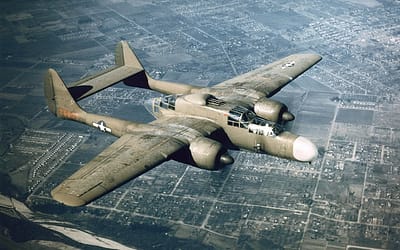
The 332nd flew its aircraft with red-painted tails — a marking that became so recognised among the heavy bomber crews they escorted that they specifically requested "Red Tails" as their protection. The reason was straightforward and tactical: the 332nd prioritised escort duty above individual kill counts. Many fighter groups allowed their pilots to break away from bomber formations to chase enemy interceptors, resulting in kills for the fighter pilots but exposure for the bombers they were supposed to protect. The Red Tails stayed with their bombers.
Over 200 missions escorting heavy bombers, the 332nd never lost a bomber to enemy aircraft — a record unmatched by any other escort group in the 15th Air Force. This is the statistic most frequently cited about the Tuskegee Airmen, and it was not an accident. It reflected a deliberate tactical philosophy and extraordinary discipline under fire.
The Long Reckoning
The Tuskegee Airmen flew 15,553 sorties, flew 1,578 missions, and produced 96 aerial victories against enemy aircraft. 66 pilots were killed in action. Thirty-two were captured and became prisoners of war. Benjamin O. Davis Jr. rose to become the first Black general in the United States Air Force. In 2007, the surviving Tuskegee Airmen were collectively awarded the Congressional Gold Medal — the highest civilian honour Congress can bestow.
Their broader legacy extended beyond the combat record. In 1948, President Truman signed Executive Order 9981, desegregating the US military — a decision driven partly by the undeniable evidence that Black servicemen had fought with distinction in every arm of the military, and that the justifications for segregation had been exposed as lies. The Tuskegee Airmen didn't just fight for America; they fought against a version of America that had told them what they were capable of, and then proved it wrong in the skies over Italy and Germany.
Sources: National Archives WWII records; Robert A. Rose, Lonely Eagles (1976); Stanley Sandler, Segregated Skies (1992); National Museum of the US Air Force; Congressional Record, 2007.
Verwandte Fragen
Who were the Tuskegee Airmen?
The Tuskegee Airmen were the first African American military pilots in the US armed forces, trained from 1941 at Tuskegee, Alabama. Flying in segregated units such as the 99th Pursuit Squadron and the 332nd Fighter Group, they compiled one of the most distinguished combat records of World War II despite intense racial prejudice.
Why were the Tuskegee Airmen created?
They were created in 1941 after civil rights organisations and President Roosevelt pressured a reluctant military to form a Black flying unit. The Army placed the programme on a segregated base in Alabama with deliberately inferior conditions — a setup many believed was designed to fail. The airmen succeeded anyway.
What were the Red Tails?
"Red Tails" was the nickname for the 332nd Fighter Group, whose aircraft had distinctively painted red tails. Flying bomber-escort missions over Europe, the group earned a strong reputation among the crews they protected, and the name later became shorthand for the Tuskegee Airmen as a whole.
How many missions did the Tuskegee Airmen fly?
The Tuskegee Airmen flew more than 15,000 combat sorties during World War II, escorting heavy bombers and attacking ground targets across North Africa, Italy and Europe. They became known for their record of protecting the bombers they were assigned to escort.
Where did the Tuskegee Airmen first see combat?
The 99th Pursuit Squadron, the first Tuskegee unit to reach the front, entered combat over North Africa and then Italy. Early graduates had spent frustrating months at Tuskegee waiting for assignments while less experienced white pilots were deployed, before finally being sent into the Mediterranean theatre.
What discrimination did the Tuskegee Airmen face?
They faced segregation at every turn: separate mess halls, inferior housing, denial of promotions, and refusal to assign them to combat. The justification rested on a 1940 Army report claiming Black men lacked the intelligence and nerve to fly — a document with no evidential basis, written to justify exclusion.
When did the first Tuskegee pilots graduate?
The first class of five pilots graduated in March 1942, after training began at Tuskegee in 1941. They trained on the same aircraft and followed the same curriculum as white pilots, while enduring constant institutional resistance and long delays before being allowed into combat.
Wer war Bessie Coleman?
Bessie Coleman was a pioneering African American aviator who, refused flight training in the United States, learned to fly in France and earned her licence in 1921 — the first Black woman to do so. Her example helped pave the way for later Black aviators, including the Tuskegee Airmen.
0 Kommentare