
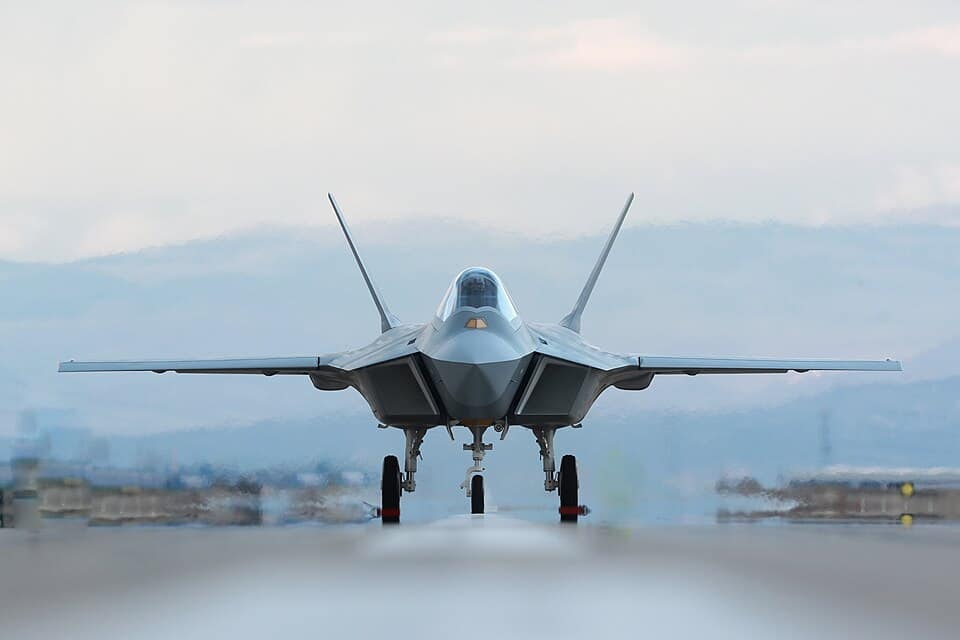
Quick Facts: KAAN Engine Deal
- Motor: General Electric F110 turbofan
- Deal value: More than $700 million (roughly 80 engines)
- Flugzeug: TAI KAAN (TF-X) fünfter Generationsjäger
- Congressional review: 15 days from notification
- Kontext: Timed ahead of NATO Ankara summit, 7–8 July 2026
- F-35 status: Turkey remains excluded from the F-35 programme (separate issue)
An Engine Turkey Cannot Build — Yet
The KAAN first flew in February 2024 on a pair of F110 engines — a proven powerplant that already drives the F-16, F-15K, and the UAE's F-16E/F Block 60. But Turkey's long-term plan calls for a domestically developed TEI TF-35000 engine. That engine does not exist yet. Without the F110, the KAAN programme stalls on the runway. The sale gives Turkey a bridge engine: enough F110s to power the initial production run of KAANs while TEI works on the indigenous alternative. It is a pragmatic move by both sides — Washington gets $700 million and tighter defence ties with a NATO ally sitting on the Black Sea; Ankara gets the powerplant it needs to keep its fighter programme on schedule.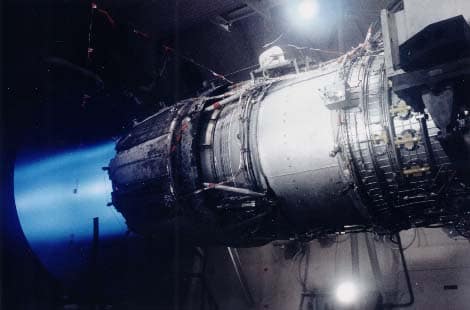
The F-35 Question Lingers
Turkey was kicked out of the F-35 programme in 2019 after purchasing Russia's S-400 missile system. Washington said the two systems were incompatible — the S-400's radar could learn to track the F-35's stealth signature. Ankara called it extortion. The dispute has never been resolved. The F110 sale is explicitly separated from the F-35 question. Administration officials have stressed that selling engines for Turkey's indigenous fighter does not imply any path back to the F-35 Joint Strike Fighter programme. But the timing — days before NATO's Ankara summit — is no accident. Washington wants something from Ankara at that table, and $700 million in jet engines is one way to get it.Was kommt als Nächstes?
If Congress does not block the deal within 15 days, deliveries could begin as early as 2027. That timeline aligns with Turkey's plan to begin low-rate initial production of the KAAN, with Turkish Air Force operational capability targeted for the late 2020s. The bigger question is whether Turkey can make the TF-35000 work. If it can, the KAAN becomes a fully sovereign fighter — exportable without American veto. If it cannot, Turkey will depend on GE engines indefinitely, giving Washington lasting leverage over Ankara's air power. Either way, the $700 million buys Turkey time. And in the defence business, time is the most expensive commodity of all.Sources: Reuters, Defense News, U.S. Defense Security Cooperation Agency, Anadolu Agency
Verwandte Fragen
Was ist TAI KAAN?
The KAAN (formerly TF-X) is Turkey’s fifth-generation stealth fighter, developed by Turkish Aerospace Industries. It first flew in February 2024 and is intended to replace Turkey’s F-16 fleet, giving Ankara a domestically built advanced fighter.
What engine powers the KAAN?
Early KAAN fighters use the General Electric F110 turbofan, the same proven engine that powers the F-16 and F-15K. Turkey plans to switch to an indigenous TEI TF-35000 engine later, but that powerplant does not yet exist.
Why is the US selling F110 engines to Turkey?
The United States approved a sale of more than $700 million in GE F110 engines (roughly 80) to power the initial run of KAAN fighters while Turkey develops its own engine. It was timed ahead of the NATO Ankara summit on 7–8 July 2026 and deepens U.S.-Turkey defense ties.
Is Turkey part of the F-35 program?
No. Turkey was removed from the F-35 program in 2019 after buying Russia’s S-400 air-defense system, which Washington said could compromise the jet’s stealth. The F110 engine sale is kept separate from the unresolved F-35 program dispute.
Wann absolvierte die KAAN ihren Erstflug?
The KAAN made its maiden flight in February 2024, powered by two General Electric F110 engines. The aircraft is central to Turkey’s goal of building an independent advanced-fighter industry.
Which countries are developing new stealth fighters?
Several nations are pursuing advanced fighters, including Turkey with the KAAN and a UK-Japan-Italy team building the GCAP-Kampfflugzeug der sechsten Generation. These programs aim to reduce reliance on U.S. jets like the F-35.
0 Kommentare