
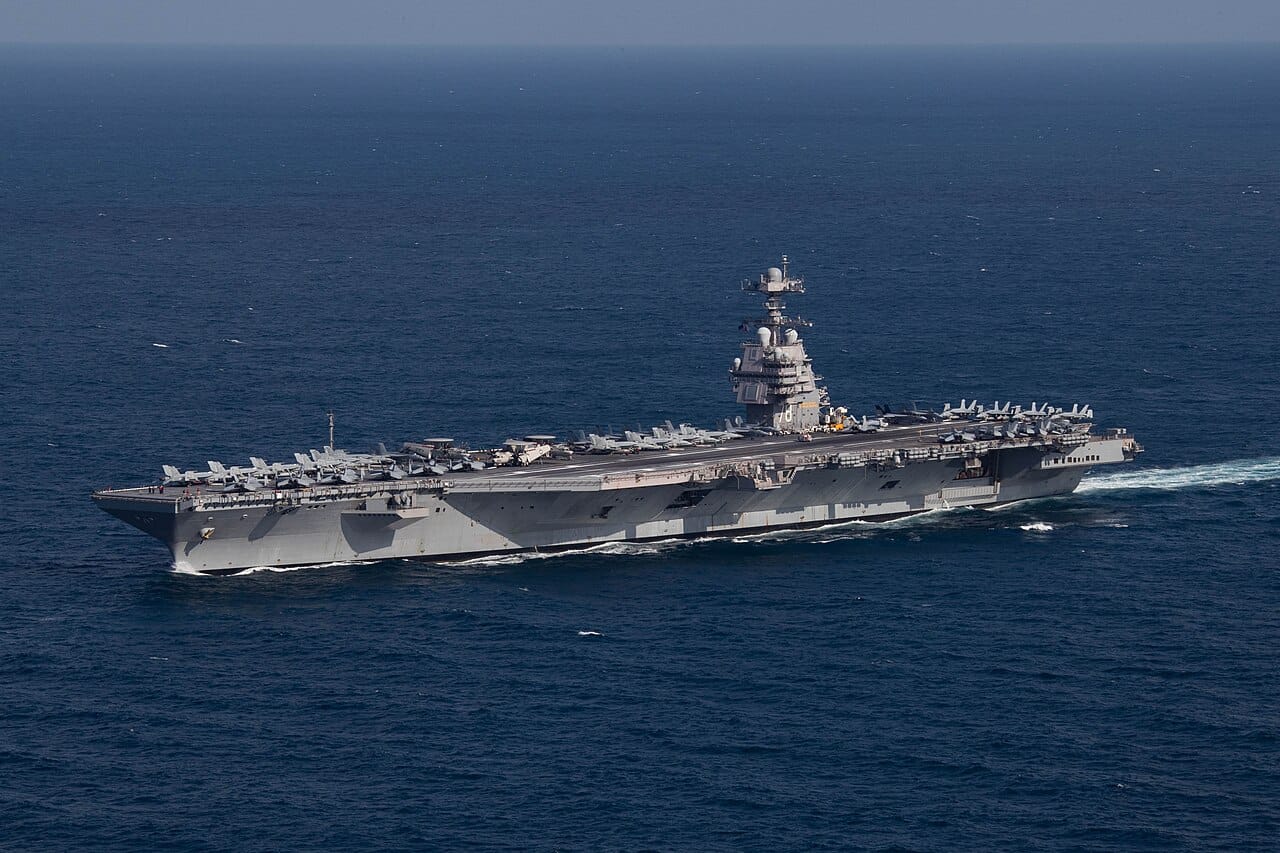
For a quarter of a century the U.S. Navy bet the future of its supercarriers on a catapult with no steam and no pistons: a magnetic sled that flings a 30-ton fighter off the bow with a silent electromagnetic pulse. It cost billions to build and took years to tame.
On August 13, 2026, President Donald Trump signed a national-security memorandum telling the Navy to tear it out and go back to steam.
The order does not touch the three Ford-class carriers already built around the electromagnetic system. It lands on the fourth: the future USS Doris Miller, whose keel is due to be laid by the end of this year.
Kurzinfo
- Die Bestellung: National-security memorandum signed by President Trump, Aug 13, 2026
- Ship affected: USS Doris Miller (CVN-81), the fourth Ford-class carrier
- Ripped out: EMALS, the Electromagnetic Aircraft Launch System
- Going back to: Steam catapults, as used on every Nimitz-class carrier
- Already committed to EMALS: CVN-78 Gerald R. Ford, CVN-79 John F. Kennedy, CVN-80 Enterprise
- EMALS builder: General Atomics, under a roughly $1.2 billion EMALS and Advanced Arresting Gear contract
- Doris Miller delivery: Expected early 2034
A memo, and a 25-year reversal
The memorandum orders the Navy to abandon the Electromagnetic Aircraft Launch System, or EMALS, on the next carrier in the Gerald R. Ford class and replace it with the steam catapults the fleet has used since the 1950s. The same document, according to USNI News and Breaking Defense, also clears the way for some naval vessels to be built in foreign shipyards and calls for standing up a fifth public shipyard.
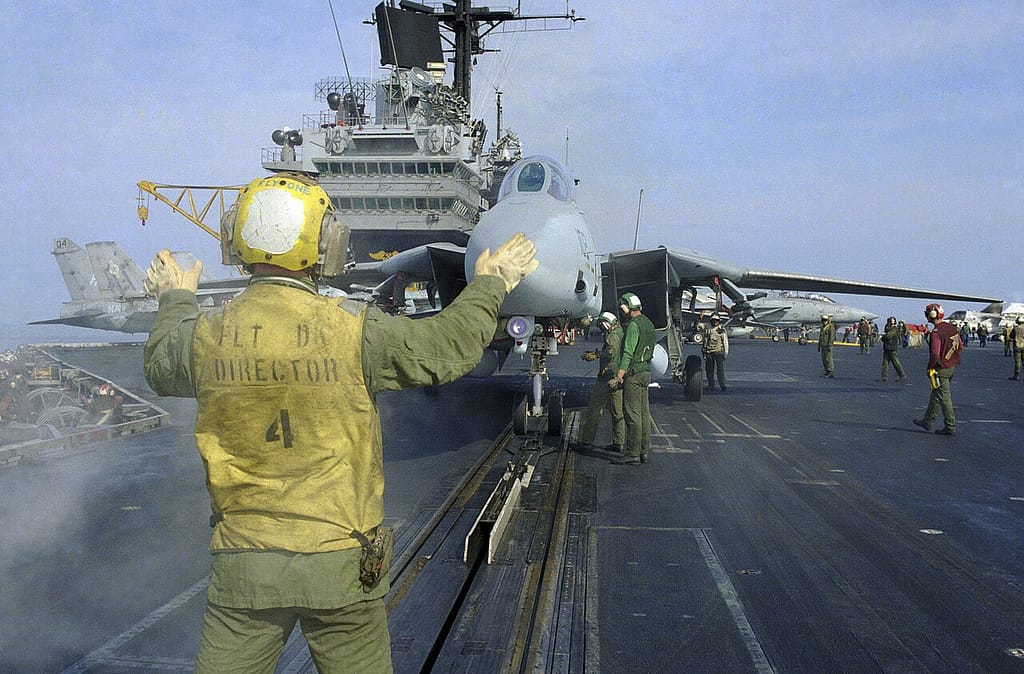
EMALS replaces a bank of steam pistons with a linear induction motor buried under the flight deck. Drawing power from the Ford's twin A1B reactors, it accelerates the launch shuttle with a precisely controlled magnetic pulse, and its backers say it is gentler on airframes, faster to recharge between launches, and able to fling everything from a heavy strike fighter to a light drone off the same track.
None of that spared it from the President's long-running dislike.
Why Trump never trusted the magnetic catapult
Trump has been complaining about EMALS since his first term. In a 2017 interview with Time, he described being briefed on the system aboard a carrier and concluding that the old way was better, arguing that the electromagnetic gear was so complicated it would take a genius to keep it running.
Early in the program the criticism had teeth. The system suffered reliability problems during the Ford's testing and shakedown years, with reported failures between launches that dented confidence in the new technology before the crew worked the bugs out.
General Atomics pushes back
General Atomics, the California firm that builds both EMALS and the Ford class's Advanced Arresting Gear under a contract worth roughly $1.2 billion, did not welcome the reversal. The company noted that work on the Doris Miller's launch and recovery gear is already close to half finished, and warned that switching systems now would pile on cost, schedule and integration risk.
Ripping a nearly-built electromagnetic system out of a ship that was designed around it, and re-engineering the hull for steam plumbing instead, is not a simple swap. Independent estimates cited in the coverage put the redesign bill in the hundreds of millions of dollars.
What it means for the fleet
For now the change is surgical. The Gerald R. Ford is already at sea with EMALS, the John F. Kennedy is running its acceptance trials with the same gear, and the Enterprise is being built around it. Only the Doris Miller, still mostly steel and schematics, is far enough from completion to change course, and even then the Navy expects delivery only in the early 2030s.
The deeper fight is philosophical. Steam is proven, simple and understood by generations of sailors. EMALS is newer, in theory cheaper to run over a career, and able to launch the light unmanned aircraft the Navy wants to fly from its decks in the years ahead. The memo settles the argument for one ship. It does not settle it for the fleet.
Sources: USNI News, Breaking Defense, The Hill, Time (2017)


0 Kommentare