

The Trump administration's FY2027 defence budget is a masterclass in strategic betting. At $1.5 trillion—with the base budget breaching $1 trillion for the first time ever—it's less about growth and more about ruthless prioritization. While some weapons systems are getting funding injections that look like victory, others are being quietly starved, delayed, or eliminated. The winners are fighter jets and hypersonic missiles. The losers? Army helicopters and legacy air platforms.
This isn't a typical defence budget that spreads money across the entire industrial base. This one has clear architectural preferences: it's betting on expensive, technologically advanced platforms while systematically defunding conventional rotorcraft that have served the military for decades. For defence contractors and strategists, understanding who won and who lost in this budget is understanding where American military doctrine is heading.
Kurzinfo
| Total Budget | $1.5 trillion FY2027 (first $1T+ base budget) |
| Biggest Winner | F-47 stealth fighter: $5 billion (+$1.5B from FY26) |
| Biggest Loser | Apache helicopter: cut 99.6% (from $361.7M to $1.5M) |
| Space Force Growth | 77% increase to $71.2 billion |
| Missile Surge | Air Force: $6.3B→$11.4B; Army: $7B→$37B |
A Historic Budget Ceiling, and a Deliberate Redistribution
Breaking $1 trillion in a base (non-supplemental) defence budget is a historic milestone. The Trump administration is committing $1.15 trillion in base spending plus an additional $350 billion in what's classified as "reconciliation" funding—essentially off-budget mechanisms that allow for defence spending without the formal appropriations scrutiny. For the services themselves, the message is clear: don't expect more money for everything. Expect more money for the priorities the administration cares about, and losses everywhere else.
The Navy is getting $150 billion ($126 billion base plus $24 billion reconciliation), primarily directed toward an ambitious shipbuilding plan of 34 vessels—18 battle force ships and 16 supporting vessels. The Air Force and Space Force combined receive $101.2 billion. The Army gets $60.5 billion. But within those envelopes, the sub-allocations reveal a doctrine shift so severe it's leaving some of the military's most experienced pilots and crews wondering what their platforms' futures hold.
The Fighter Jet Renaissance: F-47 Ascendant
The clear victor in this budget cycle is the F-47, a next-generation stealth fighter that's receiving a whopping $5 billion—a $1.5 billion increase from FY2026. This is not incremental growth. This is acceleration. The F-47 programme is being treated as a cornerstone of future air superiority, and the Trump administration is clearly signalling that advanced fighter development is non-negotiable spending.
For context, that $5 billion alone exceeds the total budgets of several smaller defence programmes. It signals confidence in the platform and a willingness to absorb the costs of developing 21st-century air dominance. The F-47 will be technologically more advanced than anything currently flying, and this budget ensures the timeline stays intact.

The Missile Revolution: Hypersonics and Air Force Arsenal
But the real story isn't fighter jets alone—it's the massive reallocation toward missile systems. The Air Force missile procurement budget nearly doubled, from $6.3 billion to $11.4 billion. The Army's missile spending exploded from $7 billion to an astonishing $37 billion. That's a five-fold increase in Army missile investment.
This reflects a strategic pivot toward hypersonic and long-range precision strike capabilities. The administration is betting that future conflicts will be decided by standoff distances measured in hundreds of miles, not by close-in dogfights. The scale of this shift is profound—missiles are cheaper to operate than manned aircraft, can be deployed faster, and offer fewer pilot-related variables. It's a move away from traditional air-combat doctrine and toward network-centric warfare dominated by sensors and smart munitions.
Space Force: The 77 Percent Winner
The Space Force budget increased 77 percent to $71.2 billion—the single largest percentage increase granted to any service branch. This includes funding to grow the Space Force's active duty end strength from 10,657 personnel to 13,200, a significant personnel expansion. The Space Force is being treated as a co-equal to traditional air forces, with infrastructure, personnel, and operational systems all receiving unprecedented growth.
Additionally, the budget funds the Golden Dome missile shield programme at $17.5 billion, though only $400 million appears in the base budget with the remainder coming through reconciliation. This air defence system is designed to protect critical infrastructure and represents a strategic bet on layered defence architecture.
The Helicopter Graveyard: Apache, Black Hawk, and Chinook Devastated
If winners are clear, the losers are brutally obvious. Army helicopter procurement has been nearly eliminated. The AH-64 Apache attack helicopter programme saw procurement funding cut from $361.7 million to just $1.5 million—a 99.6 percent reduction. The UH-60 Black Hawk, the workhorse transport helicopter, dropped from $913 million to $39.3 million. The CH-47 Chinook fell from $629 million to $210 million.
This isn't a gradual decline. This is a near-total halt to rotorcraft acquisition. For helicopter pilots and manufacturers, the message is unmistakable: the Army is preparing for a future where helicopters play a diminished role. The doctrine shift suggests manned rotorcraft are being viewed as too vulnerable in peer-conflict scenarios dominated by air defence systems and drone swarms.
The Forgotten Programmes: F/A-XX, E-7 Wedgetail, and Tanker Research
Beyond helicopters, several other programmes got the cold shoulder. The Navy's next-generation fighter, the F/A-XX, received only $140 million—a pittance compared to what early development typically requires. The E-7 Wedgetail airborne early warning aircraft, promoted internationally, received zero funding in both research and development and procurement. Next-generation aerial refueling tanker research appears to have ceased entirely, suggesting the administration believes current KC-46 Pegasus production meets future needs.
The Sentinel ICBM programme, critical for strategic nuclear deterrence modernization, saw a $300 million cut to $4.5 billion, suggesting some concern about programme efficiency or cost overruns.
The Autonomous Question: CCA Drone Wingmen Get a Seat at the Table
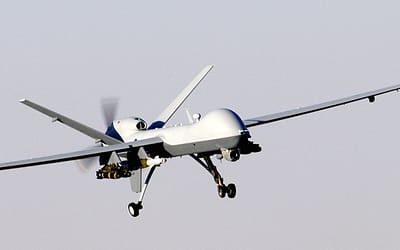
One bright spot for innovation programmes is funding for Collaborative Combat Aircraft (CCA) drone wingmen, which received approximately $1 billion. These autonomous or semi-autonomous systems are designed to operate alongside manned fighters, multiplying the combat effectiveness of each pilot while reducing pilot workload and risk. It's a technological hedge—if manned fighters become too vulnerable, drone wingmen can fill the gap.
What This Budget Reveals
The FY2027 defence budget is a strategic document written in numbers. It reveals an administration betting heavily on technological edge (F-47, missiles, space), accepting the obsolescence of conventional rotorcraft, and hedging with autonomous systems. It's accepting near-term operational gaps in helicopter transport to fund long-term strategic advantages.
For the defence industrial base, this budget creates clear winners: F-47 contractors, missile manufacturers, and Space Force suppliers will thrive. For others—especially rotorcraft manufacturers and their supply chains—the outlook is grim. The age of the attack helicopter appears to be ending, at least in how the American military envisions future warfare. That's a profound shift, and this budget makes it official.
Sources: Department of Defence FY2027 Budget Request Summary; Congressional Budget Office defence programme analysis; USAF and Army budget justification documents; Space Force personnel and funding reports.
Verwandte Fragen
How big is the FY2027 U.S. defence budget?
The Trump administration's FY2027 defence budget totals $1.5 trillion, with the base budget breaching $1 trillion for the first time ever. It combines roughly $1.15 trillion in base spending with about $350 billion in separate 'reconciliation' funding.
Who are the winners in the 2027 defence budget?
Fighter jets and hypersonic missiles are the clear winners. The F-47 stealth fighter receives $5 billion, and missile accounts surge across the services, reflecting a deliberate bet on advanced, high-end platforms for a possible peer conflict.
Who are the losers in the 2027 defence budget?
Army helicopters and legacy air platforms are the biggest losers. The AH-64 Apache program is cut by 99.6 percent, from $361.7 million down to just $1.5 million, as the budget redirects money toward stealth fighters, missiles and Space Force buildup.
How much does the F-47 fighter get in the 2027 budget?
Der F-47 stealth fighter receives $5 billion in fiscal 2027, an increase of $1.5 billion over the prior year. It is the single biggest winner in the budget, underscoring the priority placed on sixth-generation air superiority.
How much is the Space Force budget growing?
The U.S. Space Force budget grows 77 percent to $71.2 billion in the FY2027 request. The increase funds expanding constellations and the Space Force buildup needed to protect satellites in an increasingly contested orbital environment.
What is 'reconciliation' funding in the defence budget?
Reconciliation funding refers to roughly $350 billion in defence spending added on top of the $1.15 trillion base budget through off-budget mechanisms. Because it sits outside the formal appropriations process, it faces less scrutiny than ordinary defence spending.
Why is the 2027 budget favouring missiles?
The budget bets heavily on long-range and hypersonic missiles, with Air Force missile spending rising from $6.3 billion to $11.4 billion and Army missile funding jumping from $7 billion to $37 billion. The shift reflects lessons about mass and standoff firepower in modern war.

0 Kommentare