
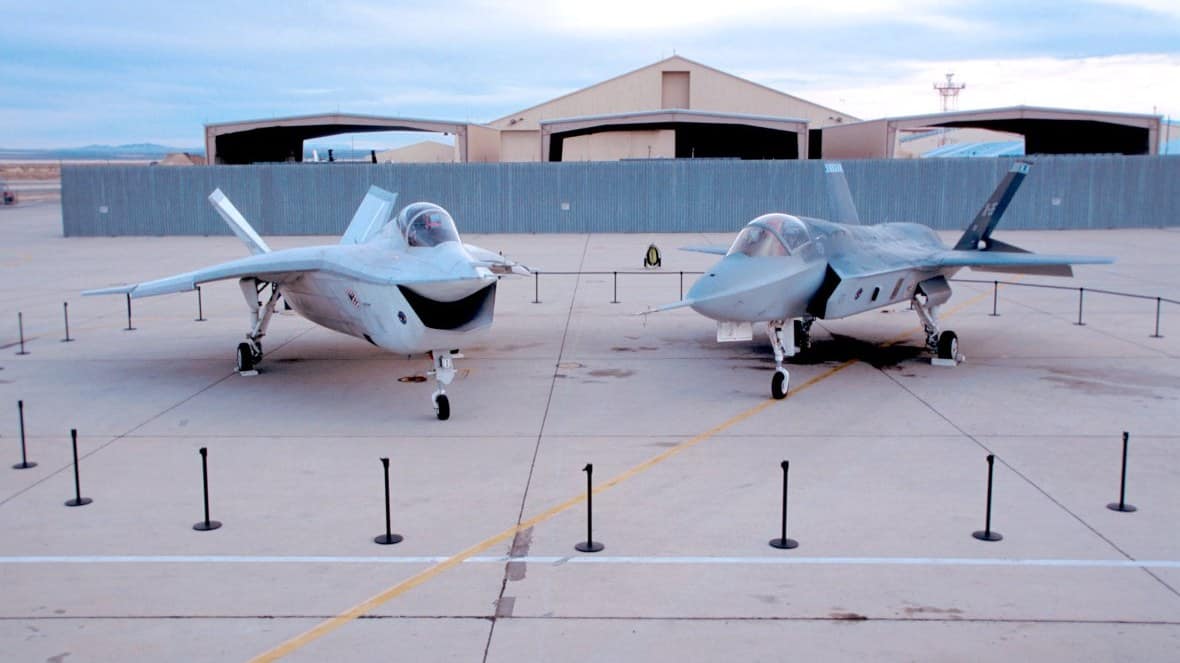
Am Nachmittag des Freitags, dem 26. Oktober 2001, trat Edward “Pete” Aldridge, der Beschaffungschef des Pentagons, in Washington ans Rednerpult. Dreitausend Kilometer entfernt versammelten sich Boeing-Chef Phil Condit und sein Joint-Strike-Fighter-Chef Frank Statkus mit ihren Teams vor einem Fernseher. In Fort Worth, Texas, taten es ihnen Tausende von Lockheed-Martin-Mitarbeitern gleich. “Wir sind heute hier, um das größte Beschaffungsprogramm in der Geschichte des Verteidigungsministeriums anzukündigen”, begann Aldridge. “Der Wert des Programms könnte zweihundert Milliarden Dollar übersteigen.”
Fünf Jahre Flugerfahrung, fünfzehn Jahre Forschung und zwei der ungewöhnlichsten Flugzeuge aller Zeiten – all das mündete in diesem Satz. Der Joint Strike Fighter sollte ein einziges Flugzeug in drei Versionen für die US Air Force, Navy, Marine Corps sowie die britische Royal Navy und RAF sein – und ein einziges Unternehmen sollte ihn komplett bauen. Der Sieger bekam alles.
An jenem Nachmittag weinten Menschen in einem Raum vor Freude. In einem anderen stellte ein Mann seinem Vorsitzenden eine Frage, deren Antwort er bereits kannte. Dies ist die Geschichte der X-32, der X-35 und der größten Wette in der Geschichte der Flugzeugindustrie.
Kurzinfo: X-32 vs. X-35
| Wettbewerb | Demonstration des Joint Strike Fighter-Konzepts, 1996–2001 |
| Teilnehmer | Boeing X-32A/B vs Lockheed Martin X-35A/B/C |
| Hauptunterschied | Boeings Direktantrieb im Vergleich zu Lockheeds wellengetriebenem Hubventilator für die vertikale Landung |
| Erstflug der X-32A | 18. September 2000 — Fred Knox |
| Erstflug der X-35A | 24. Oktober 2000 — Tom Morgenfeld |
| Entscheidung | 26. Oktober 2001 – Lockheed Martin gewinnt alles |
| Einsätze dann | Mehr als 1,4 Billionen Pfund; etwa 3.000 Flugzeuge für die USA und Großbritannien. |
| Vermächtnis | Der F-35 Lightning II – heute von rund 20 Nationen geflogen |
Ein Kämpfer für alle
Die Idee hinter dem JSF war verführerisch und ein wenig verrückt: ersetzen Sie die F-16, Die A-10, Die F/A-18 und die Harrier – Vier völlig unterschiedliche Flugzeuge für völlig unterschiedliche Aufgaben – ergänzt durch Varianten eines einzigen, erschwinglichen Tarnkappenjägers. Die Luftwaffe benötigte einen konventionellen Jet, die Marine eine verstärkte Trägerversion und das Marine Corps sowie die Royal Navy ein Flugzeug, das wie ein Harrier senkrecht landen konnte, ohne dessen Angewohnheit, Piloten zu töten.
Im November 1996 wählte das Pentagon Boeing und Lockheed Martin aus, um jeweils zwei Demonstrationsflugzeuge zu bauen und diese in der Luft zu platzieren. McDonnell Douglas, das Unternehmen, das den F-4 und die F-15, Das Projekt wurde eingestellt – ein Schock, der dazu beitrug, dass es ein Jahr später von Boeing übernommen wurde. Der Testflug wurde von einem NOVA-Dokumentarfilmteam aus dem Inneren gefilmt, weshalb wir genau wissen, wie es aussah, als das Projekt eingestellt wurde.
Direkter Hub im Vergleich zum Hubventilator
Der gesamte Wettbewerb drehte sich um eine einzige technische Frage: Wie lässt sich ein Überschall-Tarnkappenjäger in der Luft halten? Boeing entschied sich für den direkten Auftrieb – den Triebwerkschub durch schwenkbare Düsen nach unten zu richten, wie beim Harrier. Das Verfahren ist einfach, bewährt und leicht und ermöglichte es Boeing, ein einziges Flugzeugzellenkonzept für alle drei Varianten zu entwickeln.
Lockheed Martin wagte etwas völlig Neues: einen wellengetriebenen Hubventilator. In der X-35B treibt das Triebwerk einen riesigen horizontalen Ventilator hinter dem Cockpit an, der kühle Luft nach unten bläst, während die Hauptdüse nach hinten schwenkt – wodurch der Auftrieb nahezu verdoppelt und die bei Direktantrieben üblichen, extrem heißen Abgase vermieden werden. BAE-Testpilot Simon Hargreaves, der den ersten Schwebeflug durchführen sollte, sprach offen über das Risiko: “Niemand hat je versucht, ein so komplexes … so integriertes Antriebssystem zu modellieren.”
Einfach und bewährt gegen komplex und revolutionär. Theoretisch hätte Boeings Ansatz gewinnen müssen. In der Luft aber hatte die Physik andere Pläne.

Monica und die Überarbeitung der Spielmitte
Kommen wir nun zum Lufteinlass im Raum. Der riesige Lufteinlass am Bug und der wuchtige, einteilige Deltaflügel der X-32 machten sie allgemein zu einem der unschönsten Kampfflugzeuge aller Zeiten – die Mitarbeiter bei Boeing selbst nannten sie ’Monica“, nach der Praktikantin im Weißen Haus, die damals die Schlagzeilen beherrschte. Statkus war stolz auf diesen Flügel, ”von Spitze zu Spitze aus einem Stück gefertigt“, und Kampfpiloten sollten sich eigentlich nicht um Äußerlichkeiten kümmern. Tun sie aber doch.
Das eigentliche Problem war, dass Boeing ein Flugzeug im Einsatz hatte, aber ein anderes verkaufte. Als die Marine mitten im Wettbewerb die Anforderungen an Manövrierfähigkeit und Nutzlast verschärfte, überarbeitete Boeing seine Serienmaschine und versah sie mit einem konventionellen Leitwerk – die Prototypen waren jedoch bereits in der alten Deltaform gebaut. Das Pentagon sollte also einen Kampfjet kaufen, der nur auf den Präsentationsfolien existierte.
Und der Direktstart hatte seinen alten Fluch: Heiße Abgase prallten von der Landebahn ab und gelangten zurück ins Triebwerk. Bei Senkrechtlandetests in Patuxent River kämpfte die X-32B mit dem Ansaugen heißer Abgase, und Boeing entfernte Verkleidungen und Teile des Jets, um Gewicht für die Schwebeflugdemonstrationen zu sparen. Jedes eingesparte Kilogramm war ein Argument, das Lockheed später für die X-32B anführen würde.
Mission X
Lockheeds Kampagne hatte mit einem Paukenschlag begonnen. “Wir sind in der Luft, Leute, und es läuft super!”, funkte Cheftestpilot Tom Morgenfeld, als die X-35A am 24. Oktober 2000 abhob. Der Durchbruch gelang jedoch im darauffolgenden Sommer mit der sogenannten Mission X: Am 20. Juli 2001 hob die X-35B auf weniger als 150 Metern ab, erreichte Überschallgeschwindigkeit und landete senkrecht – das erste Flugzeug der Geschichte, dem all dies in einem einzigen Flug gelang.
Hargreaves setzte die Maschine so mühelos auf, als hätte er jahrelange Erfahrung. “Wunderbar, keinerlei Probleme”, rief er. Der Hubventilator – dieser verrückte, komplexe, noch nie zuvor geflogene Hubventilator – funktionierte. Boeings Demonstratoren hatten zwar alles Notwendige erledigt, aber in mehreren Schritten. Lockheed hatte es an einem Nachmittag vor laufender Kamera geschafft.

Der Umschlag, bitte
Damit sind wir zurück beim 26. Oktober 2001, in zwei Zimmern vor zwei Fernsehern. Nach Aldridges Vorwort verlas Luftwaffenminister James Roche das Urteil.
In Fort Worth herrschte Chaos. In Seattle wandte sich Statkus an seinen Vorsitzenden: “Ist es ein Alles-oder-Nichts-Spiel, Phil?” “Zum jetzigen Zeitpunkt lautet die Antwort ja”, erwiderte Condit, “die Entscheidung, an der sie festgehalten haben, ist ein Alles-oder-Nichts-Spiel.” Als Statkus sich entschuldigen wollte, unterbrach ihn Boeings stellvertretender Vorstandsvorsitzender Harry Stonecipher: “Nein, Sie haben hervorragende Arbeit geleistet. Ich weiß nicht, was wir übersehen haben.”
Was die meisten Analysten übersehen hatten, war der Hubventilator – das damit verbundene Leistungspotenzial und Wachstumspotenzial – sowie die durch Boeings Überarbeitung mitten im Wettbewerb entstandene Vertrauenslücke. Der darauffolgende Entwicklungsvertrag hatte allein einen Wert von rund 19 Milliarden Dollar, mit einem prognostizierten Gesamtvolumen von etwa 200 Milliarden Dollar.
War das „Alles-oder-nichts“-Prinzip klug?
Ein Vierteljahrhundert später ist die Frage nach wie vor brisant. Die F-35 erfüllte alle operativen Versprechen des JSF – und wurde gleichzeitig zu einem warnenden Beispiel für die Industrie: Jahre später als geplant, weit über dem ursprünglichen Budget, mit Gesamtkosten, die die US-Regierung heute auf über zwei Billionen Dollar schätzt. Ohne konkurrierende Produktionslinie gab es keinen Plan B und kaum Verhandlungsmacht bei der Preisgestaltung. Einige Veteranen des Programms argumentieren, ein geteilter Kauf wäre zwar pro Flugzeug teurer gewesen, hätte aber eine Art Versicherung geboten; andere betonen, dass der Sinn des JSF gerade darin bestand, dass sich Amerika nicht mehr alles doppelt leisten konnte.
Das Urteil veränderte auch die gesamte Branche. Boeing, mit einem Schlag aus dem Kampfflugzeuggeschäft ausgeschlossen, brachte eine ganze Generation lang keinen neuen bemannten Kampfjet mehr auf den Markt – bis März 2025, als die US Air Force Boeing mit dem Bau der F-47, ihrem Luftüberlegenheitsjäger der nächsten Generation, beauftragte. Es dauerte 24 Jahre, doch der Verlierer des letzten großen Wettstreits um den Kampfjet-Wettbewerb ging schließlich als Sieger hervor.
Quellen: Transkript der PBS NOVA-Sendung “Battle of the X-Planes”, Wikipedia (Boeing X-32, Lockheed Martin X-35, Joint Strike Fighter-Programm), Pressemitteilung von Lockheed Martin (26. Oktober 2001), The Seattle Times, Air & Space Forces Magazine, US GAO
Verwandte Fragen
Worum ging es bei dem Wettbewerb zwischen der X-32 und der X-35?
Der Wettbewerb zwischen der X-32 und der X-35 war die Demonstration des Joint Strike Fighter-Konzepts, die von 1996 bis 2001 lief, um einen gemeinsamen Tarnkappenjäger für mehrere US-Streitkräfte und Großbritannien auszuwählen. Boeings X-32 flog gegen Lockheed Martins X-35. Lockheed gewann im Oktober 2001, und ihr Entwurf wurde zur F-35 Lightning II, einem Mitglied einer langen Reihe von Tarnkappenjägern. US-Flugzeugwettbewerbe.
Welches Flugzeug hat den Wettbewerb um den Joint Strike Fighter gewonnen?
Lockheed Martins X-35 gewann am 26. Oktober 2001 den Wettbewerb um den Joint Strike Fighter und setzte sich damit gegen Boeings X-32 durch. Der Auftrag, der mehr als 14 Billionen US-Dollar für rund 3.000 Flugzeuge einbrachte, bescherte Lockheed einen der größten jemals vergebenen Rüstungsaufträge. Das siegreiche Modell wurde als F-35 Lightning II in Dienst gestellt und wird heute von etwa 20 Nationen eingesetzt.
Worin bestand der Unterschied zwischen der X-32 und der X-35?
Der Hauptunterschied lag in der Art der senkrechten Landung. Boeings X-32 nutzte direkten Auftrieb, indem sie den Triebwerkschub nach unten ableitete, während Lockheeds X-35 einen wellengetriebenen Hubventilator hinter dem Cockpit einsetzte. Der Hubventilator der X-35 beeindruckte die Tester und trug maßgeblich zu ihrem Sieg bei. Die X-32A absolvierte ihren Erstflug am 18. September 2000, die X-35A am 24. Oktober 2000.
Warum verlor die X-32 gegen die X-35?
Boeings X-32 verlor hauptsächlich, weil ihr Direktantriebssystem für die Senkrechtlandung als weniger leistungsfähig und mit geringerem Wachstumspotenzial als Lockheeds wellengetriebener Hubventilator angesehen wurde. Die X-35 zeigte ein ruhigeres Kurzstart- und Senkrechtlandeverhalten. Die Einsätze ähnelten denen anderer hochkarätiger Wettbewerbe wie beispielsweise dem KC-X-Panzerkrieg, wo sowohl Ingenieurwesen als auch Politik eine Rolle spielten.
Was wurde aus der X-35?
Aus der X-35 wurde die F-35 Lightning II, eine Familie von Tarnkappenjägern in drei Versionen für konventionelle, trägergestützte und STL-Einsätze (Self Take-Off/Senkrechtlandung). Sie wird heute von rund 20 Nationen eingesetzt und bildet das Rückgrat der westlichen taktischen Luftstreitkräfte, während neuere Entwicklungen wie … Programme für Kampfflugzeuge der sechsten Generation Ziel ist es, dies zu erreichen.
Wie hoch war der Wert des Joint Strike Fighter-Vertrags?
Der Vertrag für den Joint Strike Fighter hatte bei seiner Vergabe im Jahr 2001 einen Wert von über 1,4 Billionen US-Dollar und umfasste rund 3.000 Flugzeuge für die Vereinigten Staaten und Großbritannien. Er galt als das größte Beschaffungsprogramm in der Geschichte des US-Verteidigungsministeriums, weshalb der Vergleichsflug zwischen der X-32 und der X-35 eine außergewöhnliche Bedeutung erlangte.
0 Kommentare