
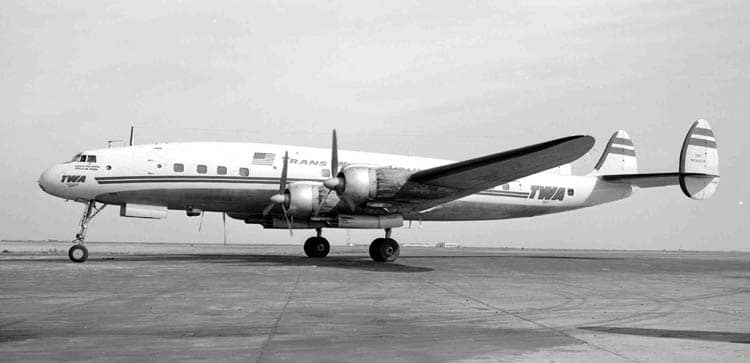
On a clear summer morning in 1956, two airliners climbed out of Los Angeles minutes apart, each carrying dozens of people east across the desert. Somewhere over the Grand Canyon, in a sky so vast it should have held them both a thousand times over, they flew into each other. All 128 people aboard died — and the modern system that keeps airliners apart was born out of the wreckage.
It remains one of the most consequential accidents in aviation history: not for how it happened, but for everything it changed.
Datos rápidos
- Fecha: June 30, 1956, over the Grand Canyon, Arizona
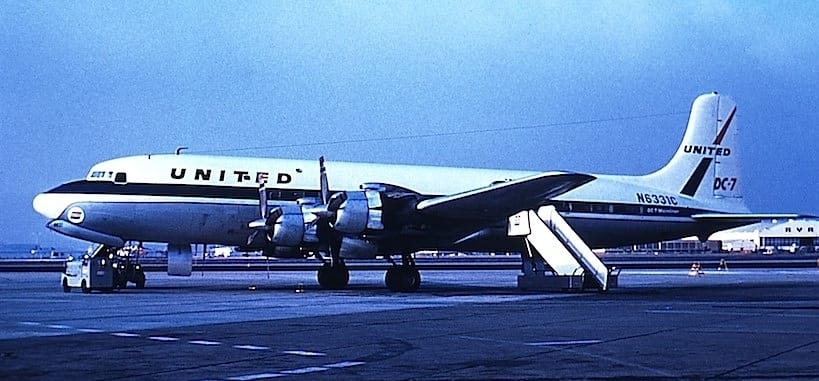
- Aeronave: TWA Flight 2 (Lockheed Super Constellation) and United Flight 718 (Douglas DC-7)
- Peaje: All 128 people aboard both aircraft killed
- Causa: The two airliners simply never saw each other
- Airspace: Uncontrolled — no radar was watching them
- Legado: Led to the creation of the Federal Aviation Agency in 1958
A sky with no one watching
In 1956, air travel was booming, but the system underneath it had not caught up. Once airliners climbed away from the immediate vicinity of major airports, they often flew through vast stretches of uncontrolled airspace under “see and avoid” — the simple, terrifying principle that pilots were responsible for spotting other traffic with their own eyes. There was no radar tracking them at altitude, and controllers frequently had only a rough idea of where a given flight was.
That morning, TWA Flight 2, a Lockheed Super Constellation with 70 aboard bound for Kansas City, left Los Angeles three minutes ahead of United Air Lines Flight 718, a Douglas DC-7 carrying 58 to Chicago. Both soon left their assigned airways to pick their own paths — around towering thunderstorms, and, investigators later believed, to give their passengers a better look at the canyon below.
Twenty-one thousand feet
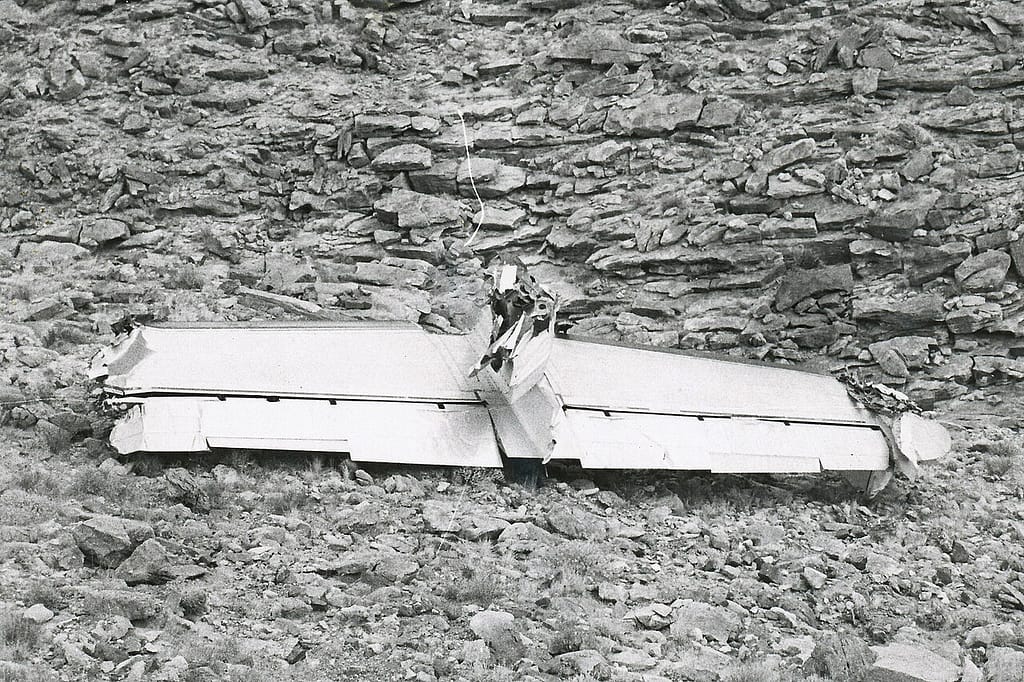
Flying visually, both aircraft ended up at about 21,000 feet, converging over one of the most spectacular landscapes on Earth. Neither crew saw the other in time. The DC-7’s wing and propeller tore into the Constellation’s tail, and both airliners fell into the canyon — the wreckage scattered across remote buttes so inaccessible that recovering the victims took mountaineers.
It was the first commercial air disaster in the United States to kill more than a hundred people, and it stunned a nation that had come to think of airline travel as routine.
Why they never saw each other
The Civil Aeronautics Board investigation reached a conclusion that was as simple as it was chilling.
The board could not say for certain why. It listed the likely factors: clouds between the aircraft, the physical limits of cockpit visibility, the ordinary distractions of flying — and one detail that has haunted the story ever since.
Above all, the board pointed to the “insufficiency of en route air traffic advisory information” — too few facilities, too few controllers, and no way to keep two airliners in the same patch of sky safely apart. The system itself had failed.
The system we fly under now
The public would not accept “see and avoid” for airliners any longer. The outcry drove congressional hearings, a surge of funding, and a wholesale rebuilding of American air traffic control — positive radar control of high-altitude airspace, and a single powerful agency to run it. In 1958 the Federal Aviation Agency, forerunner of today’s FAA, was created.
Every time an airliner today is handed from controller to controller, tracked on radar, and kept in its own protected block of sky, it is flying inside a system that the Grand Canyon disaster forced into being. The 128 who died over the canyon did not know it, but they changed the way the whole world flies. The crash site is now a National Historic Landmark — a memorial not just to the dead, but to the safety that came at their cost.
Sources: Wikipedia; Civil Aeronautics Board accident report; Federal Aviation Administration; Grand Canyon Historical Society; Admiral Cloudberg.
0 Comentarios