
Parte de Alas de guerra: del zepelín a la sexta generación, nuestra serie sobre los grandes puntos de inflexión de la aviación militar.
Just before three in the morning on 17 January 1991, the people of Baghdad woke to the heaviest anti-aircraft barrage the world had ever seen. Tracer fire climbed in solid sheets, missiles streaked upward, the whole sky over the city boiled with fire. And it was all aimed at nothing — or rather, at something the gunners could not see, hear in time, or track.
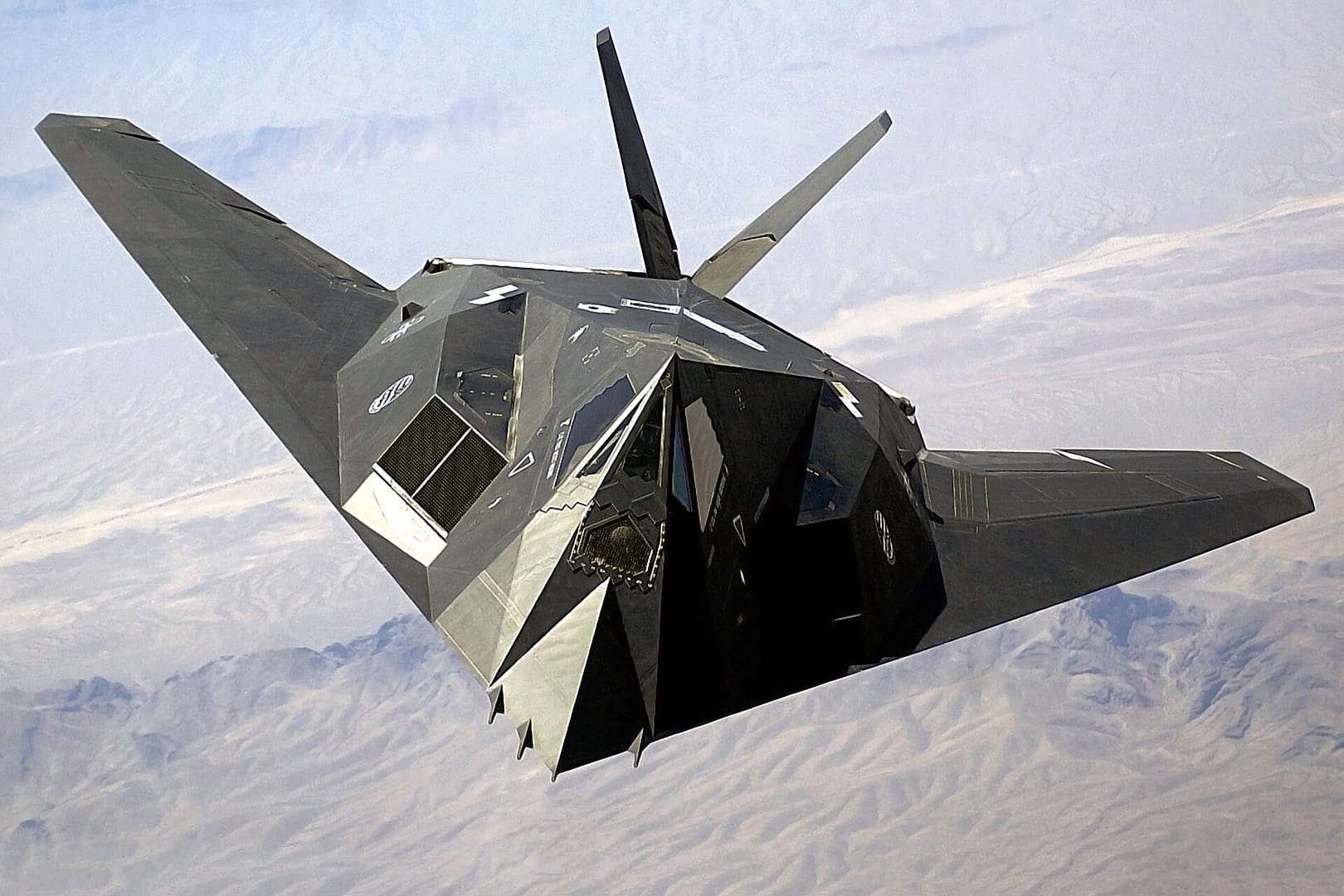
High above them, a handful of strange black aircraft shaped like flying arrowheads were sliding through the dark, completely invisible to the radars sweeping the sky. One by one they opened their bomb bays over the nerve centres of Iraq’s air defences — the command posts and communications hubs that were supposed to coordinate the city’s protection — and dropped their bombs straight through the roofs. Not one of the attackers was scratched. In a single night, the F-117 stealth fighter had proved that an aircraft could fly over the most heavily defended city on Earth as if the defences were not there at all.
DATOS RÁPIDOS
| Qué | Stealth — shaping an aircraft so radar can barely see it |
| First of its kind | The Lockheed F-117 Nighthawk |
| The unlikely seed | A Soviet physicist’s equations, ignored at home |
| Debut en combate | Panama, 1989; then the opening night of the Gulf War, 1991 |
| The truth | Stealth reduces detection — it does not make an aircraft invisible |
| Hoy | America’s F-22, F-35 and B-21; China’s J-20; Russia’s Su-57 |
The theory hidden in a Soviet journal
The strangest thing about stealth is where it came from. In the 1960s a Soviet physicist named Pyotr Ufimtsev published dense equations describing how radar waves scatter off the edges of an object. The Soviet establishment saw no military value in them. An engineer at Lockheed’s legendary “Skunk Works” did. Using Ufimtsev’s maths, the Americans worked out that an aircraft built from flat, carefully angled panels could deflect radar energy away from the sender, so that almost nothing bounced back.
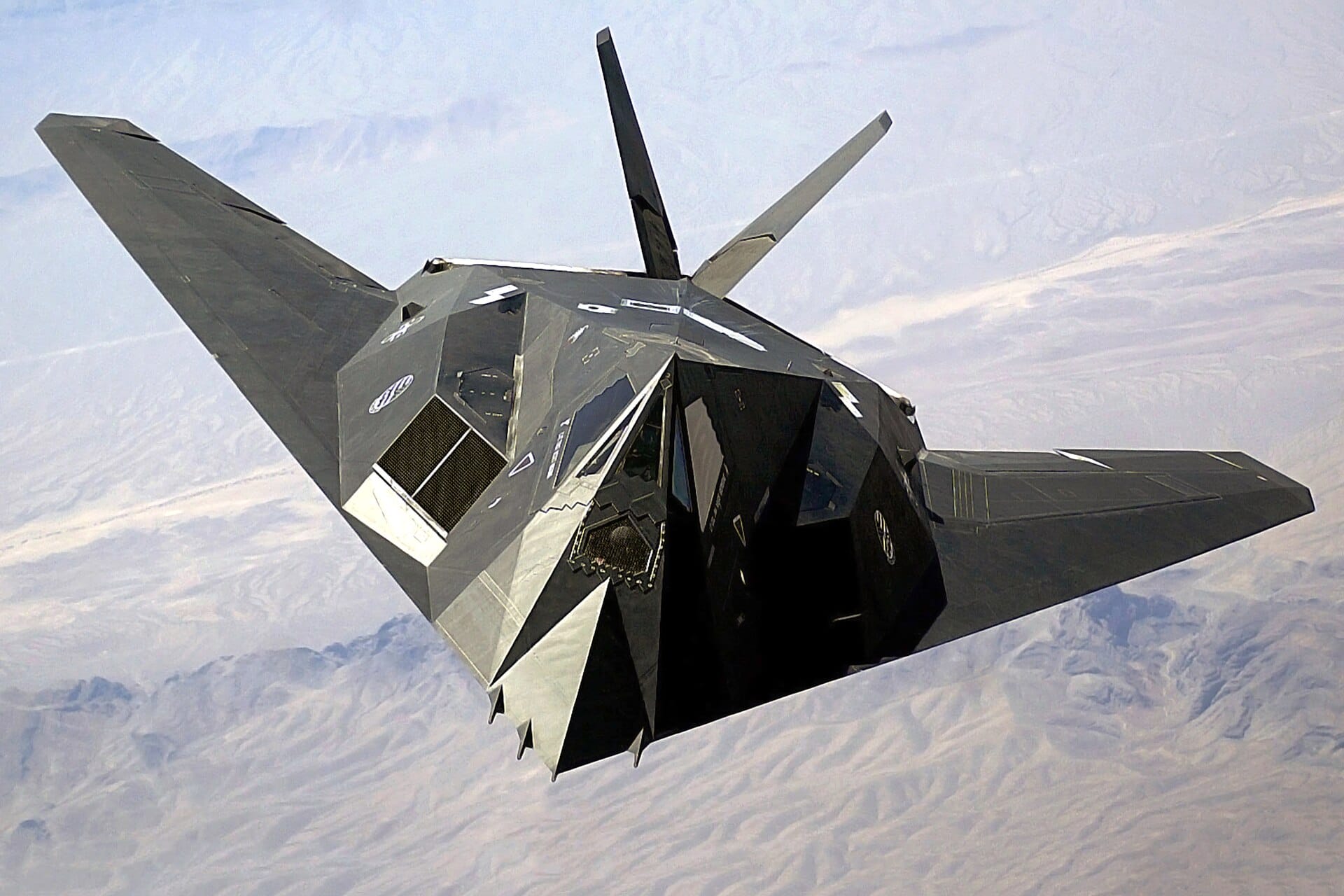
The result looked nothing like an aeroplane. Early models were so angular and aerodynamically awkward that the design was nicknamed the “Hopeless Diamond,” and it took fly-by-wire computers to keep the thing in the air at all. But on radar it was barely the size of a bird. The demonstrator, Have Blue, led directly to the operational F-117 — built and flown in total secrecy for years.
The secrecy was almost obsessive. The F-117 flew only at night, from a remote desert base, and the U.S. government refused even to admit it existed until 1988, by which time it had been operational for years. Pilots led double lives, vanishing into the dark and returning before dawn. The aircraft was so unstable that they nicknamed it the “Wobblin’ Goblin” — only its computers, adjusting the controls dozens of times a second, kept the unnatural shape flying at all.
Invisible over Baghdad
The F-117 actually drew its first blood not over Iraq but over Panama in 1989, in a little-remembered debut. But it was the Gulf War that made stealth famous. Throughout that conflict the Nighthawks struck the most dangerous, most heavily defended targets in the country — and came home untouched, again and again, while conventional aircraft needed whole packages of jammers and escorts to survive. Stealth did not just protect the aircraft; it let a single bomber do the work that once took a fleet.
The numbers told the story. The stealth fighters made up only a small fraction of the aircraft over Iraq, yet on the opening nights they struck a large share of the most important strategic targets — the command bunkers, the headquarters, the communications nodes — precisely because they alone could reach them without a small army of support aircraft clearing the way. Stealth had not just added a capability; it had changed what was worth attempting.
From facets to curves
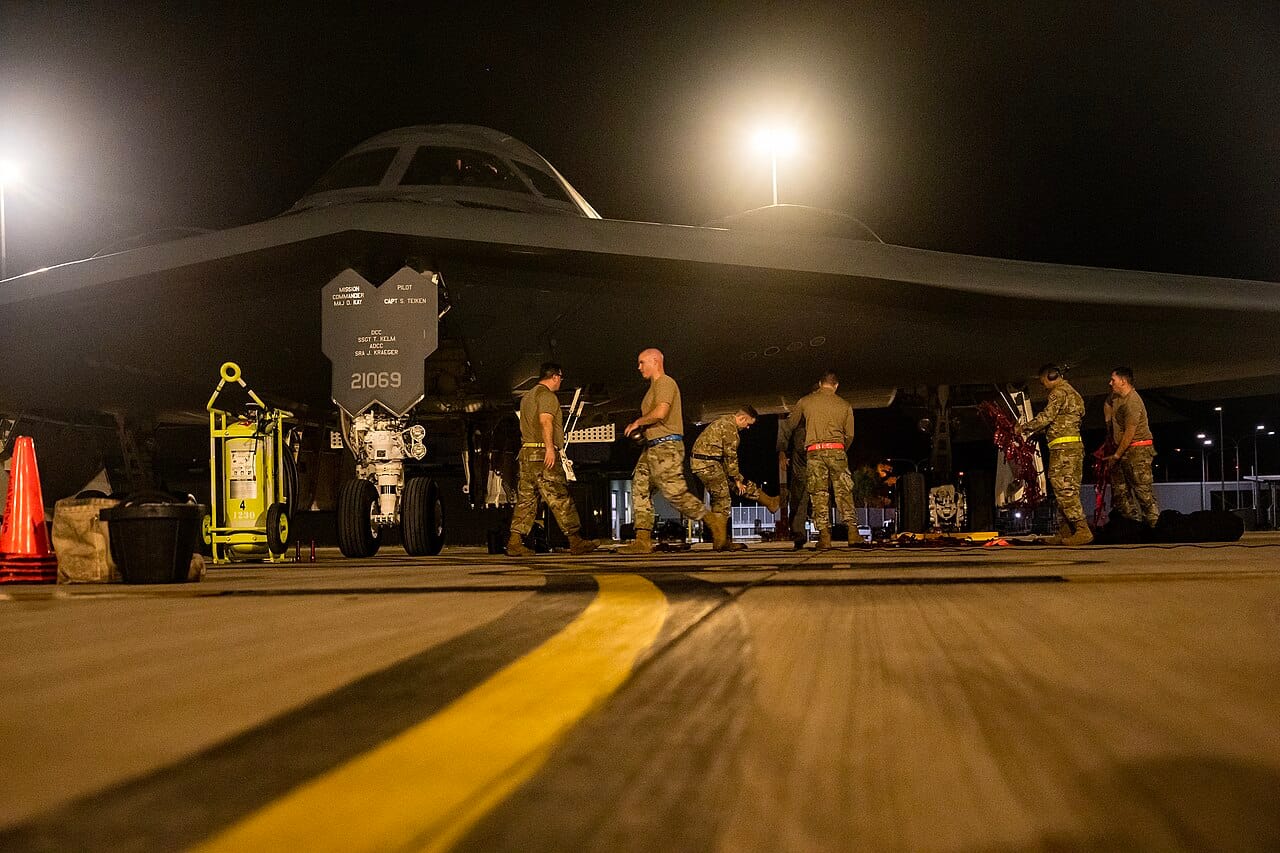
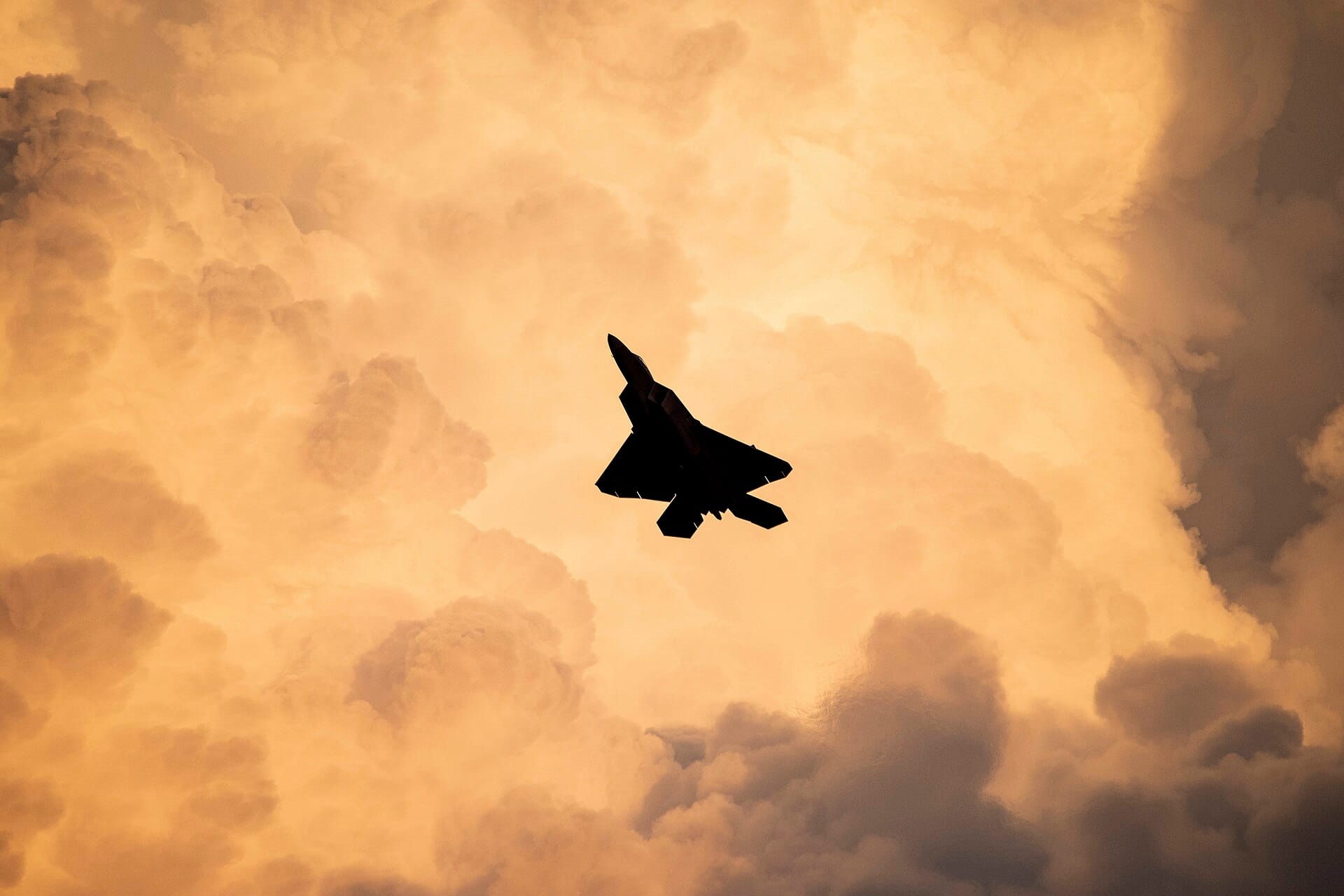
The F-117’s flat panels were a crutch for slow computers. As computing power grew, engineers learned to shape stealth into smooth, continuous curves — and the result was the B-2 Spirit, a flying wing that blends low radar signature with the range to cross the planet. The next generation folded stealth together with everything else: the F-22 Raptor and F-35 combine a low signature with supersonic speed, advanced radar and sensor fusion, so they can detect and shoot an enemy long before being seen themselves.
Stealth is not invisibility
It is vital to understand what stealth is not. It does not make an aircraft invisible; it makes it much harder to detect, track and hit — shrinking the range at which defences can react to almost nothing. But “almost” is not “never.” In 1999 a Serbian missile crew, using old low-frequency radar and clever tactics, managed to shoot down an F-117 — the only one ever lost in combat — a reminder that no advantage in war lasts forever. The story has a remarkable coda: years later the American pilot who was shot down that night and the Serbian officer who shot him down met in person, and became friends — two men who had tried to kill each other, sharing a meal and a strange mutual respect. Today a quiet counter-stealth race is under way, with long-wavelength radars and heat-seeking sensors all hunting for ways to see the unseeable.
Everyone wants it
For two decades stealth was an American monopoly. No longer. China flies the Chengdu J-20, Russia the Su-57, and the next American bomber, the B-21 Raider, is already in flight testing. Stealth has become the price of admission to the front rank of air power — and the foundation on which the coming sixth generation is being built.

POWERS COMPARED — THE STEALTH RACE
| Who got there first | The United States — the F-117, then the B-2, F-22 and F-35 |
| The hidden origin | A Soviet physicist’s theory, used by America rather than the USSR |
| The challengers | China’s J-20 and Russia’s Su-57 — and a global counter-stealth effort |
| El veredicto | Stealth buys time and surprise — until someone learns to see through it |
Sources: National Museum of the U.S. Air Force; Lockheed Martin historical accounts; standard histories of stealth technology and the 1991 Gulf War.
| 1. | El dirigible en guerra | Cómo el Zeppelin llevó la guerra al cielo por primera vez |
| 2. | El primer trabajo: reconocimiento | Los ojos que conquistaron el Marne y ascendieron a la órbita. |
| 3. | El luchador | La búsqueda centenaria por el control del aire |
| 4. | Folkestone, 1917 | El día en que nació el bombardeo estratégico. |
| 5. | La revolución de la precisión | Cuando las bombas y los misiles aprendieron a apuntar por sí mismos |
| 6. | La guerra de los magos | Cómo la guerra electrónica aprendió a cegar al enemigo. |
| 7. | Ojos en órbita | Cómo el espionaje se extendió al espacio. |
| 8. | Sigilo | Cómo los aviones aprendieron a desaparecer del radar |
| 9. | El auge de los drones | Guerra sin piloto en la cabina |
| 10. | La sexta generación | Cuando el caza aprendió a volar por sí mismo |
0 Comentarios