
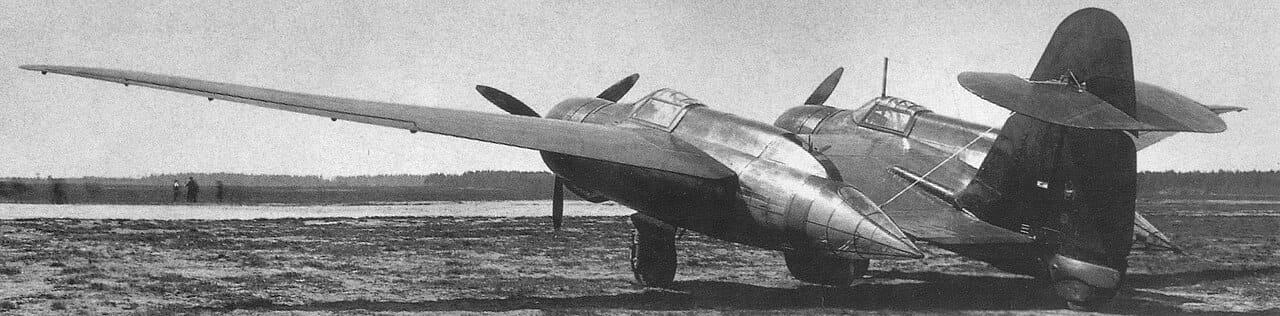
Si en 1940 le hubieran preguntado a un piloto de pruebas soviético cuál era el avión más extraño que había pilotado, seguramente habría respondido con cuatro sílabas: Дэ-Бэ Эл-Ка. El Belyayev DB-LK. Dos fuselajes, sin cabina central, alas exteriores de flecha invertida y puestos de bombarderos acristalados acoplados a la cola de cada góndola del motor. Parecía menos un avión que algo construido por un niño con piezas de repuesto de otros tres modelos.
Los pilotos de prueba tenían un nombre menos amable para él. Lo llamaban Курица. El Pollo. Y no lo decían con buena intención.
Datos rápidos
| Tipo | Prototipo de bombardero de largo alcance con doble fuselaje |
| Diseñador | Viktor Nikolayevich Belyayev (TsKB) |
| Primer vuelo | Principios de 1940 |
| Envergadura | 21,6 m (70 pies 10 pulgadas) |
| Motores | Dos motores radiales M-87B de 14 cilindros, de 950 hp cada uno. |
| Velocidad máxima (alcanzada) | 488 km/h (303 mph) — muy por debajo de los 547 km/h proyectados. |
| Apodo | Курица ("Kuritsa" — "la gallina") |
| Resultado | Se construyó un prototipo. No llegó a producirse en serie. Fue destruido durante la Segunda Guerra Mundial. |
Un planeador con ideas
Viktor Belyayev no era una figura marginal en la aviación soviética. Había trabajado con Andrei Tupolev durante la década de 1930 en una serie de grandes bombarderos pesados y poseía una sólida formación en ingeniería. Además, sentía una gran fascinación por las posibilidades aerodinámicas del ala volante. Su planeador de ala de murciélago, el BP-2, había sido un prototipo exitoso a mediados de la década de 1930, y Belyayev creía que su geometría de fuselaje corto y ala de cuerda larga podía ampliarse para convertirse en un bombardero de combate.
El resultado fue el DB-LK — Дальний Бомбардировщик-Летающее Крыло, "Bombardero de largo alcance - Ala volante" —. El diseño eliminó por completo el fuselaje convencional. Los dos motores M-87B se ubicaban en la parte delantera de dos góndolas cortas del fuselaje, cada una terminando en un cono de cola ampliamente acristalado que albergaba una estación de operador de radio/artillero. El piloto y el navegante se sentaban en cabinas en la parte delantera de las góndolas, con la carga de bombas suspendida entre ellos dentro de la sección central del ala.
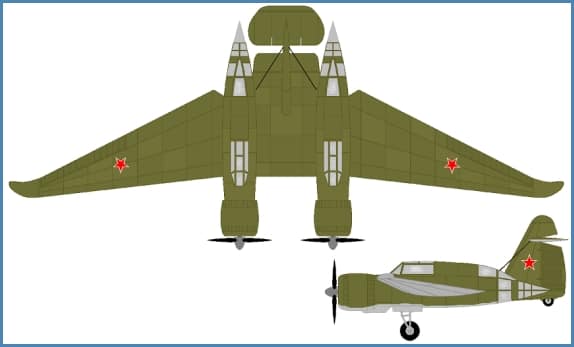
""El pollo""
Según se informa, los pilotos de prueba se mostraron reacios a volar el DB-LK, alegando su diseño poco convencional y la total falta de datos sobre la envolvente de vuelo de dicha configuración. Finalmente, fue el piloto de pruebas de LII, MA Nyukhtikov, quien se encargó de pilotarlo, tras extensas pruebas de rodaje a alta velocidad, una de las cuales terminó con el colapso del tren de aterrizaje.
Cuando el DB-LK finalmente voló, su rendimiento fue realmente impresionante sobre el papel. Las alas exteriores de flecha invertida —con un ángulo de flecha de tan solo 5 grados y 42 minutos, pero con una inclinación hacia adelante que anticipaba los mucho más famosos experimentos del Junkers Ju-287 alemán y el Grumman X-29 estadounidense— proporcionaban una excelente maniobrabilidad a baja velocidad. El armamento defensivo ofrecía campos de tiro despejados que ningún bombardero convencional podía igualar.
¿Qué salió mal?
La lista de problemas no era catastrófica individualmente, simplemente era larga. La carrera de despegue era excesiva debido a la alta sensibilidad a las variaciones del centro de gravedad. Las cabinas de los pilotos tenían una visibilidad frontal pésima, ya que estaban ocultas tras los arcos de las hélices y el borde de ataque del ala. La tripulación se quejaba de que los gases de escape del motor se acumulaban dentro de sus compartimentos, obligándolos a usar máscaras de oxígeno. No podían verse entre sí; el intercomunicador era el único medio de comunicación entre la cabina y la cola.
Lo más importante es que el diseño prometía 547 km/h, pero solo alcanzaba los 488. Esto no suponía ninguna ventaja real sobre los bombarderos ya en servicio, y era considerablemente más lento que el Pe-2 de nueva generación que entraría en servicio. La Fuerza Aérea Soviética, la VVS, analizó el DB-LK, sus problemas, los recursos de producción que requeriría y lo rechazó.
Se consideró la posibilidad de rediseñarlo como bombardero en picado, pero finalmente se descartó. Se desconoce el destino final del único prototipo; lo más probable es que fuera destruido durante la Segunda Guerra Mundial.
La historia del Belyayev DB-LK: un análisis exhaustivo de uno de los bombarderos soviéticos más extraños jamás construidos, con fotografías de la época y diagramas de ingeniería poco comunes.
Fuentes: Wikipedia; Plane-Encyclopedia; HandWiki; Military Matters / Forgotten Aircraft; Revistas de ingeniería soviéticas (archivos de 1940).
Preguntas relacionadas
¿Cómo se llamaba al bombardero soviético apodado 'el Pollo'?
Se trataba del Belyayev DB-LK, un bombardero experimental soviético de largo alcance con doble fuselaje, cuyo primer vuelo tuvo lugar en 1940. Su peculiar forma aerodinámica le valió el apodo de Kuritsa, que en ruso significa «Pollo». Solo se construyó un prototipo.
¿Por qué se llamaba al bombardero soviético "el Pollo"?
Debido a su peculiar apariencia, el diseño de doble fuselaje con alas de forma inusual recordaba a un pollo, lo que le valió el apodo ruso de Kuritsa. Su aspecto, no su rendimiento, fue lo que le granjeó ese nombre.
¿Llegó a entrar en servicio el bombardero 'Chicken'?
No. Solo se construyó un prototipo. Voló en 1940, pero no alcanzó los objetivos de rendimiento previstos (488 km/h frente a los 547 km/h proyectados) y posteriormente fue destruido durante la Segunda Guerra Mundial sin llegar a producirse en serie.
¿Quién diseñó el bombardero soviético "Pollo"?
Fue diseñado por Viktor Nikolayevich Belyayev, un respetado ingeniero aeronáutico soviético, en la oficina de diseño TsKB. Su DB-LK, de doble fuselaje, fue un ambicioso intento de crear un bombardero de largo alcance eficiente, aunque nunca llegó a producirse en serie.
¿Qué tan rápido era el bombardero 'Pollo'?
En las pruebas, el DB-LK alcanzó aproximadamente 488 km/h (303 mph), muy por debajo de los 547 km/h que esperaban sus diseñadores. Esta velocidad decepcionante fue una de las razones por las que este inusual bombardero de doble fuselaje nunca pasó de ser un único prototipo.
Publicaciones relacionadas
El tren a reacción soviético: Cuando los ingenieros acoplaron un motor Yak-40 a un vagón de ferrocarril.
El PZL M-15 Belphegor: un biplano a reacción que lleva el nombre de un demonio.
0 Comentarios