
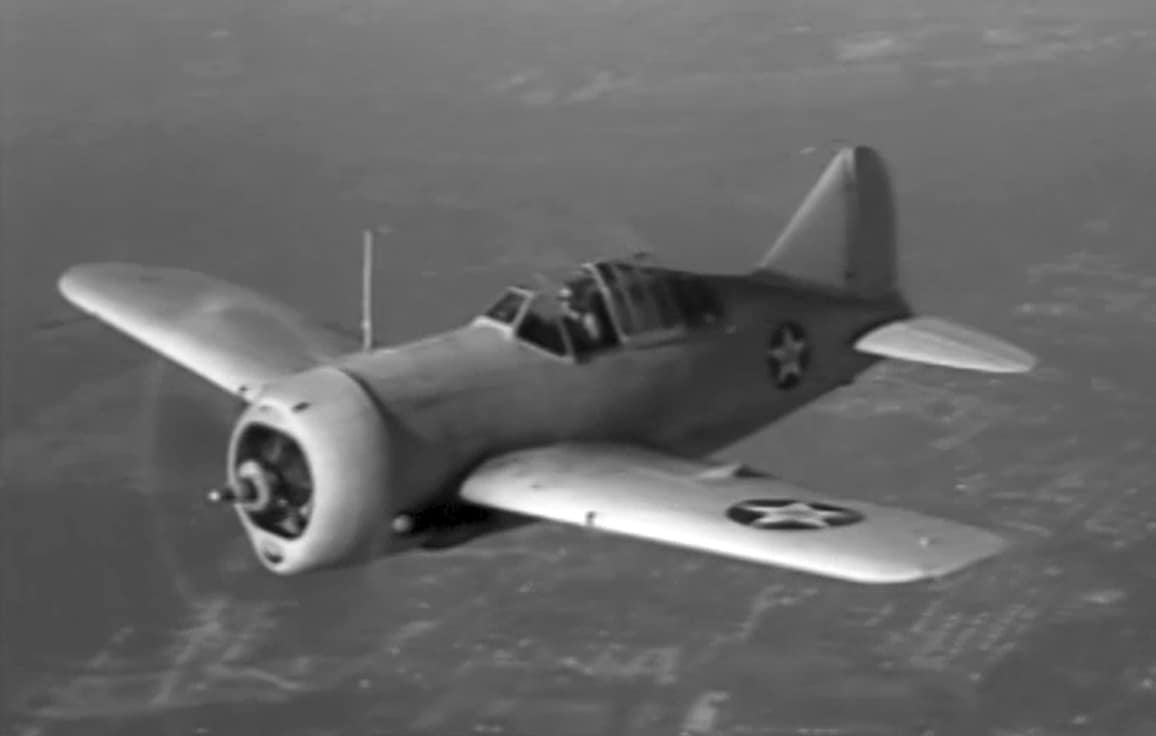
In American memory, the Brewster Buffalo is a punchline: a fat, underpowered little barrel of a fighter that was massacred at Midway and written off as one of the worst aircraft of the war. Its own pilots called it a flying coffin.
Fly two thousand miles northeast, to the frozen skies over Finland, and the same aircraft has a completely different name. There, they called it the Pearl of the Northern Skies, and in Finnish hands it ran up one of the most lopsided kill records in the history of air combat. Same fighter. Two opposite legends.
Datos rápidos
- Aeronave: Brewster F2A Buffalo, the U.S. Navy’s first monoplane fighter; first flew 1937
- US reputation: overweight and obsolete by 1942; VMF-221 lost 13 of about 20 at Midway
- Finnish version: the lightened export B-239, flown in the Continuation War (1941–44)
- Finnish record: squadron LeLv 24 claimed 477 kills on the type for 15 combat losses — roughly 32 to 1
- Aces made: 36 Finnish pilots became aces on the Buffalo
- Apodo: “Taivaan Helmi” — Pearl of the Sky
The American Disgrace
The Buffalo started life as a winner. In 1939 it beat the Grumman Wildcat to become the U.S. Navy’s first monoplane fighter. But aircraft aged quickly in that era, and by the time the Pacific war began the Buffalo was heavy, sluggish and hopelessly outclassed by the Japanese Zero. At Midway in June 1942, the Marine pilots of VMF-221 took their Buffaloes up against the Japanese and were shot to pieces, losing most of the squadron in a single morning.
That was the reputation that stuck: the worst fighter of the war, a death sentence with wings. It was retired from American front-line service almost immediately. And that would have been the whole story — if Finland hadn’t already fallen in love with it.
Pearl of the Northern Skies
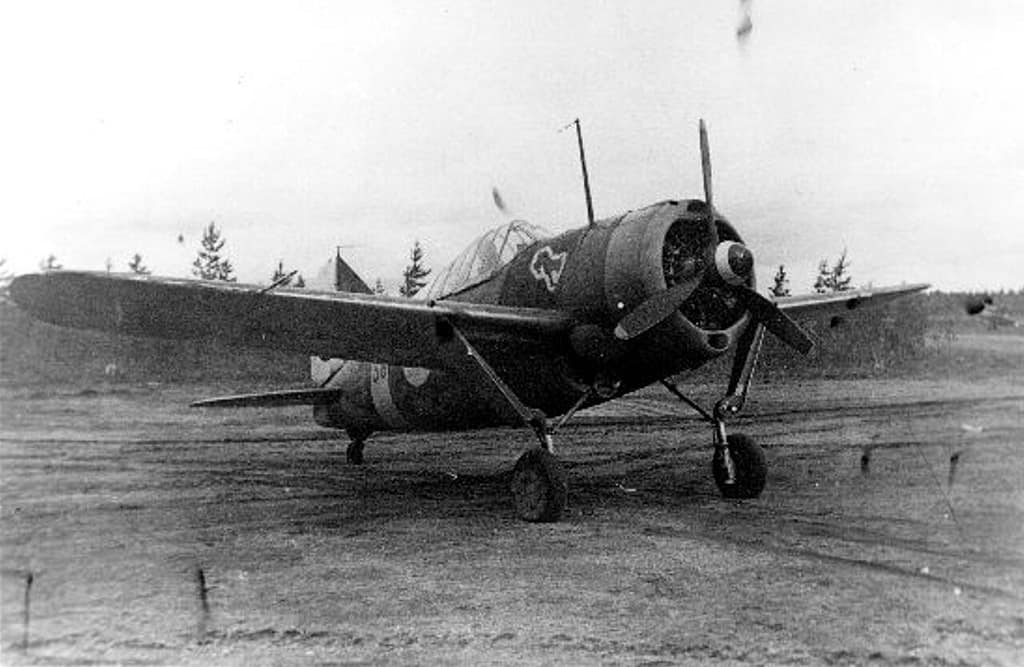
Finland had bought a batch of export Brewsters — the B-239, stripped of naval equipment and lighter than the American version — before the Continuation War against the Soviet Union. In the hands of the Finnish Air Force, the fat little fighter was transformed. Facing older Soviet types and flown by superbly trained, disciplined pilots, the Brewster became a killer.
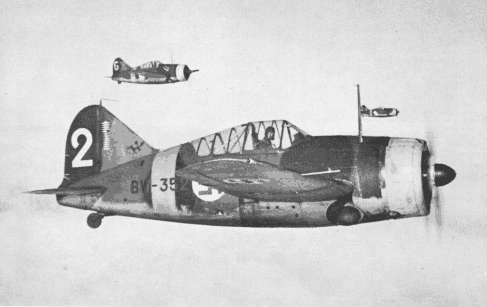
The numbers are almost hard to believe. Finland’s premier fighter squadron, Lentolaivue 24, claimed 477 Soviet aircraft destroyed on the Brewster against just 15 of their own lost in combat. Thirty-six Finnish pilots became aces flying it. Among them was Ilmari Juutilainen, who would end the war as Finland’s top-scoring ace of all time — and who had an affectionate, unglamorous way of describing the machine.
Why the Same Plane Won and Lost
The secret was not the aircraft. It was everything around it. The Finns flew the modern four-plane “finger-four” formation before it became the world standard, maintained their machines meticulously in brutal conditions, and above all shot with lethal patience — closing to point-blank range before firing.
It helped that Finland’s Brewsters faced early Soviet fighters like the Polikarpov I-153 rather than the Japanese Zero. But the deeper lesson stands: an aircraft is only ever as good as the training, tactics and nerve of the people flying it. Give a mediocre fighter to a superb air force, and it becomes a legend. Give a good fighter to green pilots in a hopeless situation, and it becomes a coffin.
The Finns loved the Buffalo so much they built a copy of their own, the VL Humu, and kept the type flying until 1948. The aircraft America couldn’t wait to forget spent its finest years as the pride of a nation fighting for its life — and earned a nickname no other Buffalo ever will: the Pearl of the Sky.
Sources: Wikipedia; HistoryNet; The National Interest; Warbird’s Forum; Finnish Air Force records.

0 Comentarios