
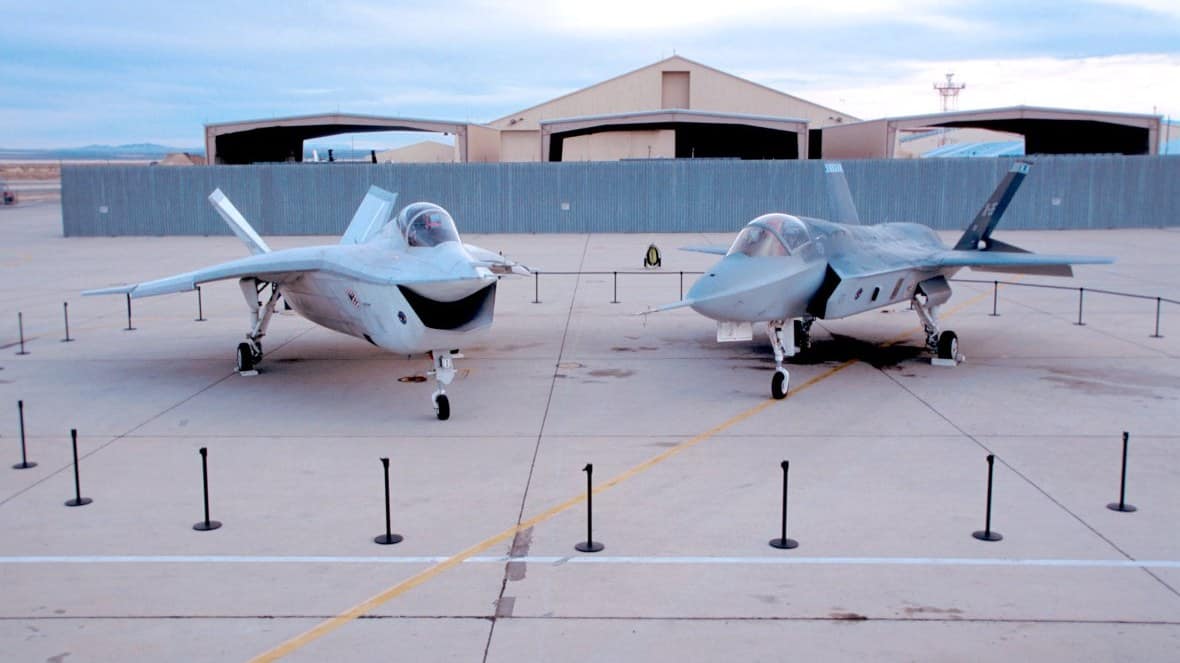
La tarde del viernes 26 de octubre de 2001, el jefe de adquisiciones del Pentágono, Edward “Pete” Aldridge, subió a un podio en Washington. A tres mil kilómetros de distancia, el presidente de Boeing, Phil Condit, y el director del programa Joint Strike Fighter, Frank Statkus, se reunieron con su equipo frente a un televisor. En Fort Worth, Texas, miles de trabajadores de Lockheed Martin hicieron lo mismo. “Hoy estamos aquí para anunciar el mayor programa de adquisiciones en la historia del Departamento de Defensa”, comenzó Aldridge. “El valor del programa podría superar los doscientos mil millones de dólares”.”
Cinco años de vuelo, quince años de estudios y dos de los aviones más extraños jamás construidos culminaron en esta frase. El Joint Strike Fighter sería un único avión, en tres versiones, para la Fuerza Aérea, la Armada y el Cuerpo de Marines de EE. UU., así como para la Marina Real y la Real Fuerza Aérea británicas; y una sola compañía se encargaría de su fabricación. El ganador se lo lleva todo.
En una sala aquella tarde, la gente lloraba de alegría. En la otra, un hombre le hizo a su presidente una pregunta cuya respuesta ya conocía. Esta es la historia del X-32, del X-35 y de la mayor apuesta en la historia de la industria aeronáutica.
Datos clave: X-32 vs X-35
| Competencia | Demostración del concepto del caza de ataque conjunto, 1996-2001 |
| Contendientes | Boeing X-32A/B frente a Lockheed Martin X-35A/B/C |
| Diferencia clave | Elevación directa de Boeing frente al ventilador de elevación accionado por eje de Lockheed para aterrizaje vertical |
| Primer vuelo del X-32A | 18 de septiembre de 2000 — Fred Knox |
| Primer vuelo del X-35A | 24 de octubre de 2000 — Tom Morgenfeld |
| Decisión | 26 de octubre de 2001 — Lockheed Martin lo gana todo |
| entonces Estacas | Más de 1.044.200 mil millones; aproximadamente 3.000 aviones para EE. UU. y Reino Unido. |
| Legado | El F-35 Lightning II: utilizado actualmente por alrededor de 20 naciones. |
Un luchador para todos
La idea detrás del JSF era seductora y un poco loca: reemplazar el F-16, el A-10, el F/A-18 y el Aguilucho Cuatro aeronaves muy diferentes que realizaban funciones muy distintas, todas ellas variantes de un único caza furtivo asequible. La Fuerza Aérea necesitaba un avión convencional, la Armada una versión mejorada para portaaviones, y los Marines y la Marina Real algo que pudiera aterrizar verticalmente como un Harrier, pero sin la tendencia de este último a matar a sus pilotos.
En noviembre de 1996, el Pentágono seleccionó a Boeing y Lockheed Martin para construir dos demostradores cada uno y ponerlos en el aire. McDonnell Douglas, la empresa que había construido el F-4 y el F-15, Fue eliminada, un suceso impactante que contribuyó a que cayera en manos de Boeing un año después. El vuelo de prueba fue filmado desde el interior por un equipo de documentalistas de NOVA, por lo que sabemos exactamente cómo se veía cuando se tomó la decisión final.
Elevación directa frente a ventilador de elevación
Toda la competición giraba en torno a una única cuestión de ingeniería: ¿cómo conseguir que un caza furtivo supersónico se mantenga en vuelo estacionario? Boeing optó por la sustentación directa: dirigir el empuje del motor hacia abajo mediante toberas giratorias, como hace el Harrier. Es un sistema sencillo, probado y ligero, que permitió a Boeing construir un único concepto de fuselaje para las tres variantes.
Lockheed Martin apostó por algo que nadie había volado jamás: un ventilador de sustentación accionado por eje. En el X-35B, el motor impulsa un enorme ventilador horizontal detrás de la cabina, que expulsa aire frío hacia abajo mientras la tobera principal gira hacia atrás, casi duplicando el empuje de sustentación y evitando el escape recirculante extremadamente caliente que afecta a los diseños de sustentación directa. El piloto de pruebas de BAE, Simon Hargreaves, quien realizaría el primer vuelo estacionario, fue sincero sobre el riesgo: “Nadie ha intentado jamás modelar un sistema de propulsión tan complejo como este… tan integrado como este”.”
Lo simple y probado frente a lo complejo y revolucionario. En teoría, el enfoque de Boeing debería haber ganado. Pero en el aire, la física tenía otros planes.

Mónica y el rediseño de mitad de partida
Hablemos de la toma de aire. La enorme entrada de aire en la barbilla del X-32 y su voluminosa ala delta monobloque la convirtieron, por consenso general, en uno de los cazas menos atractivos jamás construidos; incluso en Boeing lo apodaron "Monica", en honor a la becaria de la Casa Blanca que entonces acaparaba la atención mediática. Statkus estaba orgulloso de esa ala, "construida de una sola pieza de punta a punta", y se supone que a los pilotos de caza no les importa la estética. Sin embargo, sí les importa.
El problema de fondo era que Boeing estaba probando un avión y vendiendo otro. Cuando los requisitos de maniobrabilidad y carga útil de la Armada se endurecieron a mitad del proceso de licitación, Boeing rediseñó su avión de producción con una cola convencional; sin embargo, los prototipos ya se habían construido con la antigua configuración de cola delta. Se le pediría al Pentágono que comprara un caza que solo existía en las presentaciones.
Y el despegue directo arrastraba consigo su antiguo problema: los gases de escape calientes rebotaban en la pista y volvían al motor. Durante las pruebas de aterrizaje vertical en Patuxent River, el X-32B tuvo problemas con la ingestión de gases calientes, y Boeing desmontó paneles y piezas del avión para reducir su peso de cara a las demostraciones de vuelo estacionario. Cada kilogramo eliminado era un argumento que Lockheed esgrimiría más tarde a su favor.
Misión X
La campaña de Lockheed había comenzado con gran entusiasmo. "¡Estamos en el aire, equipo, y está volando de maravilla!", comunicó por radio el piloto de pruebas jefe Tom Morgenfeld mientras el X-35A despegaba el 24 de octubre de 2000. Pero el gran éxito llegó el verano siguiente con lo que el equipo denominó Misión X: el 20 de julio de 2001, el X-35B despegó en menos de 150 metros, alcanzó velocidad supersónica y aterrizó verticalmente, convirtiéndose en el primer avión de la historia en realizar las tres maniobras en un solo vuelo.
Hargreaves lo aterrizó en la plataforma como si llevara años haciéndolo. “¡Perfecto, sin ningún problema!”, exclamó. El ventilador de sustentación —el complejo y extravagante ventilador de sustentación que nunca antes había volado— funcionaba. Los prototipos de Boeing habían cumplido con todas las expectativas, pero lo habían hecho por partes. Lockheed lo había logrado en una sola tarde, ante las cámaras.

El sobre, por favor
Lo cual nos lleva de vuelta al 26 de octubre de 2001, a dos habitaciones frente a dos televisores. Tras el preámbulo de Aldridge, el secretario de la Fuerza Aérea, James Roche, leyó el veredicto.
En Fort Worth, reinaba el caos. En Seattle, Statkus se dirigió a su presidente: "¿Es una situación en la que el ganador se lo lleva todo, Phil?". "En este momento, la respuesta es sí", respondió Condit, "esta decisión que han mantenido es una situación en la que el ganador se lo lleva todo". Cuando Statkus intentó disculparse, el vicepresidente de Boeing, Harry Stonecipher, lo interrumpió: "No, hiciste un gran trabajo. No sé qué se nos escapó".“
La mayoría de los analistas concluyeron que lo que habían pasado por alto era el factor decisivo —el margen de rendimiento y el potencial de crecimiento que prometía— y la falta de confianza generada por el rediseño de Boeing a mitad del proceso de licitación. El contrato posterior ascendía a unos 19.000 millones de dólares solo para el desarrollo, con una proyección de unos 200.000 millones de dólares para su posterior ejecución.
¿Fue acertada la fórmula de "el ganador se lo lleva todo"?
Un cuarto de siglo después, la pregunta cobra relevancia. El F-35 se convirtió en todo lo que el JSF prometió en términos operativos, y en una lección para la industria: llegó con años de retraso, superó con creces su presupuesto original y su costo total, según estimaciones del gobierno estadounidense, supera los dos billones de dólares. Sin una línea de producción alternativa, no existía un plan B y su margen de negociación en cuanto a precios era mínimo. Algunos veteranos del programa argumentan que una compra dividida habría costado más por avión, pero habría brindado mayor seguridad; otros señalan que la esencia del JSF radicaba en que Estados Unidos ya no podía permitirse el lujo de tener dos aviones de cada modelo.
El veredicto también transformó la industria. Boeing, excluida del negocio de los cazas de un plumazo, no presentó ningún otro diseño de caza tripulado durante una generación, hasta marzo de 2025, cuando la Fuerza Aérea de EE. UU. eligió a Boeing para construir el F-47, su caza de superioridad aérea de próxima generación. Tras 24 años, el perdedor de la última gran competencia de cazas finalmente ganó la revancha.
Fuentes: Transcripción de "La batalla de los aviones X" de PBS NOVA, Wikipedia (Boeing X-32, Lockheed Martin X-35, programa Joint Strike Fighter), comunicado de prensa de Lockheed Martin (26 de octubre de 2001), The Seattle Times, Air & Space Forces Magazine, US GAO
Preguntas relacionadas
¿En qué consistió la competición entre el X-32 y el X-35?
La competencia entre el X-32 y el X-35 fue la demostración del concepto Joint Strike Fighter, que se llevó a cabo entre 1996 y 2001, para elegir un único caza furtivo para múltiples servicios de EE. UU. y Gran Bretaña. El X-32 de Boeing voló contra el X-35 de Lockheed Martin. Lockheed ganó en octubre de 2001, y su diseño se convirtió en el F-35 Lightning II, parte de una larga línea de Excursiones aéreas de aviones estadounidenses.
¿Qué avión ganó la competición del Joint Strike Fighter?
El X-35 de Lockheed Martin ganó el concurso Joint Strike Fighter el 26 de octubre de 2001, superando al X-32 de Boeing. Esta victoria, valorada en más de 14.200 millones de dólares por unos 3.000 aviones, le otorgó a Lockheed uno de los mayores contratos de defensa jamás adjudicados. El diseño ganador entró en servicio como el F-35 Lightning II, que actualmente utilizan cerca de 20 países.
¿Cuál era la diferencia entre el X-32 y el X-35?
La principal diferencia radicaba en cómo cada uno lograba el aterrizaje vertical. El X-32 de Boeing utilizaba sustentación directa, liberando el empuje del motor hacia abajo, mientras que el X-35 de Lockheed empleaba un ventilador de sustentación accionado por eje detrás de la cabina. El sistema de ventilador de sustentación del X-35 impresionó a los evaluadores y contribuyó a su victoria. El X-32A realizó su primer vuelo el 18 de septiembre de 2000 y el X-35A el 24 de octubre de 2000.
¿Por qué el X-32 perdió contra el X-35?
El X-32 de Boeing perdió en gran medida porque su sistema de elevación directa para aterrizaje vertical se consideró menos capaz y con menor potencial de crecimiento que el ventilador de elevación accionado por eje de Lockheed. El X-35 demostró un rendimiento más suave en despegues cortos y aterrizajes verticales. Lo que estaba en juego reflejaba otras competiciones de alto valor como la Guerra de tanques KC-X, donde tanto la ingeniería como la política importaban.
¿Qué fue del X-35?
El X-35 se convirtió en el F-35 Lightning II, una familia de cazas furtivos en tres versiones para operaciones convencionales, desde portaaviones y de despegue corto/aterrizaje vertical. Actualmente es operado por alrededor de 20 naciones y constituye la columna vertebral del poder aéreo táctico occidental, mientras que iniciativas más recientes como programas de cazas de sexta generación aspirar a tener éxito.
¿Cuánto valía el contrato del avión de combate Joint Strike Fighter?
El contrato del Joint Strike Fighter, adjudicado en 2001, ascendía a más de 14.000 millones de dólares e incluía aproximadamente 3.000 aeronaves para Estados Unidos y el Reino Unido. Fue descrito como el mayor programa de adquisición en la historia del Departamento de Defensa de Estados Unidos, una magnitud que hizo que la comparación entre el X-32 y el X-35 tuviera una trascendencia excepcional.
0 Comentarios