
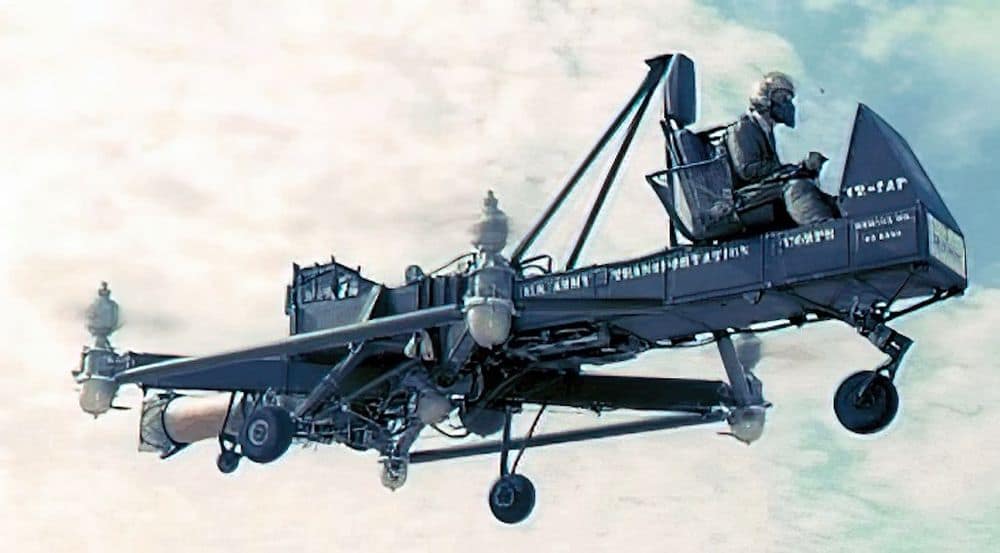
A finales de la década de 1950, el Ejército estadounidense buscaba una máquina que nadie había construido hasta entonces: algo intermedio entre un jeep y un helicóptero. Un jeep volador: una plataforma sencilla sobre la que un soldado pudiera subirse, elevarse y sobrevolar el campo de batalla. Suena a dibujo animado. El Ejército hablaba completamente en serio, y Curtiss-Wright les construyó uno que realmente volaba.
Lo llamaron VZ-7. Era, esencialmente, un cuadricóptero tripulado, décadas antes de que existiera el término.
DATOS RÁPIDOS
| Role | VTOL "jeep volador" (plataforma utilitaria) |
| Operador | Ejército de los Estados Unidos |
| Central eléctrica | 1 × Turboeje Turbomeca Artouste IIB, 425 shp |
| rotores | Cuatro hélices montadas verticalmente |
| Velocidad máxima | ~32 mph (51 km/h); techo ~200 pies |
| Número construido | 2; entregado en 1958, devuelto al fabricante en 1960. |
El sueño de la caballería aérea
El jeep volador surgió de una idea más grande. En 1954, el general paracaidista James Gavin publicó un famoso ensayo en Harper's Argumentaba que el ejército moderno necesitaba un nuevo tipo de caballería: no caballos, sino máquinas que pudieran saltar por encima del terreno.
De esa visión surgió una pequeña flota de "jeeps voladores" experimentales. El prototipo de Curtiss-Wright, construido por su división de Santa Bárbara, fue el primero en despegar.
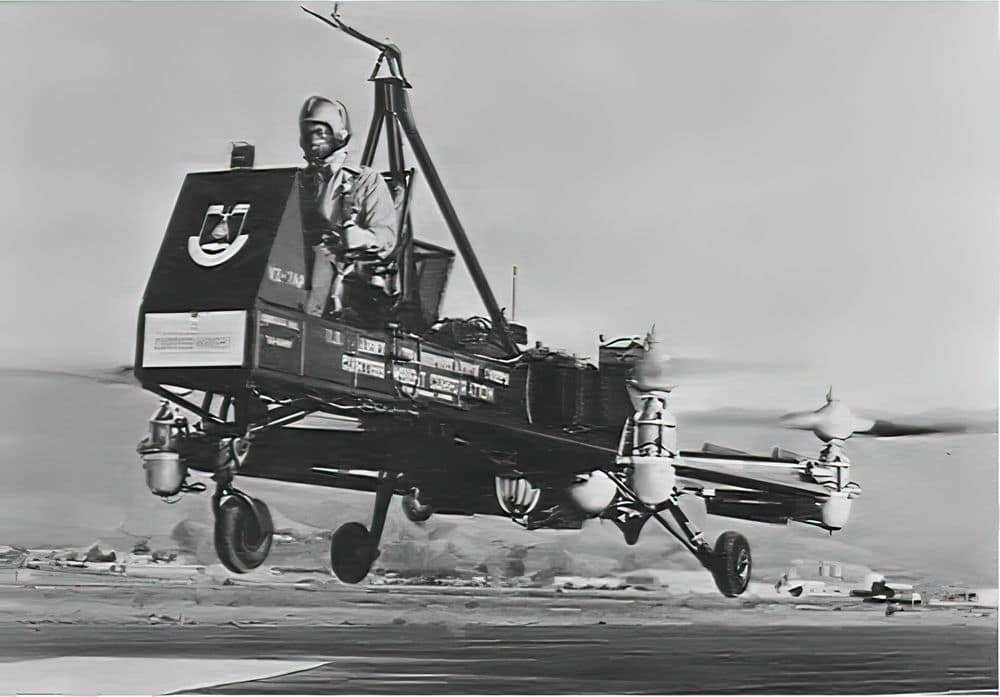
Sencillo, simple, y no del todo suficiente.
El diseño era sumamente sencillo. Una estructura rectangular de unos 5 metros de largo albergaba al piloto, el combustible y un único turboeje Turbomeca de 425 caballos de fuerza que impulsaba cuatro hélices verticales dispuestas en cuadrado. Para dirigir la aeronave, el piloto simplemente regulaba la potencia de cada hélice; unas paletas móviles en el escape controlaban el resto. Incluso transportaba un cañón sin retroceso durante las pruebas.
Y funcionó. Los pilotos lo encontraron estable, ágil y fácil de volar. El problema era que "fácil de volar" no era lo mismo que "útil". Su velocidad máxima apenas superaba los 48 km/h y no podía ascender mucho más allá de los 60 metros: sin blindaje, sin velocidad, sin techo de vuelo. Como lo expresó un relato moderno del proyecto:
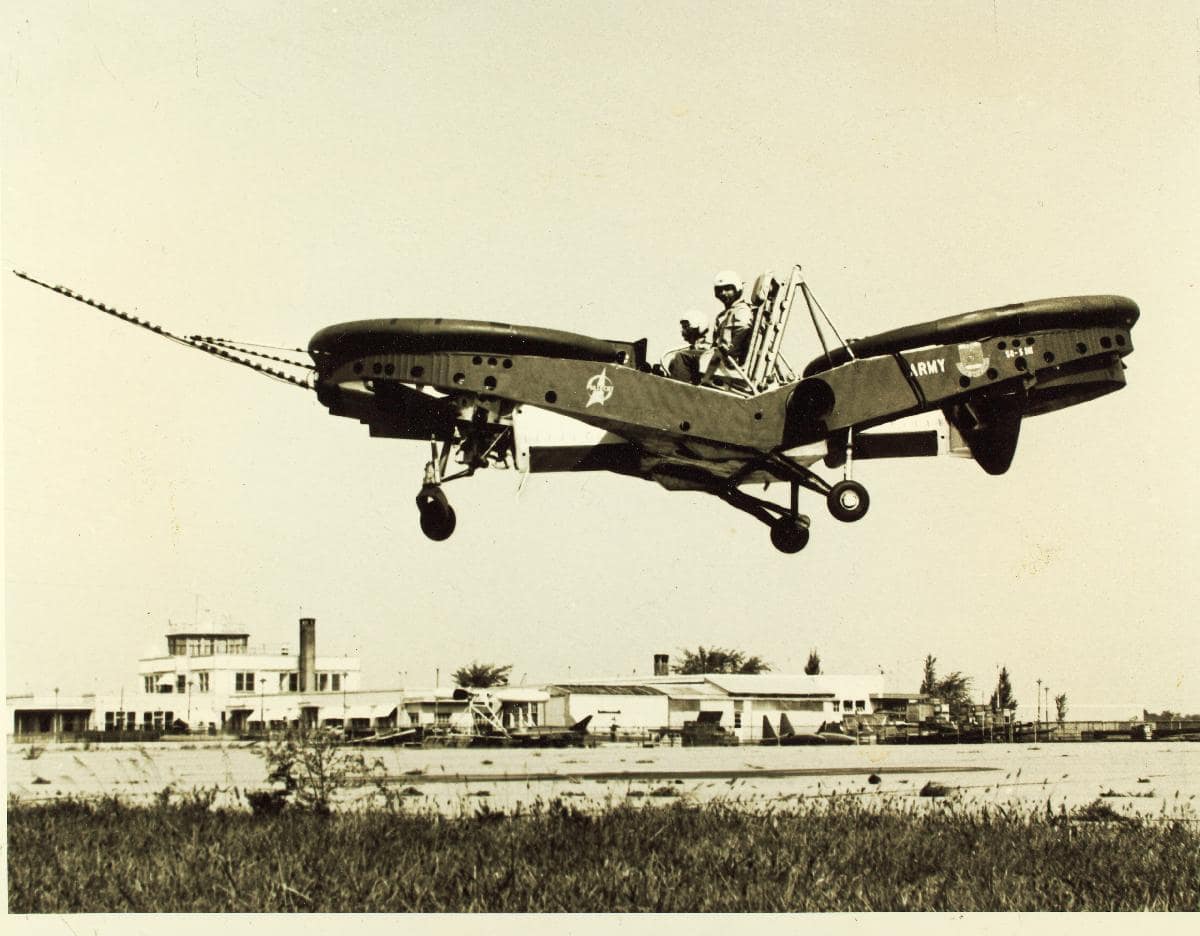
Poco después, todos los proyectos de jeeps voladores fueron archivados discretamente. El Ejército se dio cuenta de que el helicóptero ya cumplía mejor su función, y el humilde jeep hacía el resto. Un VZ-7 se conserva hoy en el Museo de Aviación del Ejército de los Estados Unidos.
Sin embargo, si observamos cualquier cuadricóptero de una tienda de modelismo, o los drones de ataque FPV que están transformando la guerra moderna, el VZ-7 de repente parece menos una curiosidad fallida y más una máquina que simplemente se adelantó setenta años a su tiempo.
Fuentes: Jets 'n' Props; General James M. Gavin, Harper's Magazine (1954); Museo de Aviación del Ejército de los Estados Unidos; Wikipedia.
0 Comentarios