
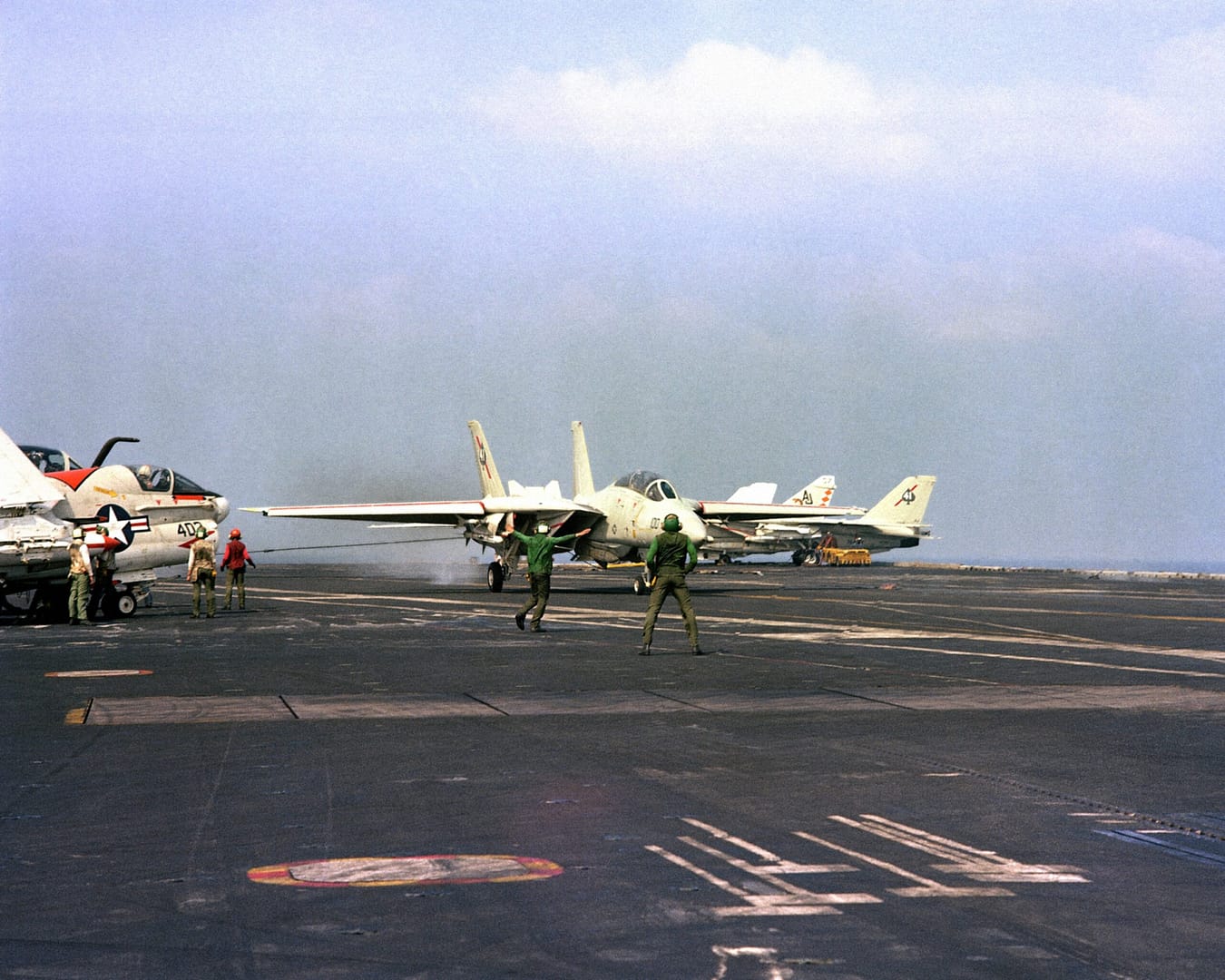
Datos rápidos
Primer incidente: 19 de agosto de 1981 — 2 × F-14A contra 2 × Su-22M3 Fitter
Segundo incidente: 4 January 1989 — 2 × F-14A vs 2 × MiG-23ML Flogger
Puntaje: Tomcats 4, Libia 0
Armas utilizadas: AIM-9L Sidewinder (1981), AIM-7 Sparrow y AIM-9 Sidewinder (1989)
Unidades involucradas: VF-41 "Black Aces" (1981), VF-32 "Swordsmen" (1989)
Ubicación: Golfo de Sidra / frente a Tobruk, mar Mediterráneo
Los VF-41 Tomcats realizaban una patrulla aérea de combate rutinaria cuando dos Su-22 libios se aproximaron y maniobraron agresivamente; una vez que el Fitter líder abrió fuego, dejó de ser un ejercicio y el enfrentamiento terminó en menos de un minuto.
Comandante. Henry "Hank" Kleemann (retirado) — Piloto de F-14, VF-41 Black Aces, Armada de los Estados Unidos
Las tripulaciones de los F-14 se habían entrenado precisamente para este escenario —un caza hostil acercándose de frente en condiciones ambiguas— bajo unas reglas de enfrentamiento que les autorizaban a disparar si una aeronave demostraba intenciones hostiles; en ambas ocasiones sobre el Golfo, los libios dispararon primero.
Robert "Mugs" Stumpf — Excomandante del VF-84 Jolly Rogers, Armada de los Estados Unidos
La línea de la muerte
En 1973, Gadafi reclamó todo el golfo de Sidra como aguas territoriales libias, trazando una línea a 32°30'N a través de la desembocadura del golfo. La denominó la "Línea de la Muerte" y advirtió que cualquier buque militar extranjero que la cruzara sería atacado. Esta reclamación carecía de fundamento en el derecho internacional —el golfo es demasiado ancho para considerarse una bahía cerrada—, pero Gadafi la impuso con interceptores. Aviones libios ya habían atacado aviones de reconocimiento estadounidenses en dos ocasiones, en 1973 y 1980. Cuando Ronald Reagan asumió la presidencia en enero de 1981, vio una oportunidad para contrarrestar esta situación. El nuevo presidente autorizó ejercicios de libertad de navegación diseñados específicamente para desafiar la reclamación de Gadafi. El mensaje fue contundente: el mar abierto pertenece a todos.Primera ronda: agosto de 1981
In August 1981, a massive naval force led by USS Nimitz and USS Forrestal deployed into the Gulf of Sidra. Nimitz carried two F-14 squadrons: VF-41 "Black Aces" and VF-84 "Jolly Rogers." The exercise was deliberately provocative — the whole point was to fly and sail inside Gaddafi's claimed zone. Libya responded aggressively. On 18 August, MiG-25 Foxbats probed the carrier group and 35 pairs of Libyan fighters flew into the area. American interceptors turned them all away. Intelligence later assessed that a MiG-25 may have fired a missile at U.S. fighters that day from 18 miles out. The next morning, 19 August, it happened. Two VF-41 F-14As — Fast Eagle 102 (CDR Henry "Hank" Kleemann and LT David "DJ" Venlet) and Fast Eagle 107 (LT Lawrence "Music" Muczynski and LTJG James "Luca" Anderson) — were flying combat air patrol when an E-2C Hawkeye vectored them toward two Sukhoi Su-22M3 Fitters approaching from Ghurdabiyah Air Base near Sirte. The intercept closed fast. At an estimated 300 metres, one of the Libyan pilots fired an AA-2 Atoll heat-seeking missile at the lead Tomcat. It missed. The Su-22s then split — leader northwest, wingman southeast toward Libya. The engagement was over in seconds. Cleared to fire under rules of engagement triggered by the Libyan missile shot, both Tomcats manoeuvred behind their targets and each fired an AIM-9L Sidewinder. Two kills. Both Libyan pilots ejected. The entire fight, from the Atoll launch to both kills, lasted under a minute.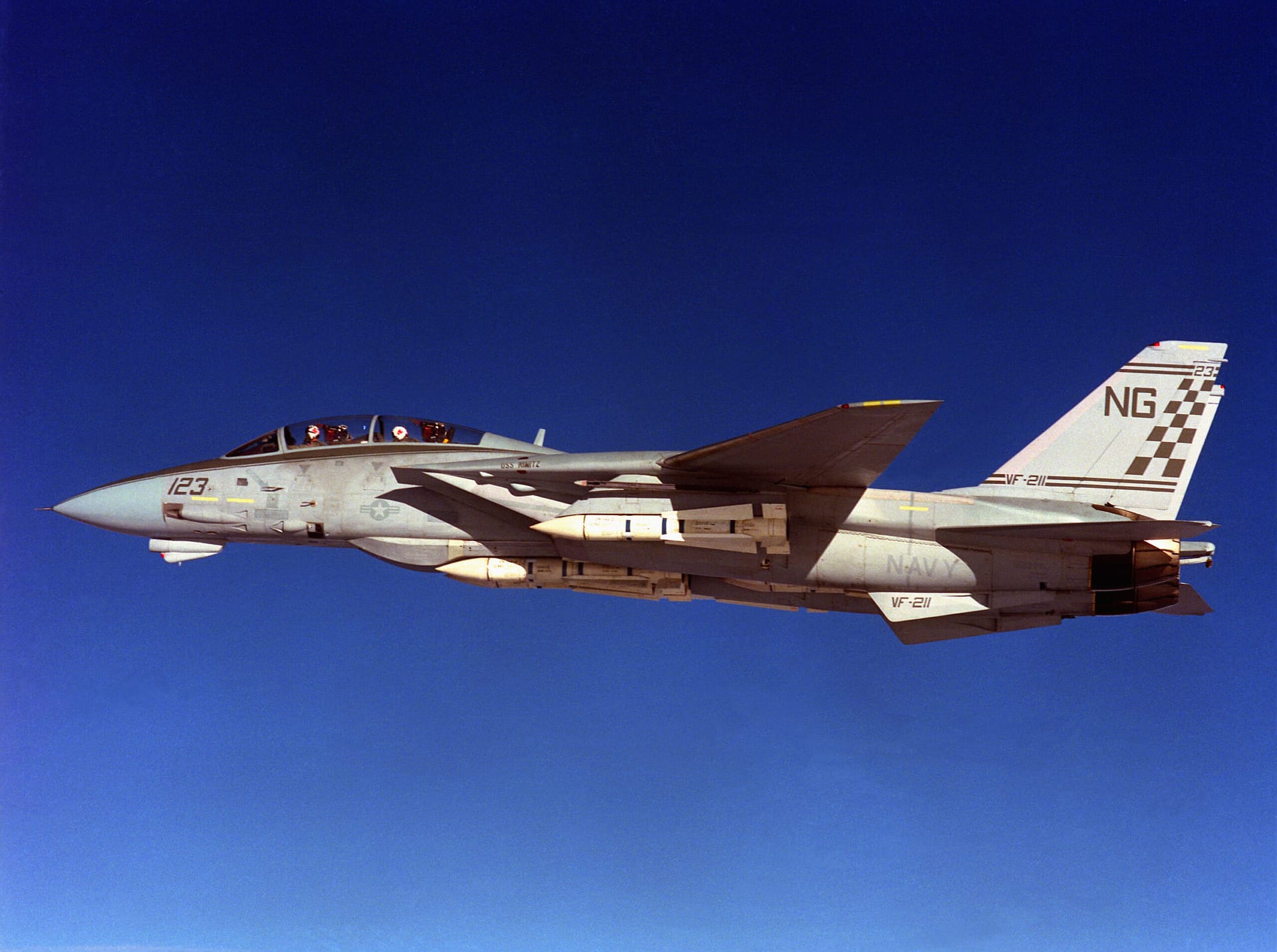
Segunda ronda: enero de 1989
Ocho años después, Gadafi seguía sin aprender la lección. El 4 de enero de 1989, el USS John F. Kennedy operaba en el Mediterráneo, al sur de Creta. Dos F-14A del escuadrón VF-32 "Swordsmen" —el Gypsy 202 (comandante Joseph "JB" Connelly y comandante Leo "Fang" Enwright) y el Gypsy 207 (teniente Hermon "Munster" Cook III y comandante Steven "Bano" Collins)— realizaban una patrulla aérea de combate cuando detectaron dos MiG-23ML Flogger libios despegando del aeródromo de Al-Bumbah, cerca de Tobruk. Lo que siguió fue uno de los enfrentamientos más allá del alcance visual más documentados de la historia de la Guerra Fría. Las tripulaciones de los Tomcat intentaron varios cambios de rumbo para demostrar su falta de hostilidad, pero los MiG-23 siguieron girando para mantener una geometría de interceptación frontal. Los estadounidenses cambiaron de rumbo cinco veces. En cada ocasión, los libios se ajustaron para seguir apuntándoles. Finalmente, con los MiG acercándose de frente a unos ocho kilómetros, el Gypsy 202 disparó un misil AIM-7 Sparrow. El proyectil impactó con precisión y destruyó al MiG-23 líder. El piloto libio que lo acompañaba giró a la izquierda; Connelly fijó el objetivo y disparó un AIM-9 Sidewinder desde aproximadamente dos kilómetros y medio. Segundo derribo. Las imágenes de la cámara de tiro fueron desclasificadas años después y siguen siendo uno de los vídeos de combate aéreo más impactantes jamás grabados. Inspiró directamente el combate aéreo final de la película original Top Gun, estrenada tres años antes del enfrentamiento de 1989, pero basada en el incidente de 1981.Lo que demostraron los incidentes de Sidra
Para el F-14 Tomcat, el Golfo de Sidra forjó su reputación. El imponente caza de Grumman había sido diseñado como interceptor de defensa naval; su principal función era derribar bombarderos soviéticos a larga distancia con misiles AIM-54 Phoenix. Sidra demostró que también podía combatir en el aire, y contra adversarios reales en lugar de objetivos de entrenamiento. Para la Armada estadounidense, los incidentes validaron las agresivas operaciones de Libertad de Navegación como herramienta diplomática. La disposición de Reagan a cruzar la Línea de la Muerte —y a responder al fuego cuando le disparaban— sentó un precedente que mantuvieron las administraciones posteriores. Para Gadafi, el resultado fue devastador: 4 Tomcats, 0 Libia. Ni un solo avión estadounidense resultó dañado en ninguno de los dos enfrentamientos. La Fuerza Aérea Libia nunca volvió a desafiar seriamente a un grupo de portaaviones de la Armada estadounidense. El Fast Eagle 102 —el Tomcat que logró la primera victoria en 1981— se exhibe actualmente en el Museo Conmemorativo de la Fuerza Aérea en Midland, Texas. Fue inaugurado en una ceremonia en agosto de 2016, donde el vicealmirante Dave Venlet, el oficial de sistemas de armas original de ese vuelo, cortó la cinta. El Fast Eagle 107 tuvo un final más trágico: se estrelló durante una operación de aterrizaje en portaaviones en 1994, causando la muerte de su piloto, la teniente Kara Hultgreen, una de las primeras mujeres pilotos de cazas embarcados de la Armada.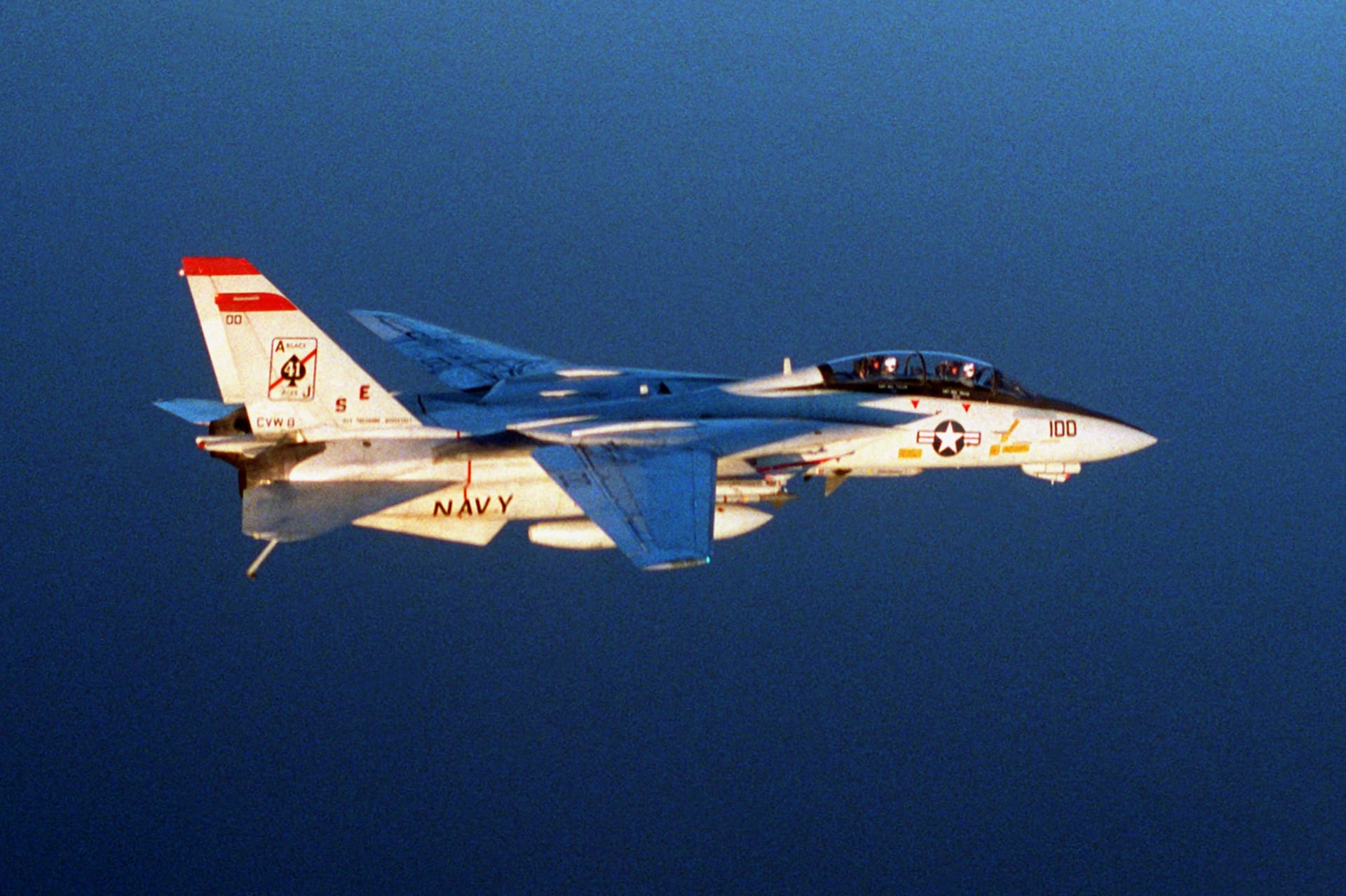
Preguntas relacionadas
¿Cuándo ocurrieron los incidentes del Golfo de Sidra?
Se produjeron dos importantes enfrentamientos aéreos. El primero tuvo lugar el 19 de agosto de 1981, cuando dos F-14A Tomcat del escuadrón VF-41 derribaron dos Su-22 Fitter libios. El segundo se produjo el 4 de enero de 1989, cuando dos F-14A del escuadrón VF-32 derribaron dos MiG-23 Flogger libios.
¿Por qué operaba la Armada de los Estados Unidos en el Golfo de Sidra?
Libia, bajo el régimen de Muamar Gadafi, reclamó la totalidad del golfo de Sidra como aguas territoriales, trazando una "línea de la muerte" a través del mismo. Estados Unidos rechazó esta reclamación amparándose en el derecho internacional y llevó a cabo ejercicios de libertad de navegación para reafirmar su derecho de paso en aguas internacionales.
¿Qué hizo que el F-14 Tomcat fuera tan efectivo en estos enfrentamientos?
El F-14 portaba el misil de búsqueda de calor AIM-9 Sidewinder y el misil guiado por radar AIM-7 Sparrow, lo que le proporcionaba capacidad tanto de corto como de largo alcance. Su radar AWG-9 podía rastrear múltiples objetivos simultáneamente, una ventaja decisiva en combates confusos y de rápido movimiento.
¿Se perdió algún avión estadounidense en los enfrentamientos del Golfo de Sidra?
No. Tanto en los incidentes de 1981 como en los de 1989, las tripulaciones de los F-14 salieron ilesas. Los enfrentamientos fueron breves, decisivos y unilaterales, en parte porque los pilotos libios estaban en desventaja tanto en entrenamiento como en equipamiento.
Publicaciones relacionadas
¿Puedo pilotar un F-14 Tomcat?
Los F-14 Tomcat de Irán cumplen 50 años y vuelven a volar en combate.
Fuentes: Comando de Historia y Patrimonio de la Armada de los Estados Unidos, DVIDS, Naval Institute Press, Air & Space Quarterly
0 Comentarios