
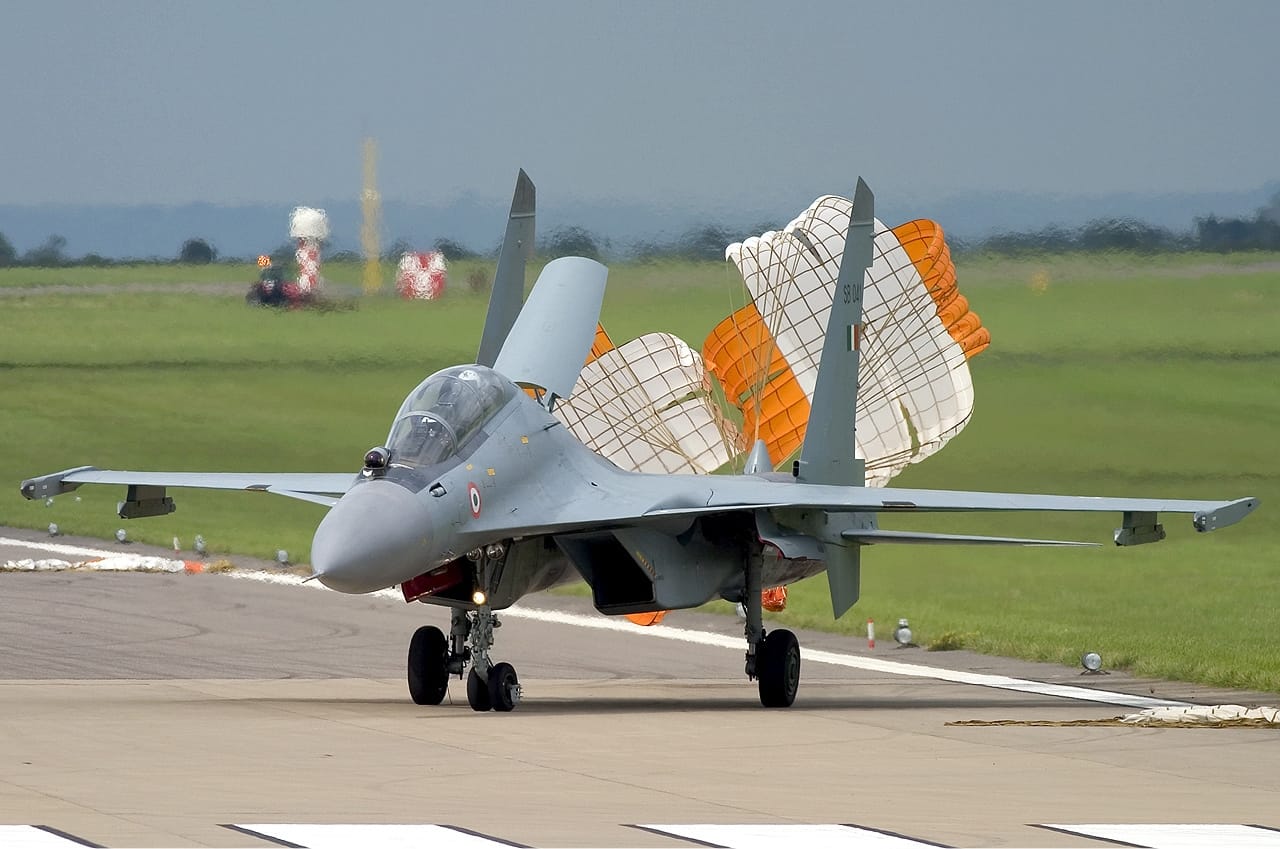
For years the Indian Air Force could see the enemy long before it could hit him. Chinese fighters and airborne radar planes carry missiles that reach out past 200 kilometres; India’s Su-30MKI fleet, its heaviest hitter, had nothing that could match them. That gap is about to close — with a Russian missile so long-legged that analysts simply call it the “AWACS killer.”
In a contract reported on 15 July 2026, New Delhi agreed to buy roughly 300 R-37M very-long-range air-to-air missiles — NATO reporting name AA-13 Axehead — in a deal valued at about US$1.2 billion. The weapons will arm the Su-30MKI, the twin-seat Flanker derivative that forms the backbone of Indian air power. Deliveries are expected to begin within 12 to 18 months.
It is a stop-gap, and India admits as much. But it is a stop-gap that changes the arithmetic over the Himalayas and the Line of Control.
DATOS RÁPIDOS
| Arma | R-37M (NATO: AA-13 Axehead) long-range air-to-air missile |
| Trato | ~300 missiles, ~US$1.2 billion, reported 15 July 2026 |
| Plataforma | IAF Su-30MKI (deliveries in 12–18 months) |
| Rango | Up to ~400 km (Russian claim); ~350 km effective from the Su-30MKI |
| Velocidad máxima | Terminal velocity approaching Mach 6 |
| Warhead | 60 kg high-explosive fragmentation |
| Guidance | Inertial + mid-course datalink + active radar homing |
A missile built to kill the eyes of an air force
The R-37M is not a dogfighting weapon. It is a sniper rifle for the sky, designed to reach the aircraft that make a modern air force work: the airborne early-warning radar planes, the aerial tankers, and the electronic-warfare jets that loiter well behind the front line. Kill those, and the enemy’s fighters go deaf, blind and thirsty.
To get there, the missile flies a lofted trajectory — climbing high into thin air where drag is low, then diving on its target to conserve energy and stretch its reach. Russian sources claim engagement ranges approaching 400 kilometres in ideal conditions; on the Su-30MKI, a more realistic effective figure is around 350 kilometres. Its terminal velocity approaches Mach 6, giving a target only seconds to react.
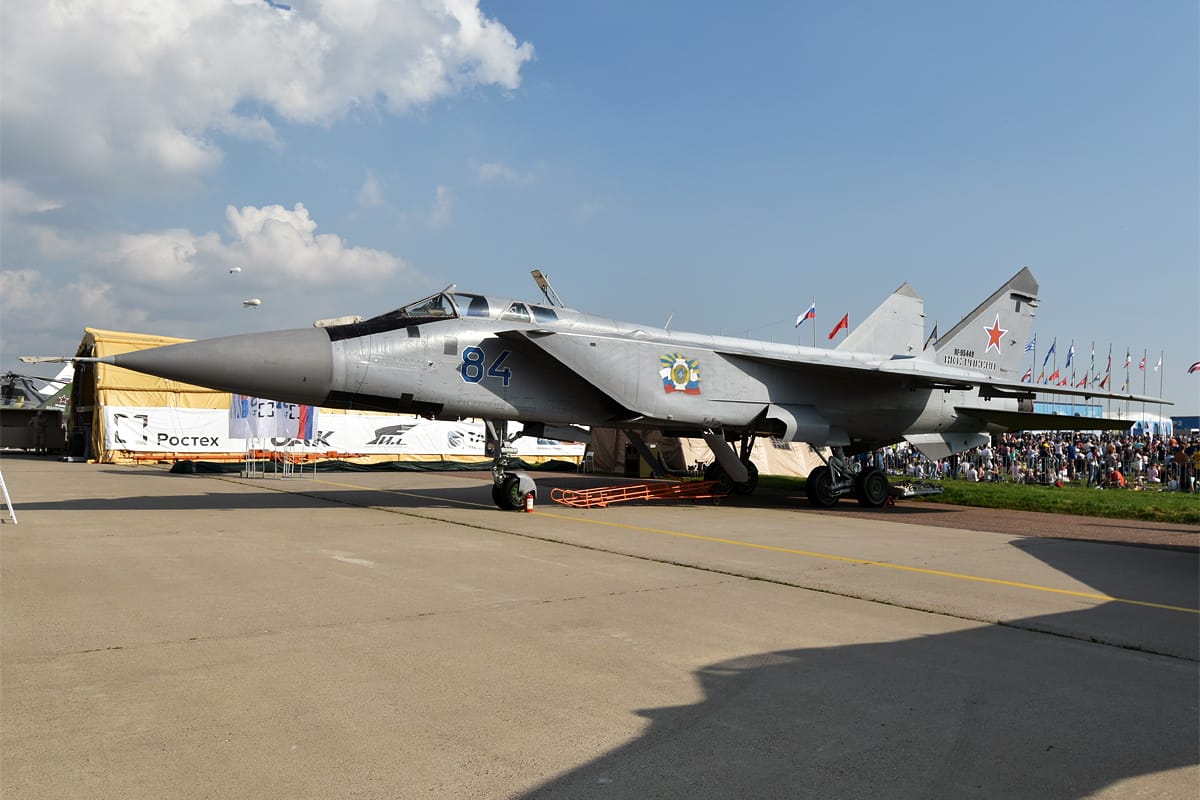
Guidance is a three-stage affair: inertial navigation off the launch aircraft’s radar picture, mid-course updates via datalink, and an active radar seeker — the 9B-1103M family — that switches on for the final kill so the launching fighter can turn away. The missile itself is a monster: roughly 4.2 metres long and close to 600 kilograms, carrying a 60-kilogram fragmentation warhead sized for large airframes.
That assessment comes from Russia’s war in Ukraine, where R-37M-armed interceptors have forced Ukrainian pilots to fly low and stay wary, picking off aircraft from ranges at which they cannot shoot back. India has clearly taken note.
Why India is buying now
The timing is not accidental. After the spring 2026 clashes with Pakistan, and with China rapidly fielding its own long-range missiles — the PL-15 and the even longer PL-17 — the Indian Air Force found itself out-sticked in the one measure that matters most in modern air combat: who can shoot first from farthest away.
India’s own answer, the indigenous Astra Mk2 and Mk3, is coming, but not yet mature. The R-37M buys time. It is a Russian solution to a problem partly created by Russian-supplied adversary technology reaching China and Pakistan — a reminder of how tangled the market for air-to-air firepower has become.
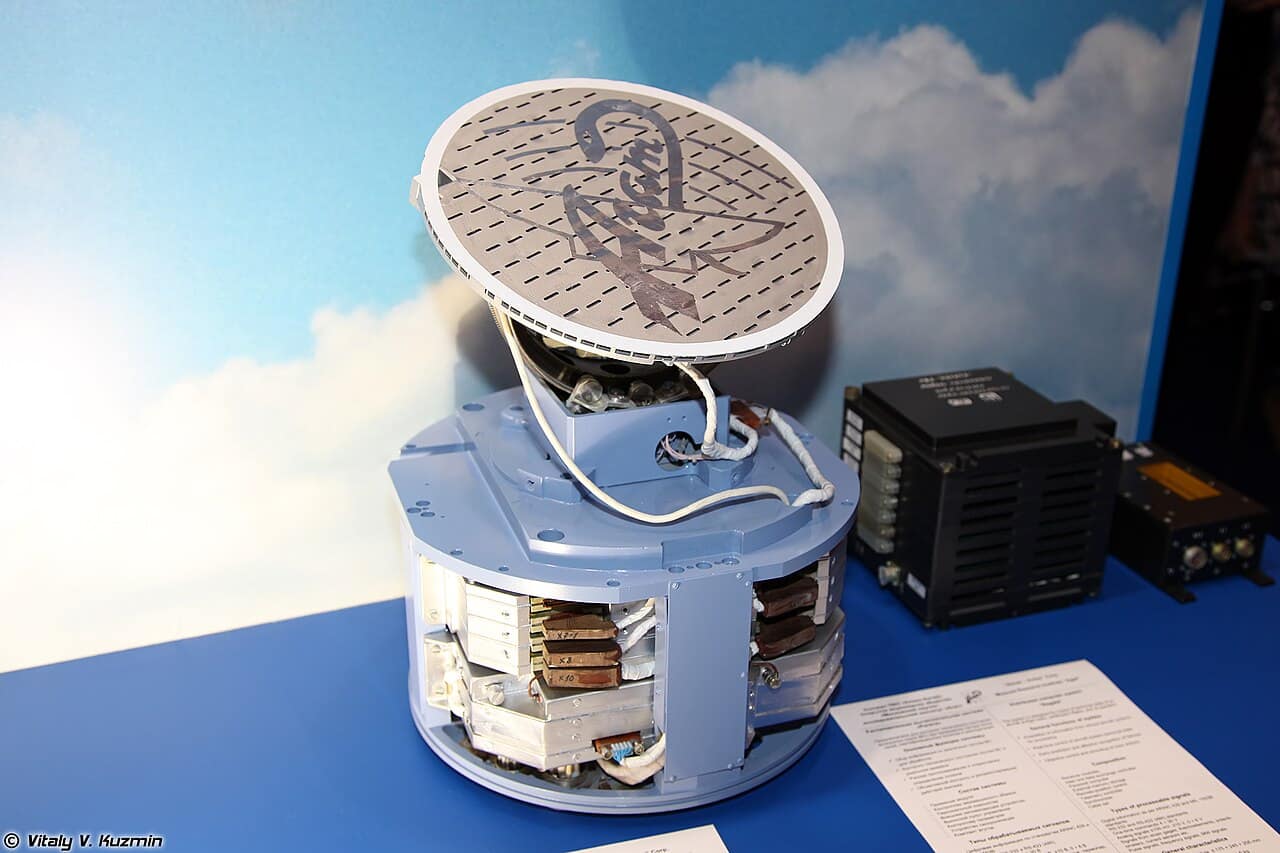
For the Su-30MKI — an aircraft Indian pilots know intimately, and one MiGFlug fans will recognise as a close cousin of the Flankers that thrill at every airshow — the R-37M turns a superb dogfighter into something that can also threaten anything that flies within 300 kilometres. On the subcontinent, that is a very long reach indeed.
Sources: Militarnyi; Defence Security Asia; Times of Oman; RUSI; Wikipedia.
Publicaciones relacionadas
Su-30 contra MiG-29: Dos caras de una misma moneda soviética.

0 Comentarios