
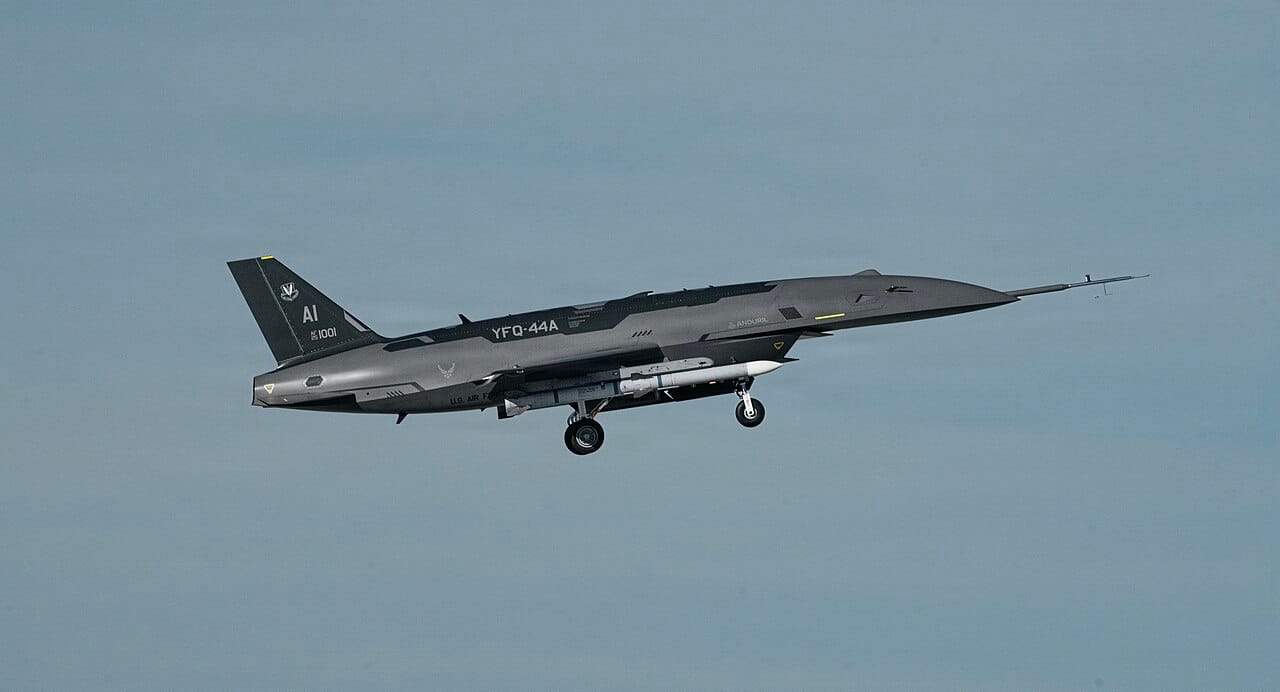
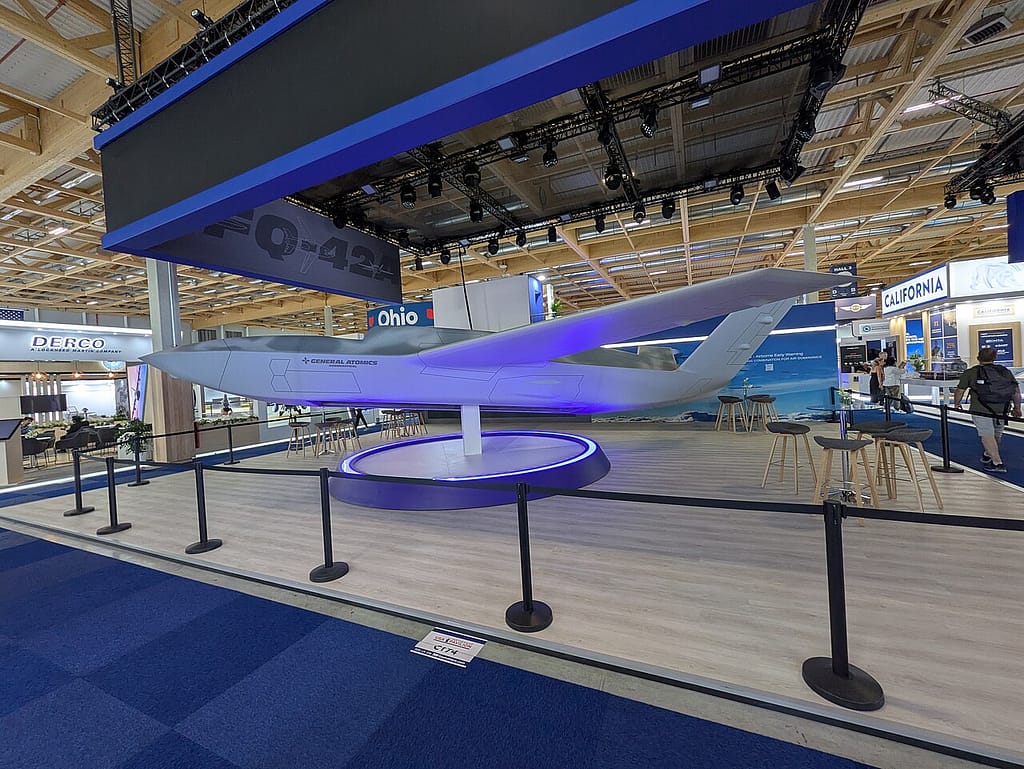
Si paseas por los pasillos de Farnborough esta semana, te toparás con aviones robot. Anduril presentó un avión de rotor basculante el lunes por la mañana. BAE y Lockheed presentaron un inhibidor de radar una o dos horas después. Boeing exhibió uno australiano en la línea de pruebas estática. General Atomics trajo el suyo. Turquía e Italia pasaron la primavera volando los suyos juntos.
Todos ellos son descritos, por alguien, como un “compañero fiel”. La mayoría no son lo mismo en absoluto, y las diferencias importan más que el marketing.
Aquí te contamos qué es lo que realmente está volando, para qué sirve cada uno y por qué todas las fuerzas aéreas del mundo quieren uno de repente.
Datos rápidos
| ¿Por qué ahora? | Dos décadas de aumento en los costos de los cazas coincidieron con una guerra en Ucrania que demostró que la producción en masa barata puede superar la calidad costosa. |
| El programa estadounidense | Avión de Combate Colaborativo (CCA) Incremento Uno: una carrera entre dos caballos: el YFQ-42A de General Atomics y el YFQ-44A Fury de Anduril. |
| Primera transmisión en vivo | Un YFQ-44A disparó un misil AIM-120 AMRAAM en una prueba este mes, la primera arma aire-aire real lanzada por un avión de combate autónomo estadounidense. |
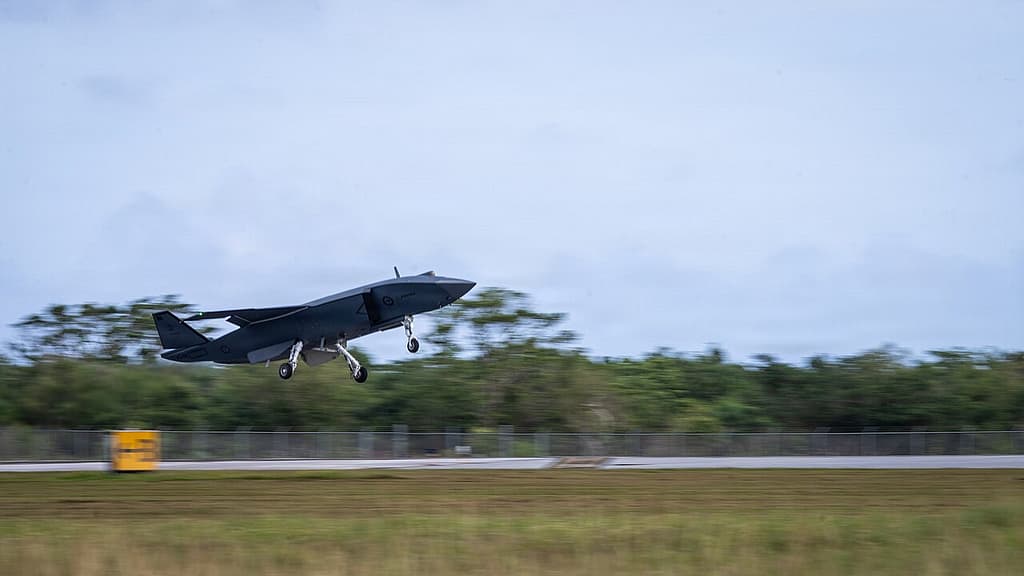
| Australia | El MQ-28 Ghost Bat de Boeing, en servicio desde 2021 y el más avanzado operativamente de todos. |
| Novedades de esta semana | El helicóptero de rotor basculante Thunder de Anduril y el BAE-Lockheed Blizzard, ambos presentados en Farnborough el 20 de julio de 2026. |
| Europa | Tanto GCAP como FCAS presuponen sistemas auxiliares no tripulados. Gran Bretaña quiere que su sistema esté operativo antes de 2030. |
| El hilo conductor | Arquitectura abierta, por lo que se pueden añadir armas y sensores en meses en lugar de años. |
Tres cosas diferentes con un mismo nombre.
La categoría se ha vuelto imprecisa. Conviene dividirla en tres niveles, ya que cuestan cantidades diferentes, cumplen funciones distintas y satisfacen requisitos diferentes.
Aviones de combate colaborativos Son los grandes: propulsados a reacción, del tamaño de un caza, se espera que regresen a casa. El YFQ-42A, el YFQ-44A Fury y el MQ-28 Ghost Bat viven aquí. Llevan misiles aire-aire internamente y vuelan junto a... F-35 o F-15EX, y están diseñados para sobrevivir a múltiples misiones. No son baratos —la Fuerza Aérea de EE. UU. ha pedido cerca de mil millones de dólares para comprar su primer lote en 2027—, pero cuestan una fracción de un caza tripulado.
Efectos lanzados desde el aire Son los pequeños, y Blizzard es el ejemplo presentado esta semana. Con un peso aproximado de 180 kilos, se asemeja más a un misil de crucero que a un avión. Se transporta, se lanza y se consume casi por completo; su función es interferir, desviar o neutralizar las defensas aéreas para que algo más valioso pueda atravesarlas. Nadie espera recuperarlo.
Trabajo en equipo con helicópteros Es el nivel más reciente y el que Anduril inauguró el lunes. Thunder es un helicóptero de rotor basculante diseñado para operar a altitud de helicóptero con los Apache y el futuro MV-75 del Ejército de EE. UU., en el aire bajo y congestionado donde un avión a reacción que depende de una pista de aterrizaje no sirve de nada.
Lo que Ucrania le enseñó a todo el mundo
El cambio intelectual que hay detrás de todo esto se produjo en los últimos cuatro años, y el presidente de Anduril fue explícito al respecto en Farnborough.
La lección no es que los drones superen a los aviones. Es que la cantidad tiene su propia calidad, y que las fuerzas aéreas occidentales pasaron treinta años optimizando precisamente lo contrario: un menor número de máquinas exquisitas e irremplazables pilotadas por pilotos que tardan una década en entrenarse.
Una fuerza aérea con 150 cazas no puede permitirse perder diez. Una fuerza aérea con 150 cazas y 400 escoltas robóticas desechables sí puede permitirse perder una cantidad considerable de escoltas.
La parte que es realmente difícil
Construir la estructura del avión no es lo difícil. Los aviones pequeños a reacción son un problema resuelto. Hay dos cosas que no lo son.
La primera es la autonomía que funciona en combate. No el piloto automático, sino la capacidad de recibir un objetivo y que el piloto se encargue de la maniobra. Shane Arnott, de Anduril, estableció la distinción clave en la que se basa todo el campo: dar órdenes a estos sistemas en lugar de controlarlos. Un Reaper necesita que alguien lo pilotee. Se supone que un CCA necesita que alguien decida qué debe lograr.
El segundo factor es la velocidad de integración, y es por eso que todas las empresas presentes en esta feria mencionan la "arquitectura abierta" aproximadamente una vez por minuto.
Instalar un nuevo misil en un avión en siete meses es extraordinario. En un caza convencional, el mismo proceso suele durar años, con campañas de pruebas, actualizaciones de software y certificaciones. Si estos aviones se van a actualizar constantemente y producir a bajo costo, esa diferencia de tiempo es la razón principal de su viabilidad comercial.
¿Quién va realmente por delante?
En cuanto a madurez, Australia destaca. El MQ-28 lleva volando desde 2021, ha disparado un misil AMRAAM real en un ejercicio conjunto con un E-7A y un Super Hornet, ha operado desde California y ha participado en un ejercicio multinacional junto a cazas estadounidenses. Ningún otro dron de su categoría ostenta ese récord.
En términos de financiación y escala, Estados Unidos. El programa CCA cuenta con dos competidores en fase de vuelo, un misil lanzado este mes y una partida presupuestaria para adquirir el primer avión operativo en 2027.
En cuanto a la amplitud de ideas, podría decirse que Europa y Turquía son líderes. El Kizilelma ha volado en conjunto con un M-346 italiano en el marco del programa K-SWARM de Baykar y Leonardo. Tanto el GCAP como el FCAS parten de la base de sistemas auxiliares no tripulados. El Reino Unido ha manifestado su deseo de contar con un sistema nacional operativo antes de 2030 y ha presentado tres propuestas industriales independientes para cumplir con este requisito.
Lo que aún no existe es un escuadrón operativo. Todos los aviones mencionados aquí están en fase de pruebas, y cada fecha asociada a ellos es un objetivo, no una fecha de entrega.
Esto conviene recordarlo al recorrer los pasillos esta semana. Lo que se exhibe en Farnborough no es el futuro del combate aéreo. Son seis o siete propuestas contrapuestas sobre cómo será ese futuro, propuestas por empresas que no siempre acertarán.
Fuentes: DefenseScoop, Aviation Week, The Aviationist, Breaking Defense, FlightGlobal, Janes, Boeing.
0 Comentarios