
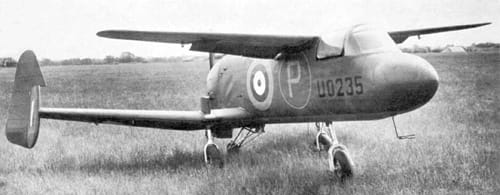
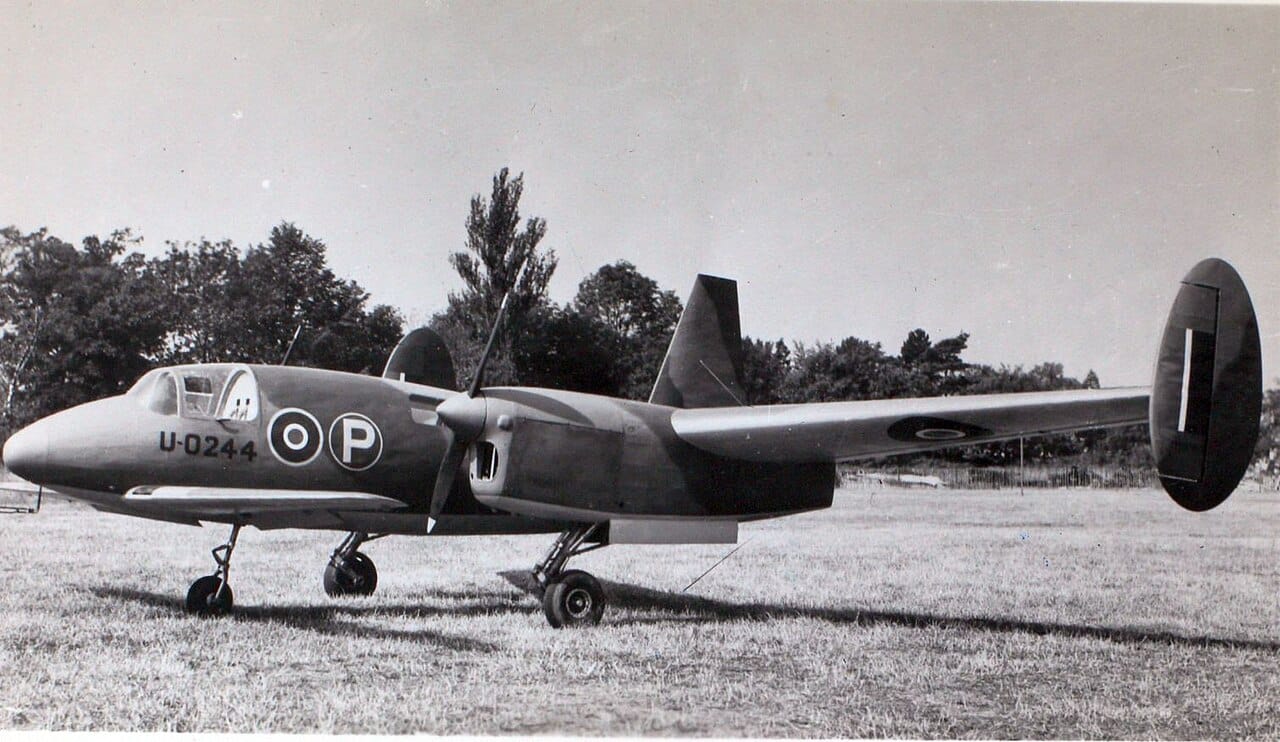
A primera vista, la pequeña aeronave parece haber sido ensamblada con piezas de una caja equivocada. Tiene un ala delante y otra detrás, una hélice orientada al revés y un piloto encaramado en la nariz. Se parece más a un insecto que a un caza, que es precisamente la intención. Miles Aircraft la bautizó como Libellula, que en latín significa libélula.
Detrás de esa rareza se escondía una idea realmente ingeniosa. En 1942, una pequeña empresa británica creyó que la configuración de alas en tándem —dos alas, una detrás de la otra— podría resolver uno de los problemas más graves de la aviación naval. Y en lugar de pedir permiso, simplemente construyeron el aparato en secreto, en tan solo seis semanas.
El resultado fue uno de los aviones de aspecto más extraño de la Segunda Guerra Mundial, y uno de los más ingeniosos, aunque de forma discreta.
• Aeronave: Miles M.35 Libellula: avión de investigación de ala en tándem (nombrado en honor a la libélula).
• Objetivo: para probar un caza naval de ala en tándem que se adaptara a portaaviones sin alas plegables
• Diseñador: Ray Bournon, para Miles Aircraft, una iniciativa privada construida en seis semanas.
• Disposición: Ala delantera, ala trasera, hélice propulsora, piloto en la nariz para una vista de aterrizaje magnífica.
• Primer vuelo: 1 de mayo de 1942, pilotado por el propio George Miles.
• Hacer un seguimiento: El M.39B, una maqueta voladora a escala de un bombardero de alas en tándem, realizó su primer vuelo el 22 de julio de 1943.
• Destino: El diseño funcionó, pero tanto el caza como el bombardero fueron rechazados; solo se construyeron el M.35 y el M.39B.
El problema mortal de aterrizar en un portaaviones
Aterrizar un caza en una cubierta de vuelo inestable es una de las maniobras más difíciles de la aviación, y en 1941 la tasa de accidentes era alarmante. Gran parte del peligro radicaba en la simple visibilidad: un caza monomotor convencional se mantenía con el morro elevado durante la aproximación, y su larga cubierta del motor ocultaba la cubierta justo cuando el piloto más la necesitaba. Los cazas embarcados también requerían alas plegables pesadas y complejas para caber bajo cubierta. Durante una visita a un centro experimental, George Miles vio un Lysander de ala en tándem y tuvo una idea: colocar un ala en cada extremo, sentar al piloto delante, y ambos problemas podrían desaparecer de una vez.
Seis semanas, y sin pedir permiso.
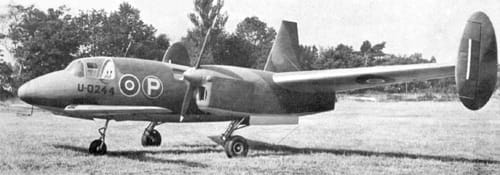
En lugar de someter un diseño poco convencional a la burocracia de tiempos de guerra y esperar, Miles simplemente construyó un prototipo. El diseñador Ray Bournon dibujó un pequeño avión monoplaza de madera y, sin que nadie del Ministerio los supervisara, el equipo lo terminó en seis semanas. Tenía un ala delantera alta, un ala trasera inferior en flecha con aletas en las puntas, un tren de aterrizaje triciclo fijo y un motor propulsor ubicado detrás de la cabina para que el piloto pudiera sentarse justo en la nariz.
El jefe de pilotos de pruebas dijo que no, gracias.
Cuando llegó el momento de pilotar la extraña avioneta, el propio piloto de pruebas jefe de Miles se mostró claramente reacio a subir a bordo, así que George Miles lo hizo él mismo. No fue una introducción fácil. El avión se resistía extrañamente a despegar hasta que Miles descubrió un truco.
El primer vuelo, el 1 de mayo de 1942, fue escalofriante: el M.35 era casi incontrolable porque su centro de gravedad estaba mal ubicado, pero Miles logró aterrizarlo sano y salvo. Una vez que la aeronave estuvo correctamente lastrada, los vuelos posteriores transcurrieron sin problemas y se demostró la eficacia del diseño de ala en tándem. Años después, el gran piloto de pruebas Eric "Winkle" Brown titularía con cariño su relato sobre la máquina "La Libélula Enamorada".“
Brillante... e imperdonable.
Miles presentó una propuesta de caza naval basada en ese diseño. Pero la compañía había cometido una falta burocrática: había diseñado y probado el M.35 en secreto, sin autorización oficial. En lugar de premiar la iniciativa, el Ministerio de Producción Aeronáutica reprendió a la empresa, y tanto este como el Almirantazgo rechazaron el caza. Una idea realmente prometedora se había estrellado contra la burocracia.
De caza a bombardero
Sin desanimarse, Miles aplicó la misma lógica a un bombardero. El diseño a tamaño real nunca se construyó, pero la compañía creó un modelo a escala para volar, el M.39B, que despegó el 22 de julio de 1943 y exploró la configuración de alas en tándem a mayor escala. Al igual que su hermano menor, voló, y al igual que este, no llegó a ninguna parte. La corriente principal del diseño aeronáutico siguió adelante con un solo ala y una cola, y los aviones con forma de libélula quedaron como uno de los grandes interrogantes de la aviación.
Fuentes: Wikipedia (Miles M.35 Libellula; Miles M.39B Libellula); Don L. Brown, “Miles Aircraft since 1925” (Putnam, 1970); Tony Buttler, “British Secret Projects”; Eric Brown, “The Lovelorn Libellula”, Air Enthusiast (1977).
Preguntas relacionadas
¿Qué era Miles Libellula?
El Miles Libellula fue un avión experimental británico de ala en tándem construido por Miles Aircraft en 1942. Bautizado con el nombre de la palabra latina para libélula, el M.35 Libellula fue un proyecto privado ensamblado en secreto en tan solo seis semanas para demostrar que un caza naval de ala en tándem podía caber en portaaviones sin alas plegables. Solo se construyeron el M.35 y su sucesor, el M.39B.
¿Qué es un avión de alas en tándem?
Un avión de ala en tándem tiene dos alas de tamaño completo montadas una detrás de la otra, en lugar de un ala principal y un pequeño estabilizador horizontal. Ambas alas generan sustentación, lo que permite un fuselaje más corto y una menor envergadura. Esta configuración apareció en diseños experimentales como el Miles M.35 Libellula, pero nunca llegó a reemplazar la configuración convencional en los cazas de producción.
¿Por qué se diseñó el Miles Libellula?
Fue diseñado para solucionar el grave problema del aterrizaje en portaaviones. En 1941, los cazas monomotor convencionales aterrizaban con la nariz hacia arriba durante la aproximación, sus largas cubiertas de motor obstruían la visión del piloto hacia la cubierta, y necesitaban pesadas alas plegables para caber bajo cubierta. El Libellula colocaba al piloto justo en la nariz, con una hélice propulsora detrás, lo que le proporcionaba una excelente visibilidad para el aterrizaje.
¿Quién diseñó el Miles Libellula?
El Libellula fue diseñado por Ray Bournon para Miles Aircraft, la empresa británica también responsable del proyecto supersónico cancelado. Miles M.52. Fue una iniciativa privada construida sin permiso oficial en tan solo seis semanas, lo que refleja la disposición de la pequeña empresa a apostar por ideas poco convencionales durante la Segunda Guerra Mundial.
¿Cuándo realizó su primer vuelo el Miles M.35 Libellula?
El Miles M.35 Libellula realizó su primer vuelo el 1 de mayo de 1942, pilotado por el propio George Miles después de que el piloto de pruebas jefe de la compañía se negara a volarlo. El primer vuelo fue escalofriante: la aeronave era casi incontrolable porque su centro de gravedad estaba mal situado; pero una vez correctamente lastrada, los vuelos posteriores transcurrieron sin problemas y demostraron la viabilidad del concepto de ala en tándem.
¿Qué era el Miles M.39B?
El Miles M.39B era un modelo a escala de un bombardero de alas en tándem propuesto, sucesor del M.35 Libellula. Su primer vuelo tuvo lugar el 22 de julio de 1943 y demostró que la configuración de alas en tándem funcionaba a mayor escala. A pesar de las pruebas exitosas, el bombardero de tamaño real fue rechazado y el M.39B se convirtió en el último modelo de la línea Libellula.
¿Llegó a producirse alguna vez el Miles Libellula?
No. Aunque se demostró que la configuración de alas en tándem funcionaba en las pruebas de vuelo, tanto las propuestas de caza naval como las de bombardero fueron rechazadas, y solo se construyeron los aviones de investigación M.35 y M.39B. Otros cazas no convencionales de tiempos de guerra, como el de empuje-tracción Dornier Do 335 Pfeil, se encontraron con callejones sin salida similares cuando los aviones a reacción tomaron el relevo.
¿Por qué algunos aviones tienen hélice propulsora?
Una hélice propulsora se monta detrás del motor y el fuselaje, impulsando la aeronave hacia adelante en lugar de tirar de ella. La principal ventaja es una visión frontal despejada: en el Miles Libellula, el piloto se sentaba justo delante, con una vista perfecta para los aterrizajes en portaaviones. Las desventajas —dificultades de refrigeración y peligrosos saltos en paracaídas más allá de la hélice— hicieron que las hélices propulsoras fueran poco comunes en los cazas.
0 Comentarios