
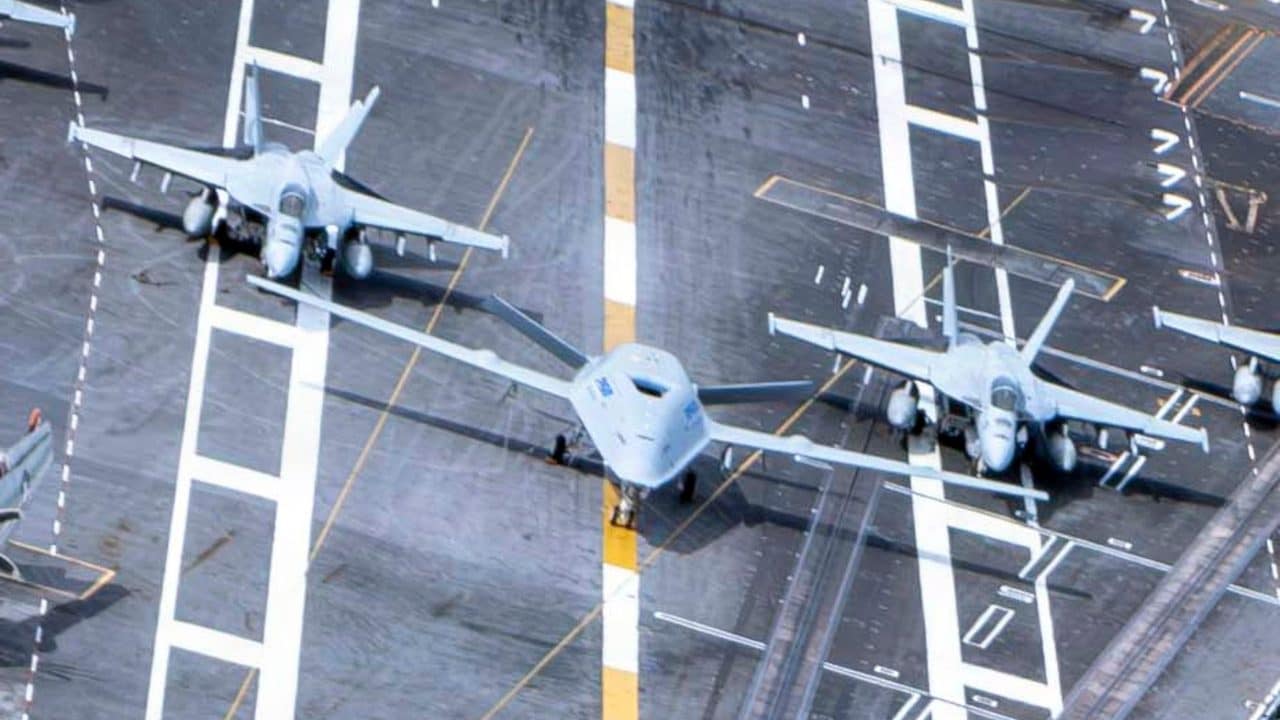
Entre los grandes veleros y cascos grises que llenaban el puerto de Nueva York para el 250 aniversario de Estados Unidos, la silueta más extraña no era un barco en absoluto. Amarrada a la cubierta de vuelo del USS Nimitz, entre filas de Super Hornets, Allí se encontraba una máquina gris sin ventanas, con las alas plegadas y sin cabina: el MQ-25 Stingray, el dron que reabastecerá de combustible a los cazas de la Armada estadounidense y la primera prueba fehaciente que la mayoría de los espectadores han visto del ala aérea robótica embarcada que está por llegar.
Según Stars and Stripes, la Armada inauguró la Revista Naval Internacional 250 en el puerto de Nueva York el 4 de julio con el Nimitz como protagonista, recién llegado de un ejercicio de flota multinacional en el Atlántico, y con el demostrador Stingray a bordo como una demostración muy deliberada.
Datos clave: Demostrador MQ-25 Stingray T-1
| Qué es | Demostrador MQ-25 (“T-1”) propiedad de Boeing, en vuelo desde 2019. |
| Dónde | A bordo del USS Nimitz para FLEETEX 250 y la revista naval del 250 aniversario en Nueva York. |
| Tamaño | MQ-25 de producción: 75 pies de envergadura (31,3 pies plegado), 51 pies de largo, más ancho que un Super Hornet. |
| Misión | Reabastecimiento aéreo para el ala aérea del portaaviones, además de capacidad ISR integrada. |
| Estado | El primer MQ-25 de producción realizó su primer vuelo en abril de 2026; la Armada tiene como objetivo alcanzar la capacidad operativa inicial el próximo año. |
Un dron enorme en una cubierta muy famosa
La Armada confirmó a The War Zone lo que sugerían las fotos de la cubierta: “Efectivamente, tenemos a bordo un prototipo T-1 propiedad de Boeing”, declaró un portavoz. El T-1 es el demostrador original del Stingray; lleva volando desde 2019 e hizo historia al reabastecer de combustible a un avión tripulado en pleno vuelo, pero nunca ha despegado ni aterrizado en un portaaviones. Fue izado a bordo con una grúa, al igual que se hizo para las pruebas de manejo en cubierta del USS George H.W. Bush en diciembre de 2021.
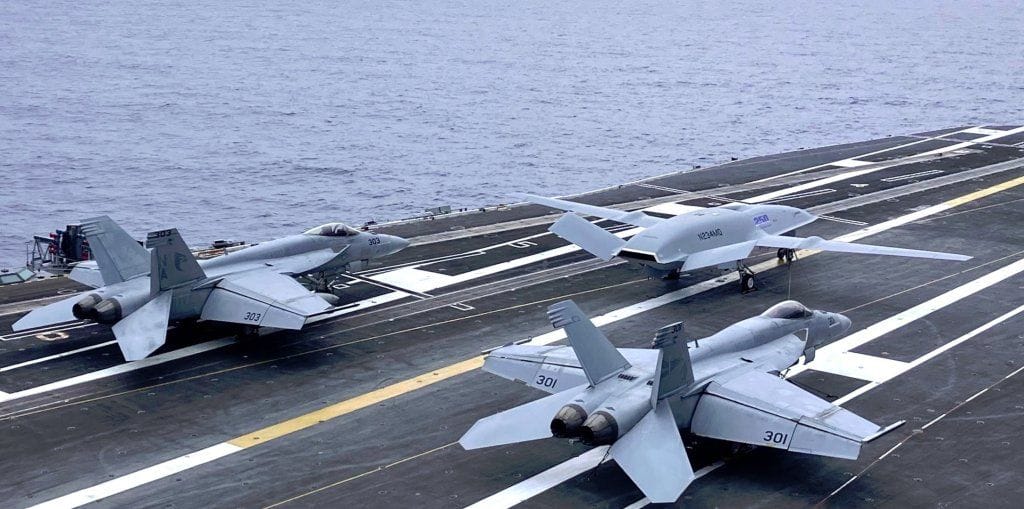
Lo que realmente transmiten las fotos es la escala. El Stingray de producción mide 23 metros de largo —9 metros más que los Super Hornet estacionados a su lado— e incluso con las alas plegadas ocupa más de 9 metros de valioso espacio en la cubierta. Maniobrar un avión de ese tamaño, sin tripulación, en medio del caos coreografiado de las operaciones en la cubierta del portaaviones sigue siendo uno de los mayores desafíos del programa.
Veintiséis buques de guerra y una fiesta de cumpleaños
A finales de junio, el portaaviones Nimitz lideró el Ejercicio Naval 250, un gran ejercicio de entrenamiento multinacional en el Atlántico con participantes como el Reino Unido, Francia, Alemania, España, Brasil, Canadá y Turquía. En un ejercicio fotográfico de navegación en grupo el 25 de junio, el portaaviones lideró a otros 25 buques de guerra de 13 de las naciones participantes, una formación naval que las armadas realizan una vez cada década.

Desde allí, el portaaviones puso rumbo al norte, hacia Nueva York, para participar en la Revista Naval Internacional, donde los Blue Angels encabezaron un desfile de aviones sobre el río Hudson el 4 de julio; a ellos se unió, en un gesto diplomático muy acertado, la Patrouille de France de Francia, que dejó una estela de humo rojo, blanco y azul sobre el puerto, tal como informó Stars and Stripes.
El ala aérea del futuro, tarde o temprano.
Detrás de toda la parafernalia se esconde un programa que la Armada necesita urgentemente. La primera misión del Stingray es poco glamurosa pero crucial: asumir la función de reabastecimiento en vuelo de los F/A-18F Super Hornet, que actualmente consumen la vida útil de sus fuselajes transfiriendo combustible a otros aviones. Cada Stingray operativo libera un caza de ataque y amplía el alcance de toda el ala aérea, algo de vital importancia en un Pacífico donde los misiles antibuque alejan cada vez más a los portaaviones de sus objetivos.
El programa lleva años de retraso. El objetivo original era alcanzar la capacidad operativa inicial en 2024; el primer prototipo del Stingray voló recién en abril. La Armada ahora espera declarar la capacidad operativa inicial el próximo año, con centros de control de drones ya instalados a bordo de los aviones George H. W. Bush, Carl Vinson, Theodore Roosevelt y Ronald Reagan.
Es casi seguro que el propio Nimitz nunca operará un Stingray en la práctica; la Armada solo ha extendido la vida útil del portaaviones, de 51 años, hasta marzo del próximo año. Lo cual hace que la imagen resulte curiosamente apropiada: el portaaviones en servicio activo más antiguo de la flota, en su gira de despedida, llevando el futuro a bordo de regreso al puerto de Nueva York. Los oficiales de la Armada quieren que las futuras alas aéreas sean un 60 % o más no tripuladas. La extraña forma gris en la cubierta del Nimitz es como luce ese futuro, estacionado junto al presente.
Fuentes: The War Zone (TWZ), Stars and Stripes, Boeing, Marina de los EE. UU.
Preguntas relacionadas
¿Qué es el MQ-25 Stingray?
El MQ-25 Stingray es un avión no tripulado embarcado diseñado para reabastecer de combustible en vuelo a los cazas de la Armada estadounidense. Sin ventanas, con alas plegadas y sin cabina de mando, es la primera pieza del ala aérea robótica embarcada que la Armada planea desarrollar. Un prototipo propiedad de Boeing, conocido como T-1, lleva volando desde 2019 y apareció a bordo del USS Nimitz en 2026.
¿Cuál es la misión principal del MQ-25?
La misión principal del MQ-25 Stingray es el reabastecimiento aéreo: reabastecer de combustible a cazas de la Armada como el F/A-18 Super Hornet para que puedan volar más lejos y permanecer en el aire durante más tiempo, liberando a los aviones tripulados del rol de reabastecimiento en vuelo. También es el paso previo de la Armada hacia la operación aeronaves no tripuladas desde las cubiertas de los portaaviones en un sentido más amplio.
¿Quién fabrica el MQ-25 Stingray?
Boeing fabrica el MQ-25 Stingray. La compañía es propietaria del demostrador T-1, que vuela desde 2019 y que se exhibió a bordo del USS Nimitz durante la Revista Naval Internacional número 250. El programa tiene como objetivo proporcionar a la Armada su primer dron operativo embarcado, integrado junto a aeronaves tripuladas en el ala aérea.
¿Cuándo y dónde se mostró el MQ-25 al público?
El demostrador MQ-25 viajó a bordo del USS Nimitz para la Revista Naval Internacional 250, que se inauguró en el puerto de Nueva York el 4 de julio de 2026 como parte de los eventos del 250 aniversario de Estados Unidos. Estacionado entre filas de Super Hornets, ofreció a muchos espectadores la primera oportunidad de ver el dron que reabastecerá de combustible a los cazas de la Armada.
¿Por qué es importante el MQ-25 para los portaaviones?
El MQ-25 es importante porque es la primera evidencia sólida del ala aérea robótica de portaaviones que está por venir: un futuro en el que las aeronaves no tripuladas operan de forma rutinaria desde las cubiertas de vuelo junto con los aviones tripulados. Comenzar con la función de reabastecimiento de combustible reduce el riesgo al tiempo que demuestra el concepto y complementa los debates sobre la Armada. caza de próxima generación.
¿Qué es un ala aérea de portaaviones?
Un ala aérea embarcada es el conjunto completo de aeronaves a bordo de un portaaviones de la Armada de los Estados Unidos, incluyendo cazas, aviones de alerta temprana y de apoyo. El MQ-25 Stingray se integrará a este conjunto, añadiendo un avión cisterna no tripulado y apuntando hacia alas aéreas que combinen aviones tripulados con aeronaves robóticas.

0 Comentarios