
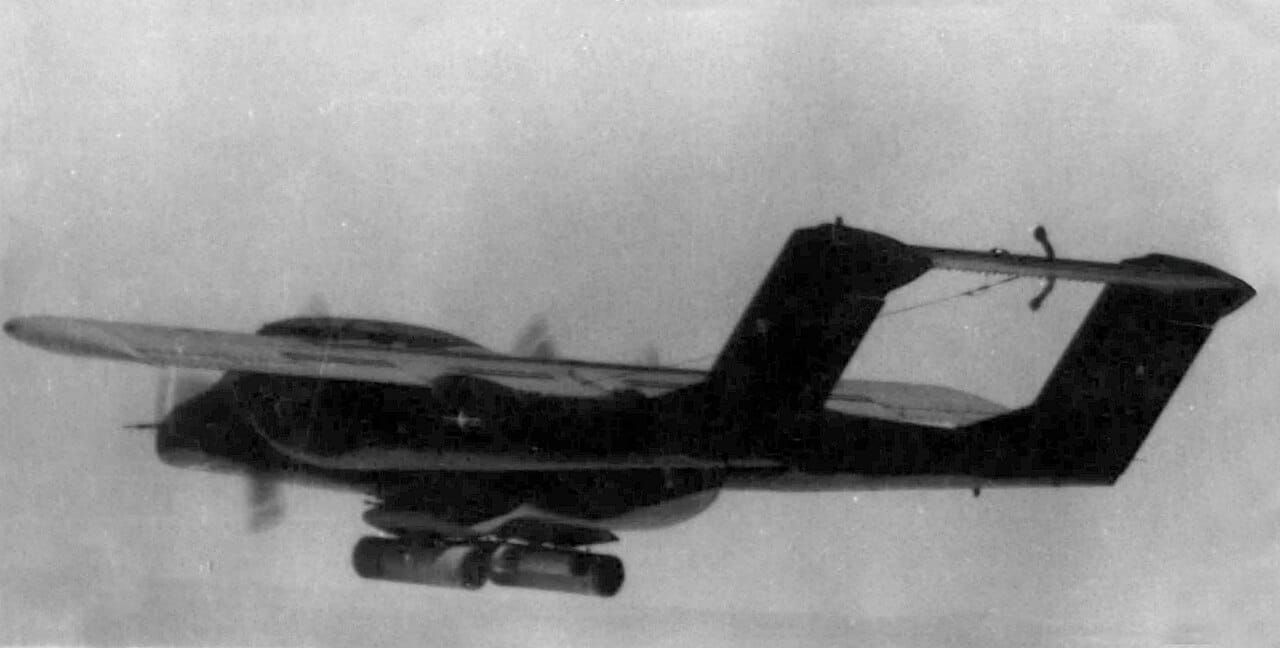
Most Vietnam-era warplanes are long gone — melted into scrap or bolted to a museum pole. The OV-10 Bronco keeps refusing to leave. Built to fight guerrillas in the 1960s, the funny little twin-boom turboprop has come roaring back again and again: over the Mekong Delta, over Kuwait, and, as recently as 2015, over Iraq and Syria hunting ISIS.
Datos rápidos
- Tipo: North American Rockwell OV-10 Bronco — COIN / forward air control aircraft
- Primer vuelo: 1965
- Motores: two Garrett T76 turboprops, twin-boom layout
- Armamento: machine guns, rockets and bombs; small rear cargo bay
- Users: USAF, US Marines, US Navy — and many air forces since
- Latest US combat: a 2015 evaluation over Iraq and Syria
Purpose-built for a dirty war
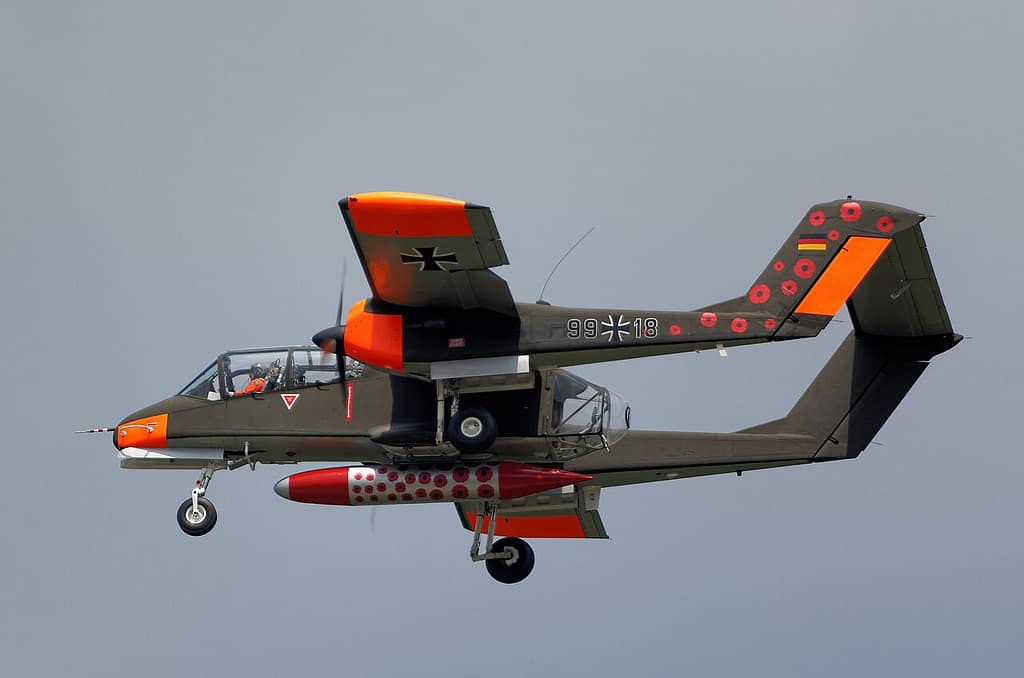
The Bronco was the first American aircraft designed specifically for counter-insurgency. First flown in 1965, it packed two Garrett T76 turboprops into a twin-boom airframe, put the crew under a bubble canopy with superb all-round visibility, and hung machine guns in stub sponsons with hardpoints for rockets. It could even carry a few troops in a small rear bay. Above all it could fly slow, turn tight, and work from rough dirt strips close to the fight.
Eyes and teeth over Vietnam
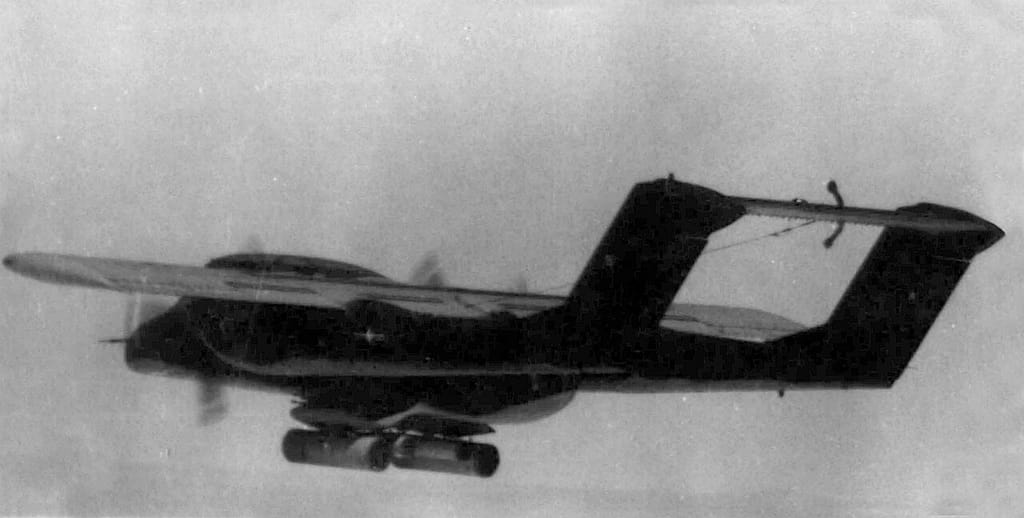
In Vietnam the Bronco did almost everything. As a forward air controller it hunted targets and marked them with white smoke rockets for the fast jets rolling in behind. It spotted for artillery, escorted helicopters, and flew visual reconnaissance. And with the U.S. Navy’s “Black Ponies” of squadron VAL-4, it turned attacker, prowling the Mekong Delta to break up enemy boats and supply lines.
The comeback kid
The U.S. retired most of its Broncos by the 1990s, but the aircraft never truly went away. It flew combat in Operation Desert Storm. Then, in 2015, the Air Force quietly sent two updated OV-10s to the Middle East for a real-world trial called Combat Dragon II, flying more than 120 combat sorties in 82 days over Iraq and Syria — proof that a cheap, low-and-slow turboprop still had a job to do in a modern war. Today Broncos fight wildfires, fly research missions for NASA, and serve air arms from the Philippines to Colombia.
In an age of stealth jets and hypersonic missiles, the Bronco’s stubborn survival makes a quiet point: the right tool for a small, dirty war often isn’t the fastest or the fanciest. Sometimes it is the cheap, tough, low-flying workhorse that can loiter all day and actually see what is happening on the ground.
Sources: Naval History and Heritage Command; Defense Media Network; War History Online; Wikipedia.
0 Comentarios