
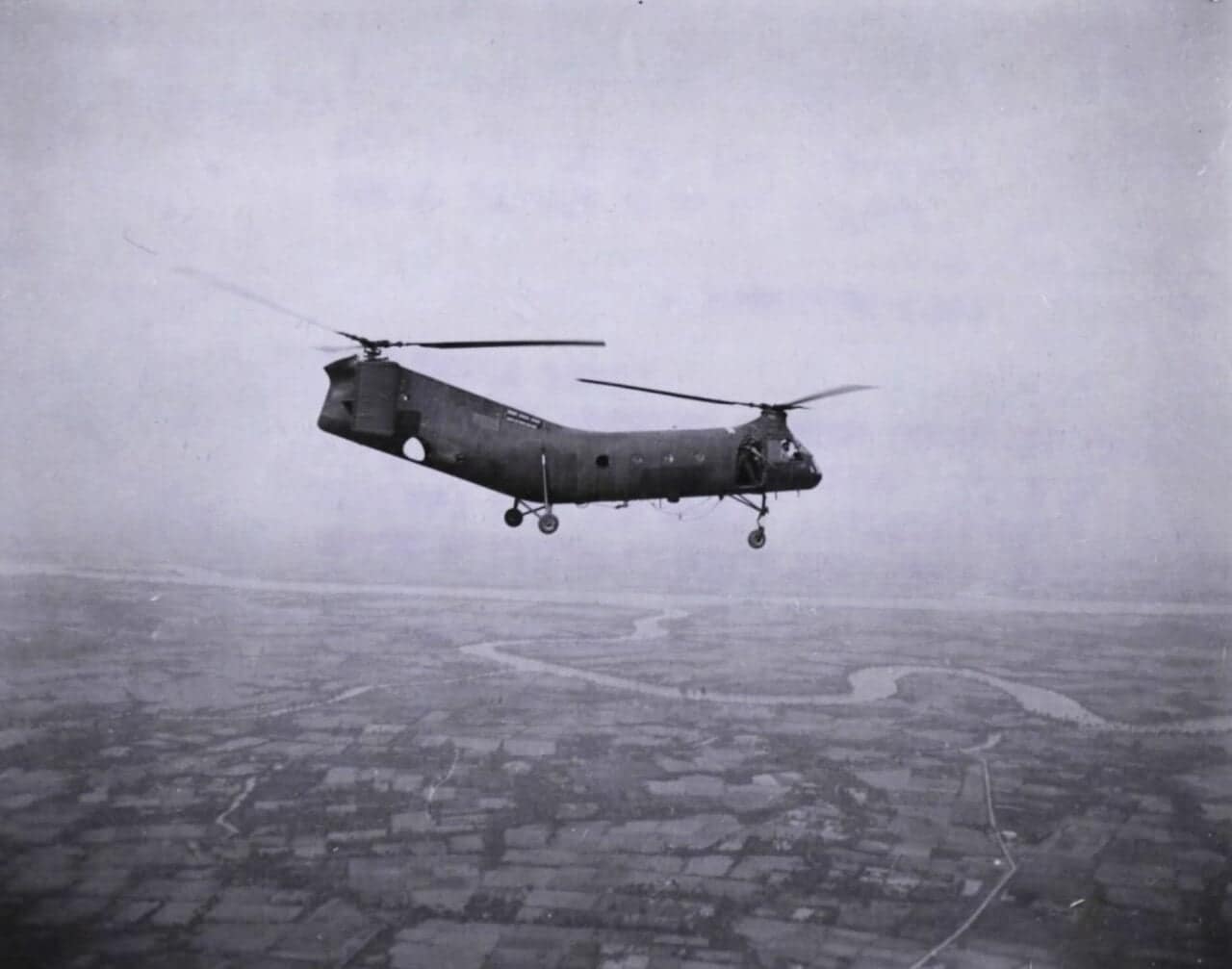
It looked like a punchline — a helicopter with its fuselage bent upward in the middle like a piece of fruit, a fat rotor spinning at each end. Soldiers called it the Flying Banana, and they meant it with affection. But the Piasecki H-21 was no joke. It pulled downed airmen out of the Arctic, carried some of the first American troops into battle in Vietnam, and helped write the playbook for the helicopter assault.
Datos rápidos
- Tipo: Piasecki H-21 Workhorse / Shawnee — tandem-rotor helicopter
- Apodo: the “Flying Banana”
- Primer vuelo: April 1952
- Motor: one Wright R-1820 radial driving both rotors
- Construido: 707, through 1958
- Retired from US Army front line: 1964, replaced by the UH-1 Huey
Born for the cold
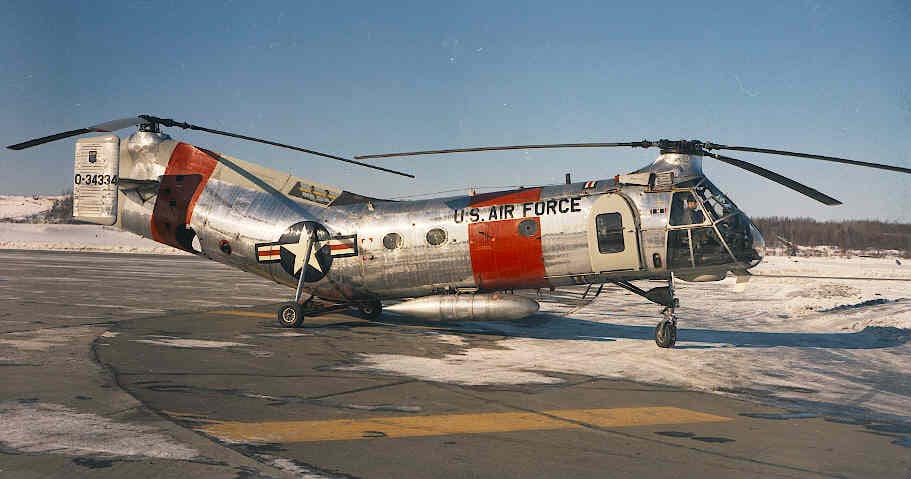
Piasecki designed the H-21 as an Arctic rescue and transport machine, and it first flew in April 1952. Its odd banana shape was pure function: bending the fuselage kept the two big tandem rotors clear of each other while leaving a roomy cabin between them. A single Wright R-1820 radial engine drove both rotors, and the whole aircraft was built to keep working in cold that would ground almost anything else.
The wrong helicopter in the wrong climate
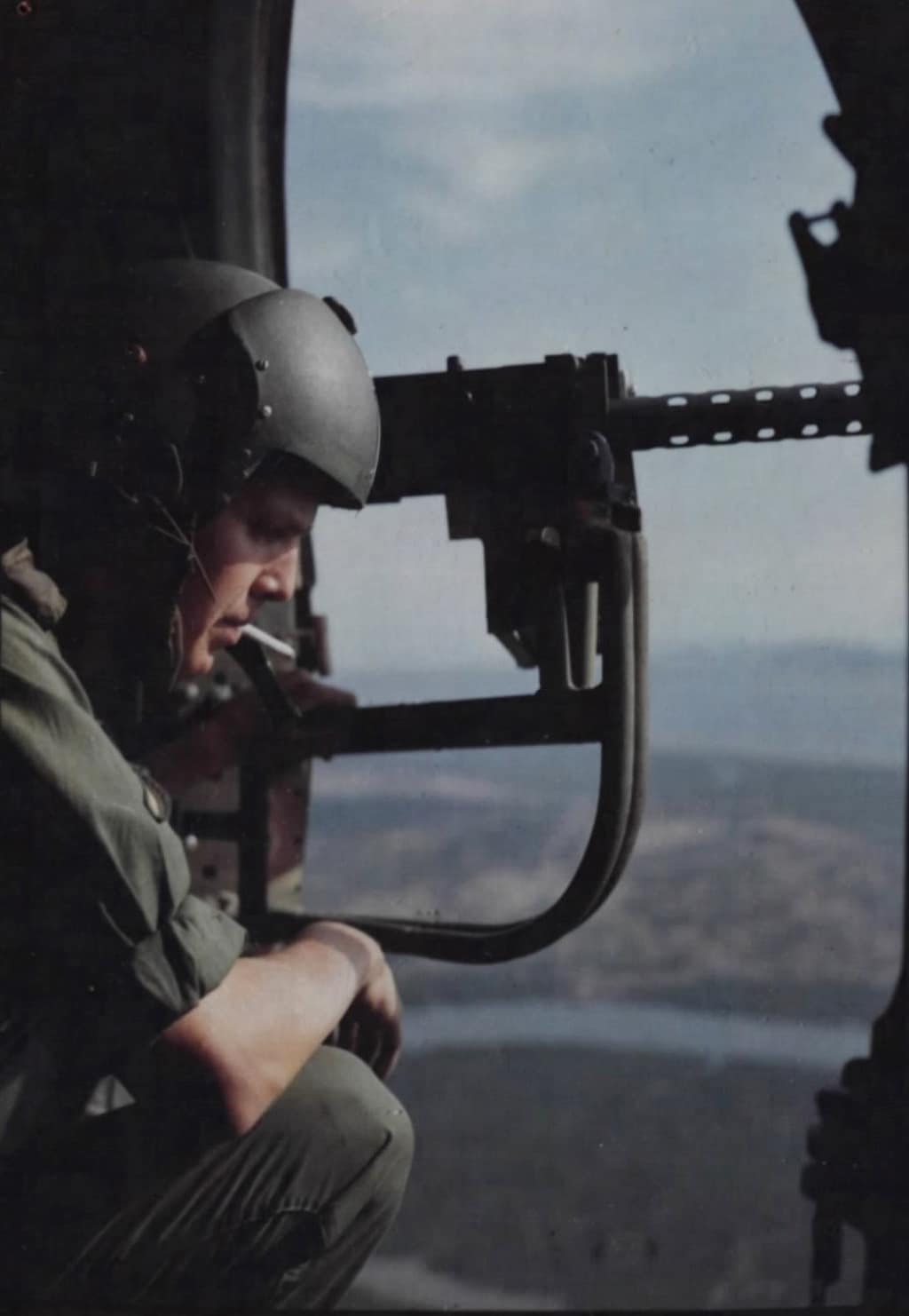
Then it went to war in the tropics. When the US Army sent H-21s to Vietnam in December 1961, with the 8th and 57th Transportation Companies, the cold-weather machine ran headlong into heat and humidity. Rated to carry 20 troops, it could lift only around nine in Vietnam’s hot, thin air. It was slow, and it made a large target. Yet for two years the Flying Banana was the Army’s workhorse, ferrying South Vietnamese soldiers into landing zones.
The grandfather of the Chinook
The Banana’s real legacy is what it started. Frank Piasecki’s tandem-rotor formula — two large rotors turning in opposite directions, no power wasted on a tail rotor — proved itself on the H-21 and led directly to the Boeing Vertol family that followed: the CH-46 Sea Knight and, above all, the CH-47 Chinook, still hauling troops and artillery more than 60 years later.
The Huey replaced it on the front line in 1964, and the Flying Banana slipped away into museum corners and faded war photographs. But every Chinook thundering over a battlefield today is, in a sense, its descendant — proof that the funny-looking helicopter had the last laugh.
Sources: HistoryNet; MilitaryFactory; Wikipedia; U.S. Army Aviation.
0 Comentarios