
On 20 January 1974, General Dynamics test pilot Phil Oestricher taxied a prototype YF-16 down the runway at Edwards Air Force Base for what was supposed to be a high-speed taxi test. At 135 knots, the aircraft began to oscillate violently in roll. Oestricher had two options: shut down the engine and risk careening off the runway, or take off. He chose to fly. The YF-16 climbed away smoothly, flew for six minutes, and landed without incident. It was the first unintentional maiden flight in aviation history — and it happened because the aircraft’s fly-by-wire system was so responsive that the prototype reacted to the pilot’s tiniest control inputs with an immediacy that no mechanical aircraft had ever achieved.
That moment — unplanned, unglamorous, and slightly terrifying — marked the beginning of the end for mechanical flight controls in combat aviation. Within two decades, every new fighter in the Western world would be fly-by-wire. Within three decades, so would most airliners. The steel cables, push-rods, and hydraulic actuators that had connected pilots to their control surfaces since the Wright Brothers were being replaced by electrical wires, digital computers, and software. The consequences for aircraft design, pilot workload, and aerodynamic possibility were enormous.
Quick Facts
- First FBW test aircraft: NASA F-8 Crusader (1972)
- First production FBW fighter: F-16 Fighting Falcon (1978)
- First FBW airliner: Airbus A320 (1988)
- How it works: Pilot inputs translated to electrical signals, processed by computers, sent to actuators
- Key advantage: Enables deliberately unstable airframes that are more manoeuvrable
- Redundancy: Typically quadruplex (four independent computers voting on outputs)
- Modern examples: F-22, F-35, Eurofighter Typhoon, Rafale, Su-57, Boeing 777, Airbus A350
Cables, Push-Rods, and the Limits of Muscle
For the first seven decades of powered flight, the connection between a pilot’s hands and the aircraft’s control surfaces was mechanical. Steel cables ran from the cockpit stick and rudder pedals through the fuselage to ailerons, elevator, and rudder. The pilot physically moved the surfaces against the airflow. As aircraft grew faster and heavier, the forces required became superhuman, and hydraulic actuators were added to amplify the pilot’s inputs — but the basic architecture remained analogue. The stick was connected to the surface through a physical chain of metal components.
This arrangement had two fundamental limitations. First, the mechanical linkages were heavy, complex, and vulnerable to battle damage — a single bullet through a control cable could render an aircraft uncontrollable. Second, and more importantly, mechanical controls imposed a hard constraint on aircraft design: the airframe had to be aerodynamically stable. A stable aircraft tends to return to level flight when disturbed. This is safe and predictable, but it limits manoeuvrability, because the aircraft resists being forced into aggressive manoeuvres.
Fighter designers in the 1960s understood that an unstable airframe — one that naturally diverges from level flight when disturbed — would be dramatically more manoeuvrable, because the aircraft’s inherent tendency to pitch and roll could be harnessed rather than fought. The problem was that no human pilot could fly an unstable aircraft. The corrections required to maintain controlled flight would need to be made dozens of times per second, faster than any pilot’s reflexes could manage. The solution was fly-by-wire.
The F-16: Instability as a Feature
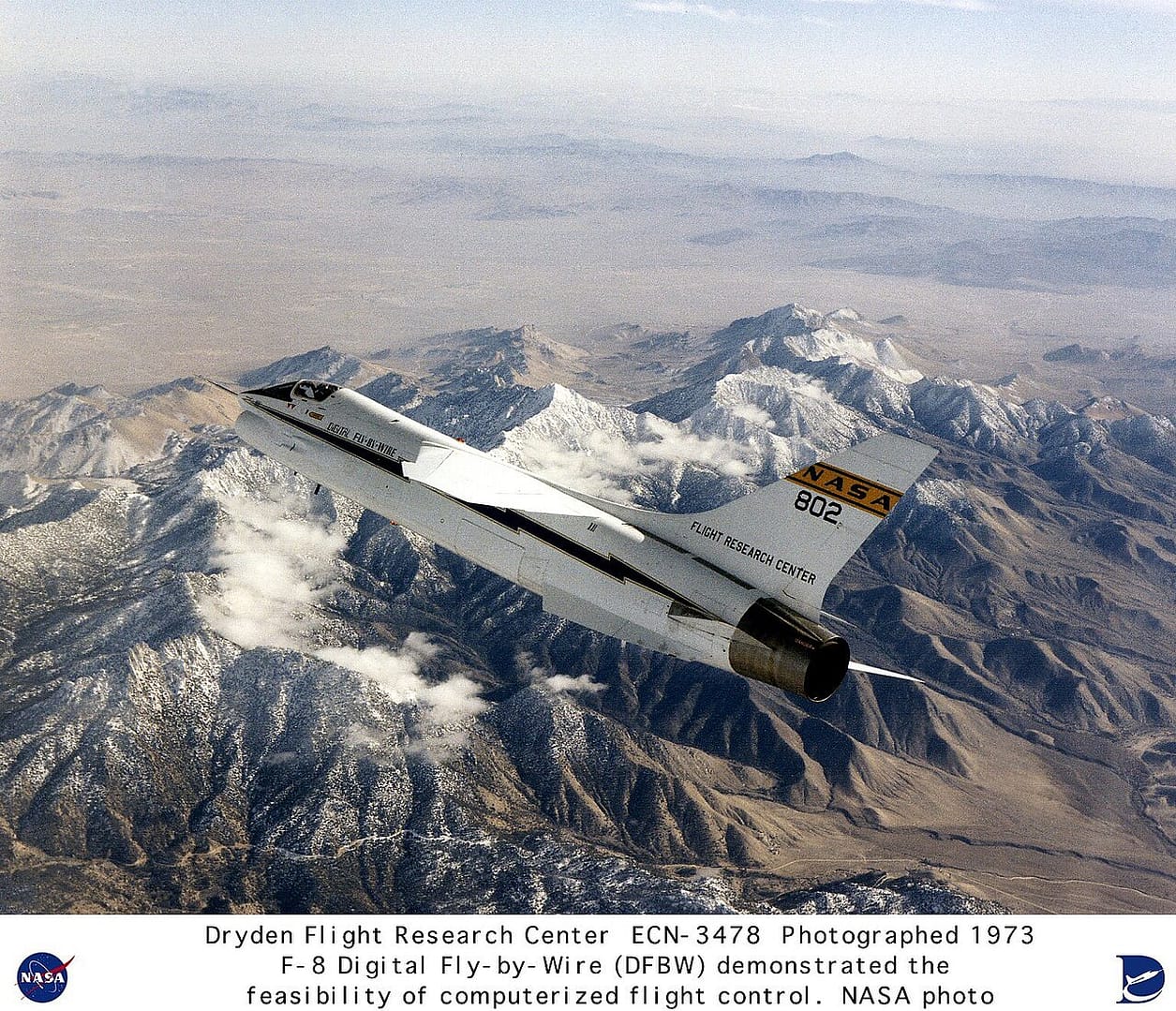
NASA proved the concept in 1972 by converting a Vought F-8 Crusader into the first digital fly-by-wire test aircraft, using a flight computer adapted from the Apollo Lunar Module. The F-8 DFBW demonstrated that a digital computer could replace mechanical linkages entirely, processing pilot inputs, applying stability augmentation, and commanding actuators through electrical wires alone.
General Dynamics took the concept to its logical conclusion with the F-16. Chief designer Harry Hillaker deliberately designed the airframe to be aerodynamically unstable in pitch — the centre of gravity was placed behind the centre of lift, so the aircraft would naturally pitch up if left to its own devices. The fly-by-wire system made forty corrections per second to keep the aircraft flying, converting the pilot’s stick inputs into commands that the computers then executed within the constraints of the aircraft’s structural limits.
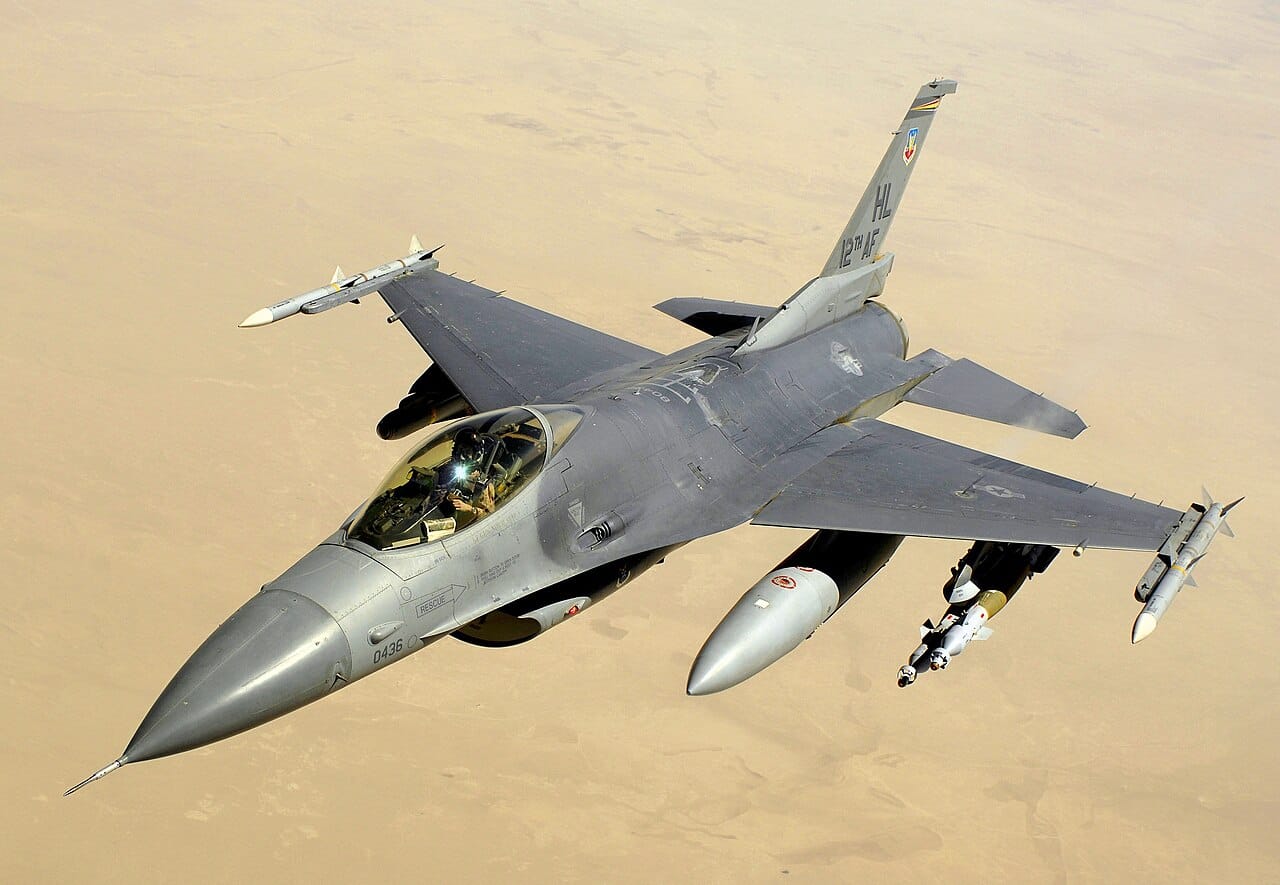
The results were extraordinary. The F-16 could pull 9g turns, transition from level flight to a maximum-rate roll instantaneously, and maintain controlled flight at angles of attack that would have stalled any conventional fighter. The FBW system also provided carefree handling — the computers prevented the pilot from exceeding structural limits, over-g-ing the airframe, or entering unrecoverable spins. The pilot could fly aggressively without worrying about breaking the aircraft, because the software would not let it happen.
From Fighters to Airliners
The military advantages of fly-by-wire were proven by the F-16, and every subsequent Western fighter adopted the technology: the Mirage 2000, the Eurofighter Typhoon, the Rafale, the Gripen, the F-22, and the F-35 are all fly-by-wire designs. The Soviet Union followed with the Su-27’s analogue FBW system, later upgraded to digital in the Su-30 and Su-35. Today, no modern combat aircraft uses mechanical flight controls.
The transition to civil aviation was more controversial. Airbus became the first manufacturer to introduce full fly-by-wire on a commercial airliner with the A320 in 1988. Bernard Ziegler, the engineer who championed the system, replaced the conventional control column with a sidestick and programmed the computers with flight envelope protections that would prevent pilots from stalling the aircraft, exceeding maximum speed, or pulling excessive g-loads. Boeing took a different approach with the 777 in 1995, implementing fly-by-wire but retaining a conventional control column and providing direct feedback to the pilot’s hands.
The debate between the Airbus and Boeing philosophies — whether the computer should have ultimate authority over the pilot, or the pilot over the computer — continues to this day. It became tragically relevant in the Boeing 737 MAX accidents of 2018 and 2019, where a flight control augmentation system overrode pilot inputs with fatal consequences. The MAX was not a fly-by-wire aircraft, but the accidents illustrated the fundamental question at the heart of all computerised flight control: who has the final say?
When the Computers Fail
The most common criticism of fly-by-wire is the question of what happens when the computers fail. The answer, in modern systems, is that they almost never do — not because individual computers are infallible, but because redundancy makes system-level failure statistically negligible. A typical military FBW system uses four independent flight control computers (quadruplex redundancy) that continuously compare their outputs. If one computer disagrees with the other three, it is voted out. The aircraft can continue to fly on three computers, then two, and in some designs, on one.
Early FBW systems included mechanical backup modes — the F-16 has a manual reversion capability that allows the pilot to fly on direct electrical connection to the actuators if the computers fail entirely. More modern designs, such as the F-35, have eliminated mechanical backup entirely, relying instead on the extreme improbability of simultaneous failure of all redundant channels. The probability of a total FBW failure in the F-35 is calculated at less than one in a billion flight hours.
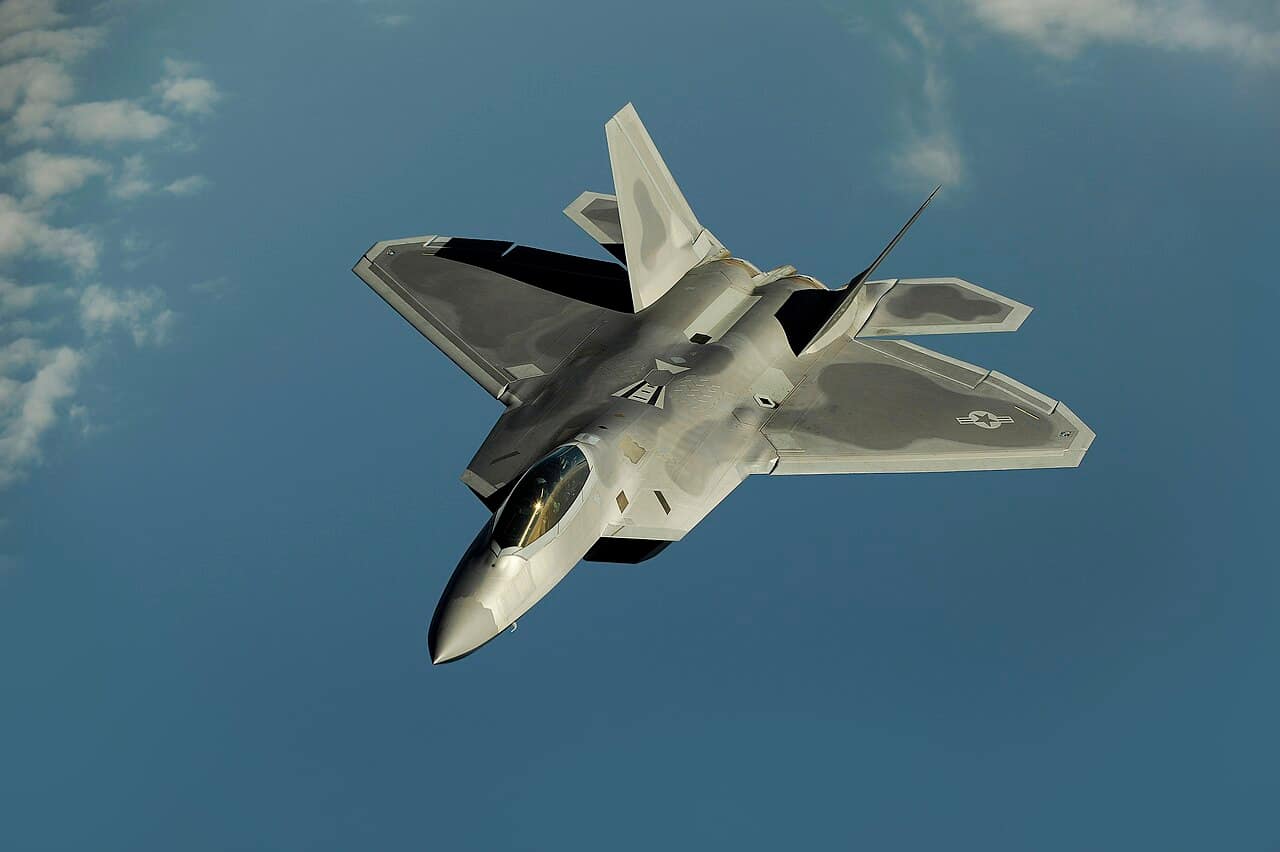
Fly-by-wire also enabled technologies that would have been physically impossible with mechanical controls. Thrust vectoring — the ability to direct engine exhaust to control the aircraft’s attitude — requires computer integration with the flight control system, because the pilot cannot simultaneously manage aerodynamic surfaces and engine nozzle angles. The F-22’s two-dimensional thrust vectoring nozzles, controlled by the same computers that manage the flight surfaces, give the aircraft supermanoeuvrability at speeds where aerodynamic controls alone would be ineffective.
From Phil Oestricher’s unplanned first flight in 1974 to the F-35s and A350s rolling off assembly lines today, fly-by-wire has transformed aviation more profoundly than any single technology since the jet engine. The cables are gone. The computers have won. And the aircraft they enable — unstable, agile, forgiving, and capable of manoeuvres that mechanical controls could never have permitted — are the direct descendants of that moment at Edwards Air Force Base when a test pilot decided it was safer to fly than to stay on the ground.
Sources: NASA Dryden Flight Research Center “F-8 Digital Fly-By-Wire” technical reports, Harry Hillaker “The F-16: A Technology Demonstrator, a Prototype, and a Flight Demonstrator” (AIAA), Bill Gunston “F-16 Fighting Falcon” (Osprey), Airbus technical documentation, Boeing 777 FCS design papers


 English
0 Comments