
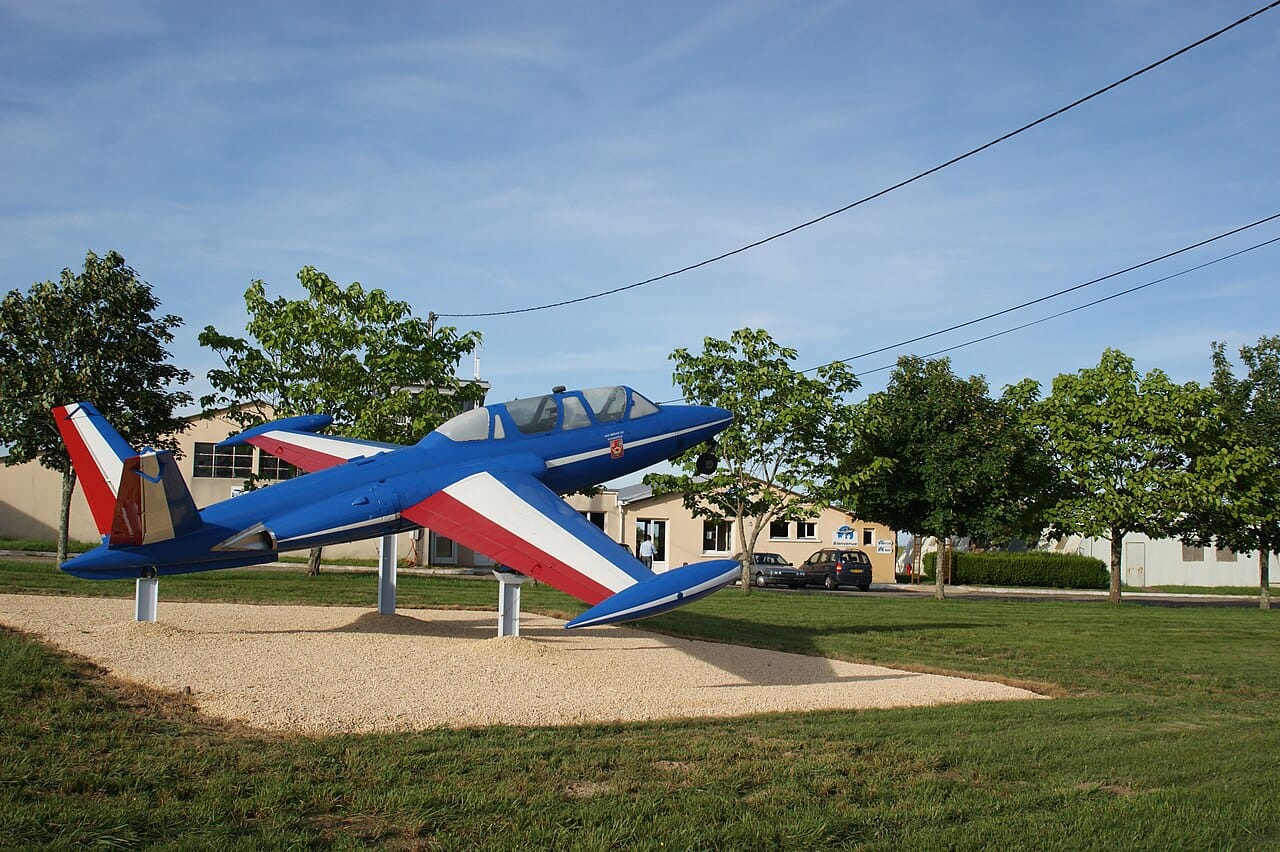
On the morning of 5 June 1967, a handful of little French-built trainers lifted off from Israeli airfields on what looked like a routine sortie. Within hours they were diving on armour in the Sinai. The Fouga Magister, a jet designed to teach teenagers to fly, had gone to war.
The glider that grew an engine
The Magister began in 1948 as Fouga's answer to a French Air Force call for a jet primary trainer. The first design was judged underpowered, so the team enlarged it and hung a pair of small Turbomeca Marboré turbojets on it. From the Fouga CM.8 research glider it inherited the feature everyone remembers: the distinctive butterfly, or V, tail. A conventional tail was tried and found aerodynamically inferior at speed.
QUICK FACTS
| Type | Two-seat jet trainer / light attack |
| First flight | 23 July 1952 |
| Powerplant | 2 x Turbomeca Marboré turbojets |
| Top speed | 715 km/h (444 mph) |
| Number built | About 900 (France and licence lines) |
| Notable operators | France, Israel, West Germany, Finland |
| Display team | Patrouille de France, 1964-1980 |
It first flew on 23 July 1952, and the first production order came on 13 January 1954. Compact and slippery, the Magister flew like something far more powerful than its two modest engines suggested, and it was quickly judged superior to rivals like the British Jet Provost.
Production spread fast. West Germany was the first export customer, and the type was licence-built by Flugzeug Union Sud in Germany, by Valmet in Finland and by Israel Aircraft Industries. Around 900 were completed in all.
From aerobatics to airstrikes
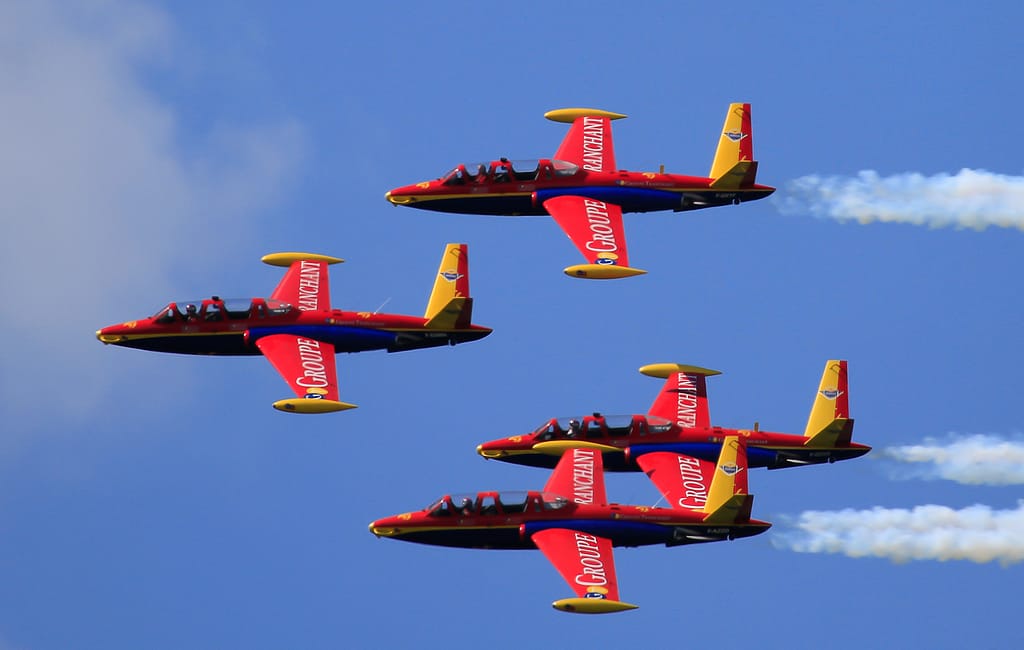
For most pilots the Magister meant training and pure display flying. The Patrouille de France flew it from 1964 to 1980, trailing smoke across European skies and making the butterfly tail an icon.
But it also fought. Israel operated it as the Tzukit, and when frontline fighters were committed elsewhere in 1967, flight-school Magisters flew ground-attack missions against tanks. Slow and lightly built, they were terribly exposed to ground fire and losses were heavy. The Magister also saw combat in the Salvadoran Civil War, the Western Sahara War and the Congo Crisis.
The French Air Force eventually replaced it with the Alpha Jet. Yet the butterfly-tailed Fouga refused to retire quietly. Decades on, privately owned Magisters still perform at airshows on both sides of the Atlantic, still shrieking, still unmistakable.
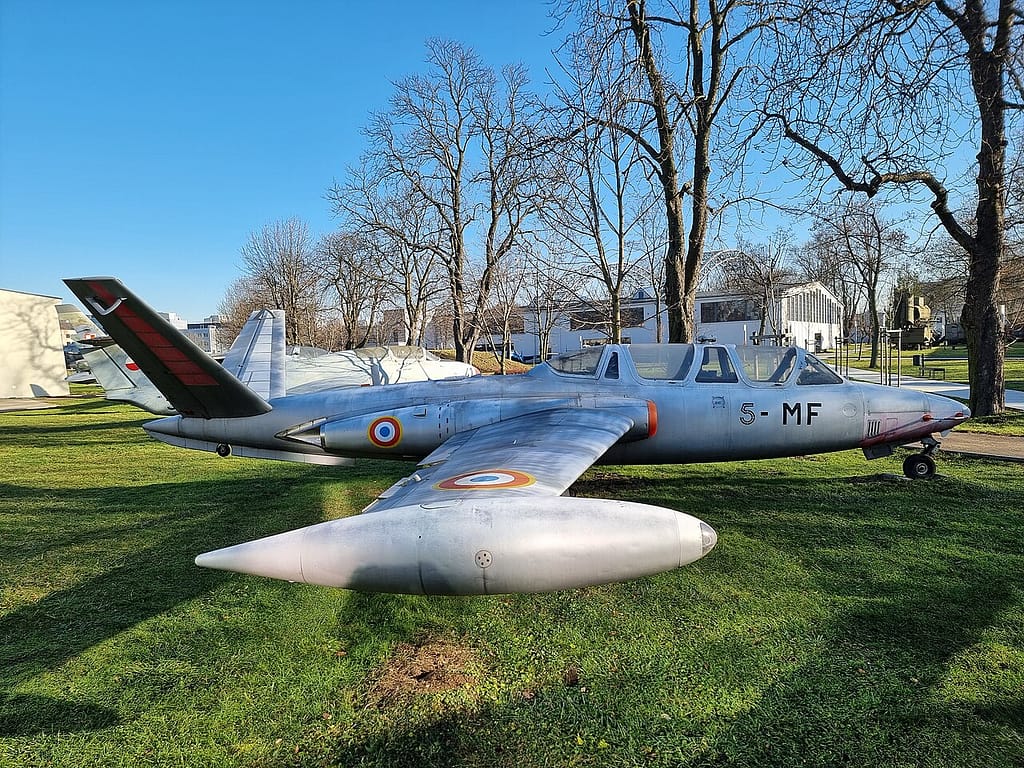
Period footage of the Patrouille de France flying the butterfly-tailed Fouga:
Sources: Wikipedia; Jewish Virtual Library; Israeli Air Force history.
0 Comments