
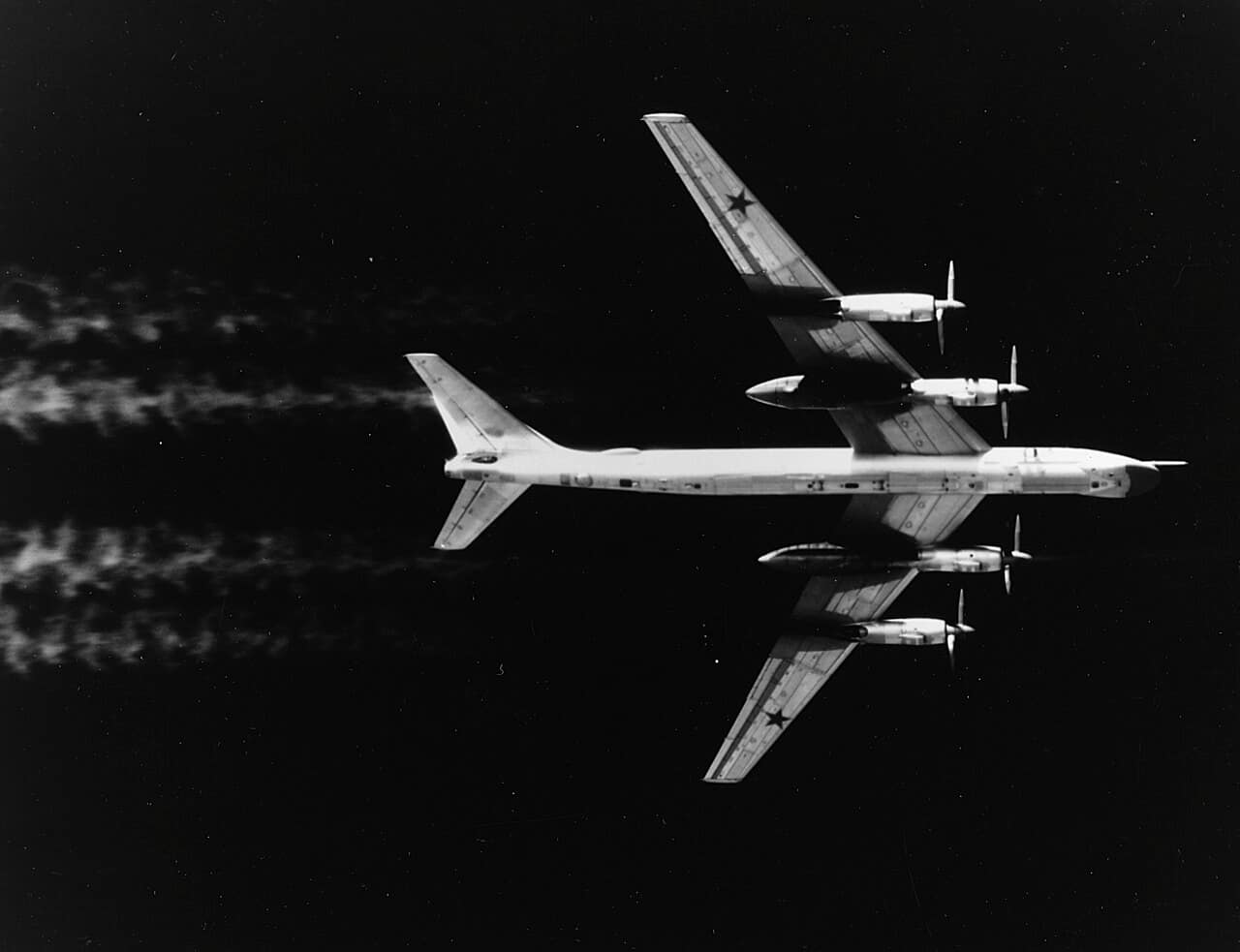
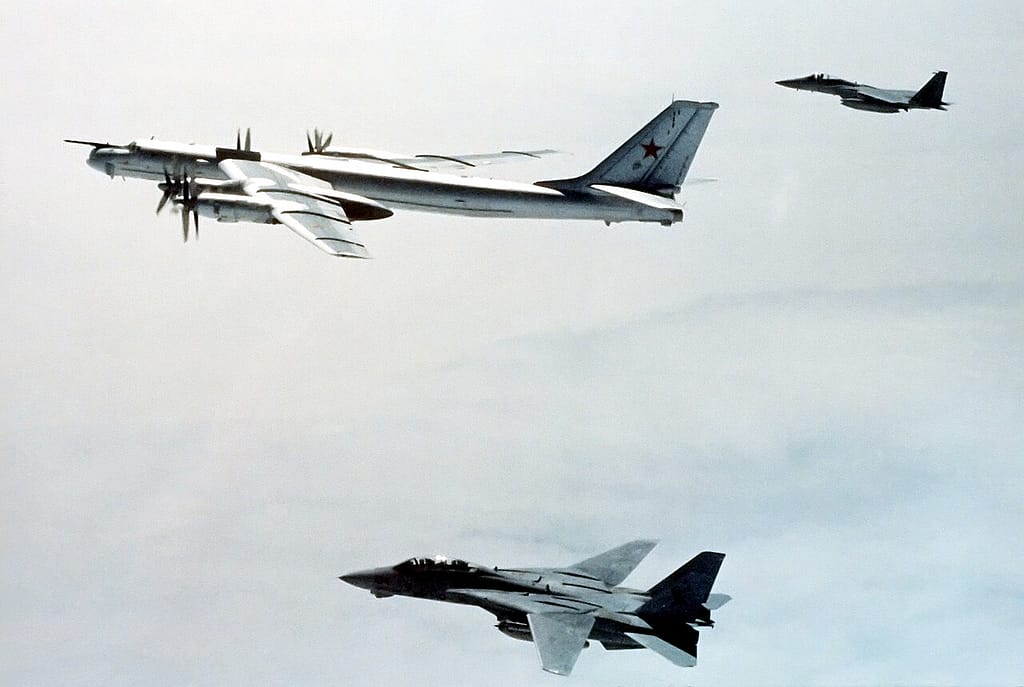
There is a sound no Western fighter pilot forgets: a deep, grinding drone that they can hear inside their own cockpit, over their own jet engines, as they slide into formation beside a giant silver bomber with four whirling pairs of propellers. It is the sound of the Tu-95 Bear — and it has been echoing across the world’s skies since Stalin was alive.
First flown in 1952, the Bear is the only turboprop strategic bomber ever to enter service, and it is still flying today, more than seven decades later. It is also, almost certainly, the loudest aircraft ever built.
Informations clés
- Aéronef: Tupolev Tu-95 “Bear” (NATO reporting name)
- Taper: Soviet/Russian strategic bomber and cruise-missile carrier
- Premier vol : 1952; in service since 1956 — and still flying
- Moteurs : four Kuznetsov NK-12 turboprops, each turning contra-rotating propellers
- Distinction: propeller tips go supersonic — among the loudest aircraft ever built
- Performance: over 500 mph; more than 8,000 miles unrefuelled
- Fait d'armes : dropped the Tsar Bomba, the largest nuclear device ever tested (1961)
The engineering paradox
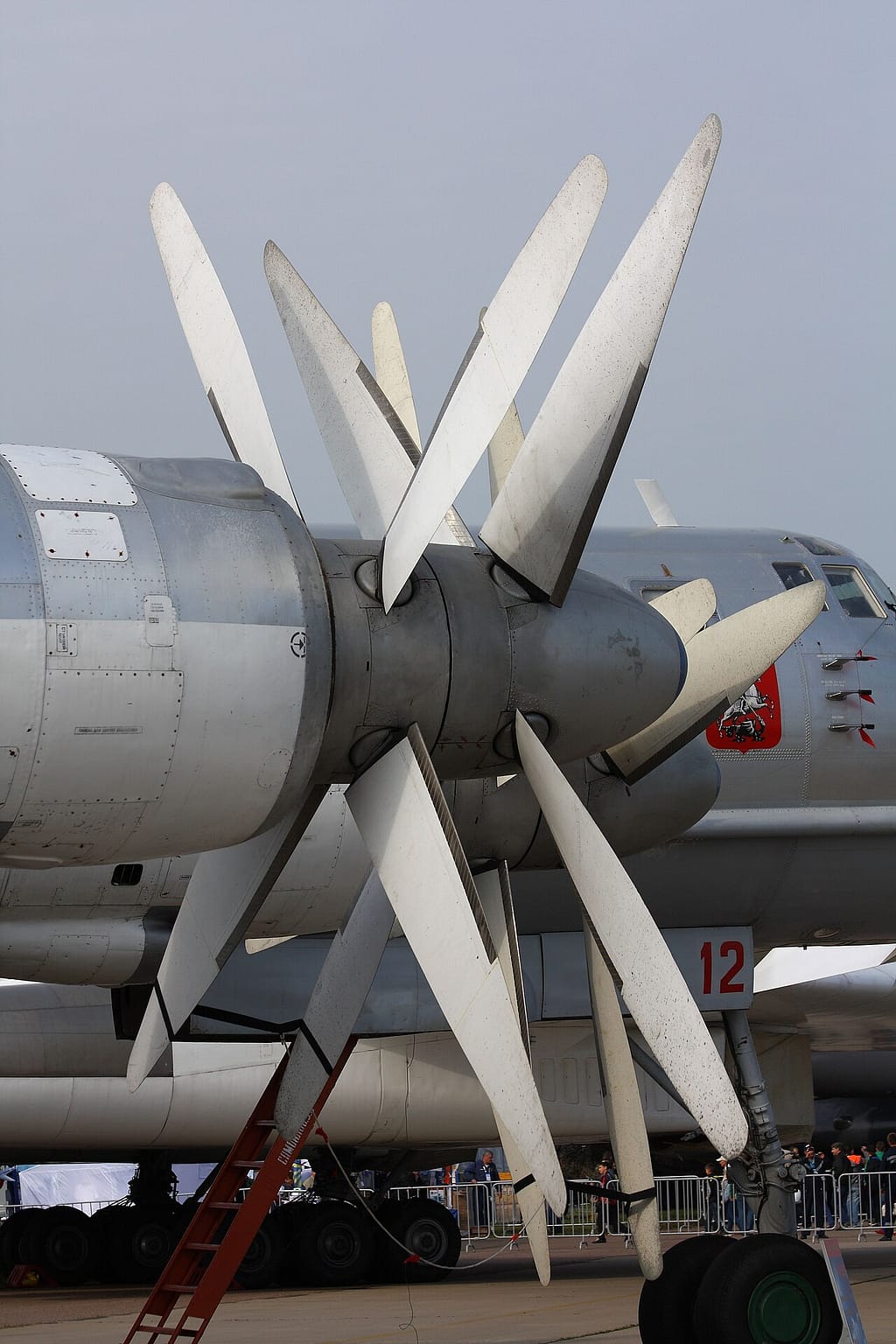
The Bear exists because of a hard 1950s problem. The Soviet Union wanted a bomber that could carry a heavy nuclear load from home soil to the United States and back. Piston engines were too weak; the early jet engines of the day were too thirsty, gutting the range. Tupolev’s answer was a compromise that should not have worked as well as it did: four enormous Kuznetsov NK-12 turboprops, each producing around 15,000 horsepower and driving two contra-rotating propellers turning in opposite directions.
Married to a jet-style 35-degree swept wing, those propellers pushed the Bear past 500 mph — close to jet speed — while sipping fuel efficiently enough for a range beyond 8,000 miles. To this day, the civil version, the Tu-114, holds the record as the fastest propeller-driven aircraft ever flown.
Why it screams
That performance comes at a price measured in decibels. To spin a propeller fast enough to approach jet speeds, the blade tips must travel faster than sound, and every blade throws off a continuous train of tiny shockwaves. The result is a roar so intense it has reportedly been picked up by underwater sonar.
For the men sent up to shadow it, the noise is part of the legend.
The bomber that dropped the biggest bomb
The Bear also carried the most terrifying weapon ever detonated. On 30 October 1961 a specially modified Tu-95V released the 50-megaton Tsar Bomba over the Arctic. The bomb fell on a giant parachute so the aircraft could flee; even so, the shockwave caught up and briefly shoved the Bear a thousand metres downward. It survived — and so did the aircraft’s reputation as the muscle of Soviet strategic power.
Still on patrol
Rockets should have made it obsolete decades ago. Instead the Bear reinvented itself — as a maritime patrol aircraft, a submarine hunter, and today as a launch platform for long-range cruise missiles. Its familiar drone still probes NATO airspace from the North Atlantic to the Pacific, greeted each time by scrambling fighters. Current plans keep it flying toward 2040, which would give a single bomber design a service life approaching a century. Few machines have earned their reporting name so completely.
Sources: MilitaryHistoryNow; Simple Flying; Wikipedia; War History Online.
0 commentaire