
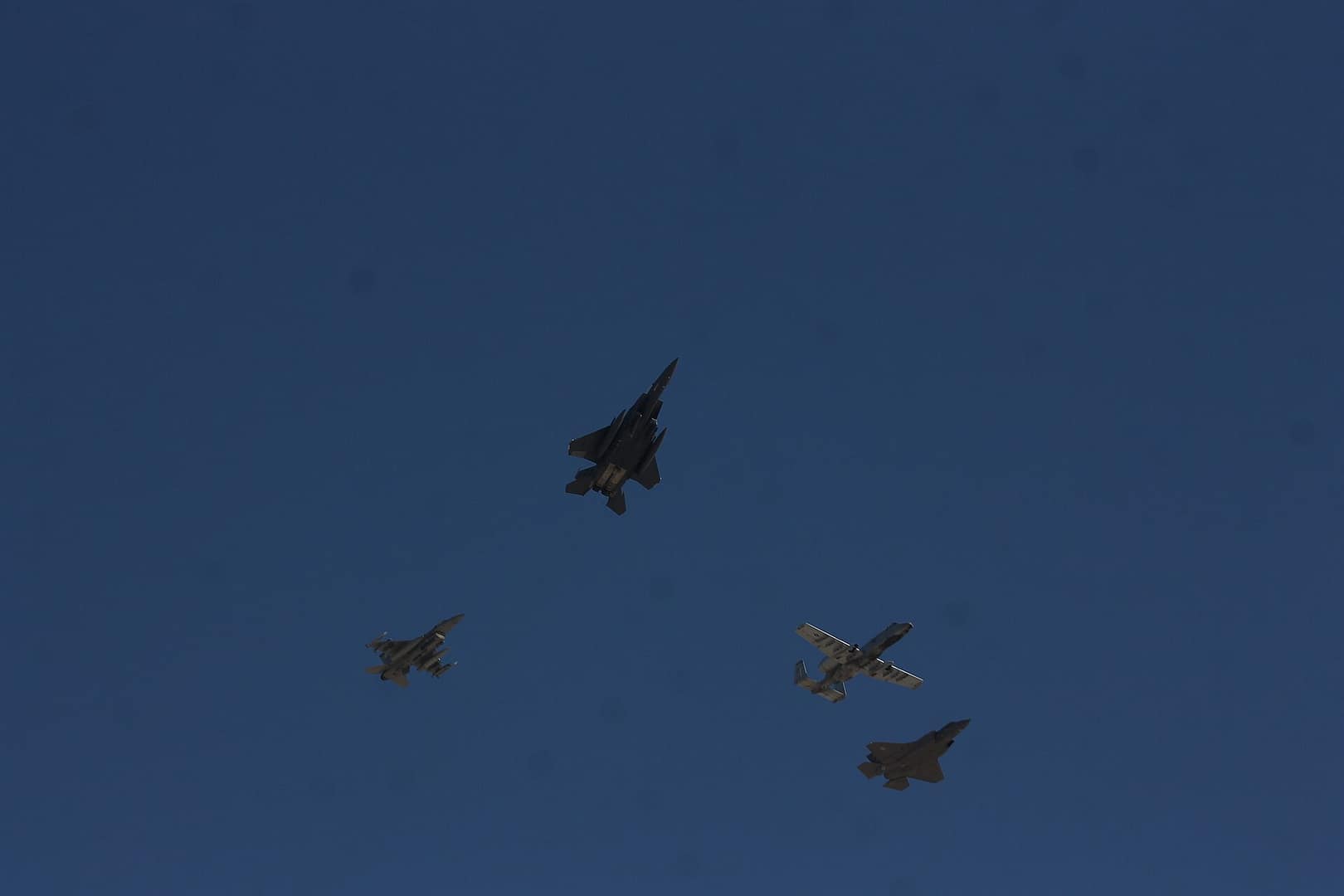
Tomorrow, as America’s 250th birthday flyovers thunder across the country, watch for the moment the crowd goes quiet. Four jets approach in perfect formation — and then one pulls up, streaming away from the others, climbing alone toward the vertical until it vanishes. Nobody needs the announcer to explain it. The gap in the formation says everything.
The missing man formation is military aviation’s highest tribute — a funeral rite written in jet exhaust. Like most rituals that feel ancient, its true history is stranger and more human than the legend.
Quick Facts: The Missing Man Formation
| What it is | A flypast with one aircraft conspicuously absent — or one that pulls up and departs the formation mid-pass |
| Roots | WWI RAF squadrons overflying home airfields so ground crews could count the gaps |
| First documented gap formation | 22 May 1931, funeral of air racer Charles “Speed” Holman, St. Paul, Minnesota |
| US military adoption | Arlington funeral of Maj. Gen. Oscar Westover, 1938; formalised by the 1950s |
| The meaning | The departing aircraft symbolises the fallen aviator leaving the ranks |
| Who receives it | Fallen aviators, presidents, dignitaries — from JFK to Chuck Yeager to Jimmy Carter |
Counting the Gaps
The tradition’s taproot is grimly practical. In the First World War, RAF squadrons returning from patrol would overfly their own airfield before landing, so the ground crews could count who had come home. The formation itself was the casualty report: every gap was a name. A popular legend places the first ceremonial missing-man flypast at Manfred von Richthofen’s funeral in 1918 — a story told often and documented never.
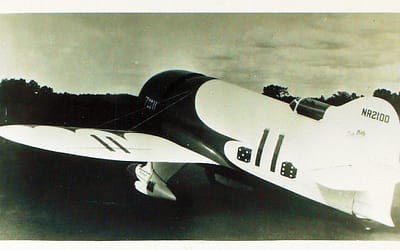
The first performance history can actually pin down happened over a Minnesota cemetery on 22 May 1931, at the funeral of barnstormer and air-racing star Charles “Speed” Holman — killed in a crash at an Omaha air show. Four aircraft of the 109th Air Squadron flew over 100,000 mourners, holding an empty slot in their formation. The St. Paul Pioneer Press wrote the tribute’s first and maybe still finest description:
Seven years later the US military made it official practice at the Arlington burial of Major General Oscar Westover, chief of the Air Corps, with more than fifty aircraft flying a “blank file.” By the end of the Korean War the ritual had its modern grammar.
The Grammar of Grief
The classic version is a finger-four: four aircraft in a fingertip formation, and as they pass the ceremony, the number three jet — the second-element leader — lights its burner and pulls up, climbing away “to the heavens” while the others hold course. In the alternative form, the formation simply flies with the slot empty the whole way. The US Navy’s official ceremony description states it plainly:
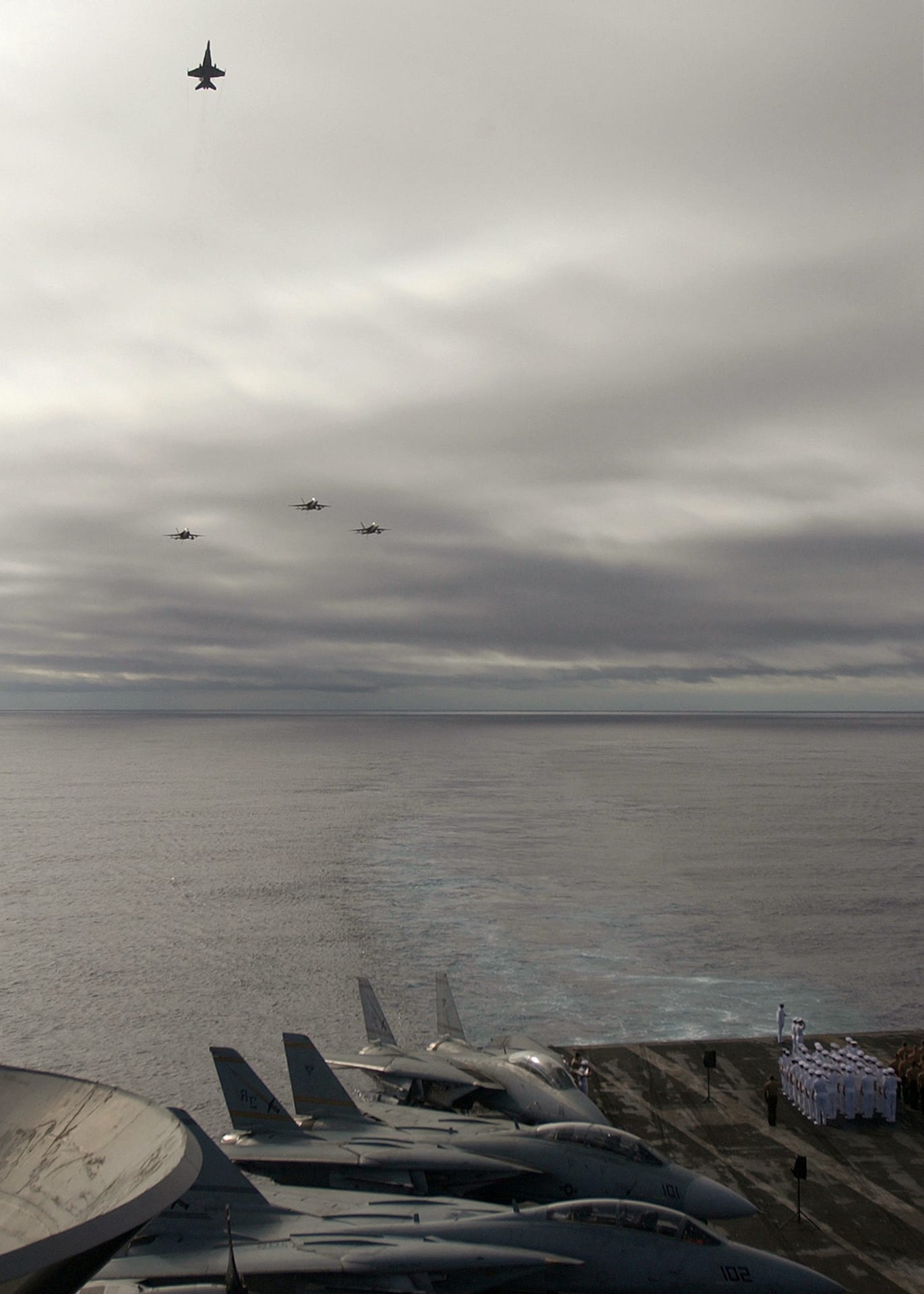
The honour has marked the largest occasions in American memory. At John F. Kennedy’s funeral in November 1963, fifty jets swept over Arlington in formations of three — the last group one aircraft short — before Air Force One itself dipped its wings over the grave. Neil Armstrong, Ronald Reagan and Chuck Yeager received the salute. In January 2025, twenty-one Super Hornets from eight squadrons flew over Plains, Georgia for Jimmy Carter — one of the largest missing-man tributes ever assembled. And in 2022 the Thunderbirds invented a new variation, the dual “Pattillo Pull,” for twin brothers Buck and Bill Pattillo, founding members of the team, who died months apart.
Why It Works
Military ceremony is full of symbols that need explaining. This one explains itself — which is why it has escaped the military entirely. Warbird formations fly it at Oshkosh for lost airmen; it has been flown for astronauts, racing drivers, and the victims of national tragedies. One of the pilots who flew for President Carter put the aircrew’s side of it simply:
So tomorrow, somewhere between the Thunderbirds and the fireworks, if a formation crosses the sky with one jet climbing away — stand still for a second. Aviation has exactly one prayer, and that is how it is spoken.
The Carter flyover — 21 Super Hornets and the break — was captured beautifully here:
And Global News’ explainer from the McCain tribute covers the ritual’s meaning in two minutes:
Sources: Smithsonian Air & Space Magazine; US Navy / DVIDS; USNI News; Arlington National Cemetery; Task & Purpose; Seymour Johnson AFB; Wikipedia
Related Questions
What is the missing man formation?
The missing man formation is a flypast tribute in which one aircraft is conspicuously absent, or one pulls up and departs the formation mid-pass, symbolising a fallen aviator leaving the ranks. It is military aviation's highest honour, flown at funerals of aviators, presidents and dignitaries. The classic version is a four-ship formation in which the number-three jet climbs away, leaving a visible gap.
Where did the missing man formation come from?
Its roots lie with First World War RAF squadrons that overflew their home airfields after patrols so ground crews could count who had returned — every gap in the formation was a casualty. The first documented ceremonial gap flypast was on 22 May 1931, at the funeral of air racer Charles “Speed” Holman in St. Paul, Minnesota, where four aircraft flew over 100,000 mourners holding an empty slot.
When did the US military adopt the missing man formation?
The US military first flew it officially at the 1938 Arlington funeral of Major General Oscar Westover, chief of the Air Corps, with more than fifty aircraft flying a blank file. By the end of the Korean War the ritual had its modern form, and it has since honoured figures from John F. Kennedy to Chuck Yeager.
How does the missing man formation work?
Four aircraft fly in a fingertip formation; as they pass the ceremony, the number-three jet — the second-element leader — lights its afterburner and pulls up, climbing skyward while the others hold course. In an alternative version the formation flies the entire pass with one slot deliberately left empty.
Did the missing man formation start at the Red Baron's funeral?
No. A popular legend places the first ceremonial missing-man flypast at Manfred von Richthofen's 1918 funeral, but it is documented nowhere. The earliest performance historians can actually verify is the 1931 funeral of Charles “Speed” Holman over Minnesota.
Who has received a missing man flyover?
Fallen aviators and dignitaries including John F. Kennedy, Neil Armstrong, Ronald Reagan, Chuck Yeager and Jimmy Carter. At Carter's funeral in January 2025, twenty-one Super Hornets from eight squadrons flew one of the largest missing-man tributes ever assembled.
Why has the missing man formation spread beyond the military?
Because it explains itself: unlike ceremonies that need decoding, the empty slot is instantly understood, which is why warbird formations fly it at airshows for lost airmen. It is the kind of tribute that could honour storied fighter pilots like Lydia Litvyak, the White Rose of Stalingrad, or the airmen behind daring feats such as Operation Vengeance.
0 commentaire