
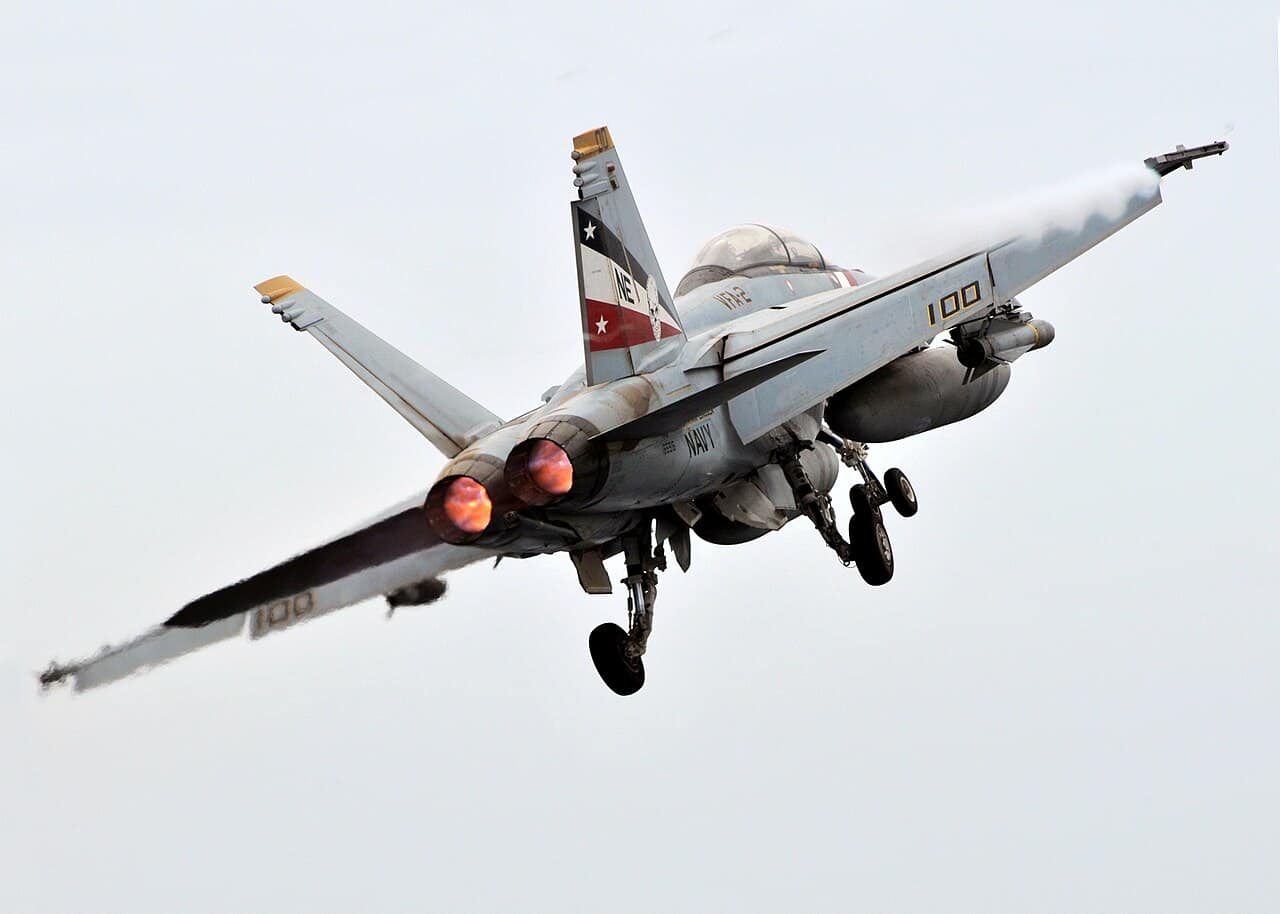
Two companies. One contract. Decades of consequences. Sometime around August 2026, the US Navy is expected to decide who will build the F/A-XX — its sixth-generation carrier fighter and one of the most important American aircraft programmes of the century. The choice comes down to Boeing or Northrop Grumman, and there is no easy answer.
Whoever wins gets to shape what launches off American carrier decks into the 2050s. Whoever loses watches a rival define the future of naval aviation.
QUICK FACTS
| Programme | F/A-XX — US Navy sixth-generation carrier fighter |
| Replaces | Boeing F/A-18E/F Super Hornet |
| Flies with | F-35C and future autonomous drones |
| In the running | Boeing vs Northrop Grumman |
| Out | Lockheed Martin (eliminated 2025) |
| Decision | Contract award expected August 2026 |
What the Navy is actually buying
The F/A-XX is meant to replace the workhorse F/A-18E/F Super Hornet and fly alongside the F-35C, not instead of it. Think longer range to keep carriers out of missile reach, deeper stealth, and the sensors and networking to run alongside swarms of autonomous drones. It is the centrepiece of the Navy’s plan to keep the aircraft carrier relevant in an era of long-range Chinese missiles.
Getting there has not been smooth. The programme has already survived funding scares that nearly stalled it before a spending bill restored the money. Now, with cash in hand, the decision that matters is who builds it.
Boeing or Northrop — and why it’s hard
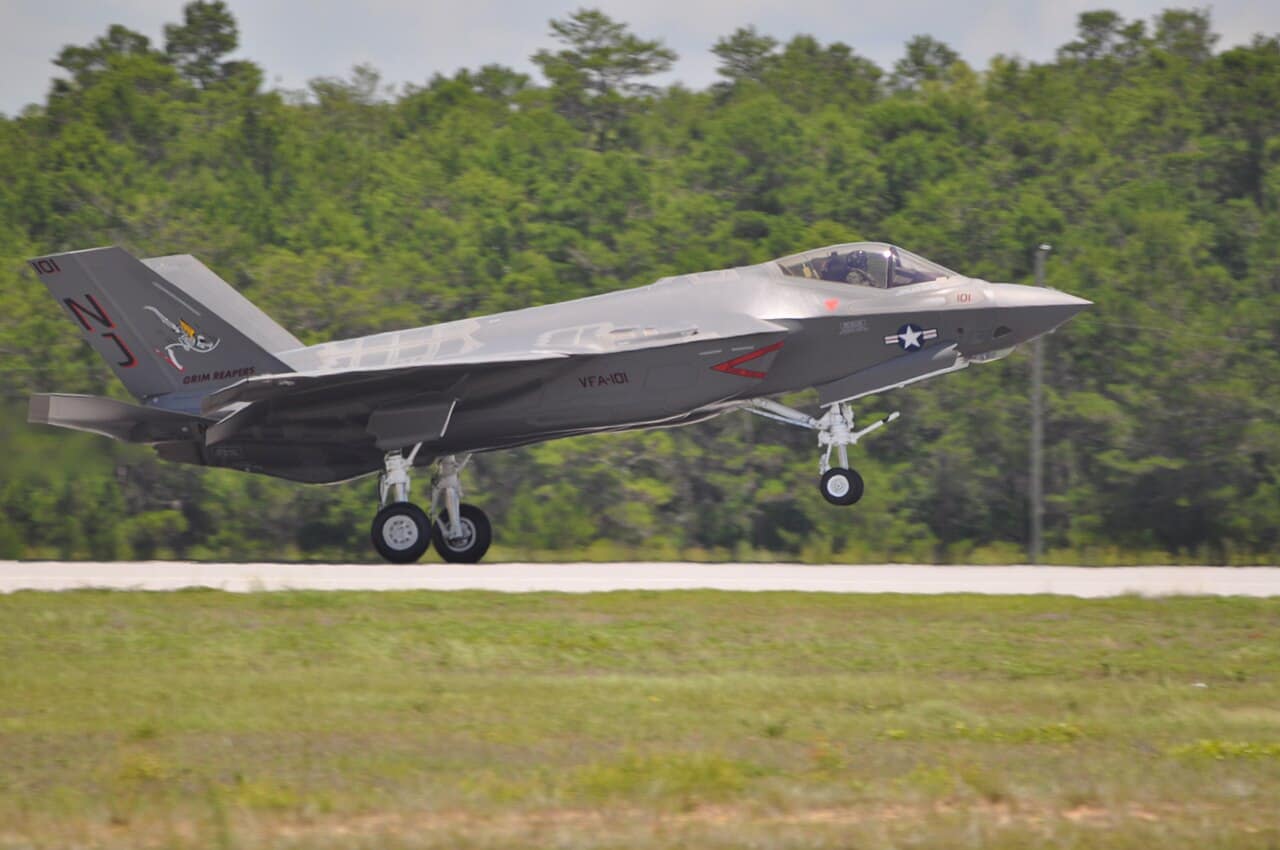
Lockheed Martin, the F-35 giant, was knocked out of the running in 2025. That left two very different bidders. Boeing knows carrier fighters cold — it builds the Super Hornet — and has just won the Air Force’s F-47 sixth-generation contract, which cuts both ways: proven capability, but a full plate. Northrop Grumman, meanwhile, is deep into building the B-21 Raider stealth bomber, arguably the most advanced aircraft programme on Earth right now.
So the Navy’s choice is not just about the best design on paper. It is about which company can actually deliver a brand-new stealth fighter without choking on the work it already has. Industrial capacity, not just engineering, may decide it.
A decision with a long shadow
Sixth-generation fighters are staggeringly expensive and take a decade or more to field. Whichever way the Navy jumps, the F/A-XX will not reach the fleet until the 2030s — and by then, China expects to have its own carrier-capable stealth fighters at sea. The pressure to pick right, and pick soon, is enormous.
For now, two teams wait on a single envelope. When it opens in August, one of them will hold the future of American naval air power. The other will start planning for the one after that.
Sources: US Navy; Sandboxx; The War Zone; Aviation Week; Naval News.
Related Questions
What is the F/A-XX?
The F/A-XX is the US Navy’s planned sixth-generation, carrier-based stealth fighter. It is designed to replace the Boeing F/A-18E/F Super Hornet and fly alongside the F-35C and autonomous drones, giving carrier air wings longer range and more advanced sensors and networking.
Who is building the F/A-XX?
The competition has narrowed to Boeing and Northrop Grumman, after Lockheed Martin was eliminated in 2025. The Navy is expected to award the engineering and manufacturing development contract — effectively choosing the builder — around August 2026.
Why does the Boeing vs Northrop choice matter so much?
It is one of the last carrier-fighter contracts of a generation, worth many billions of dollars and decades of work. It also collides with industrial-base questions: Boeing already won the Air Force’s F-47 sixth-gen fighter, while Northrop is deep into building the B-21 Raider bomber.
When will the F/A-XX enter service?
No firm in-service date has been set publicly, and the programme has already survived funding scares. Sixth-generation fighters are complex, so service entry is generally expected in the 2030s once the winning design is developed and tested.
What does the F/A-XX look like?
The Navy has not released images of the actual F/A-XX design, which remains secret. Concepts suggest a tailless, stealthy shape optimised for range and carrier operations, but the real aircraft’s appearance has not been made public.

0 commentaire