

The AGM-86B was designed when the Soviet Union still existed, gas cost about a dollar a gallon, and the B-52 crews loading it were younger than the bomber. More than four decades later, the United States has decided it cannot let the missile retire just yet. In 2026, the Air Force paid Boeing to keep its ageing nuclear cruise missiles combat-ready all the way to 2033.
It is a small contract with a heavy meaning: one leg of America’s nuclear triad is being held together with remanufactured 1980s electronics.
QUICK FACTS
| Weapon | AGM-86B ALCM — nuclear air-launched cruise missile |
| In service since | Early 1980s |
| Carried by | B-52 Stratofortress (up to ~20 per aircraft) |
| New contract | $49.5M to Boeing (March 2026) |
| Kept ready until | 2033 |
| Replacement | AGM-181 LRSO — not yet at full production |
A Cold War weapon that never left
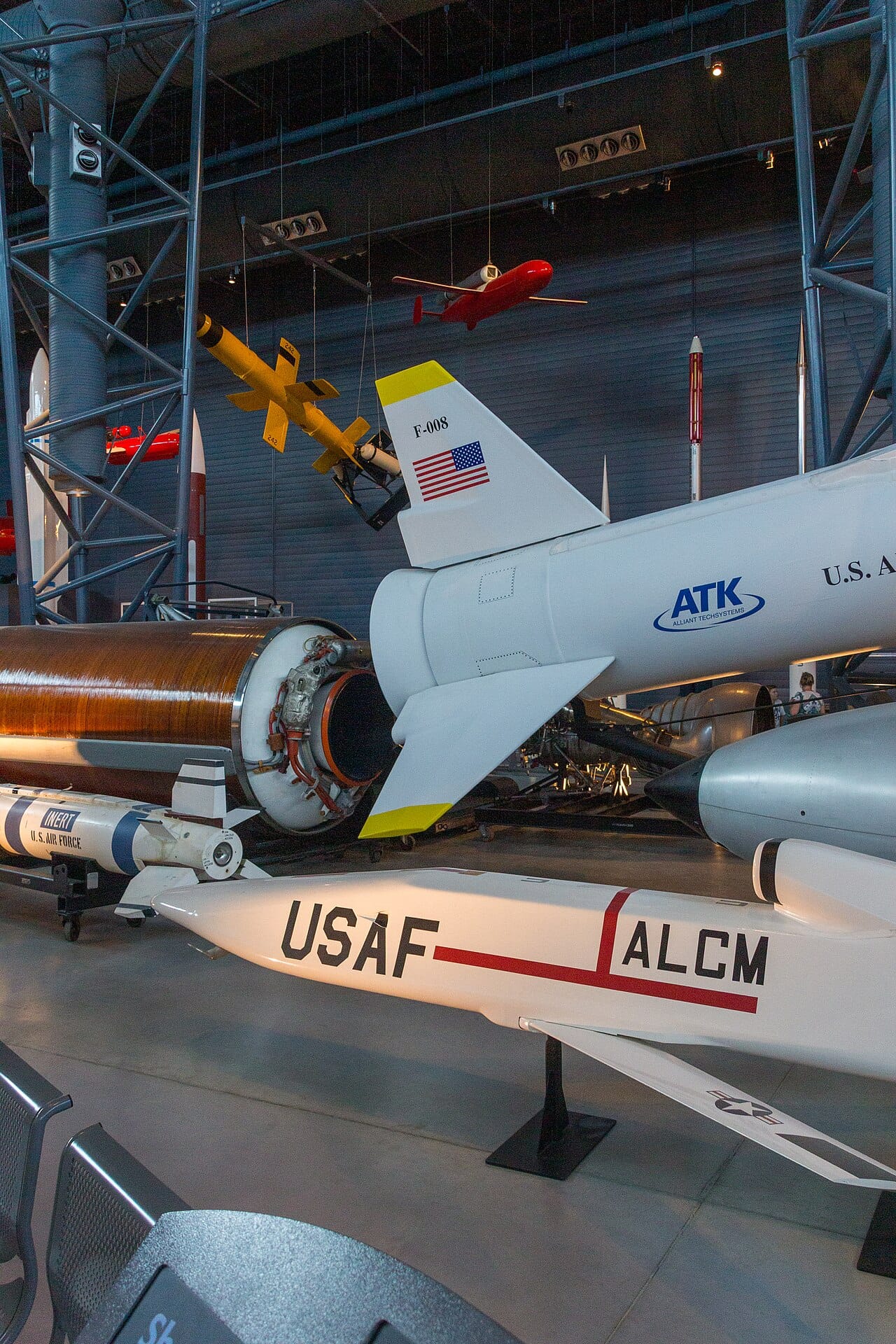
The AGM-86B is an air-launched cruise missile — a small, nuclear-armed jet that a B-52 releases from stand-off range, letting the bomber strike without flying into the teeth of enemy air defences. A single B-52 can haul roughly 20 of them, slung under the wings and on an internal rotary launcher. Since the early 1980s, it has been a cornerstone of the airborne nuclear deterrent.
The plan was always to replace it. That plan is running late.
Waiting on the replacement
The AGM-86B’s successor is the AGM-181 Long Range Standoff missile — a stealthy, modern nuclear cruise weapon. But the LRSO passed only a key development milestone in 2023 and is not expected to reach initial operational capability until the late 2020s, with full replacement stretching into the 2030s. Until enough LRSOs exist, the old missiles have to keep working.
Hence the March 2026 award: $49.5 million to Boeing to regenerate critical flight-control electronics — including the elevon actuator controllers that steer the missile — and sustain the fleet through 2033. It is the kind of quiet, unglamorous engineering that keeps a deterrent credible.
The oldest tricks, kept sharp
There is something fitting about it. The AGM-86B flies from the B-52 — itself a 1950s design now slated to serve into the 2050s. America’s nuclear bomber force has become a study in longevity, its weapons and aircraft outliving the systems meant to replace them by decades.
The 2033 date is not a promise that the AGM-86B will finally bow out then. It is a floor — the point to which the Air Force is certain it can keep a forty-year-old nuclear missile ready to fly. Whether the LRSO fully takes over by then is, like so much in this business, a matter of schedules that tend to slip.
Sources: US Department of Defense; Army Recognition; Defence Blog; Air & Space Forces Magazine; MILMAG.
Related Questions
What is the AGM-86B?
The AGM-86B is a nuclear-armed, air-launched cruise missile carried by the US Air Force’s B-52 bombers. In service since the early 1980s, it lets a B-52 strike targets from stand-off range without flying into heavily defended airspace. A single B-52 can carry roughly 20 of them.
Why is the US keeping a 1980s nuclear missile until 2033?
Its replacement, the AGM-181 LRSO, is not yet in full-scale production. To avoid a gap in the airborne leg of the nuclear triad, the Air Force awarded Boeing a $49.5 million contract in 2026 to remanufacture ageing flight-control electronics and keep the AGM-86B combat-ready through 2033.
What is the AGM-181 LRSO?
The AGM-181 Long Range Standoff missile is the stealthy, next-generation nuclear cruise missile being developed to replace the AGM-86B. It passed a key milestone in 2023 but is not expected to reach initial operational capability until the late 2020s, with full replacement stretching into the 2030s.
How many nuclear cruise missiles can a B-52 carry?
A B-52G/H can carry up to about 20 AGM-86B cruise missiles — roughly a dozen on external wing pylons and the rest on an internal rotary launcher — giving a single bomber enormous stand-off strike capacity.
Is the AGM-86B still reliable after 40 years?
Age is exactly the problem. The 2026 contract funds regeneration of critical parts such as the missile’s elevon actuator controllers — the flight-control electronics — because the original components are wearing out. Sustaining a four-decade-old nuclear weapon is delicate, expensive work.

0 commentaire