
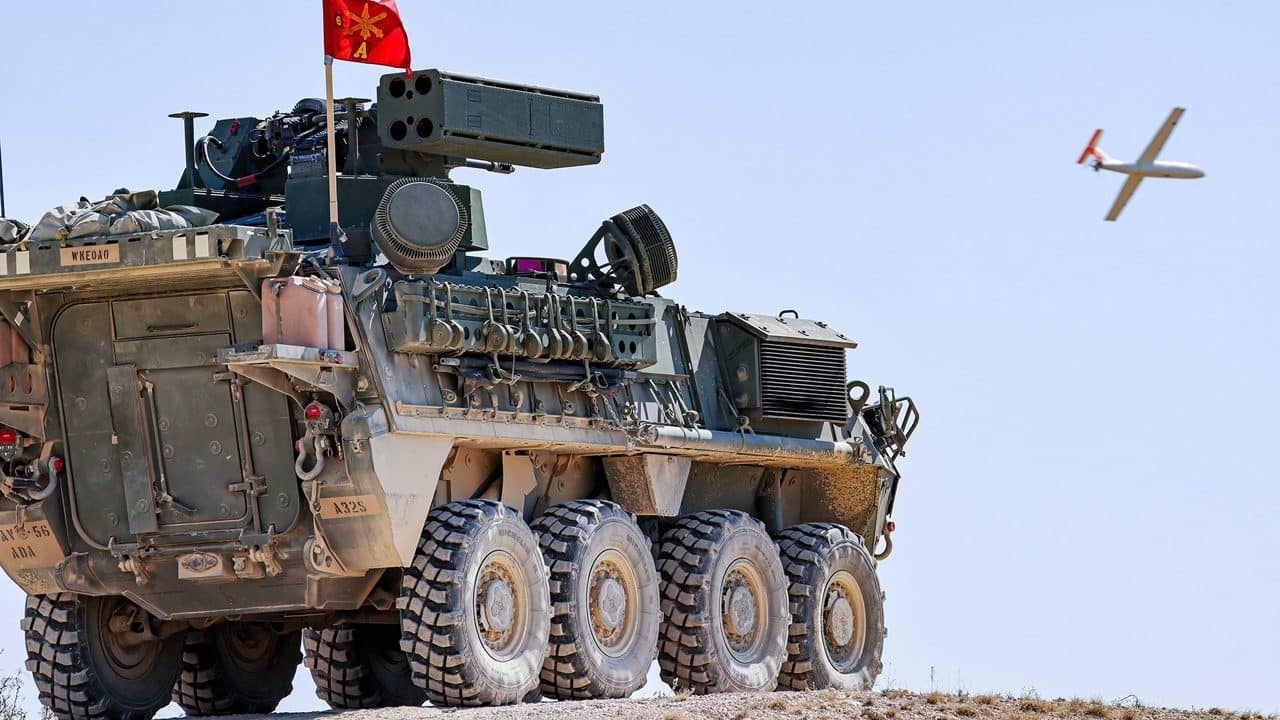
L'armée américaine a examiné attentivement la situation en Ukraine et en est arrivée à une conclusion précise et troublante : il n'existe plus de zone sûre sur un champ de bataille. Sa réponse, officialisée lors d'une cérémonie de redésignation à la base interarmées Lewis-McChord le 18 juin, est la création d'un nouveau type de division : une division conçue pour rendre le champ de bataille ennemi tout aussi dangereux, en le saturant de drones.
L'unité est le Commandement multidomaine de la 7e division d'infanterie – Pacifique (7e ID MDC-PAC). Officiellement, il s'agit d'une fusion : les deux brigades Stryker de la 7e division d'infanterie sont combinées aux unités de reconnaissance à longue portée, d'appui-feu, de cyberdéfense, spatiales et de guerre électronique de la 1re Force opérationnelle multidomaine. En pratique, son commandant décrit un changement de doctrine plus marqué : la manœuvre d'infanterie associée à une importante flotte de drones, coordonnée par l'IA.
Informations clés : 7e division d’infanterie, commandement multidomaine – Pacifique
| Activé | 18 juin 2026, Base militaire conjointe Lewis-McChord, Washington |
| Structure | 7e division d'infanterie (deux brigades Stryker) + 1re force opérationnelle multidomaine |
| Commandant | Major-général Bernard J. Harrington |
| Concept | Drones de détection et de frappe, leurres et drones de guerre électronique reliés par un système de commande “ agentique ” piloté par l'IA |
| Zone d'opérations | L'Indo-Pacifique — de l'Alaska arctique à la jungle des Philippines et d'Hawaï |
Submergé par le volume
Le major-général Bernard J. Harrington, premier commandant de ce nouveau commandement, a exposé le concept avec une clarté inhabituelle lorsqu'il a présenté l'unité aux journalistes, comme l'a documenté The War Zone.
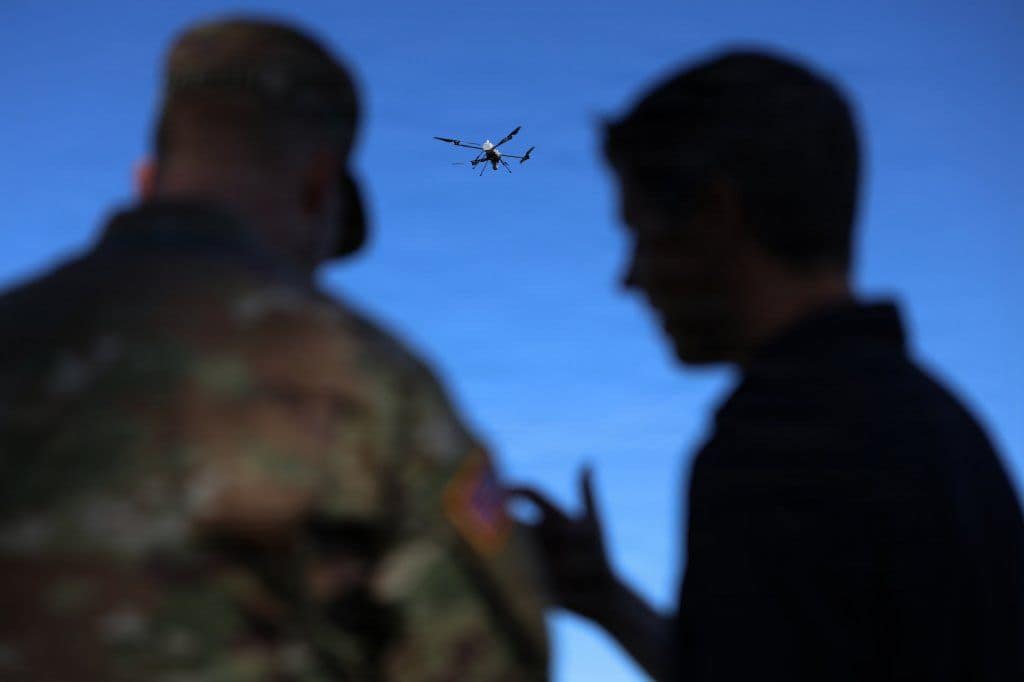
En simplifiant, l'idée est claire : déployer un nombre considérable de drones, de types si variés, que les défenses aériennes adverses sont submergées. Des drones de détection repèrent les cibles. Des drones d'attaque unidirectionnelle les neutralisent. Des drones leurres – une technique apprise des bombardements massifs de missiles Shahed menés par la Russie contre l'Ukraine – absorbent les missiles intercepteurs et, selon les termes de Harrington, “ réduisent les capacités de stockage potentielles ”. Des drones de guerre électronique neutralisent les cibles restantes.
Le tissu conjonctif est un système de commande et de contrôle basé sur une IA “ agentive ” : un logiciel qui achemine les données des capteurs, repositionne les drones et associe les cibles aux tireurs de manière autonome. Harrington le décrit comme un système où le soldat est “ dans la boucle, mais pas intégré ” : les humains supervisent et peuvent intervenir, mais n’ont plus besoin de donner leur accord à chaque étape.
Rattraper une guerre qui n'est pas en cours.
Le contexte implicite est que l'armée américaine est à la traîne. L'Ukraine et la Russie perfectionnent leurs drones de combat chaque semaine ; la Chine produit en masse tous les types de drones à une échelle qui inquiète ouvertement le Pentagone. Le Commandement central américain n'a utilisé que récemment ses premiers drones d'attaque unidirectionnelle à longue portée au combat : le LUCAS, un modèle dérivé du Shahed-136 iranien. L'armée s'est désormais fixé pour objectif d'acquérir un million de drones d'ici quelques années. Les officiers supérieurs ont été très clairs sur ce retard.
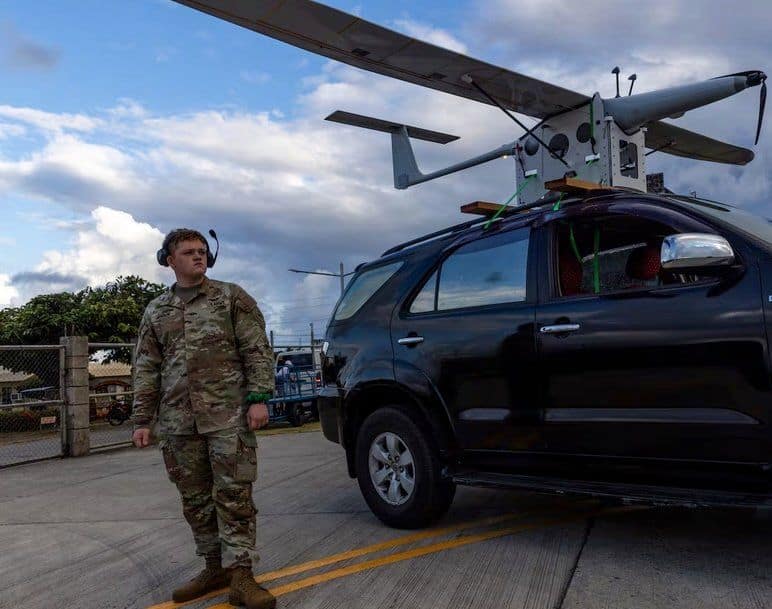
Le Pacifique complexifie encore davantage le problème. Le général Ronald Clark, commandant de l'USARPAC, souligne qu'une seule zone d'opérations en Asie du Sud-Est – du Cambodge aux Philippines en passant par l'Indonésie – couvre à peu près la même superficie que l'Europe, du Royaume-Uni à la Finlande en passant par l'Espagne. Le commandement aura besoin de drones capables d'opérer dans le froid arctique, l'humidité de la jungle et la chaleur du désert, souvent à des distances extrêmes.
Leurres, tromperie et la suite
L'élément de leurre mérite toute notre attention, car il inverse une leçon que l'Occident a apprise à ses dépens. Pendant trois ans, des leurres russes bon marché ont contraint l'Ukraine à gaspiller ses précieux intercepteurs contre des cellules vides. C'est le même principe, appliqué à l'envers – et cela ne fonctionne que si vos drones sont suffisamment bon marché pour être utilisés sans effort. C'est cela, plus que n'importe quel autre appareil, la révolution que l'armée recherche.
Il est à noter que les responsables présentant le commandement n'ont jamais prononcé le mot “ Chine ”. La nouvelle unité, a insisté Clark, n'est “ liée à aucun adversaire spécifique ”. Personne dans la salle n'avait besoin d'explications sur la carte.
Ce commandement n'a que deux semaines et des questions cruciales demeurent : quels drones, combien, à quelle vitesse, et l'armée pourra-t-elle s'approvisionner au rythme de la guerre qu'il simule ? Mais, en termes d'intention, le 7e ID MDC-PAC est sans équivoque : les futurs combats de l'armée américaine dans le Pacifique se dérouleront, en grande partie, grâce à des essaims de drones. La cérémonie d'activation et le briefing méritent d'être visionnés intégralement.
Sources : The War Zone (TWZ), US Army / USARPAC, DefenseScoop, Stars and Stripes
Questions connexes
Qu'est-ce que le commandement multidomaine Pacifique de la 7e division d'infanterie ?
Le 7e commandement multidomaine Pacifique de la 7e division d'infanterie (7th ID MDC-PAC) est une division de l'armée américaine réorganisée, conçue pour saturer le champ de bataille de drones. Officiellement créée à la base interarmées Lewis-McChord le 18 juin 2026, elle fusionne les deux brigades Stryker de la 7e division d'infanterie avec les unités de détection à longue portée, d'appui aérien, de cyberdéfense, spatiales et de guerre électronique de la 1re force opérationnelle multidomaine.
Que sont les opérations multi-domaines ?
Les opérations multidomaines sont un concept militaire américain qui consiste à mener des combats simultanés sur terre, en mer, dans les airs, dans l'espace et dans le cyberespace, de sorte que les actions menées dans un domaine renforcent les autres. Le 7e escadron de division d'infanterie (7th DI MDC-PAC) illustre ce concept en combinant les manœuvres d'infanterie aux tirs à longue portée, à la guerre électronique et au déploiement massif de drones, le tout coordonné grâce à l'intelligence artificielle.
Quelles leçons l'armée américaine a-t-elle tirées de la guerre en Ukraine ?
L'armée a tiré la conclusion de son expérience en Ukraine qu'il n'existe plus aucun endroit sûr sur un champ de bataille, car les drones bon marché et les capteurs à longue portée exposent les troupes de partout. Sa réponse consiste à rendre le terrain ennemi tout aussi dangereux en déployant massivement des drones. Un raisonnement similaire se répand. les marines se tournent vers les drones de frappe consommables.
Quand le 7e MDC-PAC de la division ID a-t-il été activé ?
L'unité a été officialisée lors d'une cérémonie de redésignation à la base interarmées Lewis-McChord le 18 juin 2026. Plutôt qu'une formation entièrement nouvelle, il s'agit d'une fusion d'unités existantes, combinant la 7e division d'infanterie avec la 1re force opérationnelle multidomaine pour créer une division conçue autour de la masse de drones et des effets multidomaines.
Qu'est-ce qu'un groupe de travail multidomaine ?
Une force opérationnelle multidomaine est une formation de l'armée américaine qui concentre au sein d'une seule unité des capacités de détection à longue portée, de tirs de précision, de cyberdéfense, d'opérations spatiales et de guerre électronique. Les ressources de la 1re force opérationnelle multidomaine ont été intégrées à la nouvelle 7e division d'infanterie (MDC-PAC), conférant ainsi à une division d'infanterie traditionnelle une portée et des effets dans de multiples domaines.
Comment les drones transforment-ils la guerre terrestre ?
Les drones rendent le champ de bataille transparent et mortel partout, si bien que les armées prévoient désormais à la fois de s'en défendre et de les déployer en masse pour submerger l'ennemi. Coordonnés par l'IA et associés à l'infanterie, les essaims de drones deviennent un élément central de la doctrine, soulevant des questions cruciales sur l'autonomie, notamment quant à savoir quand Les machines sont autorisées à décider de tirer.
0 commentaire