
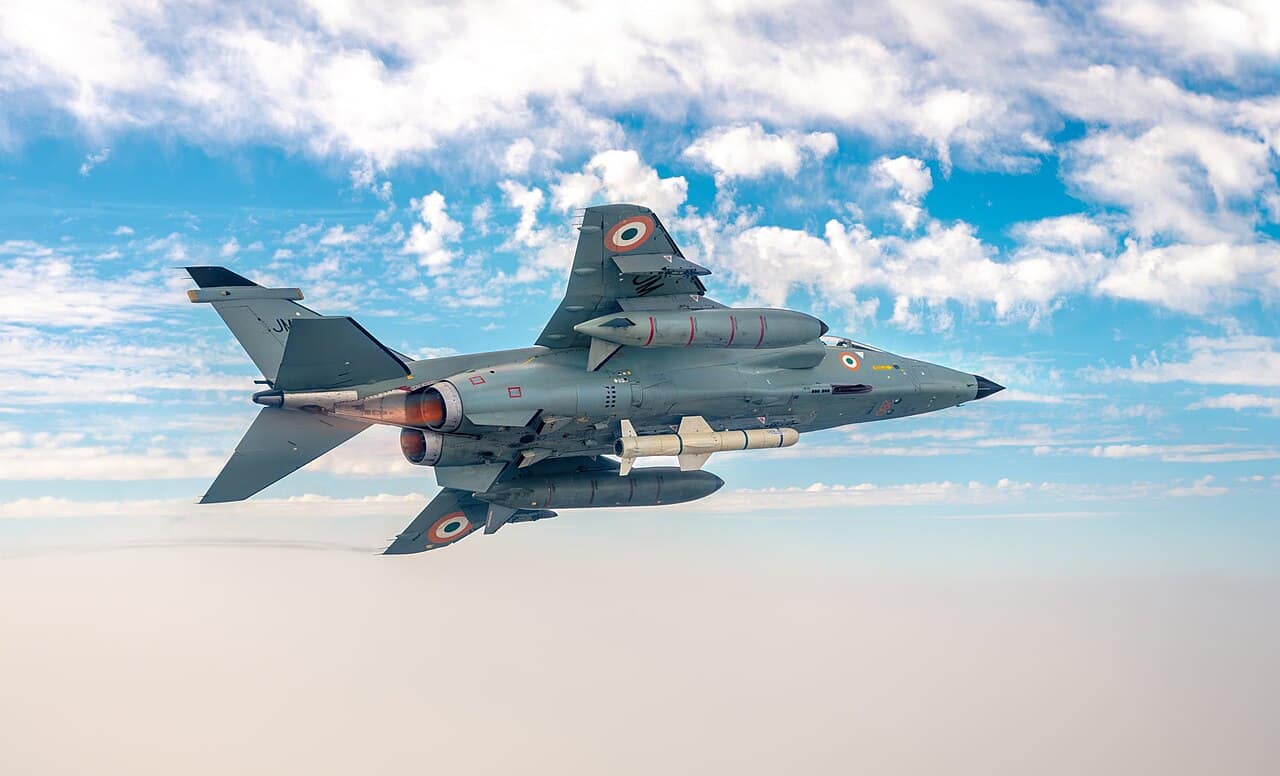
Half a century ago, the SEPECAT Jaguar screamed across the plains of northern Germany at treetop height, a nuclear bomb slung beneath its belly and the Warsaw Pact in its sights. France retired it in 2005. Britain let it go in 2007. Oman parked its last examples in 2014. And yet, in the summer of 2026, the Jaguar is still flying combat patrols — in the colours of the Indian Air Force.
India is now the only nation on earth that still operates the type, and it is going to remarkable lengths to keep it airworthy. In a detail revealed on 3 July 2026, New Delhi has quietly taken delivery of nine retired Royal Air Force Jaguars — not to fly them, but to strip them for the parts that keep its own fleet in the air.
It is a fittingly stubborn twilight for one of the great Anglo-French experiments in aviation — an aircraft that was never quite loved, never quite fast enough, and yet refused, again and again, to die.
• Aircraft: SEPECAT Jaguar — Anglo-French strike jet, twin Rolls-Royce/Turbomeca Adour engines
• Origins: Breguet + BAC joint venture SEPECAT, founded 1966; first flight 1968
• Retired by: France 2005, RAF 2007, Oman 2014
• Last operator: India (IAF), locally named “Shamsher” — fleet of roughly 120–130 jets
• 2026: nine retired RAF Jaguars handed to India for cannibalisation (revealed 3 July 2026)
• Future: Indian upgrades could keep it flying to around 2038 — nearly 70 years after its first flight
An accidental Cold War warrior
The Jaguar was born of thrift. In the mid-1960s, Britain and France both needed a new advanced jet trainer, and their governments — recognising the savings of sharing the bill — agreed to build one together. Breguet and the British Aircraft Corporation formed a joint company, SEPECAT, and Rolls-Royce and Turbomeca jointly built its Adour engines, named, in the Rolls-Royce tradition, after a river in south-west France. It was the first aircraft in RAF service produced by an international partnership — a model now standard across the industry.

When a string of cancelled projects — the TSR2, the F-111 order, the Anglo-French swing-wing AFVG — left the RAF with a yawning gap in its strike force, the humble trainer was hurriedly rearmed into a front-line attack aircraft. It was never glamorous. As the RAF Museum drily notes, it had a reputation to overcome.
Low-level, and armed with the unthinkable
For ten years from the mid-1970s the Jaguar was the RAF’s lead strike aircraft, and its most sobering job was flown from RAF Brüggen in West Germany. There, day and night, a handful of Jaguars sat on nuclear Quick Reaction Alert, ready to launch within fifteen minutes to deliver a tactical nuclear weapon against a Warsaw Pact advance. The atmosphere was captured by the sign that greeted every crew at the gate.
When the Cold War thawed, the Jaguar found a second life in real combat. Twelve aircraft deployed to the Gulf after Iraq’s 1990 invasion of Kuwait and flew more than 600 sorties without a single loss, before later serving over Bosnia and policing the skies of northern Iraq. Flying fast and low was always its natural habitat.
The last operator
India bought the Jaguar in the late 1970s and never looked back, building it under licence and naming it the “Shamsher” — a sword. Today the Indian Air Force flies the Jaguar IS, IB and the maritime-strike IM, a fleet of roughly 120 to 130 aircraft that remains a core part of its deep-strike force long after every other operator moved on.
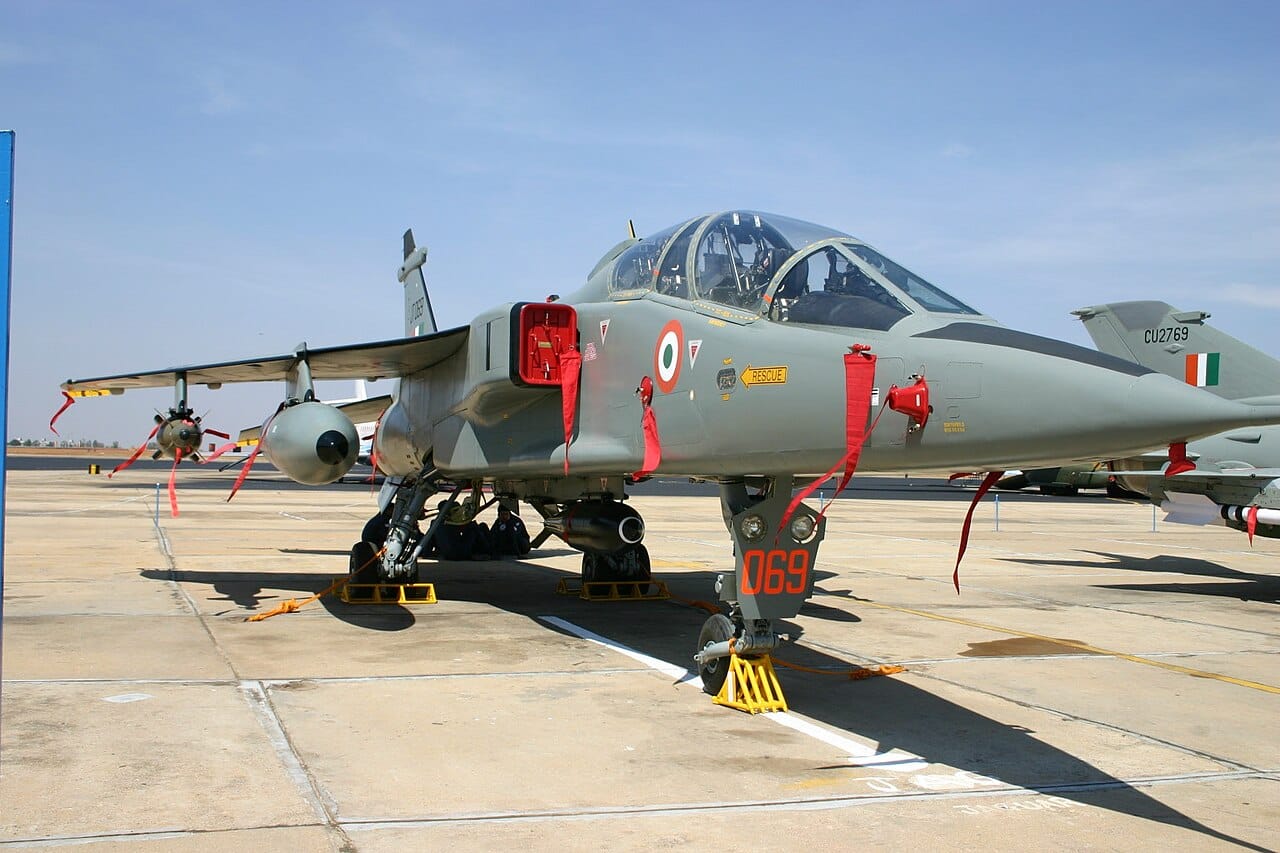
Keeping a fleet of 1970s jets flying in the 2020s is, however, a logistical marathon — which is exactly why New Delhi has become the world’s most determined collector of second-hand Jaguars.
Cannibalising the world to stay airborne
Rather than retire the type, India has spent years buying up the airframes everyone else threw away. It acquired 31 ex-French Jaguars in 2018, has looked at ex-Omani, Nigerian and Ecuadorian examples, and has now taken nine decommissioned RAF jets — a mix of single-seaters and two-seat trainers — to be stripped for spare parts. None will fly again; all will help keep the Shamsher airborne. With planned upgrades, India hopes to fly the Jaguar until around 2038, close to seventy years after the type first left the ground. Not bad for an aircraft that started life as a trainer nobody was sure they needed.
Sources: RAF Museum (“Jaguar: The Accidental Cold War Warrior”, Andrew Dennis); The Aviationist; The Week; Wikipedia (SEPECAT Jaguar); World Air Forces 2026. Fleet totals vary between sources and are given as reported.
Related Questions
What is the SEPECAT Jaguar?
The SEPECAT Jaguar is an Anglo-French strike aircraft built by a joint venture between Breguet and the British Aircraft Corporation, founded in 1966. Powered by twin Rolls-Royce/Turbomeca Adour engines, it first flew in 1968 and was the first aircraft in RAF service produced by an international partnership — a model now standard across the industry.
Who still flies the SEPECAT Jaguar today?
As of 2026, India is the only nation still operating the SEPECAT Jaguar. The Indian Air Force flies a fleet of roughly 120–130 jets, locally named Shamsher, decades after every other operator retired the type — much as it kept the MiG-21 flying long after most air forces let it go.
When was the Jaguar retired by other air forces?
France retired its Jaguars in 2005, the Royal Air Force followed in 2007, and Oman parked its last examples in 2014. That left the Indian Air Force as the type’s sole operator, still flying the Jaguar more than half a century after its 1968 first flight.
Why did India acquire retired RAF Jaguars in 2026?
In a detail revealed on 3 July 2026, India took delivery of nine retired Royal Air Force Jaguars — not to fly them, but to strip them for spare parts that keep its own Shamsher fleet airworthy. Cannibalising retired airframes is a common way to sustain an aircraft type long after production ends.
How long will India keep flying the Jaguar?
Indian upgrades could keep the Jaguar flying until around 2038 — nearly 70 years after the type’s first flight in 1968. India has invested in keeping the fleet current, and the 2026 acquisition of nine retired RAF airframes for spares supports that plan.
Why was the Jaguar developed?
It began as a cost-sharing project: in the mid-1960s Britain and France both needed a new advanced jet trainer and agreed to build one together. When cancelled projects — the TSR-2, Britain’s F-111 order, and the Anglo-French AFVG — left the RAF with a gap in its strike force, the trainer was hurriedly rearmed into a front-line attack aircraft.
Did the Jaguar carry nuclear weapons?
Yes. For about ten years from the mid-1970s the Jaguar was the RAF’s lead strike aircraft, trained to fly at treetop height across northern Germany with a nuclear bomb slung beneath its belly, aimed at Warsaw Pact targets during the Cold War.
Was the Jaguar a good aircraft?
It was never glamorous. As RAF Museum curator Andrew Dennis put it, the Jaguar “had a reputation of being under-powered and having the turning ability of a brick”. Yet it proved rugged, dependable and endlessly upgradeable — which is why it refused, again and again, to die.
0 commentaire