
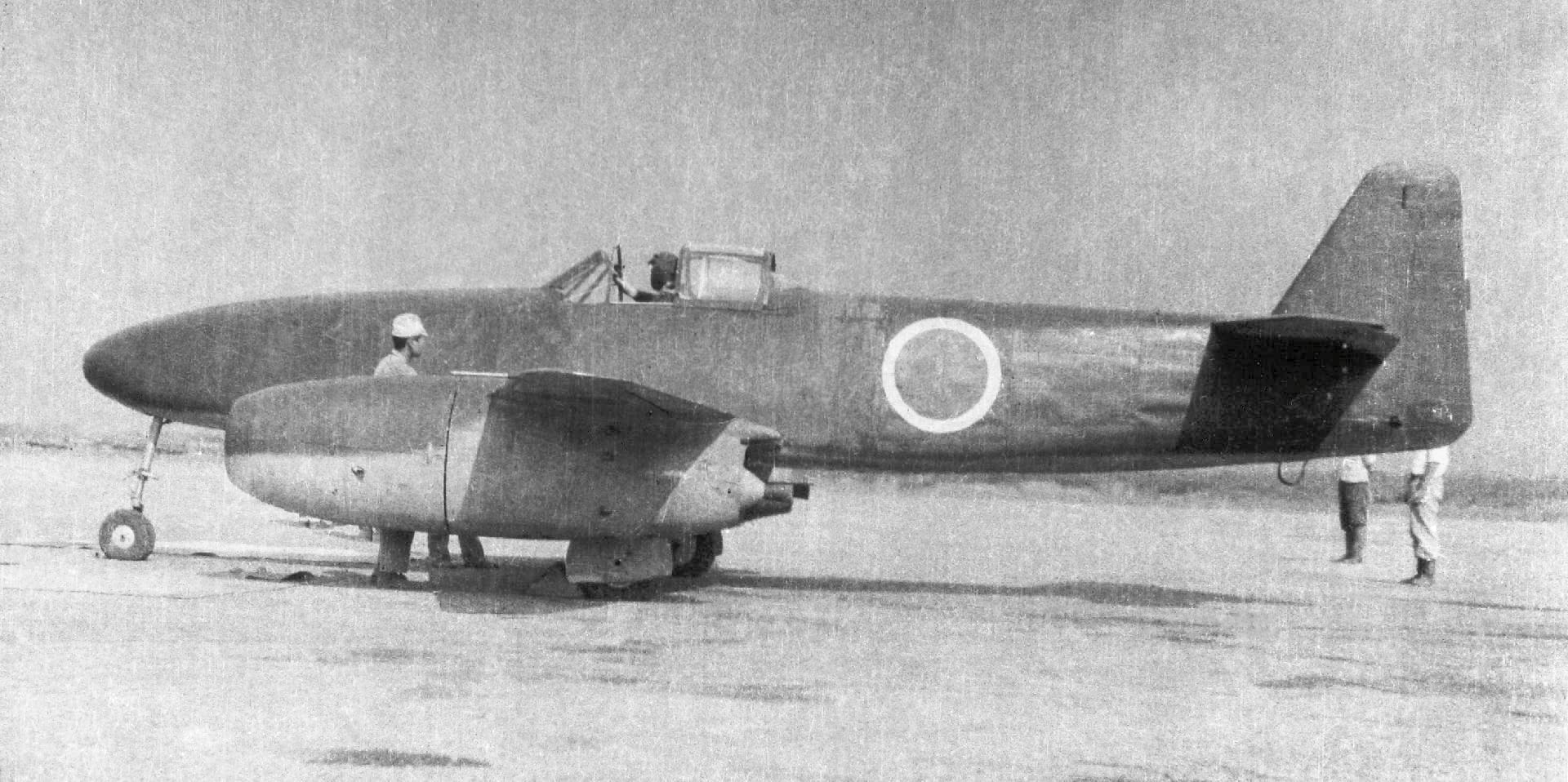
On the morning of 7 August 1945 — the day after Hiroshima — a small, silver twin-jet lifted off the runway at Kisarazu Naval Air Base. For about twenty minutes, Lieutenant Commander Susumu Takaoka flew Japan’s first jet aircraft, the Nakajima Kikka, or “Orange Blossom.” It handled well. The only real worry was how long it took to get airborne.
There would be no glory. Four days later a second flight ended in a botched, rocket-assisted takeoff and a slide toward Tokyo Bay. Days after that, Japan surrendered. The Kikka had flown into history with almost nothing left to fly for.
It is often mislabelled a copy of the German Moi 262. It was not. The Kikka was inspired by reports of the German jet, but it was an independent, smaller Japanese design — a machine racing a war it could never catch.
Informations clés
| Taper | Twin-jet attack aircraft / tactical bomber |
| Premier vol | 7 August 1945, Kisarazu Naval Air Base; pilot Lt Cdr Susumu Takaoka |
| Moteurs | 2 × Ishikawajima Ne-20 axial turbojets, about 475 kgf each |
| Origine | Imperial Japanese Navy requirement, 1944, after reports of the German Me 262 |
| Wings | Folding, to hide the jets in tunnels and caves |
| Construit | One prototype flew; a second was nearly complete; about 23 airframes under construction |
| Second flight | 11 August 1945 — aborted takeoff after a rocket-boost mishap |
| Survivors | Two airframes preserved by the Smithsonian National Air and Space Museum |
How Japan Learned of the Jet Age
When Germany began flight-testing the Me 262, Japan’s air attaché in Berlin watched several trials and sent home enthusiastic reports. Those reports eventually pushed the Imperial Japanese Navy, in September 1944, to order Nakajima to build a jet-powered attack aircraft broadly similar in layout to the German fighter.
The requirements reflected a nation on the defensive: a heavy bomb load, folding wings so the jets could be hidden in tunnels and shelters, and construction simple enough for unskilled labour. Early in its life the design was even conceived for one-way special-attack missions.
Inspired by the Me 262, Not Copied
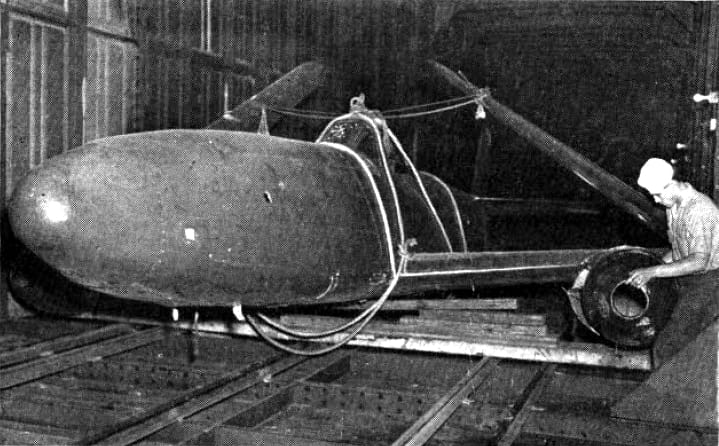
Nakajima’s engineers Kenichi Matsumura and Kazuo Ohno produced an aircraft that, in the Smithsonian’s words, bore only a superficial resemblance to the German fighter. The Kikka was noticeably smaller, with straight wings instead of the Me 262’s slight sweep, and none of the German jet’s distinctive triangular fuselage cross-section.
It was all-metal apart from fabric-covered control surfaces, with the engines slung in underwing pods to make them easy to swap. To save time, the main landing gear was borrowed from an A6M Zero and the nosewheel from a bomber’s tailwheel. This was a distinct, simpler machine — parallel evolution, not plagiarism.
A concise history of the Kikka and why it arrived too late.
The Ne-20 Engine, Built From Scraps
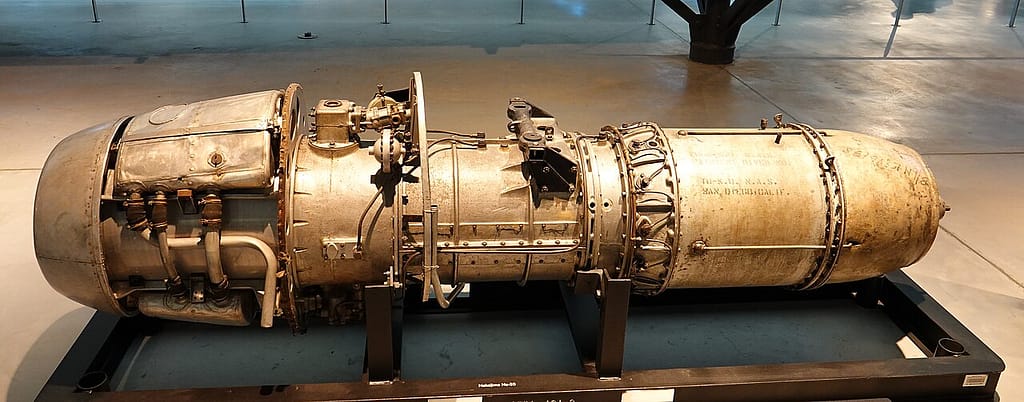
The jet’s heart was the Ishikawajima Ne-20, Japan’s first turbojet. It was loosely derived from Germany’s BMW 003 axial-flow engine — but Japan never received a full set of plans. A submarine carrying German engines, tooling and blueprints vanished at sea.
Only because one returning engineer travelled on a separate submarine, carrying his personal notes and a handful of photographs, did Japan have anything to work from. From little more than those photos and a single cutaway drawing, the Naval Technical Arsenal developed the Ne-20, giving roughly 475 kilograms of thrust. Scarce high-strength alloys meant the turbine blades lasted only a few hours — enough for testing, not for a sustained war.
Two Flights, and Then the War Ended
The first prototype began ground running in June 1945, then moved to Kisarazu. Takaoka’s maiden flight on 7 August went smoothly. For the second attempt on 11 August, rocket boosters were fitted to shorten the takeoff run — and the pilot was uneasy about the angle at which they were mounted.
Seconds after the rockets fired, the nose pitched sharply up; when they burned out, the aircraft sank, Takaoka aborted, and it slid off the runway toward the water, tearing off its landing gear. Before it could be repaired, Japan surrendered. Only one Kikka ever flew.
The doomed final test flight of the Kikka.
Captured, Studied, and Preserved
When the war ended, a second prototype was nearly finished and around 23 airframes stood in various stages of construction. Several airframes and engines were shipped to the United States for study. Today two Kikka airframes survive with the Smithsonian’s National Air and Space Museum — one at the Steven F. Udvar-Hazy Center, the other in storage.
It is the last known example of a Japanese wartime jet, and the only one to have taken off under its own power — a footnote that flew four days too late to be anything more.
Overview of the Kikka’s origins and its link to the Me 262.
Sources: Wikipedia (Nakajima Kikka; Ishikawajima Ne-20); Smithsonian National Air and Space Museum (Russell Lee, 2016).
0 commentaire