
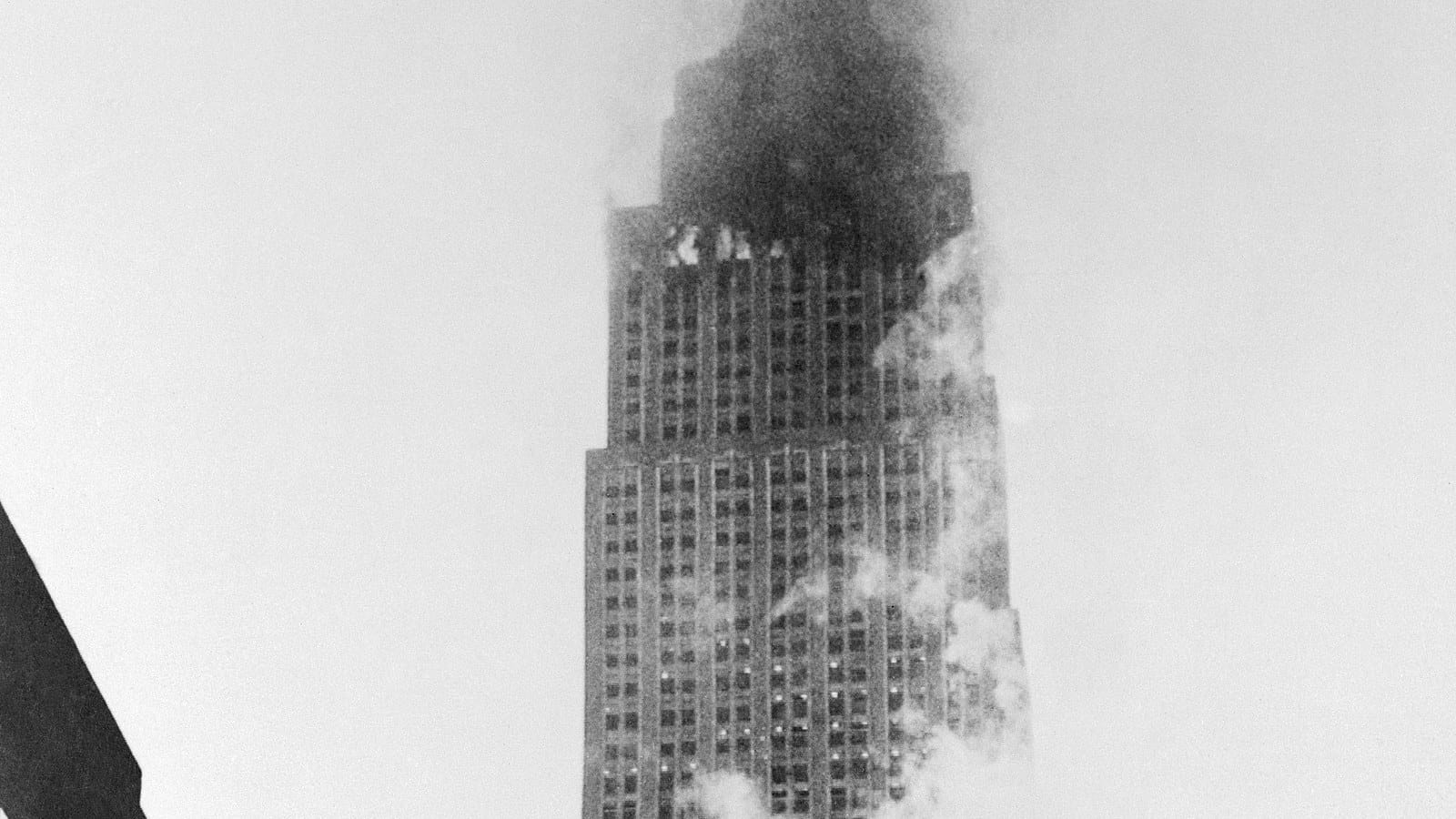
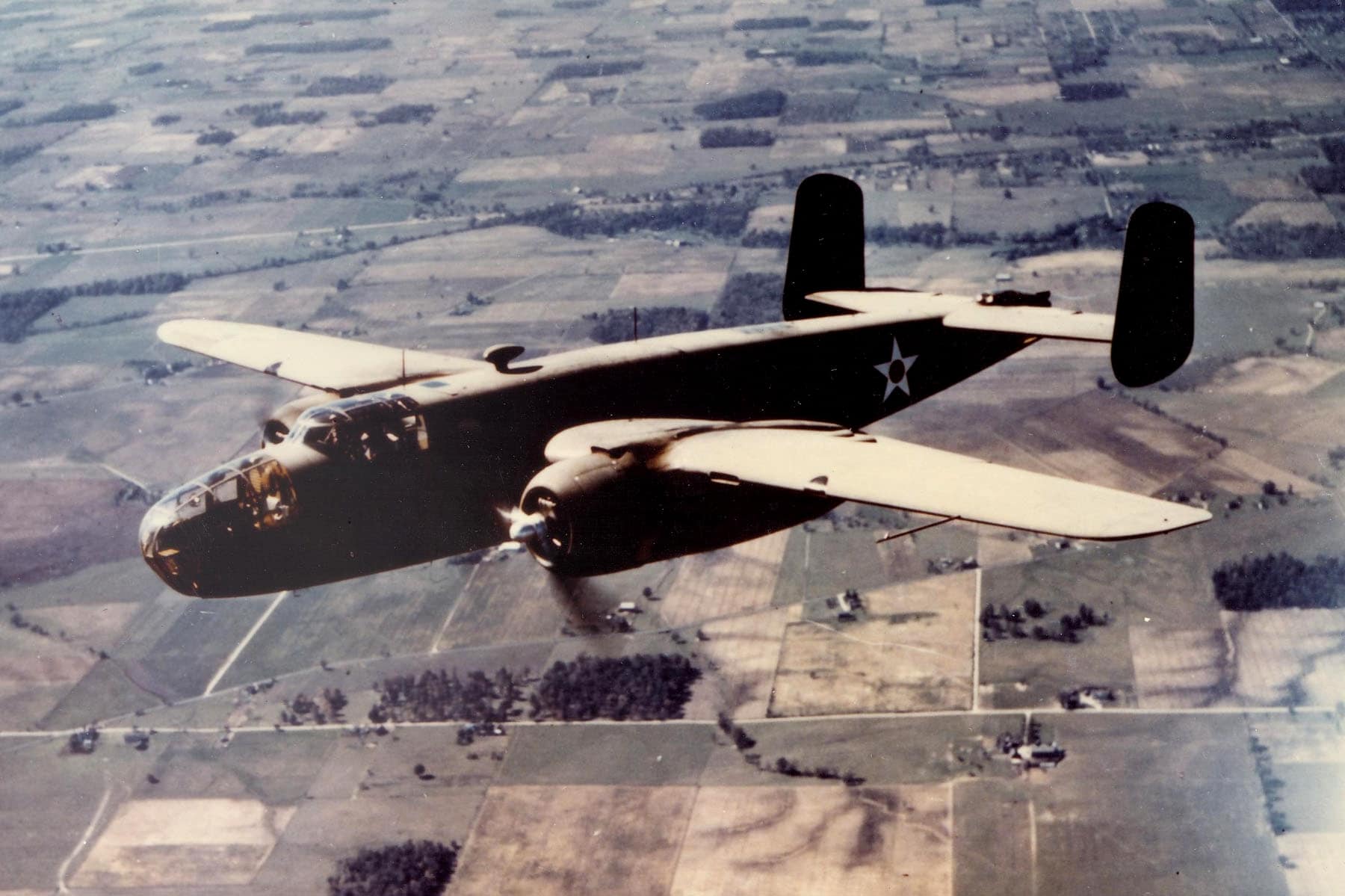
Samedi matin, 28 juillet 1945. New York est enveloppée d'un brouillard si épais que le tiers supérieur de l'Empire State Building a tout simplement disparu. À 9 h 40, les employés de bureau du 79e étage entendent un bruit qu'aucun employé de bureau ne devrait jamais entendre : des moteurs d'avion, tout près, et dont le bruit se rapproche. Quelques secondes plus tard, un bombardier B-25 Mitchell de dix tonnes, perdu dans la brume à plus de 320 km/h, s'écrase contre la façade nord du plus haut bâtiment du monde.
Quatorze personnes périssent. Une boule de feu ravage les bureaux d'une organisation caritative catholique en temps de guerre. Un moteur traverse le bâtiment de part en part et s'écrase de l'autre côté. Et Betty Lou Oliver, une jeune opératrice d'ascenseur de 20 ans, est sur le point de survivre à un événement auquel aucun être humain n'a jamais survécu.
Faits marquants : L'effondrement de l'Empire State Building
| Date | Samedi 28 juillet 1945, 9h40. |
| Aéronef | North American B-25D Mitchell “ Old John Feather Merchant ”, Forces aériennes de l'armée américaine |
| Pilote | Lieutenant-colonel William F. Smith Jr., 27 ans — pilote de B-17 décoré, plus de 42 missions de combat au-dessus de l'Europe |
| Impact | 79e étage, face nord, vent de plus de 320 km/h, trou de 5,5 m sur 6 m |
| Sonner | 14 morts (3 à bord, 11 dans le bâtiment), une vingtaine de blessés |
| Le record | Betty Lou Oliver a survécu à une chute d'ascenseur du 75e étage – un record toujours détenu par le Guinness World Records |
Perdu au-dessus de Manhattan
William Smith avait bravé les pires bombardements d'Europe et était rentré décoré. Ce matin-là, sa mission était banale : un transport de personnel de Bedford (Massachusetts) à New York, puis jusqu'à Newark pour prendre un passager. Descendant dans le brouillard, l'avion fut dégagé en direction de Newark, mais la visibilité était réduite – la tour de contrôle signalant qu'elle ne pouvait apercevoir le sommet de l'Empire State Building – et Smith se désorienta parmi les gratte-ciel du centre-ville. Il longea le Chrysler Building au-dessus de la 42e Rue, prit un virage dans la mauvaise direction et son avion disparut dans le ciel.
Catherine O'Connor se trouvait à son bureau au 79e étage des Services de secours aux victimes de guerre lorsque le mur nord a explosé :
Onze personnes travaillant au bureau des secours ont péri, dont de nombreuses jeunes femmes engagées dans des actions caritatives en temps de guerre. Les trois hommes à bord du bombardier — Smith, le sergent-chef Christopher Domitrovich et un mécanicien de la marine qui rentrait chez lui en stop — ont été tués sur le coup.
La plus longue chute à laquelle quiconque ait jamais survécu
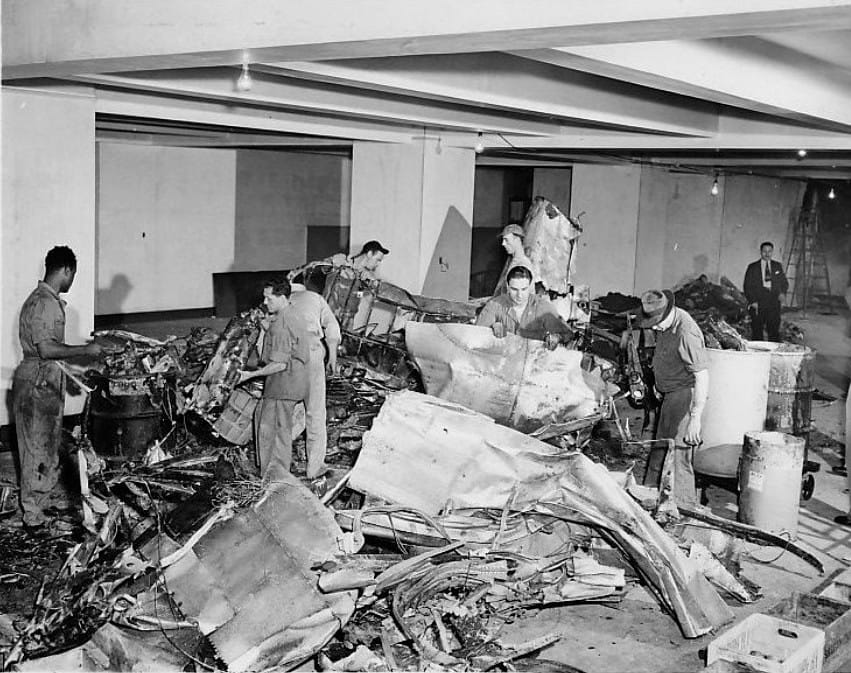
Les deux réacteurs du bombardier se transformèrent en boulets de démolition. L'un traversa toute la largeur de la tour, sortit par le mur sud et s'écrasa sur le toit d'un atelier d'artiste situé au dernier étage, à un pâté de maisons de là. L'autre percuta une cage d'ascenseur et sectionna les câbles au-dessus d'une cabine.
Betty Lou Oliver, grièvement brûlée à son poste au 80e étage, venait d'être aidée à monter dans un ascenseur pour être descendue se faire soigner. Les câbles fragilisés ont cédé. Sa cabine a chuté de soixante-quinze étages – soit environ 300 mètres – jusqu'au sous-sol. Un coussin d'air comprimé dans la cage d'ascenseur étanche et un ressort de câble enroulé sous la cabine ont amorti l'impact de justesse. Les sauveteurs ont dégagé les décombres et l'ont retrouvée vivante : le bassin, la colonne vertébrale et la nuque fracturés – un record du monde Guinness qui n'a jamais été égalé depuis. Elle a repris son travail d'ascensoriste cinq mois plus tard.
Le bâtiment qui haussa les épaules
Les pompiers de New York ont combattu l'incendie à 285 mètres au-dessus du niveau de la rue – le plus haut incendie de structure jamais maîtrisé à l'époque – et l'ont éteint en quarante minutes. La structure d'acier de l'Empire State Building a absorbé l'impact de dix tonnes sans broncher ; les ingénieurs n'ont constaté aucun dommage structurel hormis la déchirure. De nombreux étages ont rouvert leurs portes lundi matin, moins de 48 heures plus tard.
L'ombre la plus durable de la catastrophe s'est portée sur le droit : l'État ne pouvant initialement être poursuivi, le Congrès a adopté la loi fédérale sur la responsabilité civile délictuelle (Federal Tort Claims Act) en 1946 – avec des dispositions rétroactives inspirées par cette catastrophe même – permettant enfin aux citoyens de demander réparation aux États-Unis. Seize ans avant même que les plans du World Trade Center ne soient élaborés, New York avait appris que son plus haut gratte-ciel pouvait résister à l'impact direct d'un bombardier.
Le récit de l'accident par The History Guy est le meilleur court documentaire sur le sujet :
Et le reportage original de 1945 — le brouillard, le trou, la foule sur la 34e rue :
Sources : Archives municipales de New York ; Guinness World Records ; NPR ; History.com ; Warfare History Network ; Britannica ; TIME
Questions connexes
Quel avion s'est écrasé sur l'Empire State Building ?
Un bombardier B-25D Mitchell de l'US Army Air Forces, surnommé “ Old John Feather Merchant ”, s'est écrasé sur la façade nord de l'Empire State Building le samedi 28 juillet 1945 à 9h40. Le bombardier de dix tonnes a été perdu dans un épais brouillard à plus de 320 km/h lorsqu'il a percuté le 79e étage.
Comment l'avion qui a percuté l'Empire State Building s'est-il écrasé ?
Le lieutenant-colonel William F. Smith Jr., pilote, effectuait un vol de routine pour transporter du personnel à destination de New York et Newark. Descendant dans un brouillard si dense que la tour de contrôle ne pouvait apercevoir le sommet des gratte-ciel, il se désorienta parmi les tours du centre-ville, frôla le Chrysler Building, effectua un virage dans la mauvaise direction et percuta l'Empire State Building.
Combien de personnes sont mortes dans l'effondrement de l'Empire State Building ?
Quatorze personnes ont péri — les trois membres d'équipage du bombardier et onze personnes présentes dans le bâtiment, principalement dans les bureaux d'une organisation catholique d'aide aux victimes de guerre — et une vingtaine d'autres ont été blessées. L'impact a creusé un trou d'environ six mètres dans le bâtiment.
Qui était Betty Lou Oliver ?
Betty Lou Oliver, une opératrice d'ascenseur de 20 ans, a survécu à l'accident, puis a fait une chute de 75 étages lorsque les câbles de son ascenseur, fragilisés par le choc, ont cédé. Elle a survécu à cette chute, toujours reconnue par le Guinness World Records comme la plus longue chute d'ascenseur de l'histoire.
L'Empire State Building a-t-il survécu au crash du B-25 ?
Oui. Malgré l'incendie et un trou de six mètres, la structure métallique du gratte-ciel a tenu bon et le bâtiment a rouvert ses portes deux jours plus tard. Cet incident est devenu un cas emblématique en matière de sécurité aérienne et de résilience des bâtiments, s'inscrivant dans une longue tradition. histoire de l'aviation militaire façonner la manière dont les villes gèrent les risques liés aux aéronefs.
Un avion a-t-il déjà percuté un gratte-ciel ?
L'impact d'un B-25 sur l'Empire State Building en 1945 est le cas le plus célèbre de l'époque où un avion a percuté un gratte-ciel, à une époque où le guidage radar et le contrôle aérien modernes n'existaient pas encore. Il reste gravé dans les mémoires comme une tragédie de guerre et, à l'instar des aviateurs disparus honorés par la Croix-Rouge, un événement commémoratif. formation de l'homme disparu, comme un chapitre solennel de l'histoire de l'aviation.

0 commentaire