
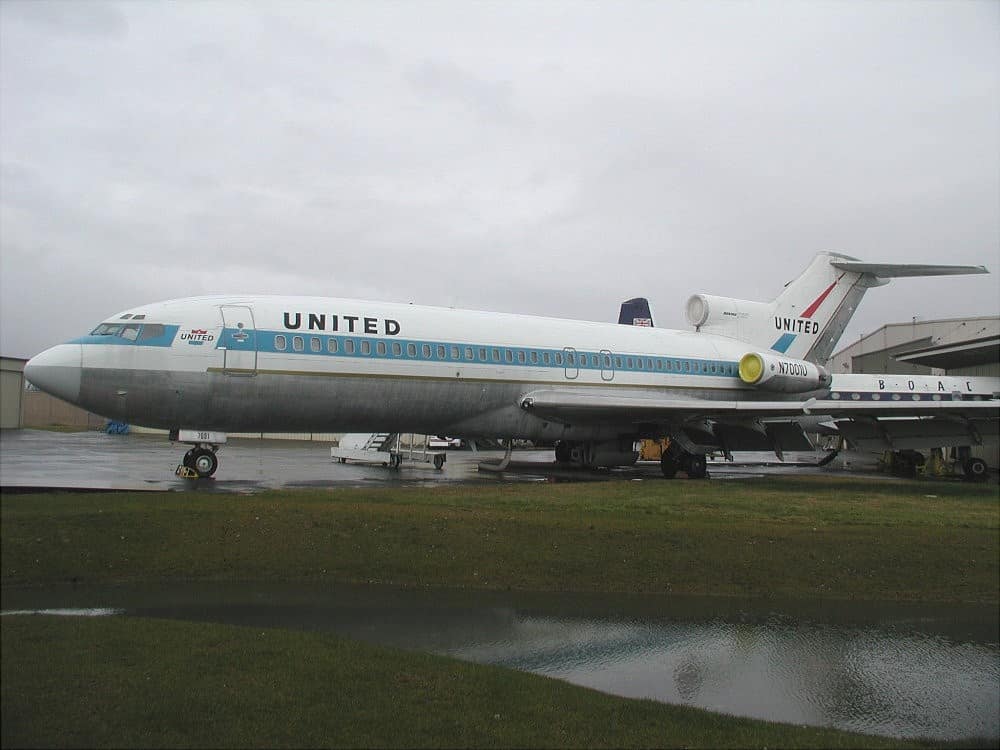
Look at an old airport photo from the 1970s and you will see it everywhere: a sleek jet with a tall T-tail and three engines clustered around its rear like the fletching on an arrow. This was the Boeing 727, and for a whole generation it was simply what “an airliner” looked like. More than any other jet, it is the one that brought fast, modern air travel to ordinary people and ordinary cities.
It also became the best-selling jetliner in the world, a record it held for decades, and it left its mark on everything from small-town airports to one of aviation’s greatest unsolved mysteries.
Quick Facts: Boeing 727
- Premier vol : 9 February 1963
- Into service: 1964, with Eastern Air Lines
- Construit: 1,832, from 1962 to 1984
- Moteurs : Three rear-mounted Pratt & Whitney JT8Ds
- Trick: Triple-slotted flaps for short-runway performance
- Fait d'armes : Best-selling jetliner in the world for years
Jets for smaller cities
The 727 was the vision of Boeing engineer Jack Steiner, who wanted to break jet travel out of the big hubs and take it everywhere. The problem was that early jets needed long runways. Steiner’s answer was a wing bristling with high-lift devices, including a complex triple-slotted flap, that let the 727 land slowly and use runways under 1,500 metres. Three engines gave it the power to climb out of hot, high, short-field airports where a twin might struggle.
A best-seller, and a self-sufficient one
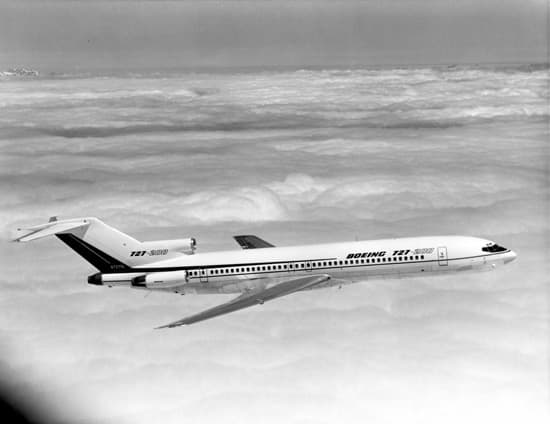
The formula worked spectacularly. Between 1962 and 1984 Boeing built 1,832 of them, and the 727 remained the world’s best-selling jetliner until its own smaller sibling, the 737, finally overtook it. It was also unusually self-reliant: with a built-in auxiliary power unit and its own airstairs, a 727 could turn around at a modest airport with no ground equipment at all.
The Cooper legend and the long goodbye
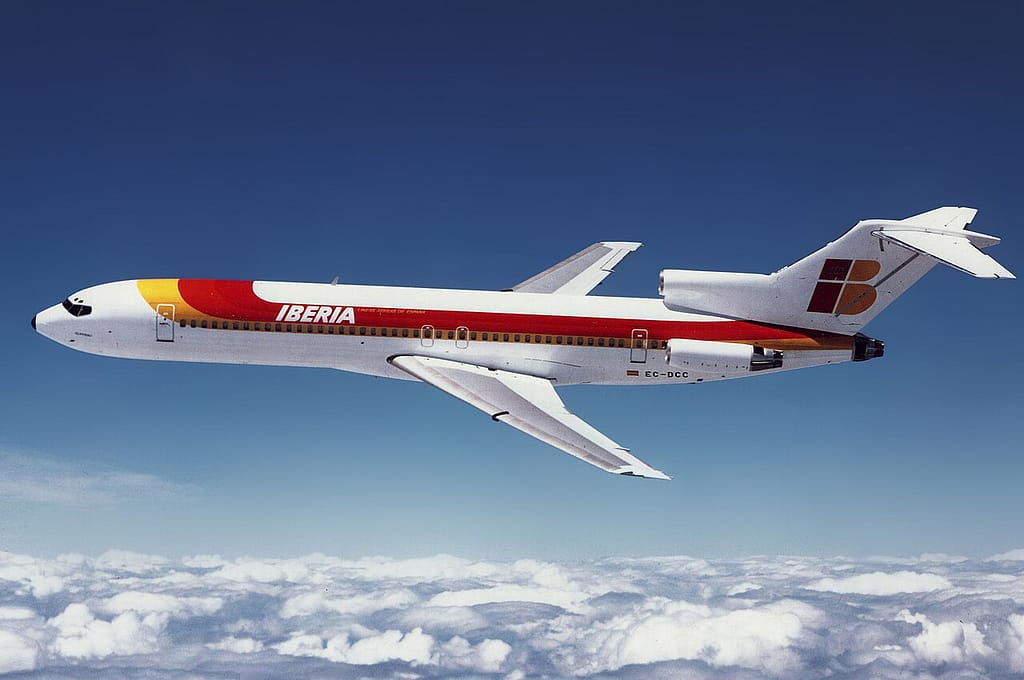
The 727 also has a permanent place in criminal folklore. In November 1971, a hijacker known as D.B. Cooper extorted $200,000, then lowered the 727’s rear airstairs in flight and parachuted into the night over the Pacific Northwest, never to be found. Boeing later fitted a simple device, the “Cooper vane,” to stop the aft stairs from opening in the air.
Rising fuel prices and stricter noise rules eventually retired the thirsty three-holer from passenger service, though cargo 727s soldiered on for years. Its real legacy is bigger than any single record: the 727 helped turn the jet from a luxury for the few into everyday transport for the many.
Sources: The Seattle Times, Boeing, Simple Flying, Wikipedia.
0 commentaire