Histoire et légendes, Aviation militaire
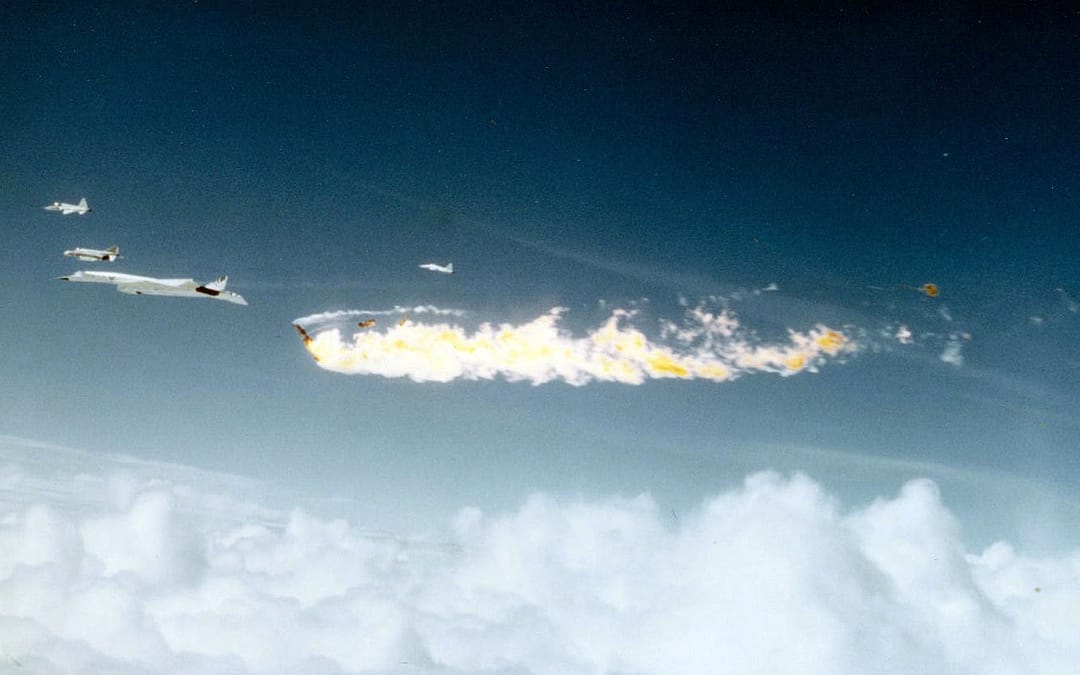
The North American XB-70 Valkyrie was supposed to be the future of strategic bombing — a six-engine colossus that could outrun anything in the sky at three times the speed of sound. Instead, it became one of aviation’s most expensive might-have-beens, and its...

Monde de l'aviation, Histoire et légendes
The photograph looks fake. A short-fuselage Soviet-era twin-engine airliner — a Tupolev Tu-134, the workhorse of Aeroflot domestic routes for thirty years — is hanging in midair beneath a single helicopter. The Tu-134 weighs about 28 tonnes empty. It is some...
Histoire et légendes, Aviation militaire
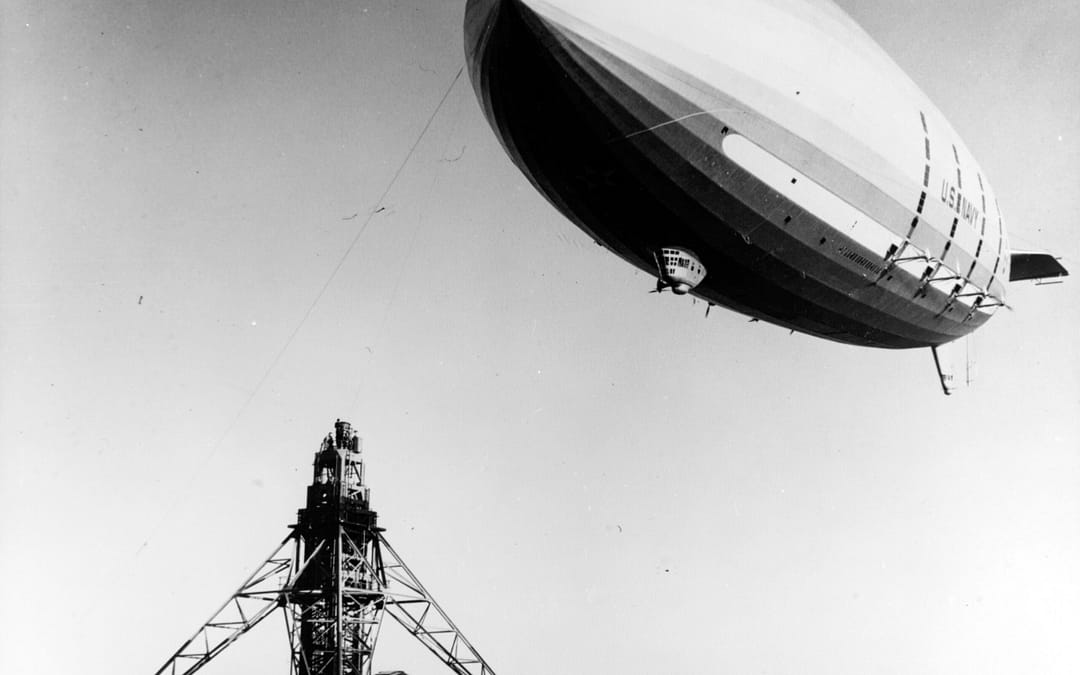
The most ambitious naval aviation concept the United States ever fielded was not the nuclear-powered supercarrier. It was a 785-foot helium airship with an interior hangar bay full of biplane fighters that could be launched and recovered in flight. There were two of...
Histoire et légendes, Aviation militaire
Le 7 août 1955, Bill Allen, président de Boeing, assistait aux courses d'hydroplanes sur le lac Washington depuis un yacht de la compagnie. Le nouveau Boeing 367-80 — prototype du futur 707 — devait effectuer un survol lors d'une démonstration destinée aux compagnies aériennes potentielles….
Histoire et légendes, Aviation militaire
On August 3, 1945, a Japanese test pilot named Masayoshi Tsuruno climbed into the strangest fighter prototype Japan had ever built and pushed the throttle forward. The aircraft trundled along the runway at Kyūshū Aircraft Company’s Mushiroda Airfield, lifted its...
Histoire et légendes, Aviation militaire
If you ever stand in front of the gigantic Cold War hangar at the National Museum of the United States Air Force in Dayton, Ohio, you will see, parked between an XB-70 Valkyrie and a YF-12, something that looks like it landed there yesterday — a domed metal disc,...
Histoire et légendes, Aviation militaire
In 1960, in a hangar at the Bell Aircraft plant at Niagara Falls, New York, Bell unveiled the wildest single-seat fighter ever proposed by an American manufacturer. It had a needle-nosed fuselage, two wing-tip nacelles that could swivel through 100 degrees, and a...
Histoire et légendes, Aviation militaire
Le 1er août 1955, Tony LeVier fit décoller un étrange appareil Lockheed d'un lac asséché du désert du Nevada. L'avion possédait des ailes incroyablement longues et étroites – comme un planeur motorisé – et était propulsé par un unique réacteur. Il montait à une vitesse fulgurante, comme aucun autre appareil qu'il ait jamais piloté….
Histoire et légendes, Aviation militaire
Le 10 septembre 1956, dans le haut désert surplombant la base aérienne d'Edwards, Bob Baker, pilote d'essai en chef de North American Aviation, poussa la manette des gaz d'un avion dont personne en dehors du bureau d'acquisition des chasseurs de l'US Air Force n'avait jamais entendu parler, en mode postcombustion.
Histoire et légendes, Aviation militaire
Fin 1958, dans le ciel texan, au-dessus de la base aéronavale de Dallas, John Konrad, pilote d'essai en chef de Vought, pilotait un appareil capable de surpasser en manœuvrabilité, en montée, en vitesse et en virage le futur F-4 Phantom II. Cet avion était monomoteur et ne disposait pas d'opérateur radar.






Commentaires récents