
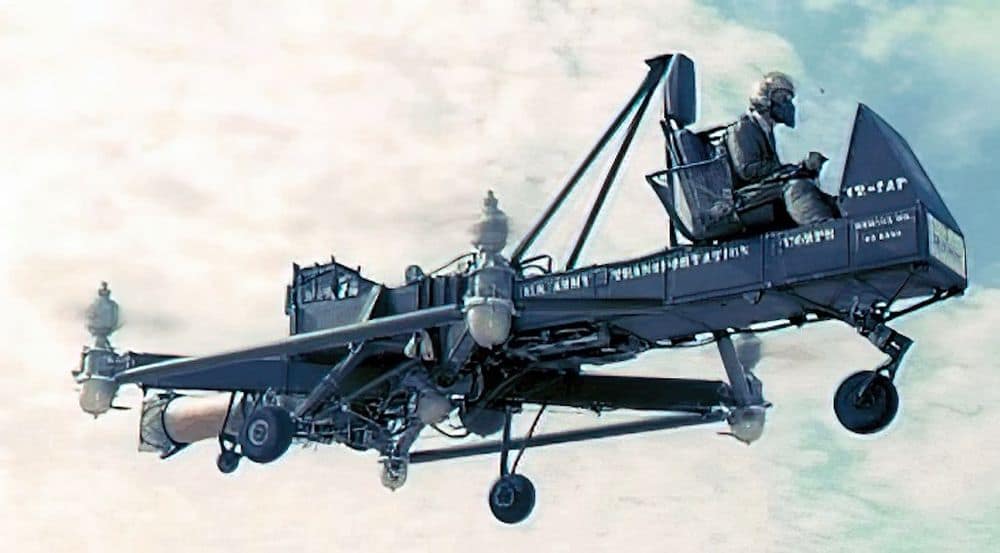
À la fin des années 1950, l'armée américaine se mit en quête d'un engin que personne n'avait encore construit : un hybride entre une jeep et un hélicoptère. Une jeep volante – une simple plateforme sur laquelle un soldat pourrait se tenir debout, s'élever verticalement et survoler le champ de bataille. On croirait un dessin animé. L'armée était pourtant tout à fait sérieuse, et Curtiss-Wright leur en construisit une qui vola réellement.
Ils l'appelaient le VZ-7. Il s'agissait, en substance, d'un quadricoptère habité — des décennies avant que le terme n'existe.
FAITS RAPIDES
| Rôle | VTOL " jeep volante " (plateforme utilitaire) |
| Opérateur | Armée américaine |
| centrale électrique | 1 × Turbomoteur Turbomeca Artouste IIB, 425 ch |
| Rotors | Quatre hélices montées verticalement |
| vitesse maximale | ~51 km/h ; plafond ~61 m |
| Nombre construit | 2 ; livré en 1958, retourné au fabricant en 1960 |
Le rêve de la cavalerie aérienne
La jeep volante est née d'une idée plus vaste. En 1954, le général parachutiste James Gavin publia un essai célèbre dans Harper's Ils soutenaient que l'armée moderne avait besoin d'un nouveau type de cavalerie — non pas des chevaux, mais des machines capables de franchir le terrain par bonds.
De cette vision naquit une petite flotte de " jeeps volantes " expérimentales. Le modèle de Curtiss-Wright, construit par sa division de Santa Barbara, fut le premier à quitter le sol.
Simple, clair — et pas tout à fait suffisant
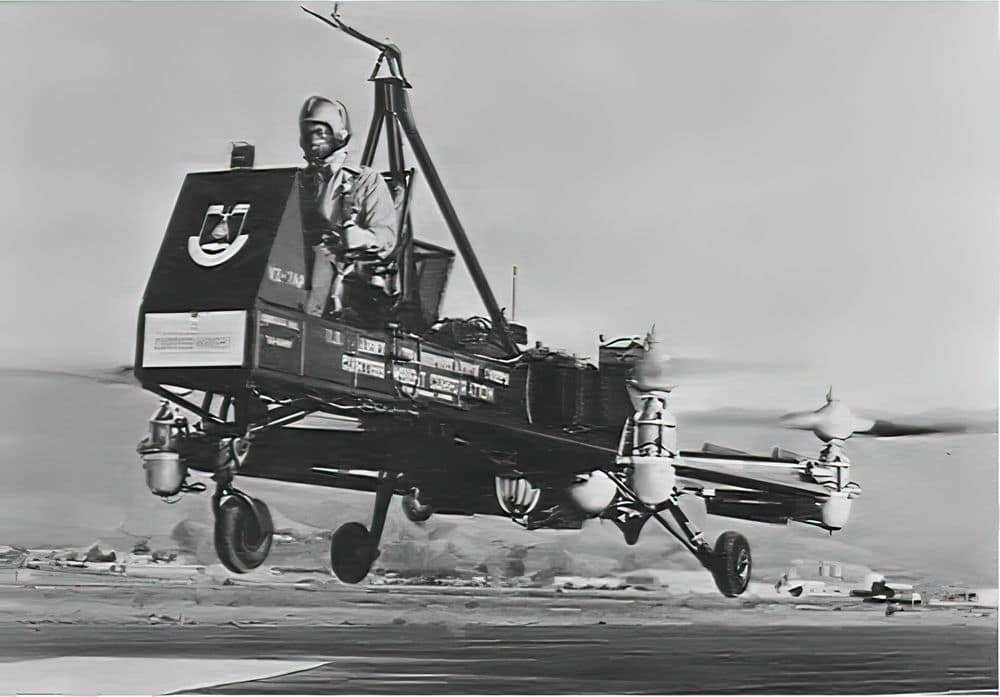
La conception était d'une simplicité extrême. Une structure rectangulaire d'environ 5 mètres de long supportait le pilote, le carburant et un unique turbomoteur Turbomeca de 425 chevaux entraînant quatre hélices verticales disposées en carré. Pour diriger l'appareil, le pilote modulait simplement la puissance de chaque hélice ; des aubes orientables dans l'échappement se chargeaient du reste. Il a même transporté un canon sans recul lors des essais.
Et ça a fonctionné. Les pilotes l'ont trouvé stable, maniable et facile à piloter. Le problème, c'est que " facile à piloter " ne rimait pas avec " utile ". Sa vitesse maximale atteignait à peine 50 km/h et son altitude ne dépassait guère les 60 mètres : pas de blindage, pas de vitesse, pas de plafond. Comme le résume un compte rendu moderne du projet :
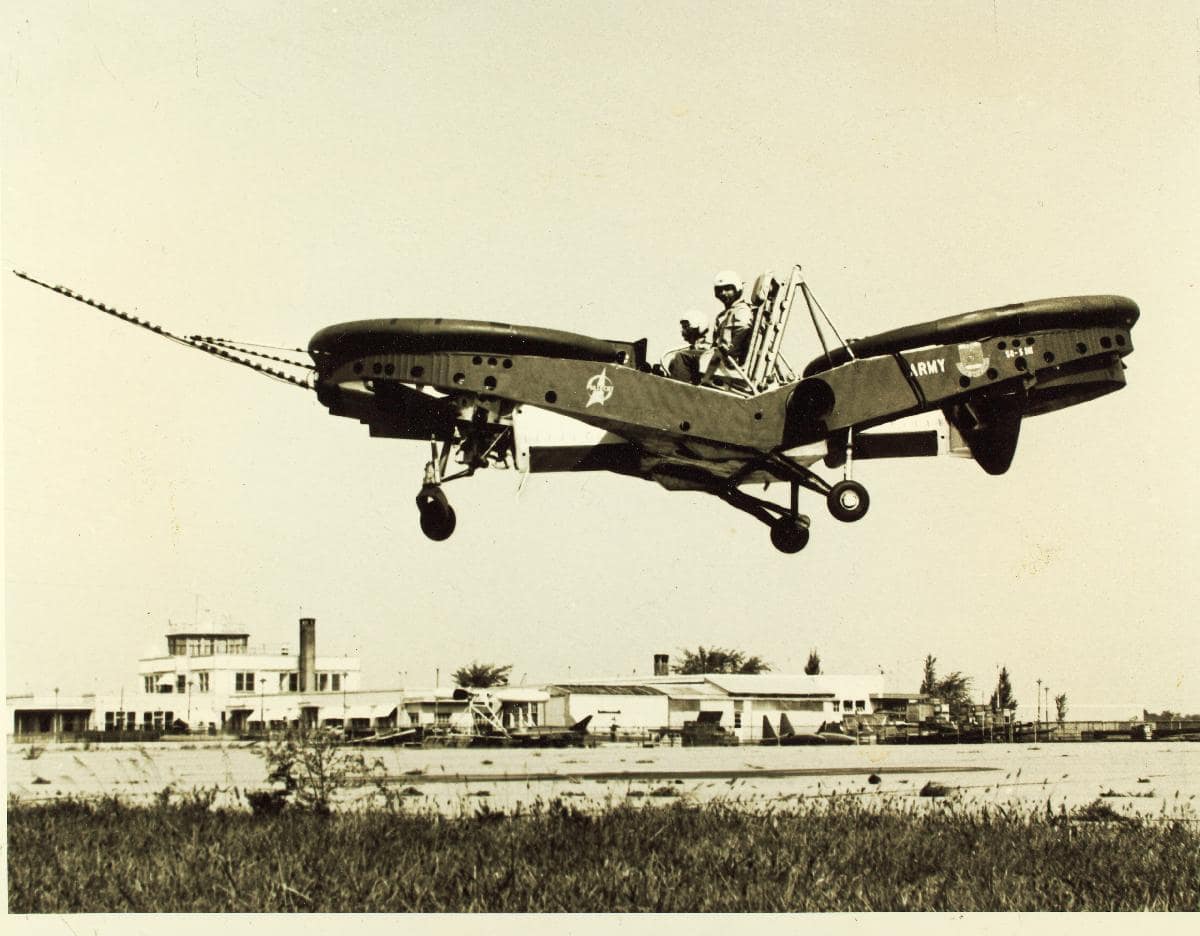
Peu après, tous les projets de jeeps volantes furent discrètement abandonnés. L'armée avait compris que l'hélicoptère remplissait déjà mieux cette fonction, et que la simple jeep se chargeait du reste. Un VZ-7 est aujourd'hui exposé au Musée de l'aviation de l'armée américaine.
Et pourtant, regardez n'importe quel quadricoptère de magasin de loisirs, ou les drones d'attaque FPV qui redéfinissent actuellement la guerre moderne, et le VZ-7 ressemble soudain moins à une curiosité ratée et plus à une machine qui était simplement en avance de soixante-dix ans.
Sources : Jets 'n' Props ; Général James M. Gavin, Harper's Magazine (1954) ; Musée de l'aviation de l'armée américaine ; Wikipédia.
0 commentaire