

Il était logique que cette promesse vienne de Paris. Le 14 juillet, jour de la fête nationale française, le président Emmanuel Macron, aux côtés de Volodymyr Zelensky, à l'issue d'un sommet de la “ Coalition des volontaires ”, annonçait que l'Ukraine avait accepté un plan visant à acquérir 16 Rafale Des avions de combat, ainsi que les missiles et radars nécessaires à leur utilisation optimale. Pour Kiev, il s'agit d'une première étape concrète vers l'exploitation des avions de combat les plus performants de France.
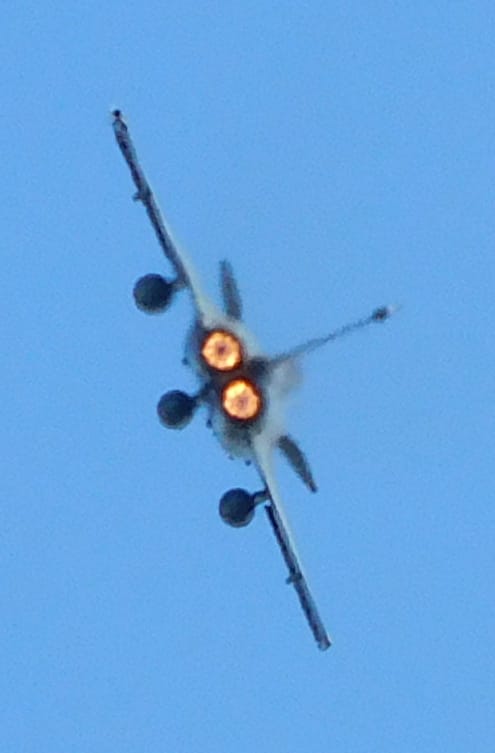
Le Rafale — de Dassault omnirole Ce chasseur représenterait une amélioration significative par rapport aux quelques Mirage 2000-5F que la France a déjà livrés à l'Ukraine. Mais cette annonce témoigne autant de la détermination européenne qu'elle constitue un contrat d'armement, et les détails comptent plus que le chiffre principal.
Informations clés
| Annoncé | 14 juillet 2026, Paris (Sommet de la Coalition des volontaires) |
| L'accord | 16 chasseurs Dassault Rafale et leurs armes d'accompagnement |
| Cadre | Lettre d'intention de novembre 2025 — jusqu'à 100 jets sur 10 ans |
| Premières livraisons | Prévu pour 2028-2029 ; la formation des pilotes devrait commencer dans les prochains mois. |
| Nous avons également convenu. | Système de défense aérienne SAMP/T NG ; licences de production ukrainiennes pour les missiles AASM, Aster 30 et SCALP |
| Déjà en service | Mirage 2000-5F français, livré plus tôt dans la guerre |
Seize avions à réaction — et l'équivalent d'une usine de missiles
L'acquisition des 16 Rafale fait suite à une lettre d'intention signée par Paris et Kiev en novembre 2025, qui prévoyait l'achat d'une centaine d'appareils au cours de la prochaine décennie. L'annonce de lundi a concrétisé la première étape de ce projet. Emmanuel Macron a indiqué que les premiers avions pourraient voler dans le ciel ukrainien dès 2028 ou 2029, la formation des pilotes débutant dans les prochains mois.
Autour des avions de combat, Macron et Zelensky se sont entendus sur une feuille de route plus large : une première livraison de systèmes de défense aérienne SAMP/T NG et – clause sans doute la plus importante – des licences permettant à l’Ukraine de produire sur son territoire des munitions de conception française. Il s’agit notamment du kit de bombe planante de précision AASM Hammer, de l’intercepteur Aster 30 qui équipe le SAMP/T et du missile de croisière à longue portée SCALP. La production d’armements sur son territoire permettrait à l’Ukraine de s’affranchir des difficultés d’acheminement qui ont entravé le soutien occidental.
Un cadeau emballé de mises en garde
Zelensky n'a pas caché sa gratitude. Dans un message publié après le sommet, il a simplement écrit :
Cet enthousiasme doit toutefois être relativisé. Il s'agit d'un engagement, et non d'un contrat signé, et la question du financement des 16 Rafale – appareils coûteux et à long délai de livraison – reste manifestement en suspens. Le carnet de commandes de Dassault est déjà bien rempli, notamment auprès de clients à l'export, de l'Inde à l'Indonésie, en passant par la Croatie et la Serbie, ce qui explique pourquoi la livraison n'interviendra pas avant 2028. Pour un pays en guerre aujourd'hui, trois ans représentent une éternité.
Pourquoi cela compte encore
Malgré ces réserves, la direction prise est indéniable. L'Ukraine est en train d'être intégrée à l'industrie de défense européenne, non seulement comme bénéficiaire de surplus, mais aussi comme futur opérateur de la force aérienne française de première ligne et, de plus en plus, comme coproducteur des missiles qu'elle utilise. Il s'agit d'un pari stratégique sur la survie de l'Ukraine et sa place dans l'architecture de sécurité européenne à long terme, un pari effectué le jour le plus symbolique du calendrier français.
Démonstration aérienne en solo d'un Rafale des Forces aériennes et spatiales françaises — le chasseur multirôle que l'Ukraine s'apprête à acquérir.
Sources : Defense News ; Kyiv Independent ; Ukrinform ; Militarnyi ; France 24.
Merci d'avoir partagé ces informations utiles, elles ont répondu à beaucoup de mes questions.