

The morning of 16 April 1912 was perfect — or so it seemed. Harriet Quimby stood at Folkestone, England, in her trademark plum-coloured flying suit, preparing to become the first woman to fly the English Channel. There was one problem. Fog had rolled in over the Strait of Dover. Her mechanics advised against going. Quimby climbed into her Blériot XI anyway.
Informations clés
| Nationalité | Américain 🇺🇸 |
| Réalisation | First American woman to earn a pilot's licence; first woman to fly the English Channel |
| Licensed | 2 August 1911, Aero Club of America |
| Channel Crossing | 16 April 1912 — England to France, Blériot XI |
| Né / Décédé | 11 May 1875 – 1 July 1912 (age 37) |
| Career | Drama critic, journalist, screenwriter, aviation pioneer |
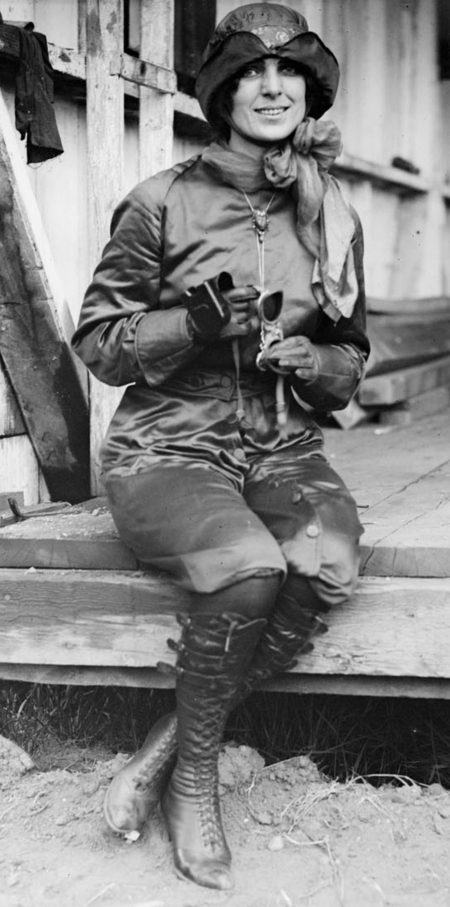
She had been a drama critic and journalist before she was a pilot. Quimby discovered aviation in 1910 at the Belmont Park air meet on Long Island, where she watched the great pilots of the era and immediately decided she would become one of them. She took lessons at the Moisant Aviation School, passing her flight test at 4:30 AM on a foggy morning — the examiners preferred early hours to avoid wind. She passed on her second attempt — her first try, the day before, had ended in failure. On 2 August 1911, she became the first woman in America to earn a pilot's licence.
Her Channel crossing was meant to be a sensation. She had kept it secret from the press, travelling to England under a false name to avoid competition. But the day she lifted off from Folkestone, the newspapers were full of something else: the RMS Titanic had sunk four days earlier. Her historic crossing — in fog, using only a compass and a watch, with no landmarks visible for most of the 22-mile flight — was buried on inside pages.
A Life Cut Impossibly Short
She landed on a beach near Hardelot, France, 59 minutes after taking off. She had done it — the first woman to fly the Channel. She expected a hero's welcome. What she got was a shrug from a world still in shock over the Titanic. It was an injustice history has slowly been correcting.
Two months later, on 1 July 1912, Quimby was flying in the Harvard-Boston Air Meet. During a return flight from Boston Light in a new Blériot monoplane, the aircraft inexplicably pitched forward. Both Quimby and her passenger — an event organiser named William Willard — were thrown from the aircraft. They had no seat belts. Neither survived the fall into the shallow waters of Dorchester Bay. Quimby was 37 years old.
“The men flyers have given out the impression that aeroplaning is very perilous work, something that an ordinary mortal should not dream of attempting. But when I saw how easily the man flyers manipulated their machines I said I could fly.”
— Harriet Quimby, 1911Quimby flew for barely 14 months between earning her licence and dying in Dorchester Bay. In that time she flew across the English Channel in fog, wrote dozens of articles about aviation for Leslie's Illustrated Weekly, and inspired a generation of women who would follow her into the sky. She appeared on a US postage stamp in 1991. Her famous plum flying suit was lost — stolen after her death, before her mother could donate it to the Smithsonian. And every woman who has flown a commercial aircraft since owes something to the drama critic from Michigan who decided, in 1910, that the sky was no place to be excluded from.
Questions connexes
Who was Harriet Quimby?
Harriet Quimby (1875-1912) was the first American woman to earn a pilot’s licence and the first woman to fly across the English Channel. A former drama critic and journalist, she earned her licence on 2 August 1911 and made her famous Channel crossing on 16 April 1912. She died in an airshow accident later that year.
Who was the first woman to fly the English Channel?
Harriet Quimby became the first woman to fly across the English Channel on 16 April 1912, piloting a Blériot XI from Folkestone, England, to a beach near Hardelot, France. She crossed in thick fog using only a compass and a watch, with no landmarks visible for most of the 22-mile flight.
Why was Harriet Quimby’s Channel flight forgotten?
Harriet Quimby’s historic Channel crossing was overshadowed because the RMS Titanic had sunk just four days earlier. Newspapers were dominated by the disaster, and her achievement - which she had kept secret, even travelling under a false name to avoid competition - was buried on the inside pages.
How did Harriet Quimby die?
Harriet Quimby died on 1 July 1912, aged 37, at the Harvard-Boston Air Meet. Her Blériot monoplane unexpectedly pitched forward during a flight over Dorchester Bay, throwing both Quimby and her passenger, William Willard, from the aircraft. Neither wore seat belts, and neither survived the fall into the shallow water.
When did Harriet Quimby get her pilot’s licence?
Harriet Quimby earned her licence on 2 August 1911 from the Aero Club of America, becoming the first woman in America to do so. She trained at the Moisant Aviation School, passing on her second attempt. A decade later, Bessie Coleman would travel to France to earn the licence American schools denied her.
How long was Harriet Quimby’s flying career?
Harriet Quimby flew for barely 14 months between earning her licence in August 1911 and her death in July 1912. In that brief time she crossed the English Channel and wrote dozens of aviation articles, inspiring the generations of women aviators who followed, including record-breakers like Jacqueline Cochran.



0 commentaire